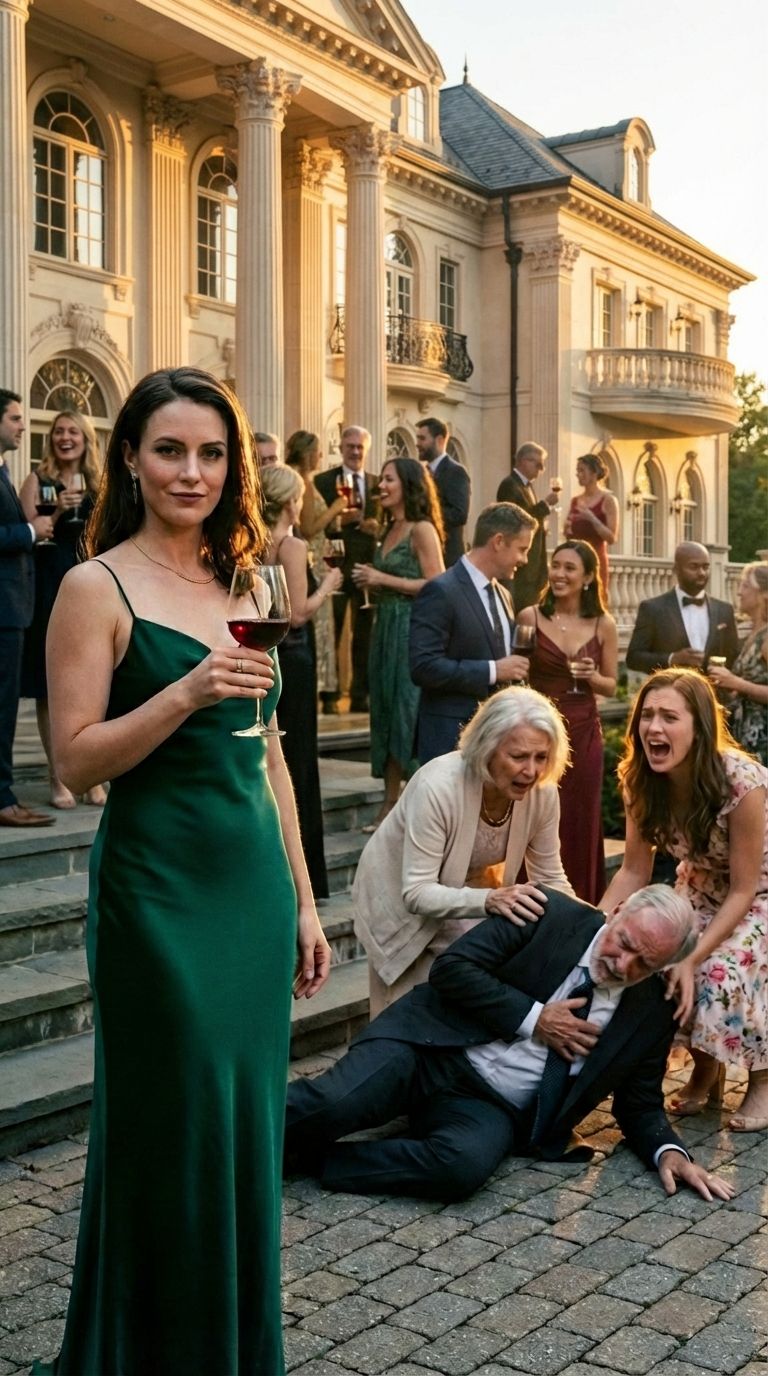
The vibration of my phone against the marble countertop sounded like a small, angry insect. It was a Thursday morning, the kind of gray, heavy-skied day on the Oregon coast where the ocean looks like hammered pewter. The air in my kitchen smelled of sea salt and the fresh beeswax I’d just rubbed into the walnut island.
I didn’t need to look at the screen to know who it was, but I looked anyway.
Mom: We’ll skip your housewarming. Your sister just moved too. It’s a busy week for Chloe. We’ll celebrate properly next time, honey.
I stared at the text. I read it once, twice, and then a third time, waiting for the words to rearrange themselves into something that didn’t feel like a physical blow to the sternum. They didn’t. “Next time.” The two most hollow words in the English language.
My thumb hovered over the keypad. I could have typed a paragraph. I could have screamed in all caps. I could have begged. Instead, I typed two words, my fingers cold and steady.
That’s okay.
I set the phone down, face down, as if to smother the rejection. What my mother didn’t know—what none of them knew—was that this wasn’t just a “housewarming” for a rented apartment or a starter condo. I wasn’t asking them to come to see a couch I bought on sale.
I was asking them to witness a miracle I had built with my own bleeding hands.
The house they were refusing to visit was a six-million-dollar architectural marvel perched on a cliff edge near Cannon Beach. It was a structure of glass, volcanic stone, and cantilevered cedar beams that defied gravity. It was my magnum opus, my sanctuary, and the subject of an upcoming primetime special on HGTV.
But to them, I wasn’t Isabelle the Architect. I wasn’t Isabelle the Builder. I was just the shadow cast by my younger sister’s blinding light.
Growing up, the hierarchy in the Hart household was as immutable as the laws of physics. Chloe was the sun; the rest of us were just planets hoping for a little warmth. Her life was a series of coronations. Her birthday parties were backyard carnivals with hired clowns and three-tiered cakes. Mine were quiet affairs, usually a grocery store sheet cake and a reminder to “keep it down” so we didn’t disturb Dad’s nap.
“How’s our Chloe doing?” the aunts and uncles would ask at Thanksgiving, their eyes sliding right past me. “And Isabelle… you’re helping her with her math, right? Good girl.”
I was the Utility Child. That was my unofficial title. I was useful. I fixed the Wi-Fi. I carried the heavy boxes. I assembled the IKEA furniture. Chloe was the “Golden Child,” the one who existed simply to be adored. If she glued glitter to a poster board, it was framed as art. If I built a working solar-powered engine for the science fair, I was told, “That’s nice, but don’t make a mess with the wires.”
I retreated to the shed.
That dusty, spider-webbed outbuilding became my church. While Chloe was learning cheer routines that would be celebrated with family dinners, I was inhaling cedar dust and learning the tensile strength of pine. I built wobbly tables. I fixed broken chairs. I learned that wood, unlike people, was honest. If you treated it with respect, if you measured twice and cut once, it wouldn’t let you down.
I learned to be quiet. I learned that my achievements were invisible unless they served the family narrative. When I got a full scholarship to study architecture in California, my father barely looked up from his newspaper. “Good,” he murmured. “Just don’t get lost in your books. And call your sister; she’s stressed about prom.”
I left home with a duffel bag and a mantra burned into my mind: You are invisible unless you are building something.
So, I built. I worked through college cleaning job sites, sweeping sawdust, and sketching late into the night until my eyes burned. I started a renovation firm, Second Form, dedicated to taking broken, forgotten spaces and giving them a second life. I turned crumbling barns into cathedrals of light. I turned damp basements into warm studios. My clients told me I had a gift for seeing the potential in the discarded.
I never told them I was just projecting my own desperate need to be seen.
The villa on the cliff was the culmination of that need. I found the land three years ago—a jagged scar of earth overlooking the Pacific, deemed “unbuildable” by three other developers. I saw the rusted rebar and the eroding soil and felt a kinship. I bought it with every cent I had saved.
I spent nights sleeping in a trailer on-site, waking up to the sound of crashing waves. I worked alongside the masons and the glaziers, hauling stone until my shoulders screamed. I designed a table—a massive, singular slab of reclaimed oak—that would sit at the center of the house. No head, no foot, no “kids’ table.” Just one continuous surface where everyone sat as equals.
And now, the house was finished. The cameras had come and gone. The premiere was set. And my family couldn’t be bothered to drive two hours because Chloe was moving into a townhouse I knew my parents had helped her buy.
I looked out the floor-to-ceiling glass walls of my living room. The ocean was churning, wild and white-capped.
A sudden, crystalline clarity washed over me. It was colder than the sea, but sharper.
I was done waiting. I was done begging for a seat at a table where I was tolerated but not welcomed.
I picked up my phone again. I didn’t text my mother back. Instead, I opened my contacts list. I scrolled past the “VIPs” of my life—the family members who had rejected me—and found the others. The misfits. The forgotten ones.
Cousin Eli, who was always excluded from Christmas because he was “too loud.” My friend Rachel, whose parents missed her college graduation to go on a cruise. Aunt Maryanne, the widow who sat alone at every wedding while the couples danced.
I began to type.
Dinner. Saturday night. My place. No kids’ table. No hierarchy. Just us.
I hit send. Then I walked to the refrigerator, pulled out a bottle of Chablis, and poured a glass. The sun was beginning to set, setting the ocean on fire.
The HGTV episode was airing on Sunday. My family thought they were skipping a boring housewarming. They had no idea that by Monday morning, the entire world would see exactly what they had thrown away.
But first, I had a dinner to host.
The preparation for Saturday night felt less like cooking and more like casting a spell.
I hired Margaret, a local chef with hands scarred from years of shucking oysters and a laugh like rolling thunder. “We’re not making party food,” I told her, standing in the kitchen that smelled of fresh basil and sea air. “I want comfort. I want food that feels like a hug you’ve been waiting for since childhood.”
We settled on a menu of roasted cedar-plank salmon, wild mushroom risotto, sourdough bread torn by hand, and a lemon tart with a crust so buttery it would disintegrate on the tongue.
I set the table myself.
This was a ritual. I rolled out the linen runner, the color of wet sand. I placed the ceramic plates I had commissioned from a local potter—imperfect, heavy, warm to the touch. I polished the crystal until it caught the gray coastal light and fractured it into rainbows. And then, I placed the name cards.
Aunt Maryanne. Eli. Rachel. Grandma.
Grandma was the wildcard. She lived in an assisted living facility forty minutes away. My parents visited her on holidays, checking the box of familial duty. I visited her on Tuesdays to play chess. When I called her, she didn’t hesitate. “I’ll take an Uber if I have to, darling. I wouldn’t miss it.” I sent a town car for her instead.
By 6:00 PM, the wind had picked up, howling around the glass corners of the villa like a jealous ghost, but inside, the fire in the volcanic stone hearth was roaring.
The first headlights cut through the fog on the driveway.
It was Rachel. She walked in, holding a bottle of wine and looking terrified. She stopped three feet inside the door, her eyes widening as they took in the soaring cedar beams, the floating steel staircase, and the wall of glass that made it feel like we were hovering inside the storm.
“Isabelle,” she breathed, her voice echoing slightly. “You… you built this?”
“I did,” I said, taking her coat.
“You told me it was a ‘little coastal project.’”
“It started that way.”
Next came Eli, looking sheepish in a thrift store blazer, then Aunt Maryanne with her famous ambrosia salad in a Tupperware container. When she saw the room, she nearly dropped it. “My word,” she whispered, touching the stone wall as if it were a holy relic. “Your mother never said…”
“She doesn’t know,” I said gently.
When Grandma arrived, leaning on her cane, she didn’t look at the architecture. She looked at me. She walked over, cupped my face in her papery, trembling hands, and said, “You finally found your size, Izzy. The world was just too small for you before.”
I almost broke then. almost. But I had a table to fill.
We sat.
There were fifteen of us. Misfits. Outcasts. The “Option B” guests of our respective families. But as we passed the bread and poured the wine, something alchemical happened.
There was no tension. There was no jockeying for approval. No one interrupted Eli when he told a long, winding story about his coin collection. No one asked Rachel why she wasn’t married yet. We were an island of broken toys who had found our shelf.
Midway through the risotto, Aunt Maryanne tapped her glass.
“I have a confession,” she said, her cheeks flushed with wine and warmth. “I spent twenty years waiting for an invitation to the ‘big table’ at Christmas. I thought if I was just quieter, or nicer, or baked better pies, they’d make space for me.” She looked around the room, her eyes wet. “I realize tonight that I was waiting for a seat on the Titanic. This… this is the lifeboat.”
Laughter rippled through the room—real, belly-shaking laughter, not the polite titters I was used to at my parents’ house.
I looked down the length of the table. The candlelight flickered on faces that were usually in the shadows. I saw them. Truly saw them. And I realized that my mother’s rejection wasn’t a punishment. It was a permission slip.
I stood up, holding my glass. “To the builders,” I said softly. “To those who build their own tables when the world refuses to give them a seat.”
“Hear, hear!” Eli shouted.
We ate until we were stuffed. We drank until the bottles were empty. We moved to the terrace, wrapped in wool blankets, and watched the storm churn the ocean into foam. It was the best night of my life.
But as the last car pulled away around midnight, leaving me alone in the silence of my six-million-dollar fortress, the anxiety crept back in.
The HGTV episode was airing in less than twenty-four hours.
My phone sat on the kitchen island. I hadn’t sent the link to my parents. I hadn’t told Chloe. It was going to be a surprise attack, a nuclear detonation in the middle of their Sunday evening routine.
I walked to the window and pressed my hand against the cold glass. The reflection staring back at me wasn’t the utility child anymore. It was a woman who held a match, waiting to drop it.
The question wasn’t if they would see it. The question was what would remain of us when the smoke cleared.
Sunday morning felt suspended in amber. I spent the day cleaning up the remnants of the feast, washing plates by hand just to feel the warm water, grounding myself.
At 7:00 PM, I sat on my sofa, a cup of tea in hand, and turned on the TV.
Coastal Revival: The Glass Fortress.
The show began with a sweeping drone shot of the cliff. The music was swelling and dramatic. The camera swooped down over the Pacific, rising up to reveal the villa gleaming in the sunlight. It looked majestic. It looked impossible.
Then, there I was on screen. I was wearing my work boots and a flannel shirt, pointing at a blueprint. My voiceover played:
“I grew up in a house where space was limited—not physical space, but emotional space. I learned that if I wanted to belong, I had to build the room myself. This house isn’t just wood and stone. It’s a declaration of existence.”
I watched myself install the windows. I watched the montage of the long nights, the exhaustion, the triumph. And then, the finale: the dinner party. The producers had filmed some B-roll of the preparations and the final setting.
The narrator’s voice was deep and resonant: “Isabelle Hart has created a sanctuary for those who have been overlooked. She didn’t just build a house; she built a new family.”
The credits rolled.
For one minute, the room was silent.
Then, the phone ignited.
It started with a text from a high school friend I hadn’t seen in ten years. Is that YOU? Holy sht, Izzy!*
Then, the notifications came in a wave. Instagram tags. Facebook posts from neighbors. Did you guys see Isabelle on TV? That house is insane!
And then, the one I was waiting for.
Mom Calling.
I let it ring. Once. Twice. Three times. I watched the name flash on the screen like a warning light.
It stopped.
Then, Dad Calling.
Then, Chloe Calling.
They were panicking. They were sitting in their living room, likely surrounded by moving boxes for Chloe’s new, unremarkable townhouse, realizing that the daughter they treated like hired help was a millionaire architectural prodigy.
I didn’t answer. I poured another cup of tea.
Finally, a voicemail popped up. It was Mom. I pressed play, putting it on speaker so her voice could fill the empty, beautiful room.
“Isabelle? Pick up. We just… we saw the show. Why didn’t you tell us? My God, the phone is ringing off the hook. Aunt Linda just called asking why we weren’t at the dinner. You made it look like… well, you made us look terrible, Isabelle. Call me back. Immediately.”
Not Congratulations. Not We’re proud of you.
You made us look terrible.
I waited an hour. Let them stew. Let them sit in the discomfort of their own making.
Then, I called back.
“Isabelle!” My mother answered on the first ring. She was breathless. “What on earth were you thinking? Going on national television and saying you had ‘no space’ in this family? Do you know how embarrassing this is for your father?”
“Hello, Mom,” I said, my voice calm, steady, anchored by the stone walls around me. “I’m glad you watched.”
“Glad? Everyone is asking why we weren’t invited! Why did you invite Maryanne? She’s a gossip! And you told the whole world you built a table for ‘outcasts.’ Are you saying we made you an outcast?”
“Yes,” I said.
The silence on the other end was heavy.
“That is… that is incredibly ungrateful,” she sputtered. “We gave you everything. We treated you exactly the same as Chloe.”
“Mom,” I interrupted. “Stop. You didn’t. You skipped my housewarming via text message three days ago. You prioritized Chloe’s moving day over the biggest achievement of my career. You have never, not once, treated us the same. And I’m not angry about it anymore. I’m just done pretending it’s not true.”
“We didn’t know it was a mansion!” she cried out, the truth finally slipping free. “If we had known it was this… obviously we would have come!”
There it was. The transactional nature of their love, laid bare.
“I know,” I said softly. “You would have come for the house. You wouldn’t have come for me.”
“That’s not true! We love you!”
“You love me when I’m useful,” I corrected. “But I’m not useful anymore. I’m successful. And that scares you.”
“Isabelle,” my father’s voice came on the line, gruff and stern. “That’s enough. You’ve had your fun. You’ve embarrassed the family. Now, when can we come see it? Sunday? We need to smooth this over before the church picnic next week.”
I closed my eyes. They still didn’t get it. They thought this was a negotiation. They thought they could bully their way into the Glass Fortress just like they bullied me into the shed.
But the shed was gone.
“You want to come see it?” I asked.
“Yes,” Dad said. “Sunday. We’ll bring Chloe. She’s dying to see the kitchen.”
I looked at the massive oak table, the one that had held the laughter and tears of my real friends just the night before.
“Okay,” I said. “Come on Sunday. Just you three.”
“Good,” he said, sounding relieved, thinking he had won. “We’ll be there at noon. Have lunch ready.”
He hung up.
I stared at the phone. They thought they were coming for a tour. They thought they were coming to reclaim their territory, to plant their flag on my success.
But they were walking into a trap. Not a trap of malice, but a trap of truth.
I wasn’t going to have lunch ready. I wasn’t going to bake a cake. I was going to serve them something they had never tasted before: reality.
Sunday arrived with a vengeance. The sky was charcoal gray, and the wind was whipping the sea into a frenzy. It was perfect weather for a reckoning.
I didn’t clean the house. I didn’t arrange flowers. I left the ambitious architectural clutter on the table—blueprints, material samples, invoices. I wore jeans and a black turtleneck, no makeup.
At noon sharp, the family sedan crunched up the gravel drive.
I watched from the window. They stepped out tentatively. My father looked smaller against the backdrop of the towering cedar facade. My mother was clutching her purse like a shield. Chloe looked… jealous. There was no other word for it. Her eyes darted around, assessing the value, the cost, the sheer magnitude of what I had created.
I opened the massive pivot door.
“Welcome,” I said.
My mother stepped in and gasped. It was involuntary. The camera didn’t do it justice. The sense of space, the smell of the ocean, the way the light played on the stone—it was overwhelming.
“Isabelle,” she whispered. “It’s… it’s a museum.”
“It’s a home,” I said.
Chloe walked past me without saying hello, running her hand along the volcanic stone wall. “Is this imported?” she asked. “This must have cost a fortune.”
“It did,” I said. “I earned every penny.”
We moved to the living room. My father sat on the Italian leather sofa, looking uncomfortable. He was used to being the biggest man in the room. Here, the room swallowed him.
“So,” he cleared his throat. “Lunch?”
“I didn’t make lunch,” I said, leaning against the kitchen island. “There’s a great bistro in town if you’re hungry later. I invited you here to talk.”
My mother stiffened. “Talk? We’re family, Isabelle. We don’t need a summit meeting.”
“We do,” I said. “Because you’re only here because I was on TV. You’re here because the neighbors are talking. You’re not here because you missed me.”
“That is unfair!” Chloe snapped. “I missed you! I was going to call you about the move, but—”
“But you didn’t,” I cut her off. “Chloe, stop. I don’t blame you for being the favorite. That’s on them. But I do blame you for believing the hype. You’ve never asked me a single question about my life that didn’t pertain to how I could help you with yours.”
Chloe opened her mouth, then closed it. She looked at her parents, waiting for them to defend her.
“Isabelle,” my father said, standing up. “You are being hostile. We came here to make peace.”
“No,” I said, my voice rising just slightly. “You came here to inspect the asset. You came here to see if my success could rub off on you. To see if you could claim credit for ‘supporting’ me all these years.”
I walked over to the long oak table—my masterpiece.
“Do you see this table?” I asked.
They looked at it.
“I built this by hand. I sanded it for forty hours. Last night, fifteen people sat here. People you would call ‘nobodies.’ But they celebrated me. They didn’t ask for a loan. They didn’t ask me to fix their Wi-Fi. They just sat with me.”
I looked my mother in the eye.
“You said you’d skip my housewarming. You said, ‘Next time.’ Well, this is next time. And I need you to know that the dynamic has changed. I am not the utility child anymore. I am the architect. And if you want a seat at this table, you have to earn it.”
“Earn it?” My mother looked affronted. “We are your parents!”
“That’s a title,” I said. “Not a relationship. A relationship requires interest. It requires showing up when there are no cameras.”
The silence stretched, thin and brittle.
Then, something shifted in my father. He looked around the room again, really looked at it. He looked at the joints of the ceiling beams, the precision of the stonework. He was a man who respected work, even if he didn’t respect feelings.
“You built all of this?” he asked, his voice quieter. “The design? The contracting?”
“Every inch,” I said.
He nodded slowly. He walked over to the table and ran his rough hand along the edge. “It’s level,” he murmured. “Perfectly level.”
“I learned that in the shed,” I said. “While you were watching Chloe dance.”
He flinched. It was a small movement, but I saw it. He looked at me, and for the first time in thirty years, I didn’t see dismissal. I saw regret.
“We missed it,” he said. It wasn’t a question.
“You missed all of it,” I confirmed.
My mother started to cry. Not the manipulative tears she used to get her way, but silent, ugly tears of realization. She looked at Chloe, then at me, and realized she had bet on the wrong horse—or rather, she had realized she shouldn’t have been betting at all.
“Can we fix it?” she asked, her voice trembling.
I looked at them. The three people who had defined my worth for so long. They looked small in my glass fortress.
“I don’t know,” I said honestly. “I don’t need you to fix me anymore. I’m already built. But if you want to get to know the woman who lives here… we can try. But it starts with you leaving.”
“Leaving?” Chloe asked.
“Yes. I have work to do. And I don’t have lunch prepared. Go to the bistro. Talk about what I said. Call me next week. If you want to have a real conversation—not a photo op—we’ll talk.”
My father nodded. He respected boundaries when they were made of stone. He respected strength.
“Okay,” he said. “Okay, Izzy.”
He used my nickname. He hadn’t used it since I was six.
They walked to the door. It was awkward. There were no hugs. But as they stepped out into the wind, my mother turned back.
“It really is beautiful,” she said. “You’re… you’re amazing.”
“I know,” I said.
I closed the heavy door. The latch clicked shut with a satisfying, solid sound.
I was alone again. The storm was battering the glass, but inside, it was warm. I walked back to my table, the empty chairs standing like sentinels.
I sat at the head of the table—not because I had to, but because I could.
I had spent my life trying to shrink so I could fit into their world. I had finally built a world big enough for me. And looking out at the endless, churning horizon, I knew one thing for sure.
The view is much better when you build the window yourself.