They say weddings are the threads that stitch families back together, tightening the loose weaves of time and distance. But sometimes, in the harsh glare of a reception hall chandelier, they quietly reveal just how far apart you have truly become.
I wore the pink dress I had been saving for three years, the silk still holding the faint, hopeful scent of lavender sachets. I baked the banana bread Owen used to beg for on rainy Tuesdays, wrapping it in foil with a ribbon that matched his eyes. I even ironed the vintage cardigan with the tiny pearl buttons—the one he once told me, a lifetime ago, made me look like the comforting mothers from the black-and-white television shows he watched when he was sick.
But when I stepped into the wedding hall—a cavernous, modern venue of glass and steel overlooking Lake Michigan—and realized no one had saved me a seat near him, I felt a physical shift deep within my chest. It wasn’t a crack; it was a silent slide, like a tectonic plate moving miles beneath the ocean.
Upper Michigan is quiet in the spring. Not the quiet of peace, but the quiet of being forgotten. My house sits tucked beside a still lake, surrounded by stoic pines and the heavy fog of memory. I live alone now. My husband, Mark, passed four winters ago, leaving a silence in the hallways that I have never quite learned to fill. Our son, Owen, visits less and less, his life consumed by the frantic pace of a world I no longer recognize.
I understand, or at least I tell myself I do. Young people have their own gravity; they spin in orbits that naturally pull away from the center. That is what we raise them for, isn’t it? To leave.
Lately, my days move with the viscosity of molasses. I bake banana bread in the morning, the rhythm of measuring flour and sugar acting as a meditation. I read the local paper over a lukewarm cup of coffee, then water the row of stubborn tulips out front that refuse to bloom on schedule. Sometimes, I watch the mail truck rattle by without stopping. Other times, I catch myself wondering if it’s stopping for someone else down the road—someone who is also checking the window every afternoon, pretending they aren’t hoping for anything.
Owen had called three weeks prior to break the news.
“I’m getting married, Mom,” he had said, his voice sounding excited but distracted, like he was checking emails while speaking. “Her name is Lauren.”
I asked him what kind of wedding they were planning.
“Something simple but elegant,” he replied. “Modern.”
Then he trailed off. He didn’t ask for my thoughts. He didn’t ask what weekends might work for me. When I asked if they needed help—offering to make the rehearsal dinner pie, a tradition in my family for three generations—he chuckled politely.
“That’s sweet, Mom, but don’t worry. We have it all handled. It’s catered.”
I hung up the phone that day and stared at the receiver for a long time. I felt something then—something I didn’t say out loud. It felt as though I had just been assigned the role of a guest in a story I thought I had helped write.
But I chose to stay hopeful. I picked out the dress. I cleaned the porch. I even hemmed the sleeves of my coat because part of me still believed that maybe, just maybe, this wedding might bring us a little closer again.
I was wrong. Sometimes the biggest losses don’t come in shouts or slamming doors. They come in silence. In small, polite brushoffs that feel like a thousand paper cuts. The kind of quiet that follows you into bed at night and makes you wonder exactly when you stopped being needed.
The wedding took place at a lakeside resort two hours south. It was a “fancy” place, all exposed wood beams and floor-to-ceiling windows looking out over the water. Owen had said it was Lauren’s idea—she wanted something “timeless.”
I arrived early, out of habit. I wore the pink dress, soft pleats at the waist, nothing too loud. My hair was pinned back, and I wore a light shade of lipstick—the kind of outfit a mother would wear to her son’s biggest day. I walked through the lobby alone, clutching my purse with both hands.
The young woman at the front desk handed me a name tag and smiled blankly, like she had no idea who I was. I looked down at the plastic rectangle.
Sylvia Hartley.
No mention of “Mother of the Groom.” No little satin ribbon like the bride’s family wore, proudly displaying their status.
I held it in my hand for a moment, the sharp plastic digging into my palm, then clipped it on.
Inside the main room, people were gathering in clusters. Laughter floated above the soft jazz music like smoke. Waiters moved through the crowd with trays of champagne and little ceramic spoons holding something chilled and expensive. I spotted Owen near the front with Lauren, surrounded by a phalanx of people I didn’t recognize. He looked handsome, but distant. He didn’t see me.
One of the wedding planners, a young man in tight slacks and a headset, waved me toward a table near the back corner. I walked past the tables near the front—tables with signs that read Groom’s Co-workers, Bride’s Extended Family, Maid of Honor’s Parents.
My table was in the shadows, near the swinging kitchen doors. The card simply said Sylvia. No last name. No title.
I sat down between a man who sold home insurance and a woman who raised alpacas in Vermont. Both were polite, but neither had ever met Owen. They talked across me for most of the night, discussing property taxes and wool yields.
During the toasts, the microphone was passed to Lauren’s father, then her brother, then her college roommate. There was a joke about tequila shots and a tearful memory from summer camp. At one point, someone at a nearby table asked, loudly enough for me to hear, “When is the groom’s mom speaking?”
Lauren took the microphone, laughed a tinkling, champagne-fueled laugh, and said, “Oh, maybe later!” Then she moved on to introduce the band.
Dinner was plated and quiet. I had the chicken. It was dry, crying out for sauce. A butter roll sat untouched on the side of my plate. I noticed no one at my table finished their meal, either. The desserts were fancier than they tasted; one bite of the lemon tart and I felt more bitterness on my tongue than sweetness.
Owen never made it to my table. Not once.
He danced with Lauren. Then he danced with her mother. Then he danced with someone’s aunt. I waited. I fixed the hem of my dress three times. I smiled at a photographer who passed me twice without raising his camera.
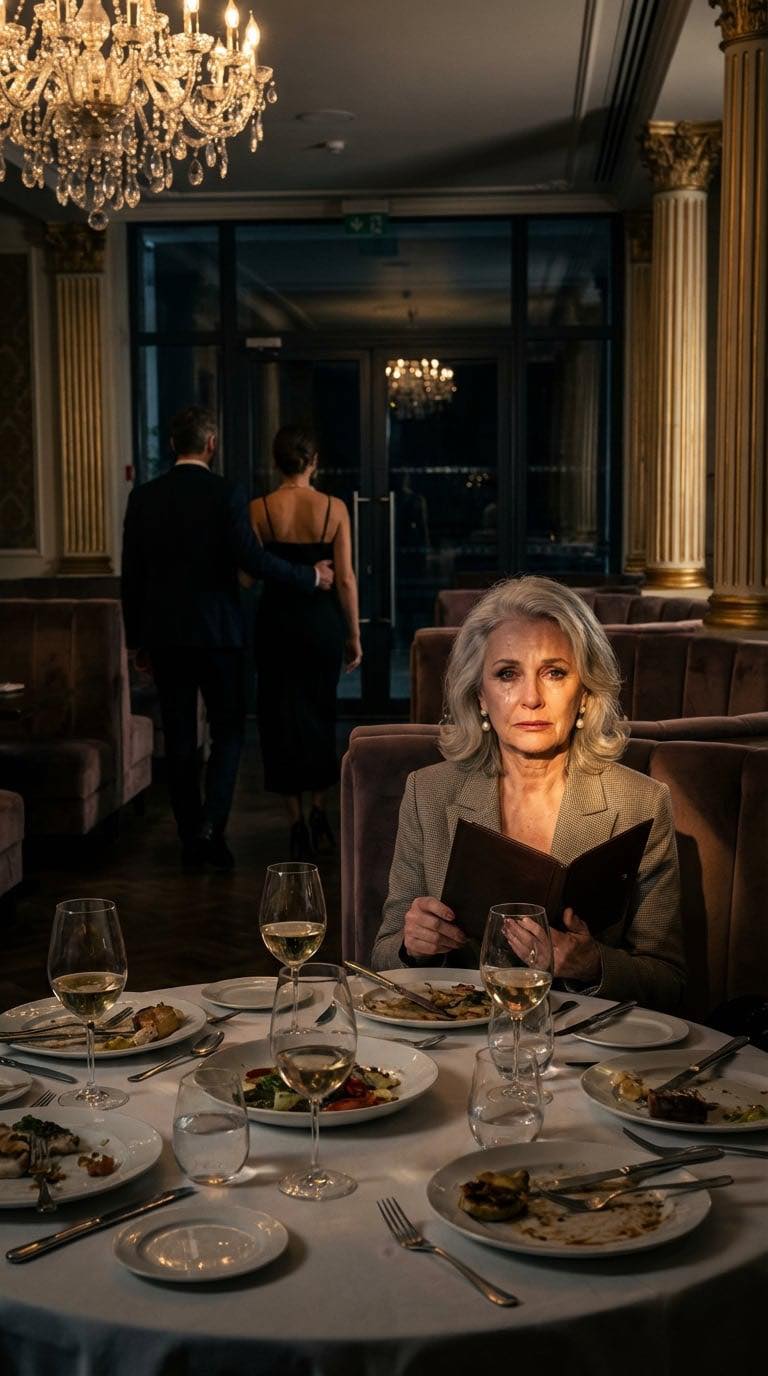
By the end of the night, I sat quietly in that rented Chiavari chair, surrounded by empty plates and people already halfway to their cars. I folded my napkin slowly, creasing it into a perfect square, and slipped it under the rim of my water glass.
No one said goodbye. No one noticed when I left.
A week passed after the wedding before Owen called.
He said he wanted to have me over for dinner. Just the two of us. He said Lauren would be out with friends. His voice was cheerful, but measured. I could tell he was trying to sound casual, but the tone was too polished.
“I’d love that,” I said. “No questions asked.”
That evening, I wore the same cardigan I had on when I first brought Owen home from the hospital thirty years ago. It still fit, soft around the wrists. I baked a tray of oatmeal raisin cookies—his second favorite—and wrapped them in foil.
The drive down was quiet. The roads were dry, but the sky was overcast in that flat, gray way that makes you feel like winter isn’t finished with you, even when the calendar says otherwise. Owen’s new house sat in a tidy neighborhood on the edge of town—brick exterior, trimmed hedges, the kind of place with matching porch lights and a doorbell camera that watched you approach.
He opened the door with a smile—quick, polite, efficient. He gave me a short hug that barely touched my shoulders.
“Kitchen is through the hall,” he said.
Dinner wasn’t ready. In fact, there were no smells of cooking at all. Instead, there was a table set for two, a bottle of wine already uncorked, and a small stack of papers placed carefully beside the salad plates. The papers were clipped neatly with color-coded tabs, and a blue pen was laid diagonally across the top page.
Owen poured me a glass of wine, asked about the drive, and complimented the cookies without opening the foil. His tone felt rehearsed, as if he were speaking through a script he had memorized but not written.
Then, he gestured to the papers.
“It’s just something for peace of mind, Mom,” he said, smoothing his tie. “In case anything ever happens to you. It would make things easier. Just a standard Durable Power of Attorney. A common form. Everyone is doing it.”
He said these things like they were weather reports—distant, practical, emotionless.
I nodded and reached for the packet. The words on the first page were thick with legal terminology, but the language underneath was clear enough for anyone who knew how to read between the lines.
Financial Authority. Real Estate Management. Full Access. Immediate Effect. No Expiration.
It didn’t say Son. It didn’t say Family. It said Agent. It said Authorization. It said Control.
He smiled, a tight shifting of facial muscles. “No rush, really. But…” He uncapped the pen.
I noticed then that the plates on the table were empty. There was no food. No simmer of pot roast, no boiling water for pasta. Just wine. Just paper. Just a silent ask beneath a friendly tone.
I placed the packet back down on the table.
“I’ll take it home,” I said softly. “I’ll look it over carefully.”
He nodded once and reached for his wine, his eyes darting to the pen, then back to my face. He didn’t argue. He didn’t need to. His silence said enough.
We talked about nothing after that. The weather. The neighbor’s new fence. Some show on cable I didn’t know. When I stood to leave twenty minutes later, he walked me to the door and hugged me again—even lighter than before.
Back in the car, I didn’t turn the engine on right away. I sat there, hands in my lap, the foil-wrapped cookies still untouched on the passenger seat. The porch light behind me turned off after a minute. Motion sensor. Efficient. Automatic. Just like the dinner.
I got home that night and didn’t bother to change out of my shoes. I sat on the edge of the couch, my coat still zipped halfway up, hands resting on my lap like they didn’t belong to me. The house was quiet. Too quiet. Even the clock in the kitchen seemed to have stopped ticking. For a moment, I wasn’t sure if I was breathing.
After a while, the cold began to seep into my bones. I stood up and walked down to the basement. My knees ached on the descent, the wooden stairs groaning under my weight. The air down there was cold, the kind that settles in old wooden beams and stays.
At the far end, behind the laundry machine, there was a cabinet tucked low beneath a shelf of rusted paint cans. I had to kneel on the concrete to reach it. Inside was a small, gray metal box.
I hadn’t opened it since the year Mark died. He always said, “Sylvia, if anything happens to me, you’ll find what you need in there.”
I’d never had a reason to look before. But that night, something in my blood knew it was time.
The lid creaked open. Everything inside was organized, just like Mark always kept things. He was methodical that way. Neatly stacked folders, clipped and labeled.
At the very bottom was a letter with my name on it, written in his familiar, slanting handwriting. My chest tightened just seeing it.
The letter was short. A paragraph, really.
Sylvia,
I know you. I know you won’t ask for help, even if you need it. So I have set things up to make sure you will never be trapped or dependent on anyone. Do not tell Owen. Not because I don’t love him, but because I know how the world works. Money changes people, and sometimes, it reveals who they already were.
I unfolded the documents beneath the letter. The files listed two accounts in my name: a portfolio of investments I never knew existed, stock options, mutual funds, and an annuity tied to a commercial property in Texas.
Altogether, it was worth over $7 million.
I stared at the number. Then I closed the folder. Then I opened it again, thinking maybe the grief had made me hallucinate. I didn’t cry. Not then. I didn’t feel relief, either. It was something heavier, like holding a secret too big for the room.
I sat there on the basement floor for a long time, the cold seeping into my legs, the metal box open beside me. What I felt most was the weight of what Mark had left behind. Not just the money. The trust. The foresight. The quiet protection I never knew I needed until that night. He had seen something coming before I ever did.
In his own quiet way, he had left me the one thing I needed most. Not safety. Not wealth.
Choice.
I closed the box, locked it, and stood up slowly. My legs were stiff, my hands shaking in a way that had nothing to do with age. Upstairs, I turned off every light in the house except the one in the kitchen. I sat down at the table with a blank notepad and the stack of papers Owen had given me.
And I began to write. Not what he wanted, but what I had to say.
The next call came two days later, mid-morning.
I had just sat down with a bowl of cereal, still wearing my house slippers. The phone buzzed once, then again. I let it go to voicemail the first time. The second time, I picked up.
Owen’s voice was smoother than usual, almost careful. He said he wanted to “check in,” see how I was feeling. He asked if I had a chance to look over the papers.
“I have,” I said. I kept my tone steady.
He paused just a second too long. “Great. There’s no rush, obviously, but… it would be good to get things in order. Just in case.”
“Just in case of what?” I asked.
He started to stumble, saying something about planning, about being practical, about protecting me. But the words came in circles. He mentioned a story he heard on the news about a woman who lost access to her accounts after a stroke. Then he brought up his friend’s mother who forgot her passwords for months.
I could hear it underneath—a list of reasons not rooted in concern, but in strategy.
When I stayed silent, he cleared his throat. “I just want what’s best, Mom.” Then his voice shifted slightly, the edge returning. “If we wait too long, it might be harder to set things up. The smart thing would be to sign now while everything is still simple.”
I looked out the window while he spoke. The trees were bare. A squirrel ran across the yard, stopped, then darted into a patch of brush. I watched it disappear and felt a sharpness settle behind my ribs.
“I’ll think about it,” I told him.
“That’s fine,” he said, his patience fraying. “Lauren found a financial adviser who could help make everything smoother. We’d be happy to set up a meeting for you.”
We ended the call. I sat there for a long time, the cereal turning soggy in front of me. I couldn’t move. I thought about all the nights I stayed up with Owen when he was sick with the flu. How I once drove five hours in a snowstorm to bring him a spare tire in college—not because I had to, but because I wanted to. Because that is what love looked like to me.
And now, here he was, speaking to me like I was a transaction. A logistical step.
The house felt smaller than usual. The silence tighter.
I got up, poured the cereal down the sink, and ran the water until the last bit of milk was gone. Then I opened the drawer by the fridge, pulled out the manila envelope where I had tucked away everything Mark left me, and held it for a while.
It didn’t feel like protection. Not yet. It felt like the last piece of something he built for me. And now, it was time I built something for myself. Not out of anger, but because even love has limits. And I had finally reached mine.
It took me three days to decide what to do. Not because I was unsure, but because I needed the silence to mean something. I didn’t want my next step to come from fear or pride. I wanted it to come from knowing—from understanding what was being asked of me and what I could no longer allow.
I found Carol’s number written on the back of an old Christmas card. She used to work as a trust and estate lawyer before she retired. We hadn’t spoken in years, not since her husband passed, but I remembered how she once said, “The quietest women often leave the most permanent marks.”
When I called, she picked up right away. Her voice sounded older, but sharp as a tack. I told her what was happening. She didn’t react with shock; she just listened. Then she said we should meet. No fuss. No judgment. Just coffee and clarity.
We sat at her kitchen table the next afternoon. Her home was small, neat, full of quilts and stacked books. I handed her the envelope. She read through every line of Mark’s documents, her eyes moving like a woman who had read too many things too late for too many people.
When she finished, she looked at me over her reading glasses.
“You have more power than you realize, Sylvia,” she said. “The money is protected. The investments are strong. The legal standing is solid. But only if you keep it that way.”
She asked if I wanted to establish a trust.
“Yes,” I said.
She asked who I wanted to name as the beneficiary.
“No one,” I said. “Not yet. Maybe never.”
She nodded. Then she told me to bring in everything Owen had given me. I pulled out the stack of papers from my bag. She flipped through it without flinching.
“This language is aggressive,” she noted, tapping a page. “Immediate authority. Sweeping access. No oversight. Sylvia, these aren’t documents written to care for someone. These were written to absorb someone.”
We spent the afternoon rewriting everything. We transferred the accounts into a private trust under my full control, locking access behind strict conditions that no one could bypass. Carol added a medical clause that required two independent physicians to confirm any loss of capacity before any authority could shift.
Then she handed me a pen.
I signed slowly, carefully. Not because I was nervous, but because it felt like drawing a boundary I should have drawn years ago. A simple line across paper that said: I am not invisible. I am not a convenience. I am not yours to manage.
When we finished, Carol slid everything into a thick folder. She told me to keep it somewhere I could reach it easily, but not obviously. I placed it in the back of the cabinet beneath the sink, tucked behind a box of dishwasher pods. No one ever looks there.
Driving home, the air felt different. Brighter, somehow. Not lighter, but sharper. Like I could finally see the shape of my life without squinting. For the first time in a long while, I didn’t feel like someone’s forgotten parent. I felt like a woman with a spine.
The invitation came in a text the next day. Owen said he wanted to try again. A “proper dinner” this time. Just the two of us. No papers. No pressure.
I waited a few hours before responding. Then typed back one word: Sure.
I didn’t tell him I wouldn’t be coming alone.
Carol met me a block away from his house and parked her car on the opposite side of the street. We agreed she wouldn’t walk in with me; she’d sit nearby, wait, and step in only if needed. I wasn’t nervous. Not anymore. I had learned what it meant to be still without being soft.
Owen opened the door, smiling. Warm. Casual. He wore a button-down shirt and socks without shoes, like he wanted to remind me he was still the boy who used to run barefoot through our hallway. The kitchen smelled like garlic and roasted vegetables. There was bread on the table. Real food this time. Or at least the look of it.
We sat. Small talk first. He asked if I’d been reading anything good. I mentioned a mystery novel I picked up from the library. He nodded, but didn’t ask what it was about. His eyes kept drifting toward the side table where another stack of papers waited—clipped and neatly arranged. Different from before, but not unfamiliar.
When he finally reached for them, his tone shifted. Slower. More deliberate.
“I spoke to a friend who works in elder law,” he began. “They recommended a simpler arrangement. Nothing binding. Just provisional. Just something to keep things smooth.”
He slid the papers toward me.
I didn’t touch them. Instead, I reached into my bag and placed a folded document of my own on top of his stack. No words. Just the sound of paper meeting paper.
Then I reached for my water and took a sip.
He looked down, confused at first. Then he unfolded it. It was a formal Notice of Trust Execution. My signature at the bottom. Full transfer of assets into private legal protection. Revocable only by me.
His face didn’t change right away. But his eyes did. They blinked rapidly, and his jaw shifted like he had bitten into something sour but was trying to smile through it.
I spoke carefully.
“I appreciate your concern, Owen. I understand life is stressful and planning is part of being responsible. But I have already taken care of mine. Everything is in place. Everything is final.”
He stared at me. “Did you… did you talk to someone?”
“Yes,” I said. “A friend. Someone who understands what it meant to be prepared without being pressured.”
The room quieted. He leaned back, his fingers tapping once against the tablecloth before stopping. For a moment, he didn’t look like a son or a husband. He looked like a man who had just realized he had run out of options.
Carol entered just then. Smooth. Polite. She knocked on the open frame of the dining room archway. She smiled, greeted Owen softly, and introduced herself.
“We’ll be leaving now,” she said.
I stood, gathered my coat, and followed her to the door without turning back. Outside, the air was sharp with wind. I exhaled slowly, the way you do when something breaks loose inside you—not out of anger, but release.
For the first time, I wasn’t walking away hurt. I was walking away certain.
The next morning came colder than the forecast had promised. The kind of cold that settled in the floorboards, quiet and lingering. I made toast, poured a glass of orange juice, and sat at the kitchen table without touching either. My hands were still warm from the night before, but my chest felt like something had closed itself off.
Around 10:00 AM, my phone buzzed. One message. Just one line from Owen.
You made this harder than it had to be.
No hello. No name. Just those words.
I stared at the screen for a long time before setting the phone face down on the table. The toast had gone cold. The juice no longer looked refreshing. There was no follow-up message. No apology. No explanation. And I knew, in the way a mother knows, that the words weren’t about disappointment. They were about control. About a door he thought he could keep open forever, and now found shut.
Later that day, I walked out to the garage to check a few boxes I hadn’t touched in years. I found the photo albums. I opened one to a page from a Christmas long ago. Owen was five, cheeks red from snow, holding up a toy truck, smiling so wide I could count the spaces in his teeth.
I used to frame that smile in my mind every time I was tired or scared. It had been my reason for a lot of things. But now, I saw something different. Not just a boy, but a boy who had always gotten what he wanted without asking twice. Mark and I had made sure of it. Not because he demanded it, but because we thought love meant removing every obstacle. Every weight.
We gave too much. And somewhere along the way, he started to believe he was entitled to what wasn’t his.
In the afternoon, I received another text. This time from Lauren.
We’re sorry things have become tense. We were just trying to plan responsibly. If you ever want to talk, I’m available.
Then she wrote something that stayed with me longer than I expected:
You raised a strong son. We just wanted to support his future.
I read it twice. The words were polite, polished. But underneath, I heard it clearly: You had your time. Now let go.
I didn’t respond. I closed my phone and left it on the counter. That night, I poured the orange juice down the sink—not because I was angry, but because I didn’t want to drink something that had lost its temperature.
I stood by the window and looked out into the dark, the sky already pulling winter over the rooftops. I didn’t cry. I didn’t pace. I stood still. Because sometimes the loudest answer is no answer at all. And sometimes, when a door closes, it’s not meant to be reopened. Not by force. Not by guilt. And certainly not by blood.
The house had never been loud, even when Mark was alive. But after the last exchange with Owen and the silence that followed, something shifted. The quiet no longer felt neutral. It felt like a verdict.
I started moving slower through the rooms. Not because I was tired, but because there didn’t seem to be a reason to hurry. The days took on a soft shape. I folded towels with precision. I wiped down the counters even when they were clean. I watered the plants at the exact same time each morning.
I wasn’t waiting for a call. But I still noticed when it didn’t come.
Three days passed before the voicemail light blinked. I didn’t answer the phone when it rang, but I did listen afterward. Owen’s voice played through the speaker like it was coming from behind a heavy curtain. He said he had overreacted. He said he just wanted to make sure things were handled properly.
Then he said something softer. He missed the way things used to be. He said he hoped we could talk again. “Just talk.”
I didn’t delete it. I didn’t save it either. I let it sit there between digital dust and obligation.
Later that night, I found myself scrolling through old text threads—ones I hadn’t opened in months. There were photos from years back. Owen grilling in the backyard. Lauren holding a pie I had helped her make. A blurry picture of the dog we once shared before she got too old to climb the stairs.
And then farther back. Texts from when Owen still used too many exclamation points. When he still said things like “Love you” before signing off.
I clicked on one and stared at it. Just stared. Not trying to feel anything. Just noticing what had once been. Then I started deleting them. One by one. Not in anger. In acknowledgement.
The last one I kept was a video. Owen at ten, holding a flashlight under his chin, telling a scary story in the dark while I laughed in the background. My voice was younger then. Lighter. I watched it twice, then closed my phone.
I went to bed early that night. Not to sleep, but to lie still. The bed felt larger. Not emptier—just more honest.
I had given that boy everything. And the man he became had used it to build a case against me. That was the hardest part. Not the greed. Not the manipulation. But the realization that what I gave from love, he had repurposed into leverage. Somewhere along the way, I had stopped being a mother in his eyes and become a resource.
And that was a grief no one warns you about. A grief that sounds like your own voice on a machine, saying nothing back.
I moved at the end of February, just before the snow melted completely.
The new house wasn’t far—still near the lake, but tucked deeper into a quieter street. Smaller. Older. The kind of place with a crooked mailbox and shutters that rattled when the wind came off the water. But it felt right. Like it had been waiting for someone who no longer needed space to entertain, only space to exhale.
I didn’t bring much with me. Just what mattered. The photo of Mark on the bookshelf. The recipe cards, handwritten and smudged with butter. A few boxes of books. The chipped blue kettle. And a ceramic owl from the garden that used to sit near the back porch and scare no birds at all.
Most mornings, I walked to the library on Main Street. Not because I needed books, but because I liked the sound of pages being turned nearby. I picked up a few shifts at the front desk. Nothing official. Just enough to feel useful. Enough to keep my hands from reaching for things that no longer reached back.
That’s where I met them. The women who came every week.
They weren’t loud. They didn’t wear matching coats or speak in groups. They arrived quietly, one by one, and stayed longer than they needed to. Some read. Some wrote. Some stared out the window like they were waiting for something that had already passed.
There was Helen, who used to run a diner and now made quilts from her husband’s shirts. June, who always brought peppermint tea in a thermos with her late sister’s initials on it. And Margot, who carried a cane but never used it until she got near the front door.
We didn’t become friends all at once. It happened slowly. Over shared thermoses. Over nods exchanged at the same bookshelf. Over the silent agreement that none of us needed to explain what we had lost, only that we still showed up.
One afternoon, Margot asked if I wanted help with the garden bed behind the library. I said yes before I even looked at it.
The soil was hard, packed down by winter and stubborn in that way land can be when left alone too long. But we turned it anyway. One row at a time. Knees in the dirt. Hands stained. No small talk. Just the rhythm of women planting something together that might bloom later.
We planted tomatoes, basil, and a few sunflowers just to be defiant. We called it the Quiet Corner, and it became ours.
We didn’t talk about our children. Not often. When we did, it wasn’t out of bitterness; it was out of recognition. Like looking at an old scar and remembering the moment before it broke the skin. What we shared wasn’t grief. It was clarity. A new kind of belonging—not to each other, but to ourselves.
In that space, with soil under my nails and books nearby, I stopped feeling like a burden. I started feeling like a woman again. Not waiting. Not missing. Just here. Present. Rooted like something finally ready to grow.
It was a Saturday morning when I saw him again.
I had just finished sweeping the front porch of the new house. The breeze was still sharp, but the sun had pushed through the clouds for the first time in days. I was about to go inside and make coffee when I noticed a car parked at the curb.
Not a rental. Not a delivery. Just one familiar shape, still as stone.
Behind the steering wheel, he sat there for a while before he got out. He moved slower than I remembered. The confidence in his stride had dulled, like someone who had spent the night thinking too long. He wore a gray hoodie and jeans that hadn’t been pressed. No folder. No pen. Just a plain white envelope in his hand.
He didn’t come to the door right away. He just sat down on the wooden steps, like he had done as a boy when waiting for dinner. His back was hunched, his shoulders curled in a shape I hadn’t seen in years.
I opened the door, stood there for a moment, then walked down, stopping a few feet from him.
He looked up. The same eyes, but quieter.
He said he was sorry. That he had been overwhelmed. That he had let money speak louder than love. He said things hadn’t gone the way he thought they would. Then he paused, looked down at the envelope, and held it out.
I didn’t take it. Not yet.
He said he didn’t expect anything. He just wanted me to know he saw it now. What he had done. What it had cost.
I let the silence hold a little longer. Then I sat beside him. Not close. Not far. Just enough for the wood to creak under both of us.
I told him I forgave him. But I also told him forgiveness didn’t come with a key. That some doors, once closed, needed time before they could open again—if they opened at all.
He nodded. He didn’t argue. He just nodded.
We sat there a little longer. The wind brushed the porch rail. A bird hopped across the sidewalk without noticing us.
He stood, said, “Thank you,” placed the envelope beside me on the step, then walked back to his car.
I didn’t call after him. I didn’t wave. I watched him go, and when the car turned the corner and disappeared, I stayed seated. Not waiting. Not grieving. Just breathing.
Because sometimes the first step back is not walking toward someone. It’s knowing how to sit still without being pulled under.
The first snow came early that year. Thin and soft, like it wasn’t sure it wanted to stay. I watched it fall from the kitchen window, the same way I used to watch Owen wait for the bus when he was small. The world felt paused. But not empty. Just still.
I spent the morning in silence. No radio. No noise from the kettle. Just the sound of the house breathing with me. I lit a fire in the stove and sat with a blanket across my lap, my hands wrapped around a warm mug. There was no sadness. No joy, either. Just a kind of peace I hadn’t known in years. A peace that didn’t come from fixing things, but from knowing I didn’t have to anymore.
Later, I found myself writing a letter. Not to Owen. Not to Mark. But to the woman I used to be. The one who thought love meant always saying yes. The one who thought being quiet kept things safe.
I wrote to her gently. Told her she was allowed to stop holding everything alone. Told her she could sit down now. The weight had been carried far enough.
I sealed the letter and tucked it between the pages of a book I no longer plan to finish. Some stories don’t need endings. They just need release.
That evening, I baked a small cake. Just one layer. Just for me. I lit a candle and placed it at the center. No one sang. No one clapped. I closed my eyes and I made a wish. That wasn’t for anyone else. It was for my own stillness. For my own beginning. For a life that no longer needed to prove itself.
I opened my eyes and blew out the flame. The room didn’t feel quiet. It felt earned.