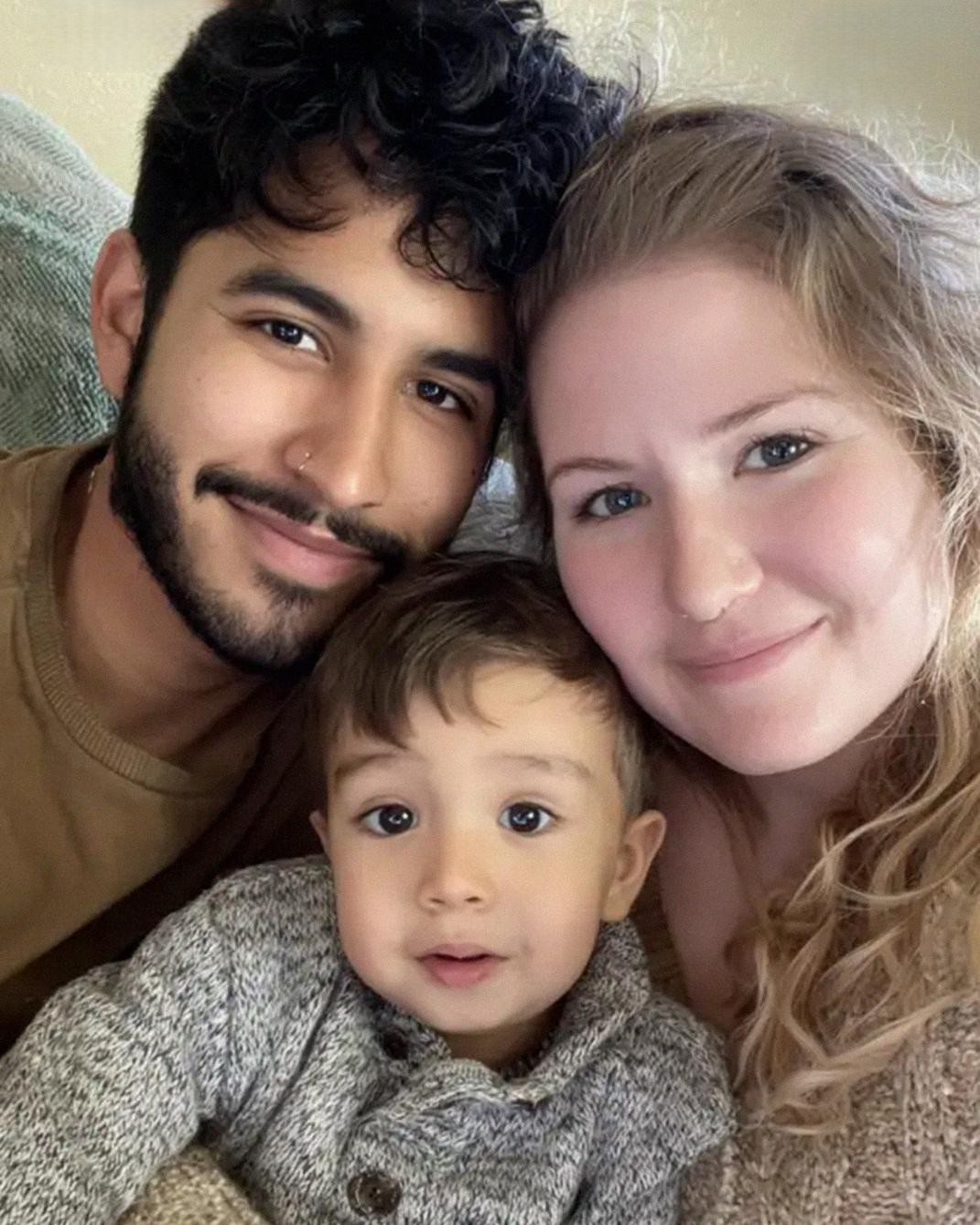
For three years, I occupied a quiet corner of my own life, a ghost in the conversations of my husband’s family. When I married Luis, I inherited a vibrant, loud, and deeply tight-knit extended family. I also inherited their assumption that because I was a blonde, blue-eyed American, the Spanish language was an impenetrable fortress to me. They never asked, and I never corrected them. At first, it was a social experiment; I wanted to see who they were when they weren’t performing for the “gringa” daughter-in-law. But as the years passed, it became a heavy, secret armor I wore to every Sunday dinner and holiday gathering.
I listened as my mother-in-law, Sofia, criticized the way I seasoned my chicken, calling it “bland as paper.” I listened as my sisters-in-law whispered about the weight I struggled to lose after my son, Mateo, was born. I heard the micro-aggressions and the blatant dismissals of my parenting, all delivered in a tongue they thought I couldn’t decipher. I smiled, I nodded, and I pretended to be the oblivious wife, while inside, I was documenting every slight.
However, a mild annoyance turned into a life-altering betrayal last Christmas. I was standing at the top of the stairs, the plastic weight of the baby monitor in my hand, when the house fell into a momentary lull. From the living room below, Sofia’s voice drifted up, sharp and conspiratorial. She wasn’t talking about my cooking this time.
“She still doesn’t know, does she? About the baby,” Sofia whispered in Spanish.
My heart hammered against my ribs. I froze, pressing my back against the hallway wall. My father-in-law, Carlos, gave a dry, dismissive chuckle. “No. And Luis promised not to tell her. He knows it would be a disaster.”
“She can’t know the truth yet,” Sofia continued, her voice dropping to a hiss. “And I’m sure it won’t be considered a crime. We did what we had to do to protect our blood.”
I felt a coldness spread through my limbs that had nothing to do with the winter air outside. They weren’t talking about a surprise party or a family secret from the past. They were talking about Mateo—my three-year-old son who was currently sleeping in the room behind me. The “truth” they were hiding felt like a physical weight, crushing the air out of my lungs.
I waited until Luis came home that evening. He walked in with his usual boyish charm, whistling as he hung up his coat, completely unaware that the foundation of our marriage had just cracked. I didn’t greet him with a smile. I led him upstairs, closed the bedroom door, and turned to face him with a coldness that wiped the grin off his face.
“What are you and your parents hiding from me about our son?” I asked, my voice dangerously level.
Luis blinked, his eyes darting to the door. “Sandra, what are you talking about? You’re acting strange.”
“Don’t play the fool, Luis. I heard them today. I heard your mother talking about ‘the truth’ and a ‘crime’ regarding Mateo. I heard that you promised to keep it from me.”
The color drained from his face so quickly it was as if a plug had been pulled. He stammered, trying to find a lie that would fit the moment, but I didn’t give him the space. I dropped the bomb I had been carrying for three years.
“I speak Spanish, Luis. I’ve understood every single word your family has said about me for three years. Every insult, every joke, every critique. And I understood exactly what your mother said today. So, you have ten seconds to tell me what you did to my son.”
Luis collapsed onto the edge of the bed, his head in his hands. The silence stretched until he finally whispered the words that broke my heart. “They did a DNA test.”
I stared at him, the absurdity of the statement failing to register at first. “A DNA test? On Mateo?”
He nodded miserably. “Last summer, when they stayed with us. They took hair from his brush. They took mine, too. They sent it to a private lab. They weren’t sure he was mine because he… because he looks like you. The light hair, the blue eyes. They didn’t think it was possible.”
The betrayal was multifaceted. There was the violation of my son’s privacy, the absolute lack of trust in my fidelity, and the gut-wrenching realization that my husband had known about this for months and chosen to protect his parents’ comfort over my right to the truth.
“They told me at Thanksgiving,” Luis confessed, his voice trembling. “They had the papers. It confirmed he’s mine, Sandra. I was angry, I swear I was, but they begged me not to tell you. They said it would only cause pain since the result was what we wanted anyway.”
“What we wanted?” I hissed. “You mean what they needed to satisfy their prejudice. They treated me like a criminal and a liar in my own home, and you let them sit at our table and kiss our son while they held that secret over my head.”
“They were trying to protect me,” he argued weakly.
“Protect you from what? The truth? The truth is that I have been a faithful wife and a good mother, and your parents are monsters who violated our family. And you, Luis, you are a coward for letting them.”
The argument that followed was the most honest we had ever had. For the first time, I didn’t hide behind a smile. I told him about the three years of insults I had endured in silence. I told him how it felt to realize that his loyalty had a threshold, and that threshold was his mother’s disapproval. I told him that our marriage was currently a hollow shell, and if he wanted to save it, the era of him being a “peacekeeper” was over. He had to be a husband.
To his credit, the shock of my linguistic reveal and the depth of my fury seemed to wake him up. The following week, after his parents had returned to their own home, Luis finally made a stand. He called them and, for the first time in his life, set a boundary that didn’t have a backdoor. He told them he knew what they had done, that I knew as well, and that their access to Mateo was now conditional on a level of respect they had never shown me.
I watched him find his backbone, but the wounds didn’t heal overnight. I realized that my own silence had been a mistake. By pretending not to understand, I had allowed their toxicity to grow unchecked. I had thought I was being the “bigger person,” but I was really just a victim who was well-informed.
Now, things are different. When we visit his family, I no longer nod and smile. I speak Spanish fluently and pointedly. The room goes quiet when I enter, a delicious and deserved awkwardness hanging in the air. Sofia tries to be warmer now, her gifts for Mateo more frequent and her tone more conciliatory, likely out of fear that I will cut her off entirely.
I haven’t decided if I will ever truly forgive them. Some betrayals are too deep for a simple apology to reach. But I have learned a vital lesson about power and silence. I am no longer the guest in my husband’s life, waiting for his family’s approval. I am the architect of my own family. And the next time someone speaks in a tongue they think I don’t understand, they should be very careful—because I am always listening, and I am no longer afraid to answer back.