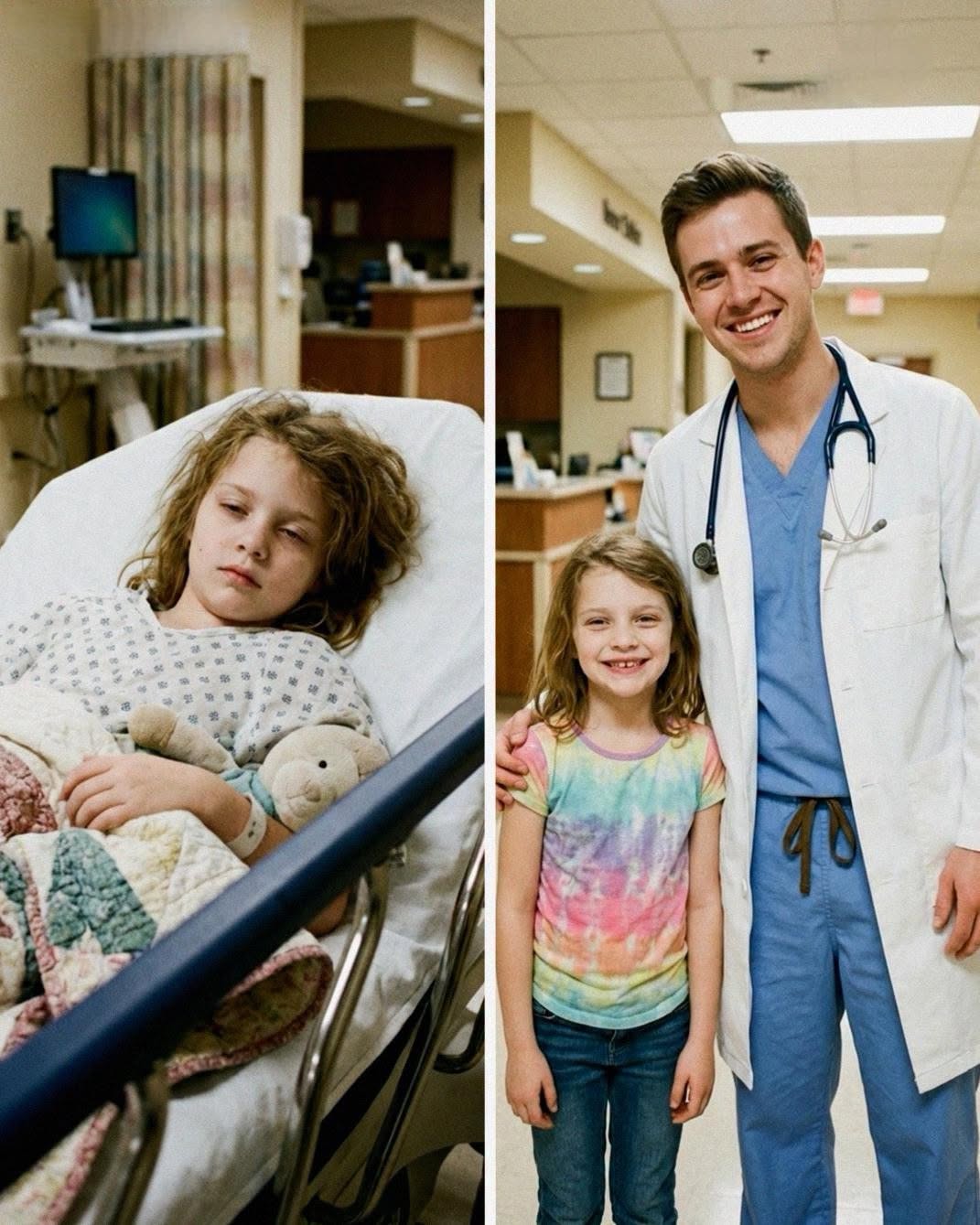
For as long as I can remember, my life has been a series of calculated steps leading toward a single goal: wearing the white coat. I am Jacob, and my journey to becoming a physician wasn’t fueled by a vague childhood dream, but by a relentless obsession with the mechanics of healing. Yet, all the years of late-night studying and anatomical diagrams did nothing to settle the storm in my stomach as I stood before the sliding glass doors of the emergency room on my very first day. I adjusted my coat, hoping the starch would hide my trembling hands, and walked in with a single mantra playing on a loop in my mind: do not mess this up.
The transition from the quiet of the morning to the chaos of the ER was instantaneous. A stretcher blurred past me, accompanied by the rhythmic shouting of vital signs and the frantic squeak of rubber soles on linoleum. In the center of the storm was a girl no older than seven, her skin a ghostly shade of porcelain, surrounded by a team of veteran doctors fighting a losing battle to revive her. The monitors were a frantic orchestra of uneven beeps, and in the corner, the girl’s mother stood in a state of silent, vibrating grief. One of the senior physicians, a man whose presence commanded the room, shouted that they were losing her.
In that moment, something shifted in my perception. It wasn’t a grand revelation, but a tiny, discordant detail that refused to align with the standard protocol they were following. Before my brain could tell my heart to be afraid, I stepped forward and told the room that they were looking at the wrong thing. The air seemed to vanish from the room as several heads turned, including that of Dr. Keller, the senior physician in charge. My throat felt like it had been clamped shut, but I forced the words out, insisting that a small, overlooked detail was the reason their interventions were failing. Keller stepped aside, his eyes narrowed, and challenged me to show him.
Up close, the discrepancy was undeniable. Her breathing rhythm was inconsistent with the initial diagnosis, and there was a sharp, chemical odor clinging to her clothes—something reminiscent of industrial cleaning solvent. I directed the team to re-examine her airway and order an immediate toxicology screen, arguing that this wasn’t a standard respiratory failure. Keller stared at me for a heartbeat that felt like an eternity before nodding. The shift in treatment was immediate, and within minutes, the mother let out a strangled gasp as the girl’s fingers twitched. Color flooded back into her cheeks, and the monitors steadied into a triumphant hum. Keller looked at me and admitted that without my intervention, the girl would have been lost. I walked away that night feeling the heavy weight of success, unaware that the real mystery was just beginning.
I collapsed into bed, the adrenaline leaving me hollow and exhausted, but my sleep was short-lived. A thunderous pounding at my door jerked me upright in the darkness. I stumbled to the entrance to find a man in a sharp uniform staring back at me. It was the local sheriff, his face a mask of grim determination. He asked if I was the doctor who had treated the girl the day before, and when I confirmed it, he took a step into my home and told me we needed to talk about what I had done to her. My blood ran cold, assuming I had somehow committed a career-ending error.
Sheriff Boone settled onto my couch and revealed a pattern that turned my triumph into terror. The girl I saved, Kelly, was not an isolated case. Over the past several months, five other children had entered the hospital with vague symptoms, only to fall into unresponsive comas that no doctor could explain. They came from different schools and neighborhoods, but they all followed the same trajectory of decline. Boone’s voice broke as he admitted the final piece of the puzzle: his own son was one of the five children currently lying in a vegetative state in the pediatric wing. He wasn’t there to arrest me; he was there because I was the only person who had achieved a different result.
Sleep was impossible after that. By seven in the morning, I was back at the hospital, but I wasn’t in the ER. I was in room 214, standing over Boone’s son. As I meticulously reviewed the boy’s chart, I found the same gaps and missed details that had nearly killed Kelly. I moved from room to room, checking all five cases, and a chilling realization began to take shape: this wasn’t a medical mystery; it was a sequence. Every single one of these children had been admitted under the primary care of Dr. Keller.
As I exited the final room, I found Keller standing in the doorway, his silhouette blocking the light from the hall. He asked why I was there so early, his tone casual but his eyes as hard as flint. I lied, claiming I was just trying to familiarize myself with the ward, and he offered a curt nod of approval before walking away. But the interaction felt like a warning. I spent the rest of my shift moving like a ghost, acting as if everything were normal while I quietly interviewed the staff. The reaction was always the same: when Keller’s name was mentioned, nurses stiffened and residents looked away. It was a wall of institutional silence built on the fear of challenging a powerful man.
Finally, a nurse named Erica pulled me into the shadows near the supply entrance. Her voice was a mere whisper as she told me she had seen Keller handling initial medications personally—a task usually left to the nursing staff. She suspected he was administering something to the children during intake, but she lacked the proof to destroy a man of his stature. That night, I met Boone at a nearby diner and laid out the evidence. The financial records, the intake notes, and the consistent missed details pointed to a single, horrifying conclusion.
The following morning, the hospital was rocked by the sight of Sheriff Boone and two deputies escorting Dr. Keller out in handcuffs. The investigation had uncovered a web of financial records showing massive insurance payouts tied to extended care cases. Keeping the children in comas wasn’t just a medical failure; it was a business model that generated a fortune in long-term facility fees. With the predator removed, the focus shifted back to the victims. Boone looked at me and told me to do whatever it took to bring them back.
I started with Boone’s son, applying the same toxicology-focused treatment I had used in the ER. I adjusted the medications, monitored the levels with obsessive precision, and waited. Minutes felt like hours until the boy’s fingers moved, and his eyes fluttered open to find his father waiting. One by one, the other four children followed, waking up from a nightmare they never should have been in. The ward, once a place of silent despair, was suddenly filled with the sounds of weeping parents and the groggy voices of recovering children.
Becoming a doctor taught me that the job isn’t just about the vast library of knowledge we carry in our heads. It’s about the courage to trust your instincts when something doesn’t feel right, regardless of whose ego is on the line. I realized that the true essence of medicine lies in the details that everyone else is too busy or too afraid to see. As I look at the empty beds in the pediatric wing and the criminal charges filed against a man who traded lives for profit, I know that I am finally ready for the responsibility of the coat. The first day was a lesson in saving a life, but the days that followed were a lesson in saving a community.