After the wreckage of a failed marriage and a string of relationships that felt more like temporary shelters than permanent homes, I had finally resigned myself to the quiet dignity of a life lived alone. By the age of sixty, I believed that the chapter of my life titled “Romance” had been permanently closed and archived. I had my routines, my church community, and a hard-won peace that didn’t depend on anyone else’s presence. Then I met Nathan. He didn’t arrive with the thunderous intensity of a Hollywood leading man; instead, he arrived with the steady, rhythmic persistence of a heartbeat. As a pastor, Nathan carried a gravitas that commanded respect, but it was his ability to listen—truly listen—that dismantled my defenses. He was a man who had known loss, having survived two previous wives, and in his quiet steadiness, I thought I had finally found a love that was built to last.
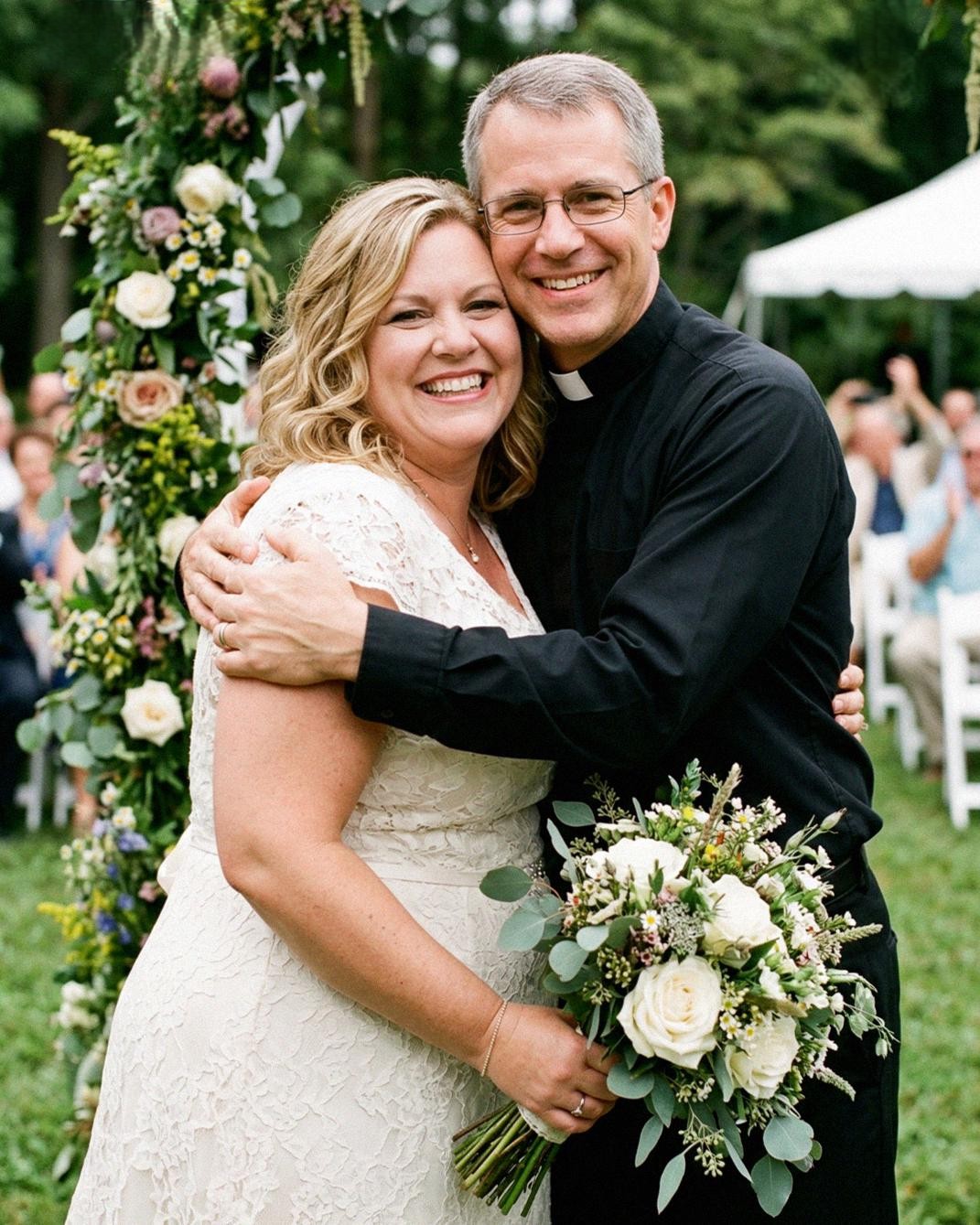
Our wedding was a testament to simplicity and late-blooming hope. It was a small gathering of those who had watched us move from cautious coffee dates to a deep, spiritual partnership. As we stood before our congregation, I felt a sense of arrival that I hadn’t experienced in decades. I believed, perhaps naively, that the shadows of our pasts had finally been chased away by the candlelight of our union. But that evening, as we returned to the house that was now “ours,” the air shifted. The domestic warmth I expected was replaced by a sudden, clinical chill. When I walked into the bedroom, Nathan wasn’t the joyful groom I had seen at the altar. He was a man possessed by a rigid, terrifying solemnity.
Standing in the center of the room, still clad in his wedding suit, Nathan looked through me rather than at me. Without a word, he produced a small, weighted key from his pocket. My heart hammered against my ribs as I watched him unlock the bottom drawer of his nightstand—a drawer he had kept strictly off-limits during our engagement. He pulled out a thick envelope with my name, “Mattie,” scrawled across the front in his elegant, practiced script. “Before we go any further,” he said, his voice dropping to a haunting register, “you need to know the whole truth. I’m ready to confess what I’ve done.”
My mind immediately spiraled into the dark corners of suspicion. Was he a criminal? Was his ministry a facade? But the truth was far more psychologically complex. As I unfolded the letter, the first line hit me like a physical blow: “I don’t know how I’ll survive losing you too, Mattie.” The letter wasn’t a confession of a crime; it was a preemptive obituary. It was a detailed, heart-wrenching account of his grief for me—a woman who was standing right in front of him, alive and healthy. Nathan wasn’t loving me in the present; he was already mourning me in a future he had constructed out of his own trauma.
The realization was suffocating. I wasn’t his wife; I was his next tragedy. Nathan had been married twice before, and both times, death had robbed him of the chance to say what mattered. To cope with that unbearable regret, he had developed a twisted ritual: he wrote final letters to his wives while they were still alive, pouring his heart into “goodbyes” so he would never be caught unprepared again. He had turned our marriage into a countdown. Stunned and feeling like a ghost in my own home, I grabbed my coat and fled into the night. I found myself sitting in the front pew of our empty church, the letter trembling in my hand. I realized that Nathan’s “steadiness” wasn’t strength; it was the rigidity of a man bracing for an impact he was certain was coming.
When Nathan eventually found me at the church, he didn’t apologize. He invited me to the one place where his behavior made sense: the cemetery. We drove in a silence that felt like a funeral procession. Standing before the graves of his first two wives, Nathan finally stripped away the pastoral mask. He confessed that his first wife had suffered through a long illness, and in his fear, he had stayed silent, “protecting” her with a stoicism that left her lonely in her final hours. His second wife had been taken in an instant, leaving him with a mountain of unspoken words. These letters—including the one he wrote for me—were his armor. He believed that by grieving me now, he could protect himself from the agony of the eventual silence.
But love cannot breathe inside a tomb. I looked at my husband, a man who was so afraid of the end that he was refusing to experience the beginning. “I can’t be someone you’re already grieving, Nathan,” I told him, my voice echoing off the gravestones. “If you’re so afraid of losing time, stop living like it’s already gone. I won’t stay in a house where I’m treated like a memory before I’ve even had a chance to stay.” It was a moment of absolute clarity. In his attempt to honor his past, Nathan was actively murdering his future. He was wasting the very time he claimed to cherish by spending it in a state of perpetual mourning.
Statistics on marriage and late-life unions often focus on the logistics of merging lives—finances, health, and companionship. According to the U.S. Census Bureau, approximately 20% of adults over the age of 65 have been married two or more times. However, the psychological statistics are more staggering; men are statistically more likely to remarry quickly after the loss of a spouse, often driven by a profound struggle with the “widower’s loneliness.” For a man like Nathan, who had experienced this twice, the trauma of loss had created a “grief reflex” that triggered the moment he allowed himself to feel affection. He was part of a demographic that often carries unresolved PTSD into new relationships, mistakenly believing that preparation is the same as protection.
We returned to the house, but the atmosphere had fundamentally changed. The locked drawer remained open, a symbol of the choice that now lay before us. Nathan stepped toward me, and for the first time that night, his eyes were focused on the present. He admitted that by loving me like I was about to go, he had already been losing me. He made a vow that night—not the formal one he had recited at the altar, but a raw, human one. He promised to stop writing endings and start living in the middle.
I chose to stay, but not to comfort him. I stayed to challenge him. I stayed to teach a man of God that faith isn’t about bracing for the dark; it’s about standing in the light while you have it. We took the letters—the ones for me and the ones he’d kept for the others—and we didn’t burn them. We moved them out of the nightstand and into a storage box in the attic. They became part of the history we acknowledged, but they were no longer the script for our future. That night, as the sun began to peek over the horizon of our first day as a married couple, we finally began our life together. Nathan stopped being a widower-in-waiting and finally became a husband. We learned that the most profound act of courage isn’t preparing for the end; it’s having the audacity to be happy right now.