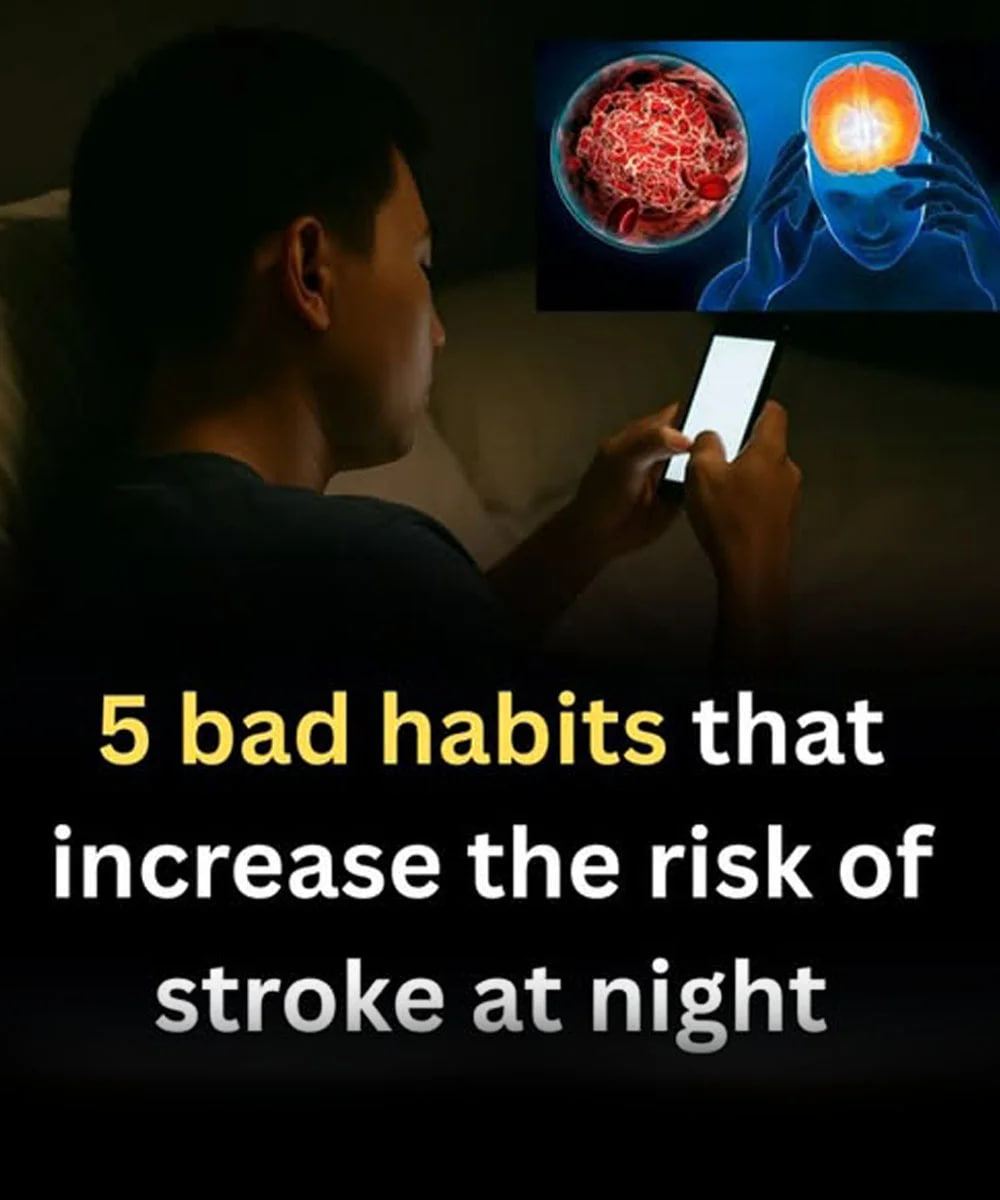
Many people believe strokes only happen during the day, but the truth is that a Stroke can occur at any time — even while you’re asleep. Certain evening habits may quietly increase the risk by affecting blood pressure, circulation, and heart function during the night.
Here are five common habits that may raise the risk of a nighttime stroke.
1. Eating Heavy or Salty Meals Late at Night
Consuming large meals late in the evening forces your body to work harder while it should be resting. Foods high in salt can also raise blood pressure, which is one of the biggest risk factors for Stroke. When blood pressure spikes overnight, the risk of a blood vessel rupture or clot increases.
2. Drinking Alcohol Before Bed
Many people think alcohol helps them sleep better, but it actually disrupts sleep patterns and can increase blood pressure and heart rhythm problems. Excessive drinking before bed can increase the likelihood of cardiovascular problems, including Stroke.
3. Smoking Late at Night
Nicotine causes blood vessels to narrow and raises blood pressure. Smoking right before going to sleep reduces oxygen flow to the brain and increases the chances of clot formation while the body is resting.
4. Sleeping Too Little or Too Much
Sleep plays a vital role in maintaining heart and brain health. Chronic sleep deprivation — or extremely long sleep durations — can disrupt the body’s natural rhythm and increase the risk of conditions linked to Stroke, including high blood pressure and diabetes.
5. Ignoring Warning Signs
Many people experience warning symptoms before a stroke but dismiss them. Symptoms like sudden dizziness, numbness on one side of the body, severe headache, or blurred vision should never be ignored. These may signal a mini-stroke, known medically as Transient Ischemic Attack, which often occurs before a major stroke.
Final Thoughts
While these habits do not guarantee that someone will have a stroke, they can significantly increase the risk over time. Maintaining healthy evening routines — such as eating lighter dinners, avoiding alcohol and cigarettes, and getting consistent sleep — can help protect your brain and heart health.
If you ever notice sudden symptoms like weakness, confusion, or trouble speaking, seek medical attention immediately. Early treatment can save lives and prevent permanent damage.