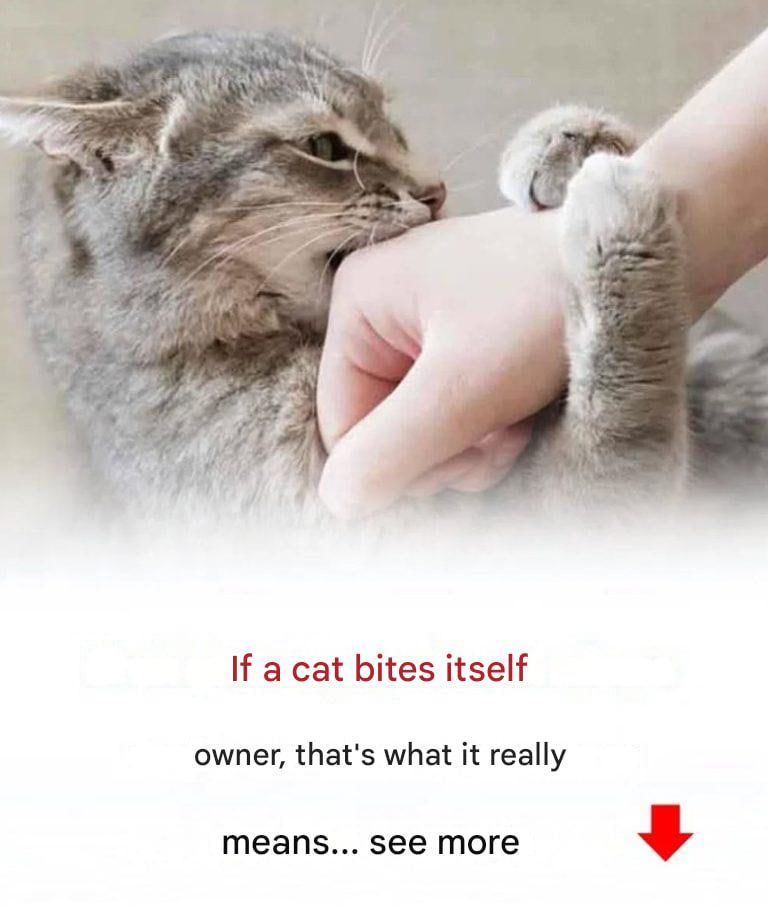
Cats, though they may seem mysterious and independent at first glance, possess an incredibly rich body language and behavior. One of these—and often misinterpreted—is biting their owner. Is it a sign of aggression? Has it stopped loving you? Or is it a sign that something is wrong? Here’s what might be behind a cat bite.
1. “I love you… but enough is enough!” — a playful (and irritating) bite
This is one of the most common surprises for owners: a cat approaches to cuddle, purrs, lets itself be petted… and suddenly bites! This moment is known as overstimulation biting.
Cats have very sensitive skin, and sometimes too much contact is simply uncomfortable for them. A bite is their way of saying, “That’s enough, I’ve had enough.”
Tip: Pay attention to subtle warning signs: faster tail twitching, twitching ears, tense muscles. These are signs that it’s time to stop petting your cat.
2. Playing with predatory instinct
A cat can perceive its owner’s hand as a moving target, prey to be hunted. If you play with your cat using your hands instead of toys, you are teaching it that it’s okay to bite.
Tip: Use rope toys, fishing rods, or plush toys, not your hands. Let your cat satisfy its hunting instincts in a controlled way.
3. Mood disorders or pain
Sudden aggressive behavior in a previously calm cat can indicate pain or illness. Biting can be a form of defense if something is causing physical discomfort, such as a toothache, joint pain, or an infection.
Tip: If your cat suddenly starts biting for no apparent reason or avoids physical contact, consult a veterinarian.
4. Fear and stress
Cats can be very sensitive to change: a new family member, a move, a different scent on you. In a stressful situation, a cat may react by biting in self-defense.
Tip: Provide your cat with a safe space and don’t force contact. Give it time and observe its signals.
5. A sign of dominance? Probably not.
Contrary to popular belief, cats don’t bite to “dominate” their owners. Feline behavior isn’t based on a hierarchy like that of dogs. Biting is a form of communication, not a sign of control.
How to react if your cat bites you?
Do not yell or physically punish; this will only increase fear or aggression.
Ignore your cat and break off the interaction; let him know that biting is game over.
Provide him with the right stimulation: your cat needs exercise, toys, and challenges.
Summary
A cat bite doesn’t necessarily mean hatred; it’s often an expression of emotion, stress, or unmet needs. Understanding feline language and respecting their boundaries is key to a harmonious relationship. A cat doesn’t say “I love you” directly; it says it by purring, rubbing against you… and sometimes even with a little nip.