Under the Boat
I started noticing strange things about my granddaughter, Emma, whenever her mother was around. She would go quiet—not just peaceful quiet, but the kind of stillness prey animals adopt when a predator enters the clearing. Her shoulders would tense up, pulling toward her ears, and she wouldn’t make eye contact with anyone.
At eight years old, Emma was showing all the classic signs of deep-seated fear, but she wouldn’t tell me why. She loved me, I knew that. But fear has a way of silencing even love.
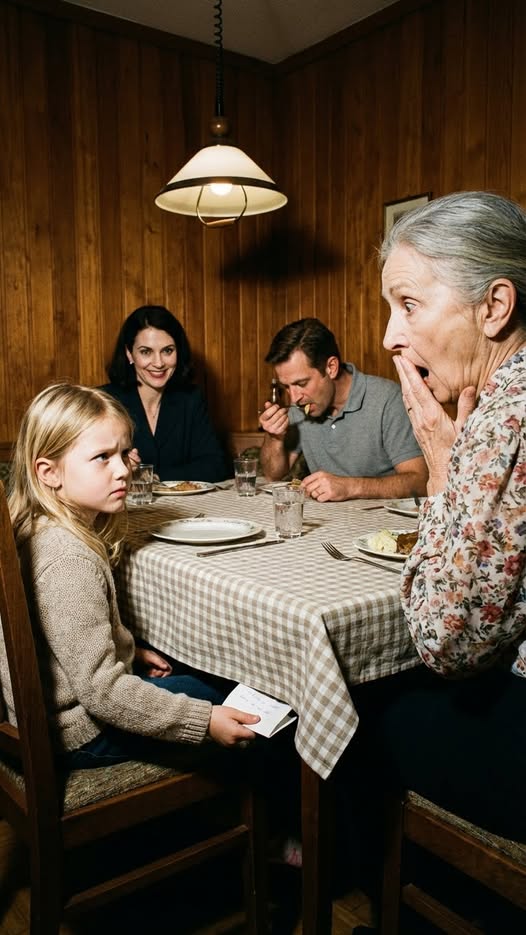
Then, one evening at our usual Sunday dinner, when no one was paying attention to the little girl at the end of the table, she slipped a folded piece of paper into my hand under the tablecloth. Her fingers were ice cold and trembling violently.
I waited until I was alone in my kitchen, the taillights of my son’s truck fading down the street, to read it.
Grandma, look under the boat in the garage. Then you’ll understand.
My heart hammered against my ribs. I went to the garage, flashlight in hand, to check.
And I screamed when I saw what was hidden there.
The moment Jason’s truck had pulled into my driveway that Sunday evening, I felt it in my gut. A low, vibrating unease that settled in the pit of my stomach. These Sunday dinners had become our routine since my husband, Robert, passed away three years ago. But tonight, as Jason climbed out of the driver’s seat and his wife, Melissa, emerged with her practiced, porcelain smile, I couldn’t shake the feeling we were going through the motions of something already dead.
Then I saw Emma.
My granddaughter had always been pure sunshine—wild curls that defied gravity, scraped knees from climbing trees, and an unstoppable energy that usually resulted in her racing through my front door straight into my arms.
But the child who slid out of the backseat was someone I barely recognized.
She had lost weight, her favorite blue dress hanging loose on her frame. Dark, bruised circles shadowed her eyes, making them look too big for her face. She moved with hunched shoulders, making herself small, as if she were trying to disappear entirely. Eight years old, and she already looked haunted.
“Mom.” Jason’s voice was flat as he kissed my cheek. No hug. No warmth. My own son wouldn’t meet my eyes, focusing instead on a spot somewhere over my left shoulder.
“Come in,” I said, forcing a smile I didn’t feel. I reached for Emma. “Hey there, Sweet Pea.”
She flinched.
Actually flinched when I touched her shoulder. Then, realizing what she had done, she caught herself and offered a trembling, fragile smile that broke my heart into pieces.
Dinner was suffocating. I had made all of Emma’s favorites: pot roast with the carrots she loved, mac and cheese with extra cheddar, and Robert’s famous cornbread recipe. But she barely touched her plate. She sat rigid, her fork moving food around in circles, creating paths through the cheese sauce without taking a bite.
Melissa dominated every conversation. She talked about the weather, the neighbors, the price of gas—anything to fill the silence.
“Emma is doing wonderfully in school,” Melissa announced, cutting her roast with surgical precision. “Her teacher says she is so well-behaved. So quiet.”
Quiet. Emma had never been quiet a day in her life.
Jason pushed his green beans around his plate, nodding at whatever his wife said like a bobblehead doll, but never engaging. The boy who would talk your ear off about baseball stats or engine repair had disappeared, replaced by this hollow shell of a man.
During dessert—peach cobbler—Melissa’s hand moved to Emma’s shoulder.
The child went absolutely still. Like a rabbit freezing before a hawk dives. Melissa’s fingers pressed down, not hard enough to leave marks, I suspected, but with clear intent. A reminder. A warning.
“Emma, tell Grandma about your new bedtime routine,” Melissa purred.
“I go to bed at 7:30 now,” Emma whispered, her eyes locked on her bowl. “Mom says I need more sleep.”
Seven-thirty? What eight-year-old went to bed that early in the endless twilight of a Florida summer?
“That’s quite early,” I said carefully, testing the waters.
“Children need structure, Margaret,” Melissa said. The way she used my first name felt deliberate. Cold. “Jason and I provide that stability. Haven’t we, honey?”
Jason nodded, staring at the tablecloth. “Yeah. Structure is important.”
I wanted to shake him awake. I wanted to grab him by the collar and scream, Look at your daughter! Look at what is happening! But what could I say? What could I prove? On the surface, they looked fine. Only Emma’s haunted eyes told a different story.
The moment came during one of Melissa’s monologues about her garden club. Emma’s small hand found mine under the table. A piece of paper pressed against my palm. Her fingers trembled as she released it, then pulled back quickly, her face carefully blank.
I closed my fist around the note.
When they left an hour later, Emma turned at the last second before climbing into the truck. Our eyes met. The desperation in that look, the raw, terrified plea, hit me like a physical punch.
Then Melissa’s hand landed on her shoulder, guiding her firmly into the backseat, and the moment shattered.
I stood in my driveway until the taillights disappeared around the bend. Only then did I open my hand.
The note was crumpled, written in Emma’s careful second-grade handwriting. Some letters were shaky, the pencil lines faint.
Grandma, look under the boat in the garage. You’ll understand.
I read it three times. My heart hammered a frantic rhythm against my ribs. What was under that boat? And why was my granddaughter so terrified she had to sneak me a note like a prisoner of war?
The rational part of my brain said, “Wait until morning. It’s dark. You’re tired.” But the instinct that had never led me wrong—thirty years as an ER nurse had taught me to trust my gut—said otherwise.
I grabbed the heavy flashlight from my kitchen drawer and headed for the garage.
Some things couldn’t wait until morning.
The garage was dark and cold, smelling of oil and old dust. I clicked on my flashlight, and the beam cut through the gloom, landing on the cabin cruiser sitting on its trailer. The Steady Bob. Twenty-five feet of memories I couldn’t bear to take out after Robert passed.
Now, it was hiding something Emma had risked everything to warn me about.
I climbed aboard, the fiberglass creaking under my weight. I started searching. Storage compartments? Empty. Under the captain’s chair? Nothing.
Then I saw the life jackets piled in the corner of the stern, tossed carelessly. That wasn’t right. Robert was a stickler for organization, and I had kept them folded and stowed just as he taught me. Someone had been here recently.
I lifted the orange foam vests and my breath caught in my throat.
A black duffel bag was wedged into the corner, hidden deliberately. My hands shook as I unzipped it.
The first things I saw were IDs. Driver’s licenses, credit cards, social security cards. All with Melissa’s face, but different names.
Melissa Warren. Melissa Drake. Melissa Carter.
Three identities. Maybe more. Who exactly had my son married?
Then I found the notebook. It was a small, spiral-bound thing, innocent-looking. But what was inside made my heart sink into my stomach.
The first page was a spreadsheet in tight, precise handwriting.
Margaret Morrison House: $500,000.
Life Insurance: $300,000.
Savings/Investments: $400,000.
Total: $1.2 Million.
My life, reduced to numbers. My legacy, quantified for liquidation. But why?
I flipped the page, and my world fell apart.
Timeline: 4-6 Months.
Method: TBD. Slip and fall or medication interaction.
They were planning something. Something that would look like an accident. An old woman slipping on a wet floor. An old woman taking the wrong pills.
The next pages detailed my daily routine. My medications. My Thursday morning walks. Times I was alone. Every vulnerable moment cataloged like I was a specimen being studied for dissection.
But here is what broke me.
The handwriting changed. Some sections were in that precise script I assumed was Melissa’s. Others were looser, more hurried. And one note, in that second hand, read:
We need to move faster. She suspects something.
We. Not just Melissa. Someone else. Someone who knew my routines, had access to my home, knew where I kept my spare keys.
No. Please, God, no. Not Jason.
My son was involved in this. The son I had raised was part of these plans to end me for money. I couldn’t breathe. The air in the garage felt thin, insufficient.
Then instinct kicked in. Evidence. Document everything.
I pulled out my phone and photographed it all. Every fake ID. Every page of that notebook. The camera shutter clicked rapid-fire in the quiet garage, loud as gunshots to my ears. I uploaded everything to the cloud immediately, then texted Marcus, a former Tampa PD detective and an old friend of Robert’s.
Found something serious. Evidence attached. If anything happens to me, you know what to do.
His response came immediately: Calling you now.
I silenced my phone. I needed to focus.
Car doors slammed outside.
My blood turned to ice. Jason’s truck engine cut off in my driveway. They had come back.
My heart hammered against my ribs as I shoved everything back into the bag, crammed the life jackets over it, and scrambled off the boat. I turned off my flashlight just as I heard voices outside.
Jason. Melissa. Footsteps crunching on gravel, coming toward the garage side door.
I stood frozen in the darkness, the evidence burning in my pocket in digital form. While the people who had plans for my death walked toward the door, the main garage door began to rumble.
Light spilled across the concrete floor, creeping toward the boat like a warning I couldn’t escape.
The garage door swung open, and headlights flooded the space, forcing me to squint against the glare. Jason and Melissa stepped inside, their shadows stretching long and distorted across the concrete. The truck engine ticked in the silence behind them.
I stood by the boat, phone in hand, trying to look steadier than I felt.
“Mom?” Jason’s voice sounded too normal. “What are you doing out here?”
I tested them.
“Emma asked me to check on something,” I said.
Melissa’s eyes narrowed just for a heartbeat—a flicker of pure reptilian calculation—before her pleasant mask returned. But I had seen it. She knew Emma had talked.
No point dancing around it. I held up my phone, showing the photo of the notebook on the screen.
“I’ve already backed this up,” I said, my voice hard. “Already sent it to people who know what to do with it.”
Jason tried to laugh. The sound came out strangled, pathetic. “Mom, come on. You must be confused. It’s dark.”
“Confused about the IDs?” I asked. “The notebook with my assets and your timeline? The notes on my routine written in two different hands?”
Melissa moved closer, shifting tactics seamlessly. Her voice dropped to that patronizing tone people use with toddlers and the senile.
“Margaret, have you been feeling alright? Sometimes, at your age, memory issues can be concerning. Even early dementia can cause paranoia.”
“My memory is fine,” I said, keeping my eyes on both of them. “I know exactly what I saw. All of it backed up and sent to a former detective.”
That was when I really looked at Jason. My son. The boy I had raised on that boat behind me. His body language told me everything I needed to know. Shoulders hunched, arms crossed tight over his chest, eyes darting to Melissa like he needed permission to breathe. Every defensive posture in the book.
Then his mask slipped. Just for a second, I saw desperation and guilt flicker across his face before he shut it down.
My son wasn’t a victim. He was a willing participant. The betrayal hit harder than any slap could have.
“Jason,” my voice cracked. “Tell me I’m wrong.”
He opened his mouth, closed it, and looked at Melissa. That was all the answer I needed.
Melissa grabbed his arm hard enough to make him wince. “We should go. Your mother needs rest. She’s clearly agitated.”
“My mental state is perfectly clear,” I said. “Clear enough to recognize what you are planning. And clear enough to make sure I am protected.”
Melissa’s pleasant facade cracked. Her smile turned cold, razor-sharp.
“Protected?” she sneered. “Interesting, Margaret. Because from where I’m standing, you are a sixty-three-year-old woman living alone in the country. So many things could go wrong. Accidents happen all the time.”
The threat hung between us, heavy and suffocating. She tugged Jason toward the door. He followed like a puppet on a string. He didn’t look back. He didn’t say a word.
I stood there until the truck backed out and the sound faded completely into the night. Only then did I sink onto the boat’s stern, my legs unable to hold me.
My son was helping that woman plan something that would end with me gone. For money. For everything I had worked for, everything meant for Emma.
They weren’t going to stop. Melissa’s threat made that clear. This wasn’t going to end with them backing down.
This was war.
The phone buzzed. Marcus, trying to call again. This time, I answered.
“Marcus,” I said, my voice rough with unshed tears. “I need your help.”
I didn’t sleep that night. How could I? Every time I closed my eyes, I saw that notebook. My son’s handwriting mixed with hers. The cold calculations. Four to six months. That was how long they had planned to let me live.
By dawn, I was on a video call with Marcus.
“Show me everything,” he said, his face grim on the screen.
I pulled up the cloud folder: photos of the fake IDs, the notebook pages, the spreadsheet. Marcus’s jaw tightened as he scrolled through each image.
“This is bad, Margaret. Really bad,” he muttered. He zoomed in on one of the IDs. “Melissa Carter… but look.”
He opened another window on his end, typing fast. “I ran her name through public records last night after you texted. Three years ago, she married your son as Melissa Carter. Clean record. But something felt off, so I dug deeper into the alias.”
My chest tightened. “What did you find?”
“Five years ago, in Arizona, there was a Melissa Warren. Married a seventy-two-year-old man named Robert Warren, a retired executive worth about two million.” Marcus’s voice dropped. “Six months after the wedding, he fell down the stairs at home. Passed away immediately. Ruled an accident.”
The room tilted. I gripped the desk to keep from falling.
“So this is what she does,” I said, my voice hollow. “She finds men—or women—with money, marries into the family, waits, and then… makes it look like an accident.”
Marcus’s eyes were dark with anger. “And Margaret… Jason knows. That notebook you found? His handwriting is all over it. He’s not a victim here. He’s her partner.”
My son. My boy. The kid I taught to tie his shoes, to bake cookies. He was part of this terrible plan.
“I’ve got a contact who can help,” Marcus said. “Daniel Brooks. He’s an attorney, specializes in elder law and financial crimes. He’s seen cases like this before. Let me reach out.”
Within an hour, Daniel called me. His voice was calm, measured.
“Ms. Morrison, Marcus filled me in. I want to help, but we need to move carefully. If they suspect you are building a case…”
“They already know I found the evidence,” I said. “I confronted them last night.”
There was a pause. “Then we need to act fast. I’m clearing my schedule. Can you meet this afternoon?”
“Yes.”
“Good. And Margaret… don’t approach them again. Not alone. If they are willing to carry out these plans, they won’t hesitate to move up the timeline.”
His words sent a chill through me. But before I could respond, my phone buzzed with a text from Jason.
Mom, we need to talk about Emma. She’s been acting strange lately. Withdrawn. Anxious. Melissa thinks she should see a counselor. We’ve scheduled an appointment for next week.
I stared at the message.
Emma. My granddaughter. The brave little girl who had slipped me that note. They weren’t just targeting me anymore. They were going after her. Isolating her. Making sure she couldn’t tell anyone else what she knew. Labeling her as “unstable” so no one would believe her.
My fear turned to something harder. Rage.
I texted back: I’ll talk to her first. Give me some time with her.
But I knew the truth. They wouldn’t give me time, and they certainly wouldn’t let Emma keep talking.
I looked at the phone in my hand, at Marcus’s contact still open on the laptop screen, at the cloud folder with all the evidence. This wasn’t just about protecting myself anymore. It was about saving Emma.
And I was running out of time.
I drove like hell to get to Emma’s school by 3:00 PM. My hands gripped the wheel so tight my knuckles went white. I had to beat them there. I had to get to her first.
When I pulled into the pickup line, my heart was pounding. I scanned the lot. No sign of Jason’s car yet. Good.
Emma came through the doors with her backpack, and the moment she saw me, her whole face changed. Relief? No. Pure, desperate salvation. She ran to the car and climbed in without a word.
“How about some ice cream?” I asked gently.
She nodded fast, her eyes darting to the rearview mirror like she expected them to appear any second. We peeled out before they could show up.
The ice cream shop was bright and loud, full of kids and parents. Safe. Normal. Emma picked chocolate chip, but she barely touched it. Her hands were shaking.
“Sweetheart,” I said softly, leaning across the sticky table. “You’re safe with Grandma. I promise.”
That was when she broke. Tears streamed down her face, and she leaned into me, sobbing quietly so the other families wouldn’t hear.
“Grandma, they’re going to hurt you,” she whispered. “I heard them. Mom said, ‘She’s in the way.’ She said it just like that… like you’re… like you’re nothing.”
My chest ached, but I kept my voice steady. “What else did you hear?”
“Dad owes people money. A lot of money. He told Mom he’d do whatever it takes to get it.” Her voice cracked. “They don’t know I heard. I had to pretend I was asleep. I’m always pretending I’m asleep now.”
Eight years old. And she had been carrying this alone.
“Emma,” I said. “I need to record what you’re telling me to keep you safe. Is that okay?”
She nodded, wiping her eyes with her sleeve.
I pulled out my phone, opened the voice memo app, and hit record. She repeated everything. Her mother’s words. Her father’s desperation. The nights she lay awake listening to them plan.
Legal evidence from my own granddaughter.
When we left the shop, I held her hand tight. “We’re going to fix this, I promise.”
But when I got back to the car, my stomach dropped.
Both front tires were slashed. Deep, clean cuts. Deliberate.
“Stay in the car,” I told Emma, my voice harder than I meant it.
I pulled out my phone and took photos from every angle. Then I called the police.
The officer who showed up was young, maybe thirty. He walked the scene, took notes, wrote up a report. “You have any idea who might have done this, ma’am?”
“I have suspicions,” I said carefully. “But I’d rather have this documented first.”
He handed me a copy of the incident report. “Keep this. And if anything else happens, call us immediately.”
I was still standing there when Jason’s car screeched into the lot. He got out fast, his face twisted with anger.
“You can’t just take Emma like that without telling us!” he shouted.
I stayed calm. Unnaturally calm. “We went for ice cream, but someone slashed my tires while we were inside. Funny coincidence, don’t you think?”
Jason’s face flickered. Guilt? Fear? He glanced at the officer, then back at me. “I don’t know what you’re talking about.”
“Sure you don’t,” I said.
He grabbed Emma’s hand and pulled her toward his car. She looked back at me once, her eyes wide and terrified.
I watched them drive away, my jaw clenched so tight it hurt. That night, my phone buzzed. Unknown number.
Stay out of it, old woman. The next accident won’t be just a tire.
I stared at the screen, my pulse roaring in my ears. They weren’t even hiding anymore. They wanted me to know. They wanted me scared.
But all I felt was rage.
I wasn’t going to fight this alone anymore.
Tuesday of Week Two, I sat in Daniel Brooks’s office in downtown Tampa. The view overlooked the bay, but I couldn’t focus on it. Marcus was there. So were two people I had never met, but already trusted.
Daniel was younger than I expected, forty-five maybe, with sharp eyes and a firm handshake. “Ms. Morrison, Marcus has briefed me. I specialize in elder law and financial exploitation cases. I’ve seen this pattern before.” He paused, his jaw tightening. “My own mother went through something similar. By the time I realized what was happening, it was too late. I won’t let that happen to you.”
The woman beside him extended her hand. “Sarah Bennett, private investigator. I focus on elder abuse cases—financial, physical, psychological. What is being done to you and your granddaughter is textbook predatory behavior.”
We spent the next hour reviewing everything. The photos from the garage. The fake IDs. The notebook with my death timeline. Emma’s recorded testimony. Melissa’s past as Melissa Warren in Arizona. The slashed tires. The anonymous threat.
Sarah’s expression darkened as she listened. “This is elder abuse with clear intent to harm, and they are escalating.”
“What do we do?” I asked.
“We document everything,” Daniel said. “And we build a case so airtight they can’t wriggle out of it.”
For the next two weeks, Sarah worked quietly. She ran surveillance on Jason and Melissa. What she found made my blood run cold.
They were meeting with people I didn’t recognize. Rough-looking men in parking lots and diners. Large cash withdrawals from accounts I didn’t even know Jason had. And they had rented a storage unit outside of town.
“They’re hiding assets,” Sarah explained during our Week Three update. “Probably planning to disappear once you’re gone.”
She had also planted a small audio device near their home—legal since it was outside in a public area. What she overheard confirmed our worst fears.
“Their timeline is accelerating,” Sarah said, playing back a snippet.
Melissa’s voice, cold and clipped: “We need to move faster. She knows too much now.”
Jason’s response was quieter, but just as chilling: “I’ll handle it.”
By Thursday of Week Three, we knew we couldn’t wait any longer.
“We need a recorded confession,” Daniel said. “In front of witnesses. I’ll prepare the legal framework. But Margaret… this is going to be dangerous. If they feel cornered…”
“They might attack me on the spot,” I finished. “I know.”
Sarah leaned forward. “I’ll set up cameras and audio in your home. Hidden, professional grade. And we’ll have the police on standby, ready to move in the second things go south.”
Marcus looked at me. “You sure about this?”
I thought of Emma, her small hand in mine, her voice breaking as she told me she had to pretend to be asleep every night.
“For her,” I said, “I’d risk anything.”
Thursday afternoon, I made the call. Jason answered on the second ring.
“Mom?”
I kept my voice steady, tired, defeated. “Son, I’ve been thinking. Maybe you’re right. Maybe I am making things harder than they need to be.” I paused. “Why don’t you and Melissa come over Friday night? We can talk about transferring the house into your names. I don’t want to fight anymore.”
There was a beat of silence. Calculation. Then Jason’s voice came back, bright and eager.
“Friday works, Mom. That’s… that’s really generous of you. 7:00. We’ll be there.”
I hung up and stared at the phone in my hand. Marcus, Daniel, and Sarah were watching me.
“It’s done,” I said quietly. The trap was set.
I stood at the stove, stirring Robert’s favorite beef stew, and forced my hands to stay steady. Nurse’s discipline. That’s what got me through thirty years in the ER, and that’s what would get me through this.
Sarah had finished installing the cameras and audio equipment an hour ago. Hidden, professional, and perfectly legal under Florida law—I had every right to record in my own home with my consent.
Marcus’s voice crackled through the small earpiece I wore. “We’re getting a clean feed, Margaret. Video and audio streaming to the truck. You’re good to go.”
Outside, Daniel and Sarah sat in a van two houses down. The police were staged two blocks away, ready to move on my signal. And Emma, thank God, was safe at Marcus’s place, far from whatever was about to happen here.
At 6:00 sharp, headlights swept across the driveway. Jason and Melissa arrived, dressed like they were going to church. He wore a button-down. She had on a burgundy dress. They even brought wine.
“Mom.” Jason’s smile was wide and warm. Fake. “Thanks for having us.”
I hugged him—briefly—kissed Melissa’s cheek, and ushered them inside like the gracious hostess I had always been. We made small talk over drinks—the weather, the neighbors, old memories of Jason’s high school football games. I kept my voice light, easy.
“Where’s Emma?” Melissa asked, glancing around.
“Sleepover at a friend’s house,” I said casually. “I figured this conversation should just be us adults.”
I saw it. The way her shoulders relaxed, the flicker of relief in her eyes. No witness. No obstacle. Good.
Dinner was perfect. The stew was rich and comforting.
“This is delicious, Mom,” Jason said, and for a split second, I saw the boy he used to be before the debt. Before her.
I set down my spoon and looked at them both.
“I’ve been thinking a lot lately about getting older. About wanting to simplify things.”
Melissa leaned forward, her expression carefully concerned.
I pulled a folder from the side table and slid it across. “Property transfer documents. You’re my son, Jason. Emma’s my granddaughter. This house, the assets… they should stay in the family.”
Jason’s eyes went bright. His hands actually shook as he opened the folder. “Mom, are you sure?”
Melissa’s mask slipped just for a second. Pure greed. “This is so generous. You won’t regret this decision.”
You won’t regret this. The words hung in the air like a threat.
I poured more wine, my hands steady as stone. The room felt thick, tense. Melissa’s eyes kept darting around—suspicious maybe, but the promise of half a million dollars was too much to resist.
“I just want peace,” I said quietly. “I don’t want to fight anymore.”
Jason reached across the table and squeezed my hand. “We’re family, Mom. We’ll take care of everything.”
Everything.
I let the silence stretch. Let them think they had won.
Then I pulled out my phone, opened the photo gallery, and slammed it face up on the table.
The screen glowed. A picture of their notebook. The one from under the boat. Every page, every word, every calculation of my death.
I looked up, met their eyes, and said quietly, “Before we sign anything, I need you both to explain this to me.”
Jason’s face went white. Melissa’s smile vanished, and the room went dead silent.
“Where did you get that?” Melissa asked, her voice sharp.
“Under the boat,” I said. “Where Emma told me to look.”
Jason stood so fast his chair scraped across the floor. “Mom, let me explain.”
“Explain what?” I cut him off. “That you and your wife have been planning something terrible so you can take my money?”
Melissa’s eyes flashed. “That’s insane, Jason. Your mother is clearly—”
“Melissa Warren,” I said, my voice like steel. “That was your name in Arizona, wasn’t it? Before that man had his tragic accident?”
Her mask shattered. The warmth, the concern, the beautiful daughter-in-law—gone. What was left was ice-cold and calculating.
I turned to Jason. “And you, my son. You wrote down my routines. My medications. When I’m alone.” My voice broke. “You’ve been helping her.”
Jason crumbled. “Mom, you don’t understand. We’re drowning. The business debts, the loans… we’re about to lose everything.”
“Jason, stop talking,” Melissa hissed.
But he couldn’t stop. The confession poured out, desperate and ugly. “We didn’t want this. We just… we were going to make it look like an accident. Quick. You’re old, Mom. You’ve lived your life, and we’d use the money to take care of Emma properly.”
My chest caved in. “Take care of Emma? You’ve made her terrified. She’s eight years old and she’s scared of her own parents.”
“Emma will adjust,” Melissa said coldly. “Kids forget. She’ll move on.”
“Money from doing something terrible,” I shouted, slamming my hand on the table. “From harming your own mother?”
Melissa’s eyes snapped to the phone on the table, then to the corners of the room. Her face twisted with rage. “You’re recording,” she said sharply. “You deceived us.”
She lunged across the table, grabbing for my phone. Jason caught her arm. “Melissa, don’t!”
BANG. BANG. BANG.
“Tampa Police! Open the door!”
Melissa wrenched free and ran for the back door. But officers were already coming in from both sides, front and back, just like we had planned.
“Melissa Carter, Jason Morrison,” the lead officer said, his voice firm. “You are both under arrest for conspiracy to commit murder and elder exploitation.”
“No!” Melissa protested, struggling as they handcuffed her. “This is a trap! She set us up!”
“You confessed on camera, ma’am,” the officer said. “In her home, with her consent. This isn’t entrapment.”
Jason stood frozen as they cuffed him, his face gray. He looked at me, his voice barely a whisper. “Mom, I’m sorry.”
I stared at my son. The boy I had loved with everything I had.
“No,” I said quietly. “You’re only sorry you got caught.”
They pulled him away.
Outside, the red and blue lights of the police cars swept across the walls, flashing over and over. The dinner sat cold on the table. The property transfer documents were scattered across the floor, worthless now.
My son was gone. But Emma would be safe.
And that was all that mattered.
Three months later, everything felt different.
The legal process had concluded. Jason and Melissa were facing long prison sentences. The courts had seen all the evidence, and justice had been served. Emma was officially mine—full custody, legal and permanent.
She started therapy immediately. At first, sessions were hard. She barely spoke. But week by week, things shifted. Nightmares came less often. Her drawings weren’t dark anymore; they were full of sunshine, flowers, and boats on bright blue water.
And then, one morning, I heard it again. Her laughter. That sound filled the house in a way I had forgotten was possible.
One Sunday afternoon, Emma and I were out on the boat. The sun was setting, painting the sky gold and pink. The water shimmered beneath us.
Emma looked up at me. “Grandma, do you still think about Dad?”
I took a slow breath. “I do, sweetheart. I think about who he used to be. But your dad made his own choices.”
She was quiet, then asked, “Do you think he ever really loved us?”
My heart ached. I pulled her close. “I think he chose a different path, honey. But that doesn’t change what we have. We have people who truly care about us, and we have each other.”
She wrapped her arms around me and rested her head against my chest.
I looked out at the horizon. Robert, I hope you’re proud. I kept her safe.
Emma pulled back and smiled up at me, her eyes bright and clear. “I love you, Grandma.”
“I love you too, Emma.”
Her laughter rang out across the bay, carried on the warm breeze. We had come through the hardest days imaginable, but now, finally, we were free to move forward together.
If you’ve heard similar grandma stories or lived through something like this, don’t stay silent. Share your experience. Warn others. Stay vigilant. Stay connected.