Chapter 1: The Morning Call
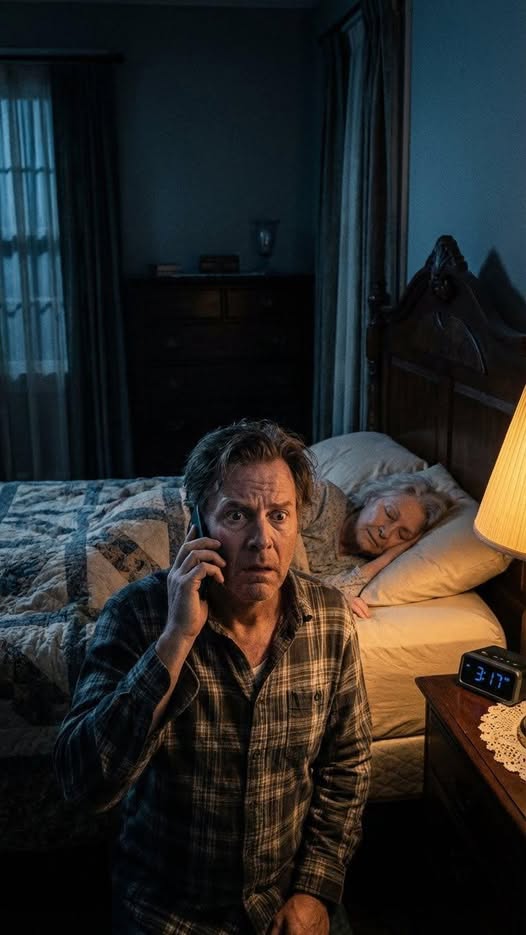
The call came at 6:47 a.m. on a Tuesday morning. I was already awake, nursing my second cup of coffee and watching the snow fall outside my kitchen window in Toronto. The fat, wet flakes clung to the glass, melting into weeping trails that distorted the gray dawn.
The number on my phone showed my brother’s name, Glenn.
My stomach tightened. We hadn’t spoken in three weeks, not since our last tense visit to Mom’s nursing home, where the air had been thick with things unsaid. I swiped the screen, bracing myself for another lecture about my “lack of involvement.”
“Douglas,” his voice said. It had that false solemnity that immediately put my teeth on edge—the tone of a mediocre actor playing a grieving son. “I have some difficult news. Mom passed away last night. Peacefully, in her sleep.”
I set down my coffee mug, the ceramic clinking loudly against the granite counter. My hands were suddenly unsteady, tremors running through my fingers like electric currents.
“What?” I stammered, the word feeling foreign in my mouth. “When? I saw her two days ago.”
“I was just planning to visit her today,” Glenn continued, ignoring my question. “The funeral is Friday.”
“Friday?” I asked, my mind reeling. “That’s three days from now. Glenn, we need to wait for Emma to fly in from Vancouver. We need to…”
“I’ve already made the arrangements,” he cut me off, his tone shifting. The grief evaporated, replaced by something cold and business-like. “Oh, and Douglas, about Mom’s estate… the will is very clear. Everything goes to me. The house in Richmond Hill, the cottage in Muskoka, her investments. All of it. You get nothing. Don’t even think about contesting it.”
Then he hung up.
The silence that followed was deafening. I stood there in my kitchen, staring at the phone in disbelief, listening to the hum of the refrigerator. My mother was dead. Just like that. Gone. And Glenn’s first priority wasn’t to mourn, or to comfort his only brother. It was to inform me I was getting nothing. Not “I’m sorry.” Not “She went peacefully.” Just a threat.
Something was very, very wrong.
Let me back up. My name is Douglas Harrison. I’m sixty-four years old, a retired civil engineer who spent forty years designing the infrastructure that keeps Ontario moving. My wife, Catherine, passed away three years ago from cancer, leaving a hole in my life that I tried to fill with volunteer work and visits to my mother. We have one daughter, Emma, who is now twenty-eight and working as a marine biologist in Vancouver.
My brother Glenn is four years younger, fifty-eight. We grew up close enough, playing street hockey in the driveway of our old house in North York until the streetlights came on. But as adults, we drifted. Glenn became a real estate agent—flashy, charming, always chasing the next big deal. He married Patricia, had two kids, and drove a series of luxury cars he couldn’t quite afford.
On the surface, everything looked fine. But I’d noticed the cracks over the years. Glenn was always stretching himself thin financially. There were whispered conversations at Thanksgiving dinners about investments that went south, about Patricia picking up double shifts as a nurse to keep them afloat.
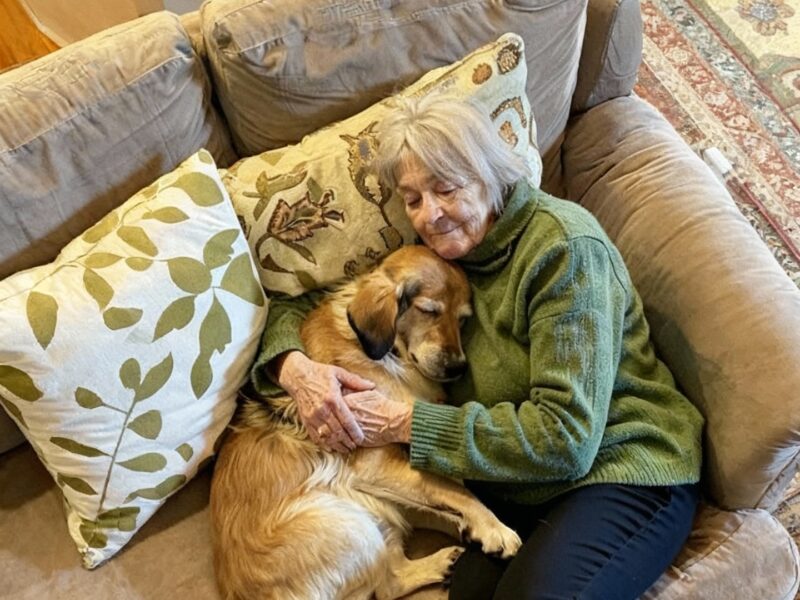
Our mother, Helen Harrison, was eighty-five. She had been sharp as a tack her entire life—a retired school teacher who could recite Yeats from memory and beat anyone at Scrabble. She lived independently until about nine months ago, when Glenn convinced her she needed “extra help.”
He suggested he become her Power of Attorney, just to manage the bills and medical appointments. Mom was hesitant—she valued her independence fiercely—but Glenn was persuasive. He was her baby boy, after all.
That’s when everything changed.
Within weeks of Glenn getting the POA, Mom was suddenly diagnosed with “rapid-onset dementia.” Glenn moved her into Maple Grove Care Center, a high-end facility that cost a fortune, saying she couldn’t live alone anymore.
When I visited, I was shocked. My vibrant, witty mother sat in a chair by the window, staring vacantly at the parking lot. She didn’t recognize me. She barely spoke. When she did, her words were a confused salad of fragmented memories.
“Is this really possible?” I’d asked her doctor, Dr. James Whitmore. “She was fine two months ago. She was doing the Sunday crossword in pen.”
“Dementia can progress very rapidly in some cases,” Dr. Whitmore had said smoothly, adjusting his silk tie. “The cognitive decline in patients her age can be quite sudden.”
It didn’t sit right with me. It felt too convenient. But what could I do? I visited Mom three times a week anyway. Even when she didn’t know who I was, I’d hold her hand, tell her about Emma, about the bridges I had built. Glenn visited too, but less frequently. When he did, he always seemed rushed, always checking his watch, always carrying a file folder.
Now, standing in my kitchen with Glenn’s threat still ringing in my ears, the pieces clicked together. This wasn’t grief talking. This was greed.
I picked up the phone and dialed Maple Grove Care Center. My hands were shaking so hard I misdialed twice.
“I’m calling about my mother, Helen Harrison,” I said when the receptionist finally answered. “I just heard she passed away last night.”
There was a long pause, filled with the sound of typing.
“I’m sorry, Mr. Harrison, but I don’t have any record of that.”
My heart slammed against my ribs. “Check again. Please.”
“Let me check her room,” she said.
I waited for what felt like an eternity, listening to the hold music—a tinny version of Vivaldi’s Spring.
A few minutes later, a nurse came onto the line. “Sir? Your mother is fine. She’s having oatmeal in the dining room right now. Is there some confusion?”
I sat down heavily on one of the kitchen stools, the room spinning. She was alive. My mother was alive.
“Can you do me a favor?” I whispered, my voice hoarse. “Don’t tell anyone I called. Especially not my brother.”
I hung up and immediately dialed my daughter. Emma answered on the third ring, sounding groggy.
“Dad? It’s barely 4:00 AM here. Is everything okay?”
“Your uncle just told me Grandma died,” I said, the words tumbling out. “But she didn’t. She’s alive. I just called the home.”
“What?” Emma’s voice sharpened instantly. “Why would he lie about that?”
“He told me the funeral is Friday. He told me I’m cut out of the will. Emma, I think Glenn is trying to steal her estate before she actually dies.”
There was a stunned silence on the line. Then, Emma’s voice came back, fierce and angry. “Dad, that’s elder abuse. That’s fraud. What are you going to do?”
“I don’t know yet,” I said, looking out at the snow. “But he said the funeral is Friday. That gives me three days to figure it out.”
Chapter 2: The Investigation
After talking to Emma, I spent the morning making calls. I felt like a general marshaling troops for a war I hadn’t realized I was fighting.
First, I contacted a lawyer I’d worked with before on a messy construction contract dispute. Robert Chen was a bulldog of a man who specialized in litigation.
I explained the situation.
“Douglas, this is serious,” Robert said, his voice grim. “If your brother has Power of Attorney and is misrepresenting your mother’s condition—or her existence—to misappropriate assets, we’re talking about criminal charges. But you need evidence. Solid evidence. His word against yours won’t hold up in court quickly enough to stop him.”
Next, I hired a private investigator, Sarah Mitchell. She came to my house that afternoon, a sharp woman in her mid-forties with gray streaking her dark hair and eyes that missed nothing.
“How long has your brother had POA?” she asked, taking notes on a tablet.
“Nine months,” I said. “Right after Mom supposedly developed dementia. Before that, she was volunteering at the library and playing bridge twice a week. Then suddenly, she couldn’t remember her own name.”
Sarah nodded, tapping her stylus against the screen. “I’ve seen cases like this. The timing is always the tell. Give me forty-eight hours. I’ll find out what’s happening with your mother’s finances.”
That evening, I drove to Maple Grove. I parked down the street and walked in through the side entrance, avoiding the front desk.
When I got to Mom’s room, she was sitting in her usual chair by the window, staring out at the darkening sky. Her gray hair was thinner now, her face more lined than I remembered. But something about her seemed different tonight. Less drugged. More present.
“Mom?” I said softly, pulling up a chair beside her.
She turned slowly, those familiar brown eyes meeting mine. There was something in them—a spark. Recognition? Or was I just projecting my own desperate hope?
“It’s me, Douglas. Your son.”
She blinked, her mouth working as if she wanted to form words but had forgotten how to use the muscles. Her hand twitched on the armrest.
“Doug… las,” she whispered.
It was faint, barely a breath, but it was there.
Before I could say anything else, the door opened. A nurse I didn’t recognize bustled in with a tray of medication.
“Time for your meds, Helen,” she said cheerfully, popping a small paper cup full of pills toward Mom’s mouth.
Mom’s eyes dulled instantly. She swallowed the pills without protest, and the spark vanished.
I drove home through the snow, my mind racing. What was Glenn planning? A fake funeral to convince everyone Mom was dead? Then what? Transfer all her assets while everyone thought she was gone? It was insane. It was also, I realized with a sick feeling in my gut, potentially brilliant in its audacity. If everyone thought she was dead, no one would look for the money.
Sarah called me the next morning.
“Douglas, you need to sit down.”
I sat at my kitchen table, phone pressed to my ear so hard it hurt.
“Your brother has been very busy,” Sarah said. “In the past eight months, he’s transferred approximately two hundred and eighty thousand dollars from your mother’s accounts into his own. He sold her cottage in Muskoka to a numbered company last week. I’m still tracing the directors, but I suspect he’s behind it. He’s also been maxing out her credit cards.”
“My God,” I whispered.
“And Douglas,” Sarah continued, her voice dropping. “The doctor who diagnosed your mother’s dementia? Dr. James Whitmore? He went to university with your brother. They’ve been friends for thirty years. They own a timeshare together in Florida.”
I felt bile rise in my throat.
“So, Mom’s dementia… it could be medication-induced?”
“If she’s being overprescribed sedatives or antipsychotics, it would explain the sudden cognitive decline and the vacant behavior,” Sarah said. “That’s not just fraud, Douglas. That’s assault. Maybe attempted murder.”
“I’m going back there,” I said, standing up. “I’m going to get her out.”
“Wait,” Sarah warned. “If you go in there guns blazing, he’ll just move her. Or worse. We need him to incriminate himself. We need to catch him in the act.”
That afternoon, I went back to Maple Grove. I brought my phone, ready to record anything suspicious. But when I got to Mom’s room, it was empty. The bed was stripped.
A nurse I didn’t recognize was changing the sheets.
“Where’s my mother?” I asked, panic rising in my chest like floodwater.
“Oh, Mr. Harrison,” she said, looking up. “Your brother took her out for a drive. He said she needed some air.”
My blood ran cold. “When?”
“About an hour ago.”
I ran to the parking lot, but Glenn’s black Mercedes was already gone. I tried calling him. No answer. I called five times. Nothing.
My mind went to the darkest places. Was this it? Was this the “accident” he had planned?
Finally, three hours later, the Mercedes pulled into the lot. Glenn got out and walked around to the passenger side, helping Mom out. She looked exhausted, her head lolling on her shoulder, her feet shuffling through the slush.
I stepped out from behind a pillar.
“Douglas,” Glenn said, jumping slightly. He recovered quickly, his face settling into a mask of annoyance. “What are you doing here?”
“You said Mom died yesterday,” I said, my voice shaking with rage. “Yet here she is.”
He had the audacity to laugh. A short, nervous bark. “Oh, that. Yeah. Sorry about the confusion. I meant to call you back. False alarm. Mom had a bad episode yesterday—stopped breathing for a minute. The nurse panicked. I thought… well, you know. These things happen with dementia.”
“Where did you take her today?” I asked, stepping closer.
“Just for a drive. She likes looking at the old neighborhood.”
“Really? Because she looks like she’s been drugged.”
“Back off, Douglas,” Glenn hissed, his face hardening. “I’m her Power of Attorney. I make the decisions about her care, not you. You want to challenge that? Get a lawyer.”
He brushed past me, half-dragging Mom toward the entrance. Through the glass doors, I watched him settle her into a wheelchair in the lobby. He leaned down and whispered something in her ear, his hand gripping her shoulder tight enough to bruise.
Then he left, not even looking at me as he walked back to his car.
I was about to follow him when my phone buzzed. An unknown number.
I almost ignored it. But something—maybe the ghost of my mother’s voice—made me answer.
“Hello?”
Silence. Then a whisper. A woman’s voice, faint and scratchy, like dry leaves skittering on pavement.
“Douglas.”
I froze. “Yes? Who is this?”
“Douglas. It’s me.”
The voice was so quiet I had to press the phone hard against my ear.
“Who?”
“It’s your mother.”
Chapter 3: The Midnight Confession
The world stopped. The snow suspended in mid-air.
“Mom?” I whispered. “That’s impossible. You’re… I just saw you. You couldn’t even speak.”
“Douglas, listen carefully,” the voice said, gaining a little strength. “I don’t have much time. I need you to come to my room tonight. Late. After 10:00 PM. Make sure Glenn isn’t here. And Douglas… don’t tell anyone about this call.”
The line went dead.
I stood in the parking lot, staring at my phone as if it had transformed into a live grenade. That was impossible. Mom couldn’t have called me. She didn’t have a phone. She didn’t have a mind clear enough to dial.
And yet, that voice—even whispered and strained—had sounded like her. The real her. The sharp, clear-minded woman I’d known my entire life.
I waited in my car down the street until 10:15 PM. The nursing home was quiet, the windows dark except for the security lights. I knew the night shift schedule; it was a skeleton crew. I used the code Glenn had given me months ago—back when he was still pretending to include me—to enter through the side door.
I crept down the hallway, the rubber soles of my boots silent on the linoleum. Room 304.
Mom was sitting up in bed, the lights low. When I entered, she turned to look at me. In the dim light of the streetlamps outside, I saw her eyes.
They were clear. Focused. Completely lucid.
“Close the door,” she said in a normal voice. Not the confused mumble I’d heard for months. A normal, strong voice.
I shut the door and locked it. My legs felt like jelly. I dragged the visitor’s chair to her bedside and sat down.
“Mom? What… are you okay? What is happening?”
My mother, whom I’d thought was lost in the fog of dementia, smiled at me. It was a wry, mischievous smile I remembered from my childhood.
“I’m fine, Douglas,” she said. “I’ve been fine this whole time.”
“But… the dementia. The diagnosis. You couldn’t even recognize me.”
“Because I was pretending,” she said simply.
The room seemed to tilt. “Pretending?”
She reached over and took my hand. Her grip was firm, steady—nothing like the weak, trembling hands I’d held for months.
“Douglas, I’m eighty-five years old. I’ve been thinking a lot about mortality. About what happens when I’m gone. And I realized I needed to know something. I needed to know which of my sons would actually take care of me. Not for my money. Not for the inheritance. But because they loved me.”
“So… you faked dementia to test us?”
“When Glenn suggested becoming my Power of Attorney, I saw an opportunity,” she said. “I agreed. But I also consulted my own lawyer—Robert Chen. Yes, I know you hired him, but I hired him first. I put most of my assets in an irrevocable trust weeks before Glenn got the POA. The accounts he has access to? I only left enough in them to see what he’d do.”
I couldn’t process this. “Mom, that’s… why didn’t you tell me?”
Her eyes grew sad. “Because I had to test both of you. I had to see who would visit me when I couldn’t give them anything back. Who would hold my hand even when I didn’t know their name.”
Tears pricked my eyes. “Mom…”
“And Douglas, you came,” she said softly. “Three times a week. You sat with me. You talked to me about Emma. You told me about your volunteer work. Even when I acted like I had no idea who you were, you stayed.”
“Of course I came,” I choked out. “You’re my mother.”
“I know that now. But Glenn…” She shook her head, her expression hardening. “Glenn failed, Douglas. Worse than I ever imagined. I’ve been documenting everything. Every time he came to pressure me to sign papers. Every time he got angry when I played confused. Every time he took something from this room thinking I wouldn’t notice. I have a recorder taped under the mattress.”
“The two hundred and eighty thousand dollars…”
“He took it from the accounts I left accessible. I’ve been letting him dig his own grave.”
“Mom, he told me you were dead,” I said, the horror rising again. “He’s planning a funeral for Friday.”
She nodded. “I know. He told me today during our drive. He said I was going to have an ‘accident’ tonight. That I’d pass away peacefully in my sleep. He brought me pills.”
She opened her hand. Resting in her palm were three blue capsules.
“He told me they were vitamins,” she said. “He watched me put them in my mouth. I hid them under my tongue.”
“This is insane,” I whispered. “This is dangerous. We need to call the police right now.”
“No,” she said firmly. “Not yet. We need to catch him at the finish line. If we stop him now, he might wiggle out of it. He might claim it was all a misunderstanding. I want him exposed. Completely.”
“How?”
She leaned forward, her eyes gleaming with a fierce intelligence. “We’re going to let him have his funeral.”
Chapter 4: The Eulogy
Friday morning came with a biting wind. The sky was the color of a bruise.
Glenn had booked Thornhill Funeral Home. He’d sent out notices, called relatives. Cousins I hadn’t seen in years called me, offering condolences. I played along, my stomach churning with every lie. “Yes, the funeral is at 2:00 PM. Yes, it was very sudden.”
The funeral home was packed. Glenn had gone all out—lilies everywhere, a large easel photo of Mom from twenty years ago at the front of the room. The casket was closed, covered in a spray of white roses.
I sat in the front row with Emma, who had flown in that morning and was in on the plan. She held my hand, her grip tight.
Glenn sat across the aisle with Patricia and their kids. His face was composed, appropriately sorrowful. Patricia kept touching his arm, comforting him. His children looked genuinely sad. They’d loved their grandmother.
At exactly 2:00 PM, Glenn stood up to give the eulogy. He smoothed his suit jacket, walked to the podium, and adjusted the microphone. He looked out at the crowd, a perfect picture of the grieving son.
“We’re here today to celebrate the life of Helen Margaret Harrison,” he began, his voice thick with emotion. “Born February 14th, 1939. Passed away January 7th, 2025.”
He paused for effect, wiping a non-existent tear.
“Mom was an incredible woman. A teacher who shaped young minds for thirty-five years. A mother who always put her children first. And in her final months, she trusted me to care for her. She knew I would protect her interests, manage her affairs, and ensure she was comfortable.”
I felt Emma stiffen beside me.
“Mom always loved me best,” Glenn continued, a small, self-deprecating smile playing on his lips. “She told me so many times. She knew I was the responsible one. The one who would take care of everything. She wanted me to have her house, her cottage, everything she’d worked for. Because she trusted me to use it wisely. To take care of the family.”
I stood up. The wooden pew creaked loudly in the silence.
Every head in the room turned.
“That’s interesting, Glenn,” I said, my voice carrying to the back of the room. “Want to tell everyone where Mom really is right now?”
Confusion rippled through the mourners. Glenn’s face went white.
“Douglas, sit down,” he hissed. “This isn’t the time. You’re upset.”
“Where’s the body, Glenn?” I asked, stepping into the aisle. “Where is Mom’s body?”
“She’s being cremated,” he stammered. “We discussed this.”
“Really? Because I called the crematorium. They don’t have her.”
Patricia grabbed Glenn’s arm, looking terrified. “Glenn, what is he talking about?”
The double doors at the back of the funeral home swung open with a loud bang.
Every person in the room turned.
And there, framed in the doorway, was my mother.
She was dressed in her Sunday best—a navy blue suit and pearls. She walked slowly, using a walker, but her back was straight and her head was high. Behind her, two police officers in uniform stood like sentinels.
The room erupted. People gasped. Someone screamed. Glenn’s daughter burst into tears.
Mom made her way down the aisle, the sound of her walker rhythmic and terrifying. Thump. Slide. Thump. Slide.
When she reached the front, she stopped directly in front of Glenn.
“Hello, son,” she said clearly. “I’m not dead. But your inheritance is.”
Glenn’s mouth opened and closed like a fish on a dock. “Mom… you… you’re confused. You’re sick. This is a mistake.”
“I’m not confused, Glenn,” she said, her voice ringing out. “I haven’t been confused for a single day. I’ve been recording everything for the past eight months. Every threat. Every theft. Every time you tried to get me to sign documents transferring my assets to you. Every time you drugged me to keep me compliant.”
She turned to the assembled crowd. Many of them were crying now—some in relief, others in shock.
“I’m sorry for deceiving all of you,” Mom said, her voice softening. “But I had to know the truth. I had to see what my son would do when he thought I was helpless. And what I found broke my heart.”
One of the officers stepped forward, handcuffs glinting in the funeral home lights.
“Glenn Harrison,” he said. “You’re under arrest for elder abuse, theft over five thousand dollars, fraud, and attempted probate fraud. You have the right to remain silent.”
Glenn tried to run. He actually tried to push past the officer and bolt for the side door. But he only made it three steps before he was tackled.
As they dragged him away, handcuffed and shouting, he looked back at Mom.
“I’m your son!” he screamed. “You can’t do this to me! I needed that money!”
Mom watched him go, tears finally streaming down her face. But her voice was steady when she spoke, almost to herself.
“You were my son,” she whispered. “But you stopped being my child the moment you decided my life was worth less than my bank account.”
Chapter 5: The Real Inheritance
The legal proceedings took months. Glenn initially tried to fight the charges, claiming Mom was actually incompetent and he was just trying to “protect the assets.” But the evidence was overwhelming. The video footage from the hidden cameras we’d installed. The audio recordings. The bank records.
Dr. Whitmore testified against him in exchange for a plea deal, revealing exactly how Glenn had pressured him to prescribe the sedatives.
In the end, Glenn pleaded guilty. He got five years in prison. He was ordered to repay every cent he’d stolen. He lost his real estate license permanently. Patricia divorced him and moved the kids to Calgary to start over.
As for Mom, she moved into a small condo near my house in Toronto. She was done with the big house, done with the maintenance. She wanted to be close to family.
We established the Helen Harrison Elder Protection Fund with part of the money recovered from Glenn. It provides legal assistance to seniors fighting financial abuse.
One evening, about a year after the funeral that wasn’t, Mom and I sat on my back porch. We were watching another snowfall, mugs of tea in our hands.
“Do you ever regret it?” I asked. “The way you tested us?”
She was quiet for a long time, watching the steam rise from her cup.
“I regret that it was necessary,” she said finally. “I regret that my own son could do what he did. But Douglas… I don’t regret finding out the truth. I had to know who would love me when I had nothing to give.”
She reached over and squeezed my hand.
“And you passed, Douglas. Not because you visited me—though that mattered. But because even when you thought I was gone, even when you thought you were getting nothing, you fought for what was right. You protected me even when I couldn’t protect myself.”
She looked at me, her eyes sharp and clear.
“That’s what family does. Real family. Blood doesn’t make you family, Douglas. Love does. Choice does. Showing up does.”
I squeezed her hand back.
“Glenn made his choice,” I said. “He chose the money.”
“And he paid the price,” she replied. “But look at what I got.” She gestured to the house, where Emma was laughing in the kitchen, making dinner. “I got the real inheritance. I got time. Real time.”
Blood doesn’t excuse betrayal. True family protects the vulnerable. And sometimes, the bravest thing an eighty-five-year-old woman can do is pretend to be helpless, just to find out who will help her when she can’t help herself.