Chapter 1: The Uninvited Guest
My name is Myra Wells. I am twenty-eight years old, and six months ago, I flew three thousand miles from Los Angeles to Boston to attend my sister Victoria’s wedding. I did not have an invitation. I did not have a seat assignment. All I had was a one-way ticket, a dress the color of a bruised twilight, and a small, silver box tucked into my clutch.
The venue was the Grand Belmont Hotel, a place that smelled of old money, white lilies, and exclusion. Crystal chandeliers, the size of small cars, suspended from the ceiling, casting a fractured, golden light over the marble floors. A string quartet played Debussy near the entrance, the music floating over the heads of guests draped in silk and bespoke Italian wool.
I stood at the edge of the velvet rope, my heart hammering a frantic rhythm against my ribs. I approached the reception table where two young women in severe black dresses presided over the guest list like gatekeepers to Olympus.
“Good afternoon,” I said, my voice steadier than my hands. “I’m here for the Wells-Thornton wedding.”
The blonde receptionist offered a practiced, tight-lipped smile. “Name, please?”
“Myra Wells. I’m the bride’s sister.”
The smile faltered. She looked down at the leather-bound book, her manicured finger tracing the ‘W’ section. Once. Twice. A third time. The silence stretched, filled only by the distant clink of champagne flutes. She looked up at me, and her expression shifted from professional detachment to something far worse: pity.
“I’m sorry, ma’am. Your name isn’t here.”
“Could you check again?” I pressed, though I already knew the answer. “W-E-L-L-S.”
The second receptionist leaned in, whispering loudly enough for me to hear. “There’s a Harold Wells, a Patricia Wells… no Myra.”
I looked past them through the open double doors. Inside, the ballroom was a sea of white linen and floral centerpieces towering like skyscrapers. Four hundred guests. Four hundred people were currently sipping Bollinger and laughing, celebrating the union of my sister to the scion of a real estate empire. And there wasn’t a single folding chair for me.
“Ma’am, should I call the coordinator?” the receptionist asked, reaching for her radio.
“No,” I said quietly. “I’ll handle it.”
I stepped away, finding a quiet corner near a potted fern. I pulled out my phone and dialed Victoria. It rang four times before she picked up. The background noise was a cacophony of joy—laughter, music, the hum of a life I was barred from.
“Hello?” Her voice was sharp, breathless.
“Victoria, it’s Myra.”
A pause. Then, a sigh that sounded like tearing paper. “What do you want? I’m a little busy right now.”
“I’m at the hotel,” I said. “My name isn’t on the list.”
The silence on the other end was heavy, deliberate. Then, she laughed—a cold, brittle sound. “I know. That’s because you weren’t invited.”
Even though I had suspected it, the confirmation felt like a physical blow. “I’m your sister.”
“You really thought you’d be invited?” She sneered. “This wedding is for people who matter, Myra. Important people. Not someone who wastes their life taking pictures of strangers. You’ve always been an embarrassment. Go home to your little apartment in California and stop pretending you belong here.”
“I just wanted to give you a gift,” I said, my voice barely a whisper. “To wish you well.”
“A gift?” She snorted. “What could you possibly give me that I don’t already have? Let me guess—a homemade photo album? A coupon for a free portrait? Spare me the gesture. No one wants you here. Not Mom, not Dad, and definitely not me.”
The line went dead.
I stood there in the lobby, letting the cruelty of her words wash over me. I could have cried. I could have stormed in and made a scene. But I didn’t. Instead, I looked down at the silver box in my hand. It was small, wrapped in a white satin ribbon, innocent in appearance.
I walked back to the gift table, a masterpiece of excess piled high with Tiffany blue, Hermès orange, and envelopes that undoubtedly contained checks with many zeros. I found a small, empty space near the front and placed my silver box there. It looked humble amongst the grandeur. Easy to overlook.
“Ma’am?” The receptionist called out gently. “Are you sure you don’t want to stay? I could try to find a chair…”
“No, thank you,” I said, offering her a genuine smile for the first time. “Some gifts speak louder when the giver is absent.”
I turned and walked out of the Grand Belmont, into the crisp autumn air. I hailed a taxi and headed straight for Logan Airport. As the city skyline receded in the rearview mirror, I checked my watch. The reception would be starting in twenty minutes. The speeches would begin in an hour.
And shortly after that, Victoria would open the box.
Chapter 2: The Camera and the Shadow
To understand why that silver box was a nuclear device wrapped in satin, you have to understand the architecture of my childhood.
I grew up in a three-story colonial on Beacon Hill, the kind of house that features in architectural digests. From the outside, we were the perfect family: wealthy, respected, the type of people who summered on Martha’s Vineyard and sat on the boards of the right charities. But inside those brick walls, there was a strict hierarchy. There were two daughters, but only one mattered.
Victoria was three years older than me. She was the sun around which my parents, Harold and Patricia, orbited. She had the bigger bedroom with the bay window. She got the designer clothes, the piano lessons, the dance recitals that my parents actually attended. I got the hand-me-downs and the silence.
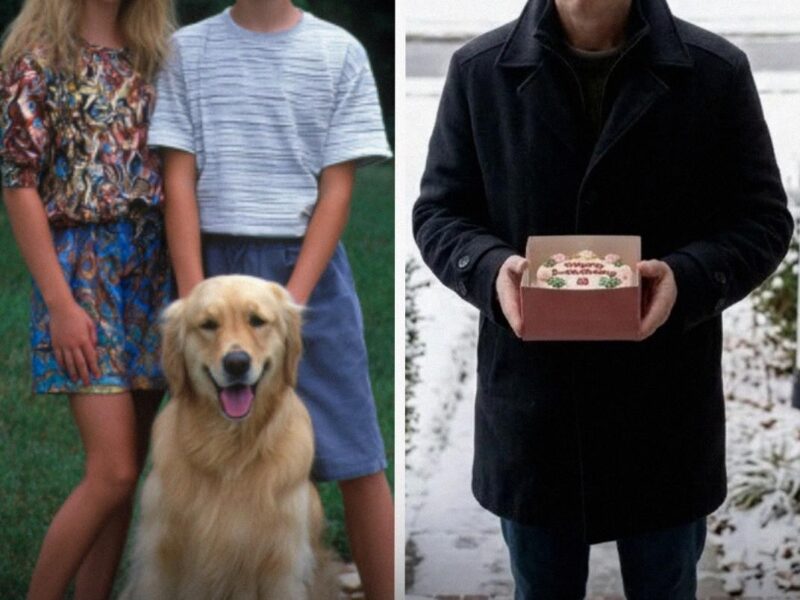
My tenth birthday was the day the dynamic crystallized for me. I had been counting down the days, double digits feeling like a monumental threshold. I imagined balloons, a cake with my name in icing, maybe even a party like the one Victoria had—the one with the pony and the catered lunch for forty kids.
I woke up early and ran downstairs in my pajamas. The kitchen was empty. My mother was in the study, on the phone, frantically planning Victoria’s upcoming cotillion. My father had already left for the firm.
“Mom,” I said, tugging on her sleeve. “It’s my birthday.”
She covered the receiver with her hand, her eyes never leaving her notepad. “I know, sweetheart. We’ll do something later.”
They never did.
But that evening, there was a knock on my bedroom door. It was Grandma Eleanor, my father’s mother. She was the matriarch of the Hartwell line, a woman of formidable elegance and sharp wit, who terrified my mother and tolerated my father. She sat on the edge of my bed, holding a small, heavy package.
“Happy birthday, my darling girl,” she whispered.
Inside was a camera. It wasn’t a toy. It was a vintage Leica, with a leather strap and a silver body that felt cool and substantial in my small hands.
“You have an artist’s eye, Myra,” she said, smoothing my hair. “You notice things the others miss. One day, the world will see what I see in you.”
I didn’t know it then, but that camera was my lifeline. It taught me to observe, to frame the world, to find beauty in the shadows where I lived.
Eight years later, I graduated high school. I had been accepted on a full scholarship to the Rhode Island School of Design, one of the most prestigious art programs in the country. I was the valedictorian of my art class, selected to give a speech. I practiced for weeks, imagining my mother’s proud smile in the audience.
The morning of graduation, I came downstairs in my cap and gown. Victoria was at the kitchen table, scrolling through her phone, looking bored. My parents were huddled over a laptop.
“The ceremony starts at two,” I said. “We should leave by one to get seats.”
My mother didn’t look up. “Sweetheart, something came up.”
“What do you mean?”
My father finally glanced at me, adjusting his tie. “Victoria has a networking event with Goldman Sachs. A mixer for future interns. It’s a huge opportunity for her career. We can’t miss it.”
I stood there, clutching my speech notes, the paper crinkling in my fist. “But it’s my graduation.”
“Photography isn’t a real career, Myra,” my father said, his voice flat and final. “Maybe if you were going to business school like your sister, we’d have something to celebrate.”
Victoria smirked, sipping her coffee.
I walked to that ceremony alone. I gave my speech to a room full of strangers. And when they called my name, I saw only one familiar face in the front row: Grandma Eleanor, clapping louder than anyone, her eyes shining with fierce pride.
Afterward, she took my hands in hers. “Remember this feeling, sweetheart,” she whispered. “The greatest treasures aren’t always the ones people fight over. Sometimes, they are the ones quietly passed on.”
I packed two suitcases that night. I didn’t say goodbye to my parents or Victoria. I bought a one-way ticket to Los Angeles and never looked back.
Chapter 3: The Secret Empire
For ten years, I built my life in silence.
I started as a grunt, winding cables and fetching coffee for wedding photographers who treated me like furniture. But I watched. I learned about lighting, composition, and the chaotic choreography of weddings. I saved every penny, eating ramen and living in a studio apartment the size of a closet.
Slowly, client by client, I built something of my own. I founded Everlight Studios.
My style was distinct—candid, emotive, editorial. I didn’t just take pictures of people standing in rows; I captured the way a groom’s hand shook before he put the ring on, the tear tracking through a mother’s foundation, the stolen glances.
My family never asked about my work. To them, I was still “Myra who takes pictures.” Victoria called occasionally, not to check on me, but to brag. “Senior Marketing Director at twenty-nine,” she’d say. “Corner office. Engaged to a hedge fund manager.” Every conversation was a performance, and I was her captive audience.
“I just closed a seven-figure campaign,” she told me one evening. “What about you? Still doing those little photo shoots?”
I was sitting in my office at the time, a space with floor-to-ceiling windows overlooking the glittering sprawl of downtown LA. On the wall behind me were awards from Vogue and Harper’s Bazaar. My company had pulled in three million dollars in revenue the previous year. We had a team of twelve and were booked solid for two years.
“I’m doing well, Victoria,” I said calmly. “Congratulations on the campaign.”
“Thanks. Mom and Dad are throwing me a celebration dinner. Obviously, you’re not invited. Immediate family only.”
Immediate family.
“Of course,” I said. “Have a wonderful time.”
I hung up, staring at the phone. They had no idea. And for a long time, I told myself I didn’t care. Success was the best revenge, right? But then Grandma Eleanor died, and the ground shifted.
The call came from Harrison Lawson, her attorney. Grandma had passed away in her sleep. I flew to Boston immediately. The funeral at Trinity Church was packed—she had been a patron of the arts, a philanthropist, a force of nature.
I sat in the third row, alone. My parents and Victoria were in the front, accepting condolences like royalty. Victoria was wearing a black designer dress, dabbing at dry eyes with a lace handkerchief. Between hugs, I saw her leaning toward my mother, whispering.
“The jewelry collection,” I heard Victoria hiss. “Have you talked to the lawyer? I need to know when I can access the safe deposit box.”
“Not here,” my mother whispered back. “We’ll discuss it later.”
They were counting her diamonds before her body was even cold.
After the service, Mr. Lawson pulled me aside. He was a gray-haired man with kind eyes who had known me since I was a child. “Miss Wells, could you stay behind? There is something your grandmother wanted you to have.”
He led me to a small vestry office and slid a manila envelope across the table. “Your grandmother came to see me two years ago. She was very specific. This is separate from the public will.”
Inside were two documents and a handwritten letter.
The first document was a notarized amendment to her estate. I read it three times, my breath catching in my throat. The Hartwell Jewelry Collection. The sapphires, the Art Deco diamonds, the pearls that had been in the family for four generations—valued at over two million dollars.
They were mine. Not Victoria’s. Not my mother’s. Mine.
I opened the letter, my hands trembling.
My dearest Myra,
If you are reading this, I am gone. I know this choice will cause a storm, but it is necessary. Victoria sees these pieces as trophies—status symbols to be displayed and envied. But you, my darling girl, you see their history. You understand that beauty isn’t about possession; it’s about preservation.
Your mother and sister will be angry. They will say I made a mistake. But I have watched you grow into a remarkable woman, even when no one else was watching. These pieces belong with someone who will honor them. They belong with you.
All my love,
Grandma Eleanor
“There is one more thing,” Mr. Lawson said gently. “Your grandmother requested that this remain confidential until you decide the right moment to disclose it.”
I nodded, tucking the documents into my bag. I walked out of that church carrying a secret that weighed as much as the truth. I held onto it for six months.
I didn’t know then that I would be using it as a weapon at my sister’s wedding.
Chapter 4: The Invitation That Never Came
Three months after the funeral, Victoria got engaged to Marcus Thornton. It was the match my parents had dreamed of—wealth marrying wealth, cementing status.
The wedding was set for the Grand Belmont. Four hundred guests. A six-figure budget. I waited for my invitation. Weeks passed. Nothing. Finally, I called my mother.
“Mom, I haven’t received my invite. Is there a delay?”
There was a long, painful pause. “Myra… Victoria felt it would be better if you didn’t attend.”
“Better?”
“The wedding is very… intimate,” my mother lied. “We don’t want anything to distract from Victoria’s day. You know how awkward you can be at these events.”
“Intimate?” I asked, looking at Victoria’s Instagram, where she had just posted a photo of her seating chart with hundreds of names. “I see.”
“Thank you for understanding, sweetheart.”
That night, I scrolled through social media. Victoria was hosting a “Bridal Brunch” at the Four Seasons. I saw a video clip posted by one of her friends. Victoria was holding a glass of champagne, holding court.
“Grandma’s pearls will be my ‘something old’,” she announced to the room, her face flushed with triumph. “The collection is worth millions. It’s been in the family for generations. I’m finally bringing it home where it belongs.”
“How wonderful that it’s going to you,” a bridesmaid cooed.
“Well, obviously,” Victoria laughed. “I was always Grandma’s favorite. She knew I would appreciate the pieces properly. Unlike my sister, who wouldn’t know a Cartier from a costume piece.”
My mother nodded in the background, smiling.
They were building a castle on a foundation of lies. Victoria had been hounding Mr. Lawson for months, and he had been stalling, citing “probate delays” per my instructions. She had told Marcus’s family about the inheritance. She had promised to wear the pearls.
But then, fate played its final card.
A week later, my assistant, Jenna, knocked on my office door. “Myra, we just got a contract signed for a wedding in Boston. The bride was referred by Caroline Ashford.”
My blood ran cold. Caroline Ashford was a legend in the event planning world, and she had been Grandma Eleanor’s best friend. She knew everything.
“Who is the bride?” I asked.
“Victoria Wells.”
I stared at the paperwork. Victoria had hired Everlight Studios. She had seen our portfolio, loved the work, and signed the contract, completely unaware that her “failure” of a sister owned the company.
I called Caroline immediately.
“You knew,” I said when she answered. “And you recommended us anyway.”
“Eleanor would have wanted this,” Caroline said, her voice warm and mischievous. “The truth finds its own way out, Myra. Whether you show up personally is your choice. But the stage is set.”
I looked at the contract. Client: Victoria Wells. Deposit Paid: $15,000.
I made my decision. I booked my flight to Boston. I packed the silver box. Inside, I placed three things: a copy of the jewelry amendment, Grandma Eleanor’s letter, and a copy of the photography contract with my name clearly printed as the proprietor.
The morning of the wedding, I stood before my mirror in Los Angeles. “You can do this,” I whispered.
I wasn’t going for revenge. I was going to be seen.
Chapter 5: The Unboxing
I was sitting in the VIP lounge at Logan Airport, sipping a coffee that tasted like battery acid, when the time came. 7:45 PM. The dinner service would be ending. The MC would be announcing the gift opening.
I closed my eyes and imagined the scene.
The Ballroom, The Grand Belmont.
Victoria is radiant in custom Vera Wang. Marcus is beside her, looking adoring. My parents are beaming at the head table. The MC gestures to the gift table. Victoria, loving the spotlight, floats over.
She opens a crystal vase. A set of silver candlesticks. Applause. Then, she sees the silver box.
She picks it up, reads the tag: To Victoria, from your sister Myra.
She probably laughs. She probably makes a snide comment to the guests nearby. “Oh look, a gift from the sister who couldn’t afford a flight.”
She unties the ribbon. She lifts the lid.
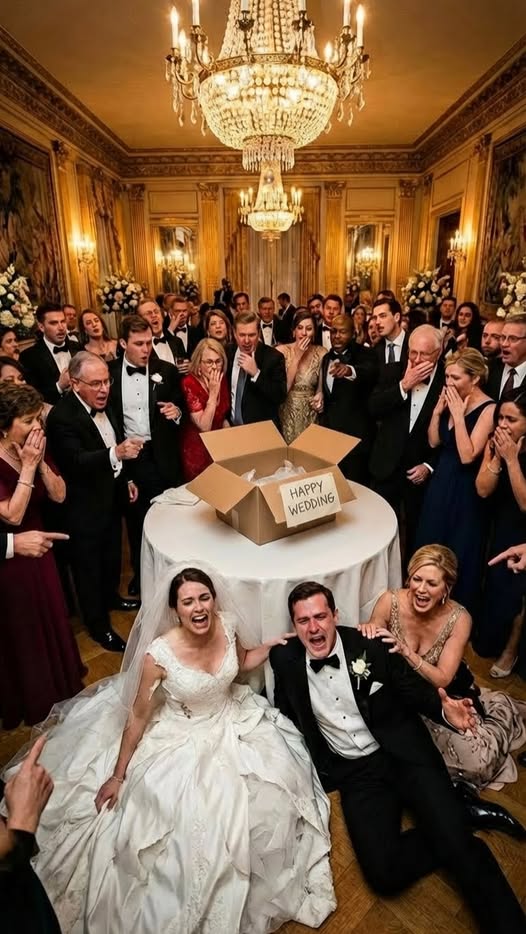
The first thing she sees is the legal document. I imagine the confusion on her face. She reads the header. Amendment to the Estate of Eleanor Hartwell. Her eyes scan down. Sole Beneficiary: Myra Eleanor Wells.
The color drains from her face.
Marcus leans in. “What is it?”
Victoria tries to hide it, but her hands are shaking. She drops the document. Then she sees the letter. She recognizes the handwriting immediately. She reads the words about trophies and memories.
“This is fake,” she stammers, her voice rising in panic. “My sister forged this! She’s jealous!”
The room goes quiet. My mother rushes over. “Victoria, what’s wrong?”
“She stole it! She stole the inheritance!”
Then, Caroline Ashford stands up. The Wedding Planner. The iron lady of Boston society. She walks to the microphone.
“It is not a forgery,” Caroline says, her voice projecting to the back of the room. “I witnessed Eleanor sign that document myself. She left the collection to Myra because, as she told me, ‘Myra loved me. Victoria only loved what I could give her.’”
The gasp in the room sucks the air out of the ballroom.
Victoria is crying now, mascara running down her face. “This is a lie! Myra is a nobody! She’s a failure!”
And then, Marcus reaches into the box. There is one piece of paper left. The contract.
He pulls it out. He reads it. Everlight Studios. Proprietor: Myra Wells.
He looks at the photography team, who are capturing every second of this meltdown. He looks at the contract. He looks at his bride.
“You hired her company,” Marcus says, his voice cold. “You told me your sister was unstable. You told me she couldn’t hold down a job. But you hired her company for fifteen thousand dollars.”
“I didn’t know!” Victoria screams.
“What else have you lied about?” Marcus asks.
Back at the airport, my phone sat on the table in front of me. It was silent.
And then, it wasn’t.
It lit up. Victoria Calling.
I let it ring.
Victoria Calling.
I took a sip of coffee.
Mom Calling.
Dad Calling.
Victoria Calling.
The notifications started cascading down the screen like a digital waterfall.
PICK UP THE PHONE.
YOU RUINED EVERYTHING.
HOW COULD YOU?
CALL ME NOW.
Forty-seven missed calls in ten minutes.
I watched the screen glow with their rage, their desperation, their sudden, violent acknowledgment of my existence. For twenty-eight years, I had been invisible. Now, I was the only thing they could see.
I silenced the phone.
A gate agent announced the final boarding call for Los Angeles. I gathered my purse. As I walked down the jetway, one final message came through. It wasn’t from my family.
It was from Marcus.
Myra. This is Marcus. I’m reading the contract. I’m reading the letter. I need to know the truth. Please.
I stopped at the entrance to the plane. I typed a single reply.
The truth was in the box, Marcus. All of it.
I turned off my phone and took my seat.
Chapter 6: The Aftermath
I didn’t find out about the video until the next morning.
My assistant, Jenna, met me at the door of the studio, her eyes wide. “Myra, you need to see this.”
She held up her iPad. A TikTok video. It had 2.5 million views.
The caption read: Rich Bride Gets Reality Check from ‘Loser’ Sister.
Someone at the wedding—a guest, a waiter, maybe one of my own photographers—had filmed it. It showed everything. Victoria’s smug face as she opened the box. The shift to horror. Caroline Ashford’s speech. Marcus dropping the contract.
The comments were a landslide of vindication.
“Grandma knew exactly what she was doing.”
“The silence of the sister is the loudest thing in this video.”
“Everlight Studios? I just looked them up, her work is fire.”
“Your name is trending,” Jenna said. “We’ve had three hundred booking inquiries since midnight.”
I sat down in my chair, looking out at the LA skyline. I hadn’t wanted fame. I hadn’t wanted a viral moment. I just wanted to stop being erased.
Three days later, my mother showed up at my office.
She looked smaller than I remembered. Her Chanel suit was impeccable, but her face was gray. She stood in the lobby of Everlight Studios, staring at the magazine covers on the wall—covers I had shot.
I invited her into my office. She sat down, clutching her purse like a shield.
“I came to talk about what you did,” she began, her voice trembling. “Victoria is devastated. She’s… she’s broken, Myra. Marcus has postponed the honeymoon. He’s staying with his parents. The Thorntons are asking questions about the family reputation.”
“I didn’t do anything but deliver the truth,” I said calmly.
“You humiliated her.”
“She humiliated herself, Mom. She spent months bragging about jewelry that wasn’t hers. She lied to her fiancé about me. She told everyone I was a failure.” I gestured to the office around us. “Does this look like failure to you?”
My mother looked around. She looked at the awards, the staff working in the glass-walled editing bays, the bustling success of the life I had built without them.
Then, she looked at a framed photo on my desk. It was me and Grandma Eleanor, laughing together.
My mother started to cry. Not the polite, socialite tears I was used to, but ugly, heaving sobs.
“We failed you,” she choked out.
I didn’t speak. I let the words hang in the air.
“Victoria… she was always so loud about what she needed,” my mother said, wiping her eyes. “She demanded attention. And you… you were just quiet. You never asked for anything. I thought that meant you were fine. I thought you didn’t need us.”
“I stopped needing you,” I said softly, “because I knew you wouldn’t be there.”
She flinched. “Eleanor tried to tell me. She said I was losing you. I didn’t listen.” She looked up at me, her eyes red. “I don’t expect you to forgive me. But I see you now, Myra. I see you.”
It wasn’t a fix. It didn’t undo twenty-eight years of neglect. But it was a start.
A week later, I went to the bank vault to retrieve the collection. The pieces were breathtaking—cold fire and history. I held the pearl necklace that Victoria had coveted so desperately.
I didn’t keep them.
I arranged for the most significant pieces to be loaned to the Boston Museum of Fine Arts, to be displayed in the Eleanor Hartwell wing. A plaque would read: Preserved by her granddaughter, Myra Wells.
The rest, I kept in a safe deposit box. Not to wear, but to keep safe.
As I was leaving the bank, the manager handed me one last envelope that had been in the box. For Myra.
Inside was a note from Grandma.
My darling Myra,
One more thing I didn’t tell you. I left Victoria something, too. A small pearl bracelet that was my mother’s. It is simple. Not valuable in money, but meaningful in heart. I hope someday she will understand its worth.
I stood on the sidewalk and wept. Even in the end, Grandma had hoped Victoria might change.
Victoria and Marcus are in therapy. We haven’t spoken much, just a few text messages. She is angry, still blaming me, but the anger has no teeth anymore. The world knows the truth.
I’m still in Los Angeles. I’m still taking pictures. But I’m different now.
I learned that the best response to contempt isn’t screaming. It isn’t fighting. It’s building something real. It’s knowing your worth so deeply that no one’s refusal to see it can make you disappear.
I didn’t show up at that wedding to destroy my sister. I showed up to introduce myself.
My name is Myra Wells. And I am finally in focus.