When Sophie spent that weekend at my mother-in-law’s house, I expected the usual report: too many cookies, too little bedtime, and a new obsession with whatever toy Helen pulled out of her “just in case” closet. Helen lived forty minutes away in a quiet neighborhood where every lawn looked trimmed by the same ruler and every neighbor waved like it was part of a script. She was the kind of grandmother who saved every crayon drawing, kept spare pajamas for surprise sleepovers, and never met a child-sized appetite she didn’t try to overfeed.
Sophie adored her. And Helen adored Sophie right back.
So when Helen asked to have Sophie for the weekend, I didn’t hesitate. I packed Sophie’s overnight bag with her favorite pajamas, her stuffed rabbit, and enough snacks to survive a small apocalypse. Sophie bounced by the door like she’d been invited to Disney World.
“Be good for Grandma,” I told her, kissing her forehead.
“I’m always good, Mommy,” she said, and sprinted up Helen’s steps without a backward glance.
The weekend was quiet in a way I’d forgotten was possible. Evan and I caught up on chores we never finished and watched episodes of shows we’d started months ago. We ate dinner without cutting anyone’s food or negotiating “three more bites.” It felt peaceful, even restorative.
But that peace didn’t survive Sunday night.
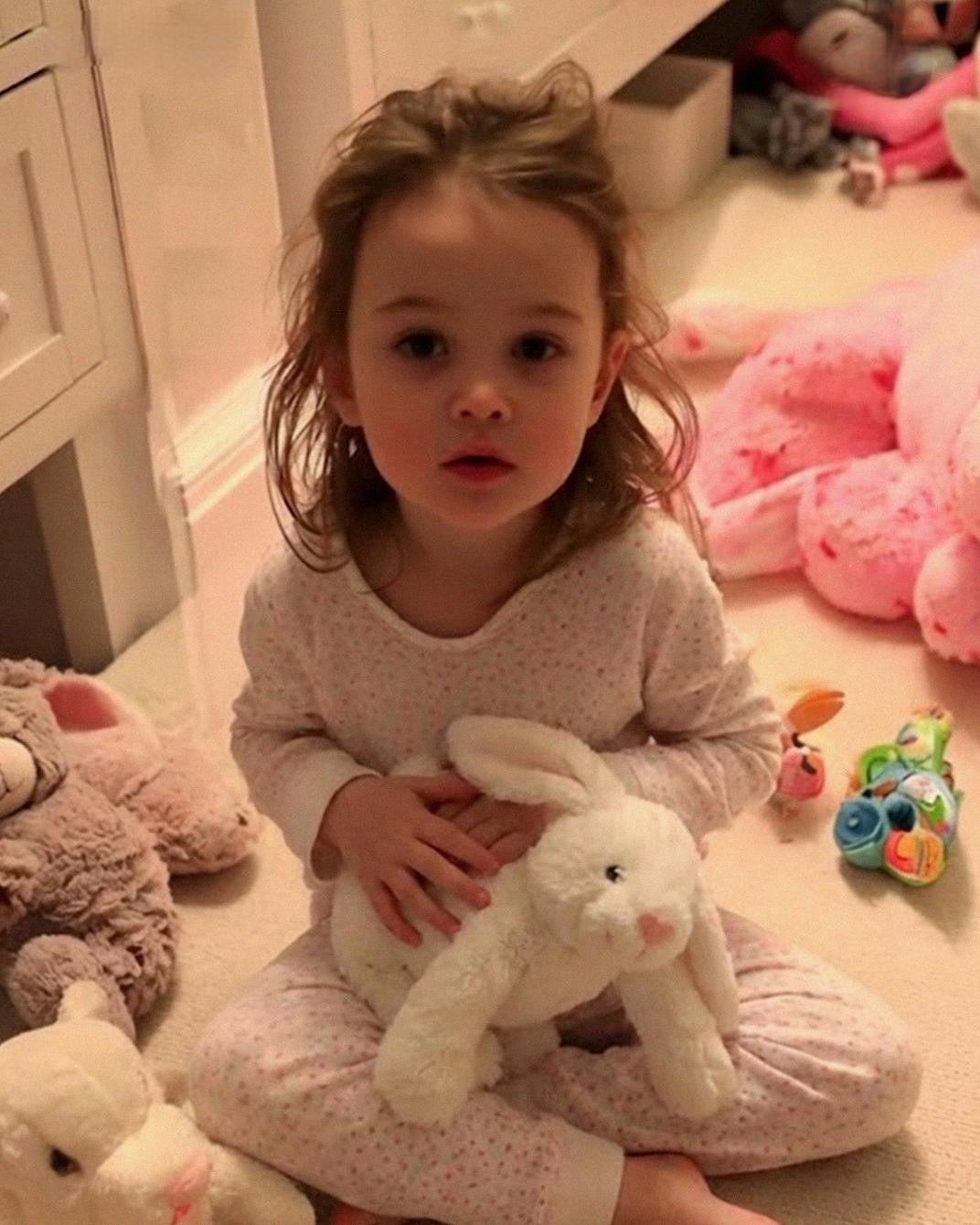
I picked Sophie up after dinner. She came barreling out of Helen’s front door with sticky fingers and wild hair, talking nonstop about cookies, board games, and cartoons she was apparently allowed to watch “until the very late.” Helen stood in the doorway smiling, her hands folded like she’d done her duty and done it well.
Everything seemed normal. Sophie was happy. Helen was her warm, grandmotherly self. Evan and I drove home with our daughter’s chatter filling the car.
Later that evening, while I folded laundry in the hallway, Sophie disappeared into her room. I could hear the familiar sounds of play: toys shifting, drawers opening, little conversations she had with herself as she built worlds on the floor. Then she said something so casually I almost didn’t register it at first.
“What should I give my brother when I go back to Grandma’s?”
My hands froze around a folded towel.
I walked to her doorway. Sophie was sitting on the carpet, surrounded by toys, making neat little piles. She glanced up at me, and the second she saw my face, her expression changed—like she’d stepped on an invisible tripwire.
“Sweetheart,” I said carefully, “what did you just say?”
“Nothing,” she blurted, suddenly busying herself with a plastic pony.
“I heard you, honey. You said something about a brother.”
Sophie’s shoulders tensed. She kept her eyes on the toys. “I wasn’t supposed to say that.”
My heart started pounding in a way that didn’t match the moment. “Say what? You can tell me anything.”
She swallowed hard. “My brother lives at Grandma’s,” she whispered, “but it’s a secret.”
The room felt smaller. The air felt too thick. We have one child. Sophie does not have a brother.
I sat down on the floor beside her so my voice wouldn’t come out sharp. “What do you mean your brother lives at Grandma’s?”
Sophie picked at the seam of her pajama pants. “Grandma said I have a brother. She said I shouldn’t talk about it because it would make you sad.”
Her eyes flicked up to mine, worried now, like she’d broken something precious.
I pulled her into my arms and held her a little tighter than usual. “You didn’t do anything wrong,” I told her. “Not even a little.”
But inside, my thoughts were sprinting in circles. There were only a handful of explanations, and every single one was terrible.
That night I didn’t sleep. Evan lay beside me, breathing evenly, and I stared at the ceiling until my eyes burned. I replayed our years together like film I’d seen a hundred times, searching for the moment I’d missed the twist. Eight years of marriage. The way Evan held my hand in the hospital when Sophie was born. The way he cried when he first saw her. How steady he’d always seemed, how dependable.
Had he cheated? Was there a child out there I didn’t know about? Had Helen been keeping a whole second life tucked away behind her lace curtains and friendly smiles?
The worst part was that I couldn’t bring it to Evan. Not yet. Because once you ask a question like that, you don’t get to un-ask it. I wasn’t sure I could survive the answer if it was what my brain kept insisting it might be.
The next few days dragged. I moved through our routines like a ghost. I made breakfast. Packed lunch. Smiled when Evan kissed me goodbye. Asked Sophie about school and nodded at her stories while my mind kept chewing the same fear.
Sophie didn’t mention it again at first, but I started noticing little things. A doll she set aside on her shelf. Two toy cars lined up together instead of one.
“What are you doing?” I asked one afternoon.
“Saving toys for my brother,” she said simply, like it was obvious.
Each time she said it, my stomach tightened.
I started noticing Evan too, in the way you do when your brain is hunting for proof. His phone facedown on the counter. The way he sometimes stared into space before answering a question. The pause before he said he was working late. I couldn’t tell if I’d missed signs for years or if fear was inventing clues out of nothing.
By midweek, I couldn’t stand it anymore. I needed the truth, and I needed it from Helen first. If I went to Evan and I was wrong, I’d poison our marriage with a suspicion that didn’t belong there. If I was right… I needed a head start to keep myself standing.
So I drove to Helen’s house without calling.
She opened the door wearing gardening gloves, dirt on her knees, surprise flashing across her face. “Rachel! I wasn’t expecting—”
“Sophie said something,” I interrupted. My voice didn’t sound like mine. “She said she has a brother. That he lives here. What is going on?”
Helen’s face drained of color. She pulled off her gloves slowly, like her fingers had forgotten how to move. For a second she looked older than I’d ever seen her.
“Come inside,” she said quietly.
We sat in her living room surrounded by framed pictures of Sophie: birthday candles, Halloween costumes, messy smiles. Normally those photos made me feel warm. Now I found myself scanning the walls like I might spot the missing piece hidden in plain sight.
“Is there something Evan didn’t tell me?” I asked. “Is there a child I don’t know about?”
Helen’s eyes filled with tears. “It’s not what you think, dear.”
“Then what is it?”
She took a trembling breath. “There was someone before you,” she began. “Before Evan ever met you.”
My stomach dropped anyway.
“He was young,” Helen said. “In love, or what he thought was love. She got pregnant. They were terrified, but they were trying. They talked about names. They tried to make plans.”
Her voice cracked. “It was a boy.”
I swallowed. “Was?”
Helen nodded, tears slipping down her cheeks. “He was born too early. He lived… for a few minutes.”
The words landed like a weight. Not an explosion. Not a betrayal. Something worse in its own way: grief.
“Evan held him,” Helen whispered. “Just long enough to memorize his face, and then he was gone.”
I sat there, stunned by the shape of the truth. “I didn’t know,” I managed. “Evan never told me.”
“He never talks about it,” Helen said. “After it happened, the relationship fell apart. The grief swallowed everything. And Evan… he buried it. He thought silence was the only way to survive.”
“And you?” I asked softly.
Helen wiped her cheeks. “I never forgot. He was my grandson.”
She told me there had been no funeral, no grave, no place the family visited. Just a pain everyone avoided. So Helen made a place on her own. In the far corner of her backyard she planted a small flower bed and hung a wind chime that whispered in the breeze. Nothing dramatic. Just a quiet corner of memory.
“I didn’t think of it as a secret,” she said. “I thought of it as remembering.”
Then she explained how Sophie found out. Sophie had been playing outside, asking questions the way children do when they sense something matters. She noticed the flower bed was different, cared for with a kind of attention that didn’t match the rest of the yard.
“Why are these special, Grandma?” Sophie had asked.
Helen tried to brush it off, but Sophie kept pressing, sweet and relentless. Finally Helen gave her a child-sized answer.
“I told her it was for her brother,” Helen admitted, her voice shaking. “I meant… her brother who isn’t here. Part of the family, even if he didn’t get to stay.”
She hadn’t meant to make Sophie feel like she was carrying a secret. She hadn’t meant for Sophie to bring it home like a mystery wrapped in guilt.
I drove home feeling wrung out, but in a different way than I’d feared. No affair. No hidden living child. No second family. Just a loss that had never been spoken aloud.
That night, after Sophie fell asleep, I sat with Evan at the kitchen table.
“I went to your mom’s,” I said.
His face went pale immediately, like he already knew what was coming.
“She told me,” I continued. “About the baby. About your son.”
Evan’s eyes closed. He nodded slowly, and the air seemed to leave his chest. “I’m sorry,” he whispered.
“Why didn’t you tell me?”
He stared at his hands. “Because I didn’t know how. I thought if I kept it in the past, it wouldn’t touch our life. I didn’t want that pain anywhere near you. Near Sophie.”
I reached for his hand. “You should’ve told me. Not because you owed me a confession. Because we’re a family. We’re supposed to carry things together.”
His eyes filled. “I didn’t want to break you.”
“I’m not broken,” I said. “But hiding it did something to you. And now Sophie stumbled into it without anyone guiding her.”
Evan cried then, the quiet kind of crying that comes from years of holding your breath. I moved around the table and held him, and for the first time I understood that his silence hadn’t been about mistrust. It had been about survival.
The next weekend, we went to Helen’s house together—Evan, Sophie, and me.
No whispers. No avoidance.
We walked into the backyard, to the small flower bed and the wind chime that sang softly in the winter air. Sophie held my hand and stared at the flowers like she could feel their importance even without fully understanding it.
Evan and Helen explained it to her in simple words. That there had been a baby, and he had been very small. That he didn’t live, but he was real. That it was okay to talk about him, and it was okay to feel sad sometimes.
Sophie listened, serious as only little kids can be, then asked, “Will the flowers come back in the spring?”
“Yes,” Helen said, smiling through tears. “Every year.”
Sophie nodded like she was filing that away as a promise. “Good,” she said. “Then I’ll pick one just for him.”
Later, Sophie still set toys aside sometimes, declaring she was saving them “just in case.” And I stopped correcting her. Not because I believed in magical thinking, but because I realized something important: grief doesn’t need to be scolded into shape. It needs room. It needs honesty. It needs light.
That weekend didn’t give Evan his lost child back. It didn’t erase the years he’d spent swallowing the memory. But it changed the way the loss lived in our family. It stopped being a shadow in the corner and became what it always should have been: a story spoken gently, held together, without shame.