I hadn’t even been discharged when my world ended. Or rather, when the world I knew—a carefully constructed façade of shared dreams and feigned loyalty—was dismantled via text message. I was still wearing a hospital wristband, a flimsy plastic reminder of my own fragility, when my marriage officially flatlined. The room smelled of antiseptic and wilted flowers, a cloying combination of clinical sterility and slow decay. It was fitting. My name is Evelyn Carter, and in that moment, I had lost more than blood and strength; I had lost the naive illusion that my devotion was a shield.
The message from my husband, Daniel Carter, arrived without the courtesy of a warning. No call. No visit to the woman he’d sworn to protect in sickness and in health. Just cold, blue pixels on a screen.
“Don’t come back. This house doesn’t support the unemployed.”
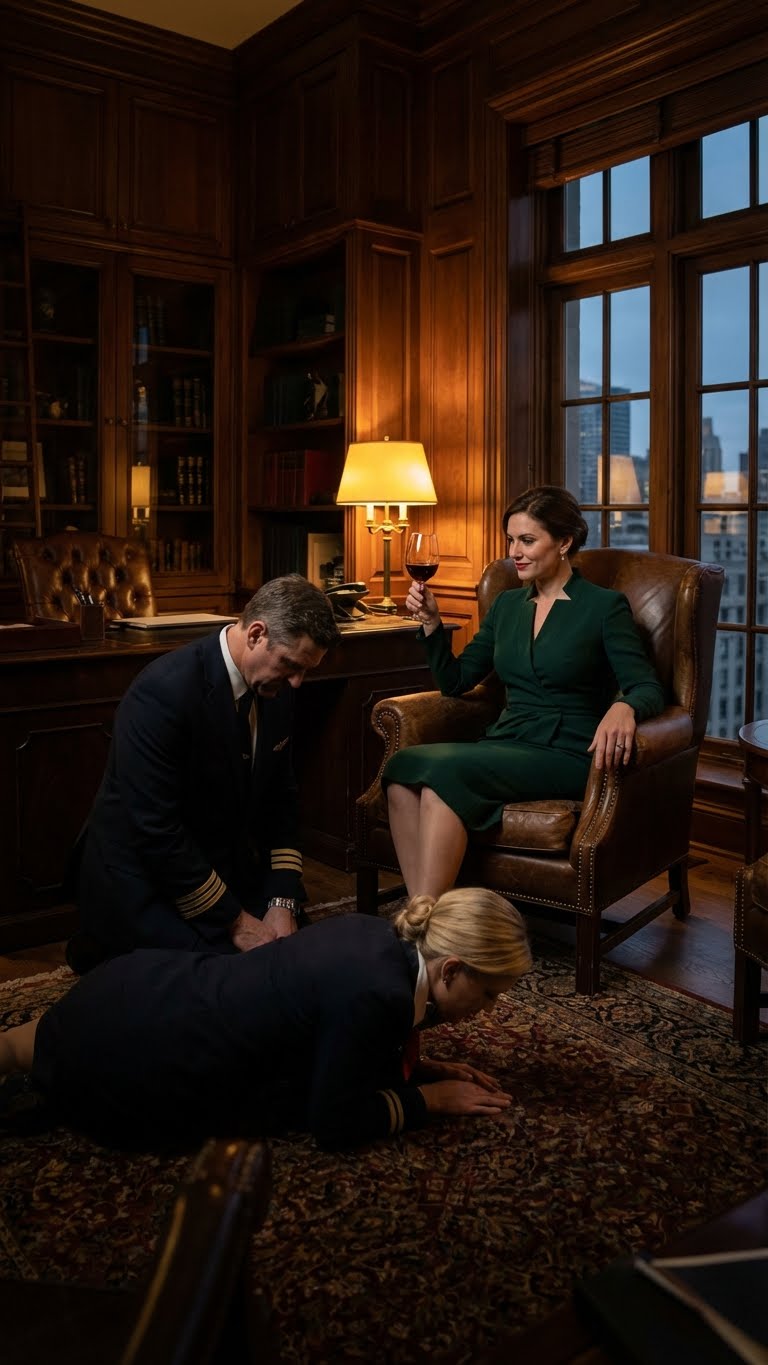
Daniel was a commercial airline pilot, a man who lived his life at 30,000 feet, both literally and figuratively. He was respected, confident, and always in a crisp uniform that seemed to armor him against the messiness of life on the ground. He saw the world in terms of flight plans and checklists—clear, logical, and devoid of emotional turbulence. I had been admitted after collapsing from exhaustion, a silent, creeping burnout from weeks of stress while trying to land a deal that was no longer publicly linked to my name. He knew I was in the hospital. He knew I had resigned from my executive role months earlier. He just didn’t know—or care to know—why.
My “unemployment,” as he called it, was a narrative he’d authored himself. He saw me at home more, my high-powered suits replaced with quiet concentration over a laptop he never bothered to look at. He interpreted my silence not as focus, but as failure. In his mind, I had become cargo—excess weight on his soaring ascent.
Within an hour, a second message buzzed on the bedside table. It was a photo. Daniel, standing a little too close to a young woman in a flight attendant’s uniform. Her name was Lena Moore. Her hand rested on his arm with an easy familiarity, as if it had always belonged there. The background was a generic hotel bar, the kind he frequented on layovers. No explanation. No apology. The meaning was as clear as a cockpit instrument panel. He had replaced his co-pilot.
I didn’t reply. In the deafening silence of that hospital room, my own silence felt like the only power I had left. I stared at the acoustic tile ceiling, counting the perforations as I replayed the years I had dedicated to supporting his career. The cross-country moves for better hubs, the holidays spent alone, the countless compromises I had redefined as love. When a nurse came in to check my vitals, she offered a polite, pitying smile.
“Is your family coming to pick you up tomorrow, dear?” she asked, her voice gentle.
I imagined Daniel, striding through the airport with Lena, their laughter echoing in the terminal while I sat here. I smiled back at the nurse, a brittle curve of my lips. “I’ll be fine on my own, thank you.”
Two days later, discharged with a handful of prescriptions and a hollow feeling in my chest, I sat in the plush leather passenger seat of a rideshare. The city blurred past the window as I scrolled through a backlog of emails and financial alerts on my phone. Most were mundane. And then one stopped me cold. It was the final confirmation from a private equity firm I had been negotiating with, secretly and relentlessly, for three years.
Acquisition Complete. Funds Cleared.
My heart, which I thought had become numb, began to pound a frantic, unsteady rhythm against my ribs. With a trembling thumb, I opened my personal banking app. The number that loaded onto the screen seemed to burn through the glass, a dizzying string of zeroes that looked more like a code than a currency.
$30,000,000. Clean, liquid, and undeniably under my name alone.
I took a screenshot. My hand was perfectly steady now. The image was sharp, the balance irrefutable.
Then, without a single word, I sent it to Daniel.
The silence that followed was brief, the calm before a storm. I watched the delivery receipt turn from ‘delivered’ to ‘read.’ I imagined his expression shifting from arrogance to confusion, then to dawning, gut-wrenching horror.
Less than five minutes later, my phone didn’t just ring; it convulsed. A violent, incessant vibration against the armrest. Missed calls stacked on the screen, one after another. Voicemails piled up, unread. He was panicking. He was losing control of the aircraft.
And for the first time since waking up in that hospital bed, I leaned back, watched the rain begin to streak the window, and I smiled.
Chapter 2: The Backstory in the Shadows
“Evelyn… we need to talk.”
I let his call go to voicemail, then played the message back. His voice was no longer the calm, commanding baritone of Captain Carter. It was thin, rushed, and frayed with a panic he couldn’t conceal. I listened to it twice before answering the next call, letting him stew in the turbulence.
When I finally picked up, I said nothing, allowing the silence to stretch, forcing him to speak into the void.
“Eve? Is this real?” he stammered, the words tumbling out. “That screenshot… is that some kind of joke?”
“It is,” I replied, my voice even, betraying none of the quiet triumph coiling inside me.
“But… how? Where did that come from? You’ve been unemployed for six months!”
“I resigned,” I corrected him gently. “I was never unemployed.”
Daniel always believed he understood me, but he had only ever seen a reflection of what he wanted me to be: supportive, stable, and secondary. He thought my resignation from a high-profile executive role at a Fortune 500 company was a sign of burnout, of failure. He saw it as proof that I had finally accepted my role as the dependent spouse, the one who kept the home fires burning while he conquered the skies. What he never asked—what he never cared enough to ask—was why I had stepped away.
Three years earlier, I had co-founded a logistics optimization startup, LogiStream, with two brilliant former colleagues, Mark Reynolds and Sophia Klein. We structured the entire venture with meticulous care. My name, at my own insistence, stayed off every public document. I was a silent, majority partner, the architect behind the scenes. I had already lived in the shadow of someone else’s career; I wasn’t eager to put my name on a marquee until the show was a guaranteed hit.
While Daniel was flying international routes, basking in the admiration of his crew and passengers, I was in a different time zone every week. I was negotiating multi-million dollar contracts from sterile airport lounges, sleeping four hours a night on hotel pillows, and learning to make impossible numbers work. LogiStream wasn’t a side project; it was a consuming, all-out war against inefficiency in global shipping, and we were winning. The stress that eventually sent me to the hospital wasn’t a symptom of weakness—it was the inevitable consequence of carrying the weight of an entire company, too quietly, for too long.
Daniel saw only the surface. He saw me typing furiously at my laptop and called it “my little hobby.” He saw me turn down social events and accused me of being antisocial. He saw the mounting exhaustion and called it laziness. He never saw the fight. He never saw the victory taking shape.
Lena Moore, I realized, didn’t just offer him admiration; she offered him simplicity. She wore the same uniform, spoke the same language of flight codes and layovers. She was a reflection of his world, not a challenge to it. She was a reminder that he was the captain, the one in charge. No complicated questions. No challenges. No quiet reminders that the woman waiting at home might one day build an empire that dwarfed his own.
“Why didn’t you tell me?” he demanded now over the phone, his voice cracking with a mixture of anger and fear. It wasn’t a question born of hurt feelings; it was the cry of a man who just realized he’d thrown away a winning lottery ticket.
“You didn’t ask,” I said again.
That silence on the line was heavier than any argument we’d ever had. It was weighted with his dawning realization, with years of willful ignorance. He began talking fast then, stumbling over excuses. The marriage had been strained. He’d been under pressure at work. The divorce… the divorce could be reconsidered. He was talking about us as a ‘we’ again, a term he had abandoned weeks ago. He even mentioned the house—our house—as if it were still a bargaining chip he could offer me.
“We can fix this, Eve. Just come home. We’ll sort it out.”
I listened without interrupting, letting him spin his narrative of regret. When he finally ran out of breath, I spoke, my tone calm and final.
“The divorce papers you filed will proceed exactly as you wrote them, Daniel. No revisions. No conversations. No negotiations.”
I ended the call before he could respond.
The next morning, Lena posted a photo on her social media. A honeymoon suite in Bali. Two champagne glasses. Her smile looked strained, his utterly vacant. The caption read: “To new beginnings with my captain!” Friends and colleagues flooded the comments with congratulations, oblivious to the storm that was already engulfing her captain’s life.
They were celebrating a new beginning. But I was about to engineer the final, definitive ending. I saved the photo and forwarded it to my lawyer with a simple message: “Let’s begin.”
Chapter 3: The Flight Recorder
Daniel underestimated many things about me, but his greatest mistake was assuming that money was the only leverage that mattered. Yes, I now possessed a fortune he couldn’t have imagined, but wealth is only a blunt instrument. When paired with information and clarity, it becomes a scalpel. And I had been performing surgery on our life together for years.
Our marriage had been built in a way that favored his confidence, not his caution. While he was focused on flight schedules and seniority lists, I had quietly managed everything else. The joint investments, the tax planning, the property structuring. Not because he’d asked me to, but because he’d considered it ‘domestic paperwork,’ trivial and beneath him. He trusted me enough not to look, assuming my competence served only his interests.
The first call with my lawyer, Ms. Albright, was brief and electrifying. She was a sharp, no-nonsense woman I had hired based on her reputation for dismantling the egos of powerful men.
“He’s citing irreconcilable differences and claiming you’re unemployed and dependent,” she said, her voice dripping with disdain. “He’s offering a standard, frankly insulting, severance package and demanding you vacate the property.”
“Let him,” I replied calmly. “Don’t counter. Not yet. I’m sending you some documents.”
For the next hour, I emailed her encrypted files: deeds, trust agreements, brokerage statements, and the incorporation papers for LogiStream that listed me as the primary, silent shareholder. I included the screenshot of my personal account and the photo Lena had posted.
Her call back was immediate. The professional detachment in her voice was gone, replaced by something akin to awe. “My God, Evelyn. You didn’t just build a safety net. You built a fortress.”
The house he had so callously told me not to return to? It was purchased with the proceeds of my own pre-marital investments. Five years ago, on my advice, we had placed it into a revocable trust to protect it from liability. A trust that I, as the grantor and primary trustee, controlled completely. It was perfectly legal, perfectly documented, and something he had signed off on without reading, dismissing it as “more of your boring financial stuff.”
The “shared” investment account he bragged about to his pilot buddies? I had funded it almost exclusively with returns I had generated from my own portfolio long before the acquisition. His contributions were, by comparison, pocket change.
When Daniel’s legal team received our initial response—a simple acknowledgment of his petition with no counter-offer—they grew cocky. They sent a letter demanding I provide a timeline for vacating the premises and a list of personal items I intended to take.
Ms. Albright advised we let them posture. “Let him fly a little higher,” she said with a grim smile. “The fall will be that much more spectacular.”
Daniel tried calling again, his tone shifting with every message he left. The first was conciliatory. The second was frustrated. The third was laced with entitlement, demanding to know why I was “playing games.” By the fifth, he was veering into threats masked as concern for my mental state.
Meanwhile, I focused on recovery. I started physical therapy in the mornings to rebuild the strength I’d lost. I held my first board meeting as the public face of LogiStream in the afternoons, feeling the thrill of ownership, of finally stepping out of the shadows. I had quiet dinners alone at restaurants I’d always wanted to try, and they felt more peaceful than any crowded table I’d sat at with Daniel’s friends, pretending to be fascinated by stories about engine performance and turbulence over the Atlantic. The world didn’t collapse when my marriage ended. It expanded.
Then came the message I had been half-expecting. It was from Lena Moore. Her profile picture showed her and Daniel, smiling on a beach. Her message was polite, cautious, and felt utterly rehearsed.
“Evelyn, I hope you don’t mind me reaching out. I just wanted to say that I wasn’t aware of your full situation. Daniel told me you two had been separated for a long time and the divorce was just a formality. I truly hope there are no hard feelings.”
She was trying to establish her innocence, to paint herself as another victim of Daniel’s deceit. I knew her type. She wasn’t malicious, just opportunistic. She saw a handsome captain with a great career and a beautiful house and didn’t ask too many questions.
I thought about ignoring it. But I decided to reply once. Briefly. Honestly.
“This isn’t about you. It never was. But a word of advice: you should always check the flight recorder before taking off with a new pilot. You never know what secrets the black box holds.”
That, I knew, would unsettle her more than any angry tirade. It wasn’t an accusation; it was a warning. And it was a promise of the storm to come.
Chapter 4: The Final Approach
The first legal hearing was a preliminary status conference. I didn’t attend in person. Ms. Albright insisted that my absence would be a more powerful statement than my presence. Distance, I was learning, was another form of power. She patched me in via a muted conference call so I could listen.
Daniel’s lawyer, a pompous man with a voice like gravel, laid out their position. They spoke of Daniel’s generosity in not seeking alimony from his “unemployed” wife and his willingness to let me keep my car. They painted me as a fragile, discarded woman who should be grateful for his meager offer.
Then it was Ms. Albright’s turn.
“We appreciate Mr. Carter’s… creative interpretation of the facts,” she began, her voice smooth as glass. “However, we won’t be needing his generosity. We accept the divorce petition as filed. As for the division of assets, we have a slightly different view.”
She proceeded, calmly and methodically, to present the truth. She started with the brokerage accounts, showing the clear financial trail of my initial capital and the growth I had managed. Daniel’s lawyer began to object, but the judge waved him into silence, intrigued. Then, she moved on to LogiStream, presenting the notarized partnership agreements and the final acquisition notice from the private equity firm.
I could hear a rustle of papers on the other end of the line. A choked cough.
“And finally,” Ms. Albright said, delivering the killing blow, “regarding the marital home which Mr. Carter has so graciously allowed my client to vacate… it appears there has been a misunderstanding. The property is not a marital asset. It is held in the Evelyn Carter Revocable Trust. Mr. Carter is listed as a successor beneficiary, but he is not the trustee. My client is. In effect, he has been living in her house. And now, she would like him to vacate.”
The silence that filled the conference line was absolute. It was the dead air of a complete system failure. I pictured Daniel, sitting there in his tailored suit, his captain’s confidence evaporating under the fluorescent lights of a sterile courtroom. The man who had texted “This house doesn’t support the unemployed” was just informed he was about to be homeless.
His lawyer, sputtering, asked for a recess. The judge granted it.
The fallout was immediate and spectacular. Daniel’s legal team requested delays. They requested mediation. They requested privacy, filing a motion to seal the proceedings, which the judge promptly denied, citing their own initial public filing. The same man who had dismissed me with a callous text was now desperately trying to hide the consequences from the world.
The second wave of messages from him began. They were no longer angry or demanding, but utterly desperate.
“Evelyn, please. We can’t do this in court. You’ll ruin me. My reputation… my finances…”
“I made a mistake. A terrible, terrible mistake. I was stressed. I wasn’t thinking. Lena means nothing. It was a stupid fling.”
“Think of the years we had. Don’t throw it all away over this. I love you.”
That last one almost made me laugh. He didn’t love me. He loved what I represented: stability, comfort, and an easy life he never had to manage. Now, he loved the money he’d just discovered he’d lost.
I never replied. My lawyers handled everything. Every offer to negotiate was met with a polite refusal. We weren’t negotiating. We were executing a flight plan that had already been filed.
When the settlement was finalized, it was as clean and precise as a pre-flight checklist. He got his freedom, just as he’d wanted. He got to keep his personal pension and his car. That was it.
I kept my company. I kept my investments. I kept my future.
And I kept the house.
Epilogue: A New Horizon
Life after the divorce didn’t arrive with a clash of thunder or a triumphant fireworks display. It arrived quietly, in moments that felt small but were monumentally significant. Waking up in my own bed without a knot of anxiety in my stomach. Signing documents that didn’t require a second opinion. Choosing where to have dinner because I wanted to, not because it fit someone else’s layover schedule.
I put the house on the market and sold it within a week. It held too many ghosts of compromises past. I moved to a coastal city where the air smelled of salt and possibility, a place where no one knew the name Carter. I rented a sleek apartment with floor-to-ceiling windows overlooking the ocean, despite being able to buy the entire building. Ownership, I had learned, feels better when it’s chosen slowly, deliberately.
I heard through a mutual acquaintance that Lena filed for divorce less than a year after their wedding. The official reason was “irreconcilable differences.” The unofficial reason was that Captain Carter, stripped of his assets and his impressive home, was no longer such a great catch. His arrogance remained, but the financial altitude that had made it palatable was gone. By then, her story felt like old news from a life I no longer lived.
Six months after the final papers were signed, Daniel tried to reach me one last time. A voicemail appeared on my phone from his new, prepaid number. His voice was steadier now, but hollowed out, stripped of its former authority.
“Eve,” he began. “I just… I heard you moved. I hope you’re happy. I wanted to say… you were right. I didn’t ask. I never looked. I see that now. I just… I wish things had ended differently.”
I stood by my window, watching the sun dip below the horizon, painting the sky in shades of orange and purple. There was a time when that message, that admission, would have felt like a victory. Now, it just felt… quiet. It was the final, faint signal from a distant, forgotten flight.
I deleted the message without responding. Not out of cruelty, but out of closure. Some things don’t need a reply.
The money didn’t fix everything. It didn’t erase the sting of betrayal or the months of physical and emotional recovery. But it gave me something far more valuable than comfort—it gave me choice. The choice to walk away, to start over, to build a life on my own terms, with no co-pilot but my own intuition. And choice, once truly tasted, is a freedom you can never surrender.
Sometimes I think back to that woman in the hospital room, staring at a ceiling, feeling like her world had been grounded forever. If I could speak to her now, I wouldn’t promise her revenge or even triumph. I would promise her clarity.
Because people reveal their true character when they believe you have nothing left to give. And sometimes, the quietest response—the screenshot you don’t explain, the silence you maintain, the life you build without them—is the loudest truth of all.