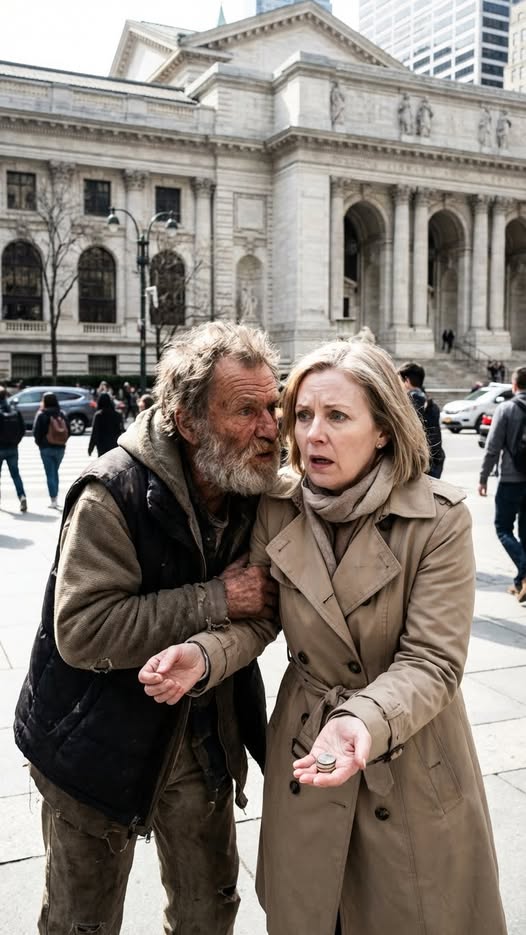
The morning Richard died, the silence in the kitchen wasn’t peaceful; it was predatory. It sat in his empty chair, heavy and suffocating, waiting to swallow me whole. That was eighteen months ago, a lifetime measured in unpaid bills and cold dinners. The grief counselor, a young woman with kind eyes and zero life experience, told me it would get easier. She spoke of “stages” and “acceptance.” She never mentioned that silence would become my roommate, or that grief is expensive.
My name is Margaret Chen. At sixty-three, I was supposed to be planning garden renovations and spoiling grandchildren. Instead, I found myself standing in the wreckage of a life I thought was secure. Richard had handled everything—the mortgage, the investments, the insurance. He was the captain of our ship, and I was the passenger who enjoyed the view. When he collapsed from a massive coronary, the ship didn’t just stop; it sank.
The medical bills from his previous hip surgeries had quietly eaten through our nest egg like termites. The life insurance policy, unadjusted for inflation since 1990, barely covered the mahogany casket and the plot at Oakwood Memorial. My daughter in Seattle was busy with her career, her calls rationed to once a month. My son in Texas was fighting his own divorce. I was alone.
So, I did what desperate widows have done for centuries: I liquidated my history. I sold the Victorian house we had lived in for thirty years, the one where we measured the kids’ heights on the doorframe. I paid off the debts and moved into a shoebox apartment on the gray outskirts of Minneapolis, a place where the carpet smelled of other people’s stir-fry and the heater rattled like dying lungs.
Reinvention is a polite word for survival. With a bad hip that clicked with every step and a resume that hadn’t been updated since the Reagan administration, I was invisible to the job market. But the Good Shepherd Senior Center needed a part-time receptionist, and they needed someone who wouldn’t demand a living wage. Twelve dollars an hour. Twenty-five hours a week. It wasn’t a living; it was a pulse.
Every morning, I took the Number 14 bus. And every morning, despite the grinding ache in my hip, I got off two stops early. The doctor said walking was crucial for mobility, but truthfully, I needed the air. I needed to feel the wind on my face to remind myself I was still part of the physical world.
That was how I found him.
He was a fixture outside the public library, as permanent and weathered as the brick facade itself. He sat on the same wooden bench every single day, an elderly black man with shock-white hair and a posture that defied his circumstances. He wore a faded green military jacket, regardless of the Minnesota chill, and a pair of scuffed boots that had walked a thousand miles.
He never begged. He never held a cardboard sign with a tragic story scrawled in Sharpie. He simply sat with a small paper cup on the bench beside him, hands folded in his lap, watching the morning rush with a quiet, regal dignity.
He reminded me of my father. It was the eyes—warm, brown, and unhardened by the cruelty of the street. The first time I stopped, the wind was whipping dead leaves around my ankles. I didn’t know the etiquette of charity. I just dropped a five-dollar bill into his cup and stammered, “I hope the day treats you well.”
He looked up, and his face broke into a smile that seemed to warm the air between us. “God bless you, Ma’am. You have a spirit that shines.”
I walked away with tears pricking my eyes, inexplicable and sudden. After that, it became our ritual. The unseen widow and the invisible man. Some days it was a five-dollar bill; other days it was just the heavy silver change from my coat pocket. We began to trade words like currency.
I learned his name was Samuel Washington. He was seventy-four. For thirty-five years, he had been a high school history teacher, shaping minds and grading papers on the Civil War and the Reconstruction. Then his wife died. Grief was followed by a pension fraud scheme that wiped him out, followed by gentrification that turned his apartment building into luxury condos he couldn’t look at, let alone afford.
Now, he slept at the St. Jude’s Shelter when he was lucky, and under the 4th Street Bridge when he wasn’t.
“You should be inside, Samuel,” I scolded him one November morning, my breath pluming in the freezing air. “It’s too cold for you out here.”
“The Lord provides, Mrs. Margaret,” he said, adjusting his thin collar. “He sent you to check on me, didn’t He?”
I didn’t feel like a divine provision. I felt like a woman holding onto the edge of a cliff by her fingernails. But Samuel became my anchor. We talked about his former students, about my distant children, about the books we loved. He was intelligent, articulate, and heartbreakingly kind.
Seasons bled into one another. Winter’s gray slush gave way to a reluctant, muddy spring. Life had settled into a rhythm of dull survival. I got a fifty-cent raise. My daughter announced she was pregnant. I turned sixty-four alone in my apartment with a store-bought cupcake.
Then came that Tuesday in late March. The air was crisp, smelling of thawing earth. I got off the bus, ready for our morning chat.
But Samuel wasn’t sitting.
He was standing by the curb, his body tense, his eyes darting back and forth across the street like a soldier in enemy territory. When he saw me, he didn’t smile. He lunged.
He grabbed my arm, his grip surprisingly iron-clad. “Mrs. Margaret,” he hissed, pulling me toward the rough brick wall of the library, out of the pedestrian flow. “You need to listen to me. Right now.”
“Samuel? You’re hurting me. What’s wrong?”
“It’s not me.” His eyes were wide, the whites showing all around. “It’s you. It’s your job. The Senior Center.”
I stared at him, my heart beginning to hammer a frantic rhythm against my ribs. “What are you talking about?”
“I can’t explain it all here. Too many ears. But you are in danger, Mrs. Margaret. Grave danger.” He leaned in, his voice dropping to a terrifying whisper. “Watch the new bookkeeper. The redhead. Tiffany. Watch the donation logs. And promise me one thing.”
He squeezed my arm harder, desperate.
“Do not go home tonight. Do not sleep in your apartment. Go to a hotel. Go to a friend’s. Just don’t go home.”
“Samuel, you’re scaring me,” I whispered, the morning cold suddenly biting through my coat. “How do you know about Tiffany? How do you know about the donations?”
“I know things because I am invisible,” he said, his voice trembling slightly. “People talk around a homeless man like he’s a fire hydrant or a trash can. They say things on their phones. They meet on benches. They don’t think I have ears.” He looked over my shoulder, checking the street again. “Please. Just trust me. Act normal today. Don’t ask questions. Don’t look at the files. Just survive the day, and do not go home.”
“I… I promise.”
“Good. Come back tomorrow. I’ll show you.”
He released me and slumped back onto the bench, instantly transforming from a frantic informant back into the passive observer. I stood there for a moment, shaken to my core, before turning toward the Good Shepherd Senior Center.
The walk felt miles longer than usual. My hip throbbed in time with my racing thoughts. Was Samuel having a mental break? Or was he right?
The Center was a low-slung brick building that smelled perpetually of pine cleaner and overcooked vegetables. We served two hundred elderly clients—day programs, meals on wheels, socialization. It was a good place. Or so I thought.
The director, Patricia Holloway, was a pillar of the community. She had run the center for twelve years with a polished, corporate efficiency. She was the kind of woman who wore pearls with her cardigans and remembered everyone’s birthday.
And then there was Tiffany Reynolds. The new bookkeeper. She had started three months ago, a bubbly twenty-eight-year-old with flaming red hair and a smile that seemed a little too wide, a little too practiced.
I sat at my reception desk, answering phones, my hands slick with sweat. Good morning, Good Shepherd, how may I direct your call? My voice sounded normal, but my eyes kept drifting to the glass-walled office where Tiffany worked. She was typing furiously, pausing only to laugh at something on her phone.
Nothing looked wrong. Everything felt wrong.
At 1:00 PM, Patricia stepped out of her office. She walked straight to my desk, her heels clicking on the linoleum like a metronome.
“Margaret, dear, do you have a moment?”
My stomach dropped to my knees. “Of course, Patricia.”
“Have you… heard anything odd lately? From the donors?” She leaned against my desk, her face a mask of concern.
“Odd?” I managed to keep my voice steady. “In what way?”
“Oh, probably nothing. A regular donor called yesterday claiming her tax receipt didn’t match her records. She thought she gave more than we acknowledged. I’m sure it’s just a clerical error. Tiffany is looking into it.”
Watch the bookkeeper, Samuel had said.
“I haven’t heard anything,” I lied. “But I’ll keep an ear out.”
“You do that.” Patricia smiled, but it didn’t reach her eyes. Her eyes were flat, calculating. “You’re such a treasure, Margaret. We rely on your discretion.”
The rest of the afternoon was an exercise in paranoia. Every time the phone rang, I jumped. Every time Tiffany walked past the front desk to use the restroom, I felt like a rabbit sensing a hawk.
At 4:45 PM, fifteen minutes before closing, Patricia called me into her office.
“Shut the door, please, Margaret.”
I sat in the plush guest chair. Patricia was behind her mahogany desk, hands clasped.
“I need to share something with you in strict confidence,” she began, her voice grave. “I’ve discovered something terrible. There is fraud occurring at this center.”
My breath hitched. “Fraud?”
“Systematic embezzlement. Someone has been skimming from the donation fund. We’re missing nearly forty thousand dollars over the last quarter.” She sighed, looking pained. “I suspect… well, I suspect it might be an inside job. I’ve called the police. They’ll be starting an investigation tomorrow.”
She fixed me with a stare that felt like a laser.
“Margaret, I need to know. Has anyone approached you? Has anyone asked to see the financial records? Maybe someone… trying to cover their tracks?”
I realized then what was happening. The way she framed the questions. The timing. She wasn’t confiding in me. She was auditing me. She was checking to see if I was the leak, or perhaps, she was preparing to position me as the patsy. The elderly receptionist with financial troubles. It was a perfect narrative.
“No one,” I said, gripping my purse strap until my knuckles turned white. “I just answer the phones, Patricia.”
“Good,” she said, her posture relaxing slightly. “That’s good. You can go home now, Margaret. Get some rest. You look tired.”
You look tired. It sounded like a threat.
I left the building as fast as my bad hip would allow. The sun was setting, casting long, bruised shadows across the parking lot. Samuel’s voice echoed in my head, louder than ever. Don’t go home.
I stood at the bus stop. The Number 14 was coming. It would take me to my apartment, to my bed, to my things. The alternative was a hotel I couldn’t afford.
But fear is a primal instinct. It overrides logic. I let the bus pass.
I walked three blocks to the Starlight Motel, a dingy establishment with a flickering neon sign. I paid forty-nine dollars for a room that smelled of stale smoke and regret. I locked the door, engaged the chain, and pushed a chair under the handle.
I lay on the stiff bed, staring at the water-stained ceiling, waiting.
At 2:13 AM, my cell phone rang.
I stared at the screen. Unknown Number.
“Hello?” My voice was a croak.
“Mrs. Chen? This is Sergeant Rivera with the Minneapolis Police and Fire Department.”
The world stopped spinning.
“Yes?”
“Ma’am, I’m calling about your residence at the Garden View Apartments. There has been a significant structural fire. It appears to have originated in unit 3B. That is your unit, correct?”
Unit 3B. My unit.
“Yes,” I whispered. “Is… is anyone hurt?”
“We evacuated the building. But the damage to your unit is total. We were calling to verify your location. We couldn’t find you at the scene.”
“I’m… I’m away,” I stammered. “I’m staying at a hotel tonight.”
“That is extremely fortunate, Ma’am. The fire moved very fast. If you had been in there…” He trailed off. “We’ll need you to come in for a statement tomorrow.”
I hung up the phone and vomited into the trash can.
If I had gone home. If I had slept in my bed. I would be ash.
Samuel knew.
I didn’t sleep. I sat in the plastic chair by the motel window, watching the sun bleed into the sky, shaking with a terror that felt cold and wet.
At 7:00 AM, I took a taxi to the library. I didn’t care about the cost.
Samuel was there. When he saw me getting out of the cab, he stood up, and for the first time, I saw him cry. He rushed over and embraced me—a hug of desperate relief that smelled of rain and old wool.
“You’re alive,” he choked out. ” praise God. You didn’t go home.”
“It burned, Samuel,” I sobbed into his shoulder. “My apartment. They burned it.”
“I know. I knew they would.”
He led me to the bench. “Sit. We have work to do.”
He reached into the inner lining of his jacket and pulled out a battered, spiral-bound notebook and an ancient flip phone wrapped in a plastic bag.
“I have been watching them for three weeks,” Samuel said, opening the notebook. His handwriting was cramped, precise, and meticulous—the handwriting of a teacher.
“Three weeks ago, two men sat right here. They didn’t see me. They were arguing about money transfers. They mentioned Good Shepherd. They mentioned ‘cleaning the books.’ One of them was a tall man, expensive suit, sharp face.”
“Patricia’s brother,” I realized. “I’ve seen him pick her up for lunch.”
“They talked about the operation being compromised,” Samuel continued, tapping a page dated four days ago. “They said the receptionist—that’s you, Margaret—was asking too many questions. They said you were a liability. They used the word ‘kindling’.”
I shivered. “Kindling.”
“Yesterday,” Samuel said, his voice hard, “I saw Patricia herself. She met the tall man here. They weren’t arguing anymore. They were planning. They talked about an electrical fire. They talked about how sad it would be. A tragic accident for a lonely widow.”
He handed me the flip phone. “Press the center button.”
I did. A grainy photo appeared on the tiny screen. It was taken from a distance, but the subjects were unmistakable. Patricia Holloway and the Tall Man, heads close together on this very bench.
“There are more,” Samuel said. “I followed them to a coffee shop. I took pictures of them passing an envelope to a third man—a guy with a neck tattoo. I’m guessing he’s the one who lit the match.”
I looked at Samuel. This man, who had lost everything, who society had deemed worthless, had conducted a better investigation than the police.
“Why?” I asked, looking at his weathered face. “Samuel, why did you do this? You put yourself in danger.”
He smiled, that same gentle smile. “Because you saw me, Margaret. For a year, thousands of people walked past this bench. They looked through me. You stopped. You looked me in the eye. You asked how I was. You treated me like a man.”
He tapped his chest. “I was a history teacher. I taught my students that evil prevails when good men do nothing. I may not have a house, or a car, or a bank account. But I am still a man. And I wasn’t going to let them hurt my friend.”
I closed the notebook. The evidence was heavy in my hands.
“We have to go to the police,” I said. “Not just for me. For everyone they’re stealing from.”
“Yes,” Samuel said, standing up and straightening his jacket. “Let’s go teach them a lesson.”
Walking into the precinct with a homeless man and a flip phone, I expected to be laughed at. But I had underestimated the power of Samuel Washington.
When we sat down with the detectives, Samuel didn’t slump. He sat with the posture of a headmaster. He laid out the notebook. He narrated the timeline. He correlated his observations with the dates of the financial discrepancies I knew about. He spoke with such clarity, such authority, that the detectives stopped looking at his clothes and started looking at his data.
They brought in the fraud unit. Then the arson investigators.
The picture Samuel painted was devastating. Patricia Holloway wasn’t just skimming; she was running a syndicate. She was draining funds from three different senior centers across the state, laundering the money through her brother’s shell companies, and using Tiffany as the ignorant button-pusher.
When they connected the “neck tattoo man” from Samuel’s photos to a known arsonist in their database, the dominoes began to fall.
I spent the next week in emergency housing, protected by the police. They arrested Patricia at the center. I wasn’t there to see it, but I heard she was led out in handcuffs in front of the entire bingo club. Her brother was picked up at the airport, trying to board a flight to the Caymans.
The trial took place six months later.
I took the stand and told the jury about the “clerical errors,” the fake kindness, the trap she tried to spring on me. But the star witness was Samuel.
They cleaned him up for court—a donated suit, a haircut. When he walked to the stand, he looked like a senator. He walked the jury through his notebook, page by page. The defense attorney tried to discredit him, tried to paint him as a crazy vagrant.
“Mr. Washington,” the lawyer sneered, “you live on a bench. How can we trust your recollection of complex financial conversations?”
Samuel adjusted his glasses. “Sir, I live on a bench because my pension was stolen by men in suits very much like yours. My lack of an address does not affect my hearing, nor does it impair my ability to recognize a conspiracy when it is discussed three feet away from me. Poverty is not a cognitive defect.”
The courtroom went silent. The jury was captivated.
Patricia Holloway was found guilty on twelve counts of fraud, embezzlement, and conspiracy to commit murder. She was sentenced to fifteen years. Her brother got twelve. The arsonist got twenty.
As the gavel banged, finalizing the sentence, I looked across the aisle at Samuel. He wasn’t smiling. He just nodded, a slow, solemn nod of a historian watching a chapter close.
We walked out of the courthouse into the bright summer sun. Reporters were swarming, cameras flashing. They wanted the story of the Widow and the Vagrant.
“I need to go,” Samuel whispered to me amidst the chaos. “Too much noise.”
“I’ll see you tomorrow?” I asked. “At the bench?”
“Of course, Mrs. Margaret.”
But he wasn’t there the next day. Or the day after.
The bench was empty. The library staff hadn’t seen him. I checked the shelter. I checked under the bridge.
Samuel Washington had vanished.
Panic is a cold thing. I thought the cartels had found him. I thought Patricia had friends on the outside.
For three days, I searched the city. I showed his picture to everyone. Finally, a nurse at Hennepin County Medical Center recognized the photo.
“He was brought in three nights ago,” she said gently. “Collapse. Kidney failure. He’s in ICU.”
I ran.
I found him hooked up to machines that beeped and hissed. He looked so small in the hospital bed, stripped of his heavy coat and his dignity. The doctor told me it was untreated diabetes, compounded by malnutrition and exposure. His body had simply given out.
I sat by his bed and took his hand. It felt like dry parchment.
“Samuel,” I whispered.
His eyes fluttered open. They were cloudy, but the warmth was still there.
“Mrs. Margaret,” he rasped. “You’re safe?”
“I’m safe. We won. But you… you need to get better.”
“I’m tired,” he sighed. “The teaching day is done.”
“No,” I said fiercely. “No, it is not. You saved my life, Samuel Washington. You don’t get to check out now. I won’t allow it.”
I didn’t just sit there. I went to war.
I used my fifteen minutes of fame from the trial. I called the reporters back. I told them the real story—not about the fraud, but about the hero who was dying because he couldn’t afford insulin.
The story went viral. The Teacher on the Bench.
Donations poured in. Former students of his, now grown with families of their own, recognized his name in the news and came forward. “Mr. Washington taught me to read,” one comment said. “He bought me lunch when I had none,” said another.
A top-tier law firm took his case pro bono and managed to claw back a portion of his stolen pension from the state fund. A housing nonprofit fast-tracked an application.
It took two months, but by June, Samuel was discharged.
I was there the day he moved into his new apartment. It was a one-bedroom unit in a seniors’ complex, with a large window overlooking a park. It was warm. It was safe.
We sat in his living room, surrounded by boxes of donated books. I had framed a photo of his late wife and hung it on the wall.
“You didn’t have to do all this,” he said, looking around as if expecting the walls to dissolve.
“Yes, I did.” I poured us tea. “You saved me from the fire, Samuel. But before that, you saved me from the silence. You gave me a friend when I was invisible.”
He took a sip of tea, his hand shaking slightly less than before.
“You know,” he said softly, “I used to tell my students about the Ripple Effect. How a single stone dropped in water creates waves that reach shores you can’t even see.”
“Ripples,” I repeated.
“That morning,” he looked at me. “When you stopped and dropped five dollars in my cup. That was the stone. If you hadn’t done that, you would have walked past me that Tuesday. I wouldn’t have grabbed your arm. You would have gone home.”
I shivered, thinking of the flames.
“A five-dollar bill,” I mused. “And a ‘good morning’.”
“Kindness is a currency, Margaret,” he said. “And it has the highest exchange rate of all.”
I am sixty-five now. Life looks different.
My daughter named her baby Eleanor, and sends me pictures every day. I work at a different center now, one where I check the books myself. I still have a bad hip, and I still take the bus.
But every morning, I get off two stops early. I walk to a nice apartment building near the park. I buzz unit 104.
Samuel answers. We drink coffee. He tells me about his volunteer work at the library, where he tutors at-risk kids. He teaches them history. He teaches them that they matter.
People ask me what I learned from the crime, the fire, the trial. They expect a lesson on vigilance or security.
But I tell them this:
Look at the people you usually ignore. Stop for the person sitting on the bench. Look them in the eye. Because you never know who is watching over you. You never know which invisible person holds the key to your survival.
We are all just one ripple away from being saved, or being lost.
Choose to drop the stone.