I never expected the final verdict on my life to be delivered over grilled salmon and vintage Pinot Grigio.
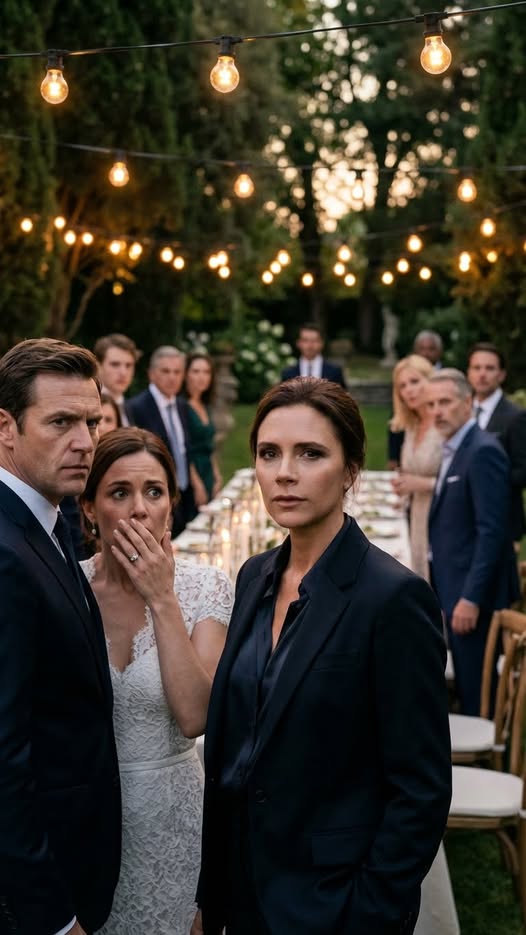
The lights in my parents’ backyard were warm, strung like pearls against the twilight sky. The smiles of the guests were practiced, rehearsed for an evening of polite envy and congratulations. My sister, Evelyn, held court at the head of the table, her laughter carrying easily over the garden, bright and sharp. She was telling a story—one I had heard a dozen times—about how “quaint” it was that I worked in the administrative offices of the downtown courthouse.
“Varity keeps the files in order,” she said, her voice dropping to a conspiratorial whisper that wasn’t a whisper at all. “She’s the backbone of the bureaucracy. Someone has to answer the phones, right?”
People chuckled. Someone clinked a fork against a glass in agreement. My chest burned, a slow, familiar heat that rose from my stomach to my throat, but I stayed quiet. I stared at the linen tablecloth, tracing the weave with my thumb, just like I always did.
Then, her fiancé, Daniel, turned toward me.
He hadn’t been laughing. He had been studying my face for the last ten minutes with a furrowed brow, like a man trying to recall the title of a song that was stuck in his head.
“So,” Daniel asked, his voice cutting through the ambient chatter, “what do you actually do, Varity?”
I didn’t explain. I didn’t offer a resumé. I didn’t defend myself against twenty years of my family’s dismissal.
I said one word.
And what happened next wasn’t loud. It wasn’t messy. It didn’t involve overturned tables or wine thrown in faces. But it was an earthquake, deep and subterranean, that changed how my family looked at me forever.
My name is Varity Cole. And for as long as I can remember, my family has been addicted to neat labels. The kind of labels you can slap on a person to explain them away quickly at dinner parties, the kind that don’t invite follow-up questions.
Evelyn was the “Star.” Ambitious, charismatic, the kind of person who could walk into a room and make the atmosphere orbit around her gravitational pull. She was a marketing executive who spoke in exclamation points.
And me? I was the “Quiet One.” The reliable one. The one who “worked at the courthouse.”
That phrase had become my cage. At Thanksgiving tables, birthday dinners, and casual phone calls with relatives who hadn’t seen me in years, it was always the same.
“So, you’re still doing admin work, Varity?” they’d ask, smiling with a pity that masqueraded as kindness.
I’d nod. “Yeah, still there.”
And the conversation would move on to Evelyn’s new promotion, or Evelyn’s new car, or Evelyn’s new fiancé.
What they didn’t see—what they refused to see—was how carefully I had learned to stay invisible around them. It wasn’t because I was ashamed of my life. It was because I learned early on that my accomplishments made people uncomfortable. Specifically, they made Evelyn uncomfortable. If I shone too brightly, she dimmed. And when Evelyn dimmed, the whole house became cold.
So, I softened my words. I rounded the edges of my life. I let them believe the smaller version of me existed because it kept the peace. It was a habit, like biting my nails or apologizing when someone else bumped into me.
But habits, no matter how deeply ingrained, are not destiny. And as I sat there gripping the stem of my wine glass, I realized that the peace I was keeping was actually a war I was waging against myself.
The toast was about to begin. Evelyn stood up, tapping her glass.
The engagement party was exactly what you’d expect from a production directed by Evelyn. It was picture-perfect, overdone, and carefully designed to induce envy.
White hydrangeas overflowed from crystal vases. A banner reading Evelyn & Daniel: Forever hung so high between the oak trees that it felt like a billboard watching us.
I had arrived two hours early because that was my role. The “Help.”
Before I could even set my purse down, my mother, Susan, handed me a stack of cocktail napkins and pointed toward the bar.
“Can you help the bartender set up the ice?” she asked, already turning away to greet a cousin she liked better. “And make sure the napkins are fanned out. Evelyn likes them fanned.”
No eye contact. No “How are you?” Just a directive.
By the time the guests started arriving, I had refilled the ice bins twice, wiped down a counter no one had used yet, and directed three catering vans to the side entrance. I told myself it was fine. I was useful. I was the grease in the gears of Evelyn’s perfect machine.
Then Evelyn arrived.
She stepped out of a black town car, glowing in a dress that cost more than my first car. The diamond on her finger caught the string lights, flashing like a strobe. People gathered around her instantly, a moth-to-flame dynamic that she had mastered by age twelve.
“You look stunning!”
“The dress is perfection!”
“Where is the lucky man?”
Daniel followed close behind her.
He was different than her usual type. Evelyn usually dated men who were loud, flashy, and consumed all the oxygen in the room—men who were mirrors reflecting her own glory. But Daniel was polished, calm, and grounded. He shook hands firmly, thanked people by name, and listened more than he spoke. He looked like someone who knew how to hold a room without trying too hard.
At first, he barely looked at me. Evelyn was too busy parading him around like a prize pony.
“He just closed the merger on the Omni-Corp deal,” Evelyn bragged to our Aunt Linda. “Big wins. Big numbers.”
My parents beamed like they had negotiated the contract themselves.
I stood near the edge of the crowd, my champagne untouched, watching the same story I’d seen my whole life play out in high definition. I was part of the scenery, like the hedges or the patio furniture.
Then Evelyn noticed me standing there.
“Come here!” she called out, waving me over with a gesture one might use for a Golden Retriever. “I don’t think everyone has met my sister.”
She wrapped an arm around my shoulder, squeezing a little too tight. “Everyone, this is Varity. She works at the courthouse.”
There were a few polite nods. Mild, glazing interest.
“She’s just admin,” Evelyn added quickly, letting out a laugh that tinkled like broken glass. “Keeps things organized. Answers the phones. You know how it is—someone has to keep the paperwork moving while the rest of us change the world.”
Someone chuckled. Another person smiled like that explained everything about my existence.
I felt the familiar heat rise in my chest. The old instinct kicked in—to smooth it over, to make a self-deprecating joke, to fade back into the wallpaper. Just let it go, Varity. Don’t ruin her night.
I looked down at my glass and took a slow breath. This wasn’t new. This was just louder than usual.
But Daniel didn’t laugh.
He was watching me now, really watching. His smile faded just slightly. His eyes searched my face, narrowing as if he was flipping through a mental Rolodex of faces that didn’t quite line up with the setting.
I saw the moment of hesitation. The pause that didn’t belong in the script.
“Dinner is served!” the caterer announced.
As we moved to the long banquet table, Daniel paused as I pulled out my chair. He looked at me, then at Evelyn, then back at me. The puzzle pieces were clicking together in his mind, but he couldn’t quite see the picture yet.
I sat down. The trap was set, though I didn’t know I was the one about to spring it.
Dinner was an elaborate affair of courses that were too pretty to eat. I took a seat near the end, exactly where I was expected to be—close to the kitchen, far from the power center.
Toasts were made. My father spoke about how proud he was of Evelyn’s “drive.” My mother spoke about how beautiful the wedding would be.
Evelyn soaked it all in, radiating triumph. Then, she stood up to offer her own toast. She raised her glass, looking lovingly at Daniel, and then cast a sideways glance down the table at me.
“I’m just so lucky,” she began, her voice sugary sweet. “To have found a partner who understands ambition. Who understands that success isn’t just given, it’s taken.”
She paused, grinning.
“Some people are built to argue important cases,” she said, nodding toward Daniel. “And some people are built to answer the phones.”
She looked directly at me. “Right, Varity?”
It was a dare. She was daring me to react, to be petty, so she could look like the victim.
That was when Daniel turned fully in his chair. He ignored Evelyn. He looked straight down the length of the table at me, his eyes wide with a sudden, dawning realization.
“Wait,” he said slowly. His voice wasn’t loud, but it cut through the murmurs like a knife.
“Varity,” he asked, “what exactly do you do at the courthouse?”
The table went still. Every eye shifted in my direction. Suddenly, there was nowhere left for the lie to hide.
For a moment, no one spoke. The question hung there, awkward and exposed, like a live wire pulled loose from the wall.
I felt the weight of years pressing into my shoulders. I looked down at my hands resting on the table. One thumb traced the rim of my glass. The wood beneath my fingers was cool, solid, real.
In that pause, a thousand small moments rushed in. Every holiday where I’d been asked to set up the kids’ table while Evelyn drank wine with the adults. Every time my work was summarized into a single word that made people comfortable. Every time I’d chosen silence because it seemed easier than watching disappointment flicker across my parents’ faces.
I realized something then. I hadn’t been protecting them by staying quiet. I’d been protecting the version of me they preferred—the smaller one. The one who didn’t challenge anyone’s pride.
Across from me, Evelyn was smiling too hard. Her jaw was tight. She sensed the shift. My mother stared at her plate. My father reached for his glass and stopped halfway.
Daniel was still watching me. Not impatient. Not mocking. Just waiting for the truth.
The old instinct told me to soften it. To say, Oh, I work in legal services. To keep the peace one more time.
But another feeling rose up. Calm. Steady. Iron.
If I spoke now, the truth would land. If I stayed silent, the lie would keep living, and I would keep shrinking until I disappeared entirely.
I straightened in my chair. I set my glass down. The sound was small, but distinct.
I looked at Daniel first. Then at my parents. Then finally, at Evelyn.
I didn’t raise my voice. I didn’t smile. I didn’t explain.
“Judge,” I said.
The word landed softly, almost politely. But the effect was immediate.
The air shifted. Conversations died mid-breath. Forks paused halfway to mouths. Even the crickets seemed to stop chirping.
For a second, no one moved. My mother’s face drained of color so fast it startled me. Her lips parted, then closed again. My father blinked hard, his hand tightening around his glass.
Evelyn laughed. It came out sharp and brittle, a desperate sound.
“Oh my god,” she said, waving a hand dismissively. “Very funny, Varity. Don’t be weird.”
I didn’t look at her. I kept my eyes on Daniel.
He hadn’t laughed. He leaned back slowly, studying me like he was reassembling a memory piece by piece.
“Judge,” he repeated quietly.
Then, his eyes widened.
“The Honorable Varity Cole,” he said. “Superior Court. Downtown.”
No one breathed.
“You presided over my corporate merger dispute last year,” Daniel went on, his voice gaining strength. “The arbitration hearing. I stood in front of you for three days. You ruled on the motion to dismiss.”
The silence deepened, heavy and undeniable.
Evelyn’s smile froze, turning into a rictus of confusion and rage.
“What are you talking about?” she snapped, turning toward him. “She works admin! She answers the phones! You’ve met her like, twice!”
Daniel didn’t look at her. He couldn’t take his eyes off me.
“I know what admin work looks like, Evelyn,” he said calmly. “And I know what a judge looks like. I know what authority looks like.”
He looked back at me, a newfound respect dawning in his expression. “You were fair. Direct. You didn’t grandstand. You listened to every argument, and then you cut through the noise in five minutes. That’s why I remember. You were the smartest person in that room.”
My father finally found his voice. It was a rusty, creaking thing.
“You’re… a judge?” he asked. Disbelief was thick in his tone, but underneath it was something else—fear. “Since when?”
“Three years,” I said evenly. “I was appointed to the bench three years ago. Before that, I was a senior prosecutor for seven years.”
My mother shook her head as if the words were in a foreign language. “But… but you said you were assisting someone. You said you worked at the courthouse.”
“You said I was admin,” I replied, my voice steady. “And I didn’t correct you. Because every time I tried to talk about my career, you asked if I was dating anyone yet. Or you asked if I could help Evelyn with her taxes. You never asked what I actually did.”
That was when it hit them. Not all at once, but slowly, painfully. The realization that the story they’d been telling themselves for years hadn’t been uncorrected because it was true—but because it was convenient. Because my smallness made their largeness feel secure.
Evelyn pushed her chair back, the legs scraping violently against the stone patio.
“This is ridiculous,” she hissed. “You let everyone believe you were a secretary. Who does that? You’re a liar.”
I met her gaze. For the first time in my life, I didn’t feel the need to look away.
“I didn’t lie,” I said. “I stopped correcting you. There is a difference.”
Her face flushed a deep, blotchy red. “You did this on purpose! You waited until my engagement party—my night—to embarrass me!”
I shook my head. “You embarrassed yourself, Evelyn. I answered a question you asked in front of everyone. You wanted to make a joke about me answering phones. It backfired.”
She turned to Daniel, clutching his arm. “You knew? You knew she was a judge and you didn’t tell me?”
“I didn’t know,” Daniel said, pulling his arm away gently but firmly. “I never connected Judge Cole to your sister. You never said her last name. You never let her speak long enough for me to hear her voice. Until tonight.”
That landed harder than anything I could have said.
Reactions rippled outward around the table. My uncle stared at his hands, muttering something under his breath. My grandmother, who sat at the far end, reached across the table and squeezed my wrist.
“I always knew,” she said softly. “You carry yourself differently, Varity. You always have.”
Evelyn stood up so abruptly her chair tipped over.
“This is my night!” she screamed, her voice shaking with tears of frustration. “And you’ve ruined it! You always find a way to make it about you!”
I stayed seated. I picked up my wine glass.
“No one is making it about me,” I replied calmly. “Until you mocked me. Until you tried to reduce me to a punchline in front of your fiancé and our family. That wasn’t accidental, Evelyn. That was a choice.”
Her mouth opened, then closed. For the first time in her life, she didn’t have a comeback. The narrative she controlled had shattered.
Daniel stood up slowly.
“Evelyn,” he said carefully. “The way you spoke to her… the way you’ve been speaking about her for months…”
“Don’t,” she cut him off, panic entering her eyes. “Don’t you dare side with her. You’re supposed to be on my side.”
“I’m on the side of the truth,” Daniel said. “And I don’t know how I missed this. I don’t know how I let you talk about your own sister like that without checking the facts.”
That was the moment it broke. Not loudly, not explosively, but completely. Evelyn looked around the table and realized the orbit had shifted. The gravity wasn’t hers anymore.
No one was laughing. No one was defending her. Even my parents sat frozen, caught between the daughter they’d always praised and the stranger sitting across from them who held the power of the law in her hands.
“This is unbelievable,” Evelyn whispered. “You think you’re better than me now?”
I looked at her, and all I felt was a profound exhaustion.
“No,” I said. “I think I finally stopped pretending to be less.”
She stared at me for a long second, something raw and frightened flickering behind her anger. Then she turned and ran inside the house, her heels striking the floor like punctuation marks at the end of a sentence.
Daniel hesitated. He looked at me. There was conflict in his eyes, but also a profound apology.
“I need to talk to her,” he said quietly.
I nodded. “Go.”
After they left, the table stayed silent. The champagne went warm. The plates sat untouched.
My mother finally reached for my hand across the table. Her fingers were trembling.
“Why didn’t you tell us, Varity?” she asked, her voice small, almost childlike.
I didn’t pull away. But I didn’t offer comfort, either.
“Because every time I tried to be seen,” I said, “you looked away.”
No one argued with that.
The next morning, I woke up to a quiet phone and a strange, unfamiliar sense of calm. No dread. No replaying the night in my head wondering if I had messed up. Just sunlight through the blinds and the steady hum of the city outside my window.
Then, the messages started coming in.
Missed calls. Long texts. Short apologies that felt clumsy but sincere. Relatives who suddenly wanted to “catch up” and hear about my career. My parents left two voicemails. I listened to neither.
Around midday, there was a knock at my door.
It was Daniel.
He looked tired, like someone who hadn’t slept but had done a lot of thinking. He wasn’t wearing his suit armor today; just jeans and a t-shirt.
“Coffee?” I offered.
“Please.”
We sat at opposite ends of my couch, the steam from the mugs rising between us.
“I didn’t break off the engagement,” he said finally. “Not yet. But we had a long talk. A very long talk.”
I nodded. “She’s not a bad person, Daniel. She’s just… she’s been the sun for a long time. It burns to look at anything else.”
“I can’t unsee it now,” he said, rubbing his face. “The way she spoke to you. The way everyone let it happen. It made me wonder what else I’ve been missing. What other narratives I’ve just accepted because she told them with confidence.”
He looked at me. “I owe you an apology, Judge Cole. I should have asked sooner. I shouldn’t have laughed at the admin jokes.”
“You didn’t laugh last night,” I reminded him. “That counts for something.”
“I don’t know what this means for us yet,” he admitted. “But I know I can’t ignore it. I can’t marry someone who needs to put others down to feel tall.”
When he left, the apartment felt lighter. Not empty, just honest.
A few days later, Evelyn showed up unannounced.
She wasn’t wearing makeup. Her hair was pulled back in a messy bun. It was the version of her that never appeared at family gatherings—the vulnerable version.
We didn’t hug. We didn’t fight. She stood in my doorway, looking at the law books stacked on my coffee table, the robe hanging on the back of the door.
“I was scared,” she said finally, her voice rough.
“Scared of what?”
“Of being ordinary,” she whispered. “Of being second. If you were the smart one, and the successful one… then who was I? I was just the loud one.”
I believed her. It didn’t excuse the years of dismissal, but it explained them.
“I’m not here to compete, Ev,” I told her. “I never was. There is enough room for both of us to be successful. You didn’t have to erase me to shine.”
She nodded slowly, tears welling in her eyes. “I think… I think I forgot how to be a sister because I was too busy being a star.”
We weren’t suddenly close. Nothing was fixed overnight. The cracks in the foundation were deep, and it would take more than one conversation to fill them.
But something had shifted.
My parents started asking questions—real questions about my cases, about the law—and actually waiting for the answers. My cousin Lily smiled at me across dinner tables, and for the first time, I didn’t feel the need to explain myself at all.
I used to think staying quiet was the same as being kind. I thought that by making myself smaller, I was giving my family a gift—the gift of comfort.
I was wrong.
Silence didn’t protect anyone. It just taught people how small they could make me before I broke. It validated their blindness.
The truth is, you don’t owe anyone a smaller version of yourself just to keep the peace. You don’t owe them your invisibility.
Last week, I walked into the courtroom. The bailiff announced, “All rise.”
I looked out at the room. I saw the lawyers, the defendants, the families. And in the back row, I saw my parents, sitting quietly, watching.
I sat in the high chair behind the bench. I arranged my robes. I picked up the gavel.
For the first time in my life, when I spoke, the world didn’t just listen. It understood.
If you have ever been there—hiding your growth so others feel comfortable, swallowing your pride so others can shine—you are not alone. But remember: the truth has a way of coming out, usually when you least expect it.
Don’t wait for someone else to ask the question. Tell them who you are.
You deserve to be seen.