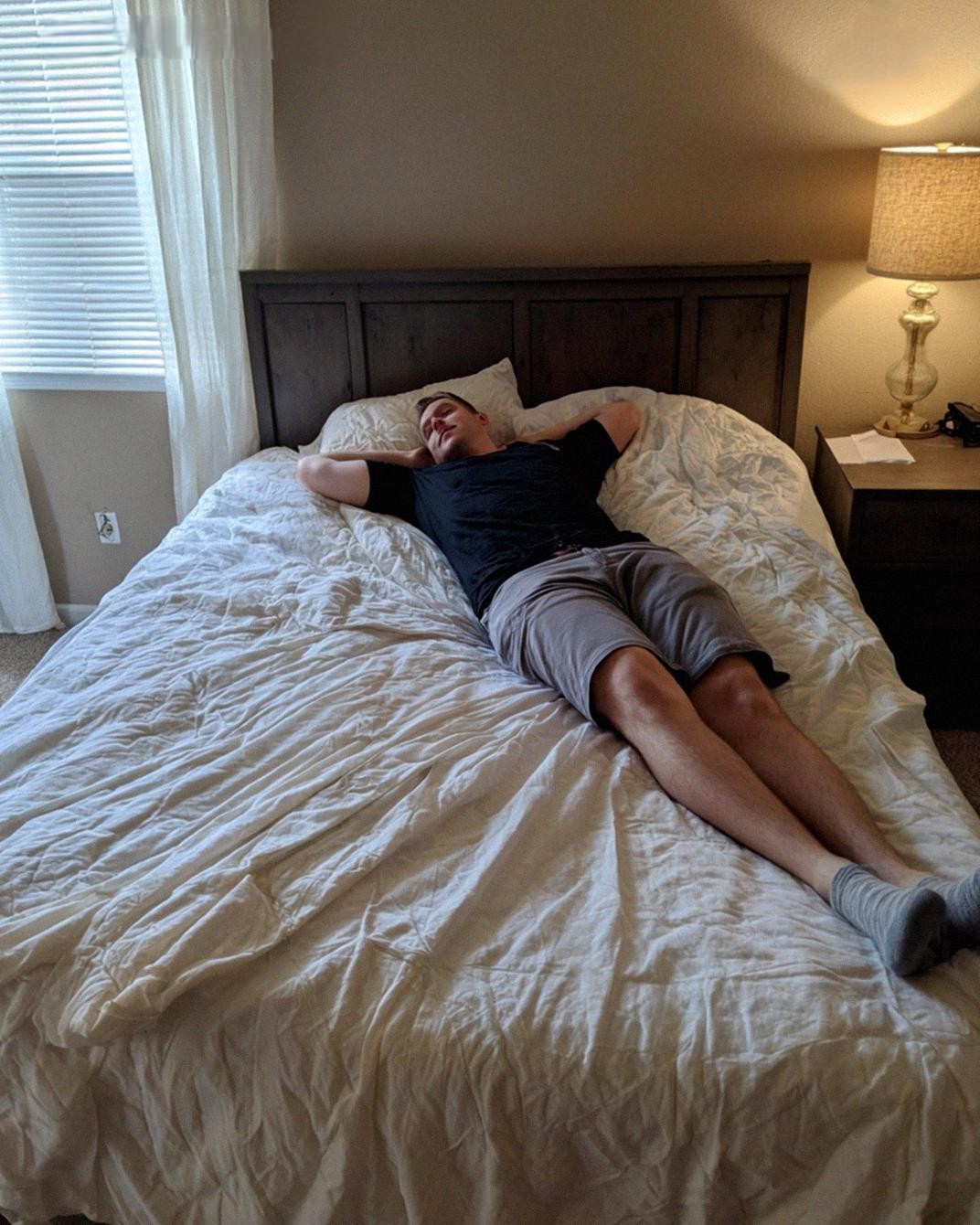
When Erin moved in with Mark, fairness was their unspoken rule. Everything split down the middle — rent, bills, groceries, even the cleaning schedule. They both liked the simplicity of it. Two adults, two incomes, one balanced life.
It worked — at least until the bed broke.
The old frame, inherited from the previous tenants, had been creaking for months. One night, after a late movie and too much takeout, it gave up completely. The slats cracked, the mattress sank, and both of them tumbled to the floor in a mess of sheets and laughter.
At least, Erin laughed. Mark didn’t. He sat up, rubbing his back and scowling.
“Honestly, Erin,” he said, “this thing probably couldn’t handle your weight anymore.”
She froze. For a moment, she thought she’d misheard him. But he didn’t laugh. He didn’t take it back.
The next morning, she decided to let it go — or tried to. She opened her laptop, found a good queen-size frame and mattress on sale, and called out from the kitchen.
“Hey, I found a set with great reviews — hybrid, medium-firm, really durable. Fourteen hundred for both.”
“Sure, whatever you think,” Mark said, scrolling through his phone.
Erin ordered it on her card, then forwarded him the receipt. “Just Venmo me your half when you can,” she said casually.
A moment later, he walked into the kitchen and leaned against the counter. “Half?”
“Yeah. Seven hundred.”
He smirked. “You take up more of the bed than I do. Shouldn’t you cover a little more?”
She blinked. “What?”
He laughed, but his tone didn’t match the smile. “I mean, you’ve put on a bit since your leg injury, babe. You use, what, seventy percent of the mattress? It’s only fair you pay for what you use.”
Something cold settled in Erin’s stomach. “Are you being serious?”
He shrugged. “Just math, Erin. Equality, right?”
She said nothing, afraid of what might come out if she did.
It wasn’t the first time. Ever since her accident — a fractured leg from helping him move furniture — he’d been making small, cutting remarks about her body. He’d call them jokes, but they weren’t funny. “My personal space heater,” he’d say. “Don’t sit on me; I like my knees intact.”
Each comment landed like a paper cut. Individually small, collectively bleeding.
That night, she lay awake thinking about fairness — how easily it could become cruelty dressed as logic.
Four days later, the bed arrived. Erin signed for the delivery, thanked the movers, and stood in the doorway staring at it — the smooth oak frame, the clean white bedding. It looked like a fresh start.
But it wasn’t their bed anymore.
She went to the kitchen, grabbed a roll of painter’s tape, and measured precisely thirty percent of the mattress. She marked the line, then cut the fitted sheet along it. Her side stayed neat, layered, and comfortable. His side — bare, narrow, and rough. She folded his comforter corner sharply and left a single thin blanket and small pillow.
When she finished, she stood back and smiled — not out of spite, but clarity.
Mark came home that evening, kissed her absentmindedly, and headed toward the bedroom.
“Erin, what the hell happened to the bed?” he called out.
She walked in calmly. “I just wanted to make sure everything was fair,” she said. “Since I’m paying seventy percent, I took seventy percent of the space. That’s your thirty.”
He stared, baffled. “You’re joking.”
“I’m not.”
“This is childish, Erin.”
“No,” she said evenly. “This is proportional.”
He ripped the comforter, half out of anger, half out of disbelief. The tear echoed through the room like punctuation on a failed argument.
“Don’t touch my seventy percent,” she said, her voice calm but final.
He slept that night curled up on his strip of mattress. She slept soundly for the first time in weeks.
The next morning, he tried to walk it back. “I was kidding,” he muttered. “You know that.”
She didn’t answer.
“Come on, Erin,” he said. “You always take things too seriously. I can’t joke around anymore.”
She set her mug down and looked him in the eye. “You’re not funny, Mark. You’re cruel. And I’m done pretending that cruelty is humor.”
He scoffed. “You’re really ending things over one comment?”
“No,” she said. “I’m ending things because I stopped recognizing myself around you.”
He stared, unsure whether to be angry or afraid. “You’re kicking me out?”
“I’m asking you to take responsibility,” she said, walking to the desk. She pulled out an envelope she’d prepared the night before — their shared expenses, itemized to the cent. Rent. Utilities. Groceries. Trips. Every time she’d covered more, every time she’d excused it.
“This is what you owe me,” she said, sliding it across the counter. “You have until Sunday.”
He stood there for a long moment, silent. Then, without a word, he left the room.
By the weekend, his side of the closet was empty. His spare key lay on the counter. He texted her once — Good luck, Erin. She didn’t reply.
A month later, a friend sent her a photo from a party — Mark sitting on an air mattress, looking lost. “Guess he’s still paying thirty percent,” the text read. Erin smiled, then deleted it. She didn’t need the satisfaction. She already had peace.
In the weeks that followed, Erin went to therapy. For the first time, she said things out loud she’d been avoiding: that she’d learned to laugh at pain because confrontation felt dangerous, that she’d mistaken “keeping the peace” for keeping herself small.
Her therapist said something that stuck: “You don’t have to be smaller to be loved.”
She repeated it in the mirror every morning.
As her leg healed, she started walking again — slowly at first, then farther each day. She hiked the trail behind her apartment, reaching the top one windy afternoon. The city stretched below her, quiet and infinite. For the first time in years, she felt light — not in body, but in spirit.
She celebrated with a haircut. “Take off the dead ends,” she told the stylist. “All of them.”
She bought herself new clothes — soft fabrics, bold colors, things that hugged her instead of hiding her. She didn’t check sizes. She didn’t pinch her stomach in the mirror. She looked at herself and thought: This body carried me through pain. It deserves comfort, not shame.
At brunch one weekend, her friend Maya said, “You look different. Happier.”
“I am,” Erin said simply. “I stopped giving discounts to people who don’t value me.”
Later that week, she walked through a store and passed the bedding aisle. She ran her hand over the soft cotton of a quilt and smiled.
Fairness, she realized, was never about dividing things evenly. It was about sharing with respect.
And she would never again share her peace with someone who measured her worth in percentages.