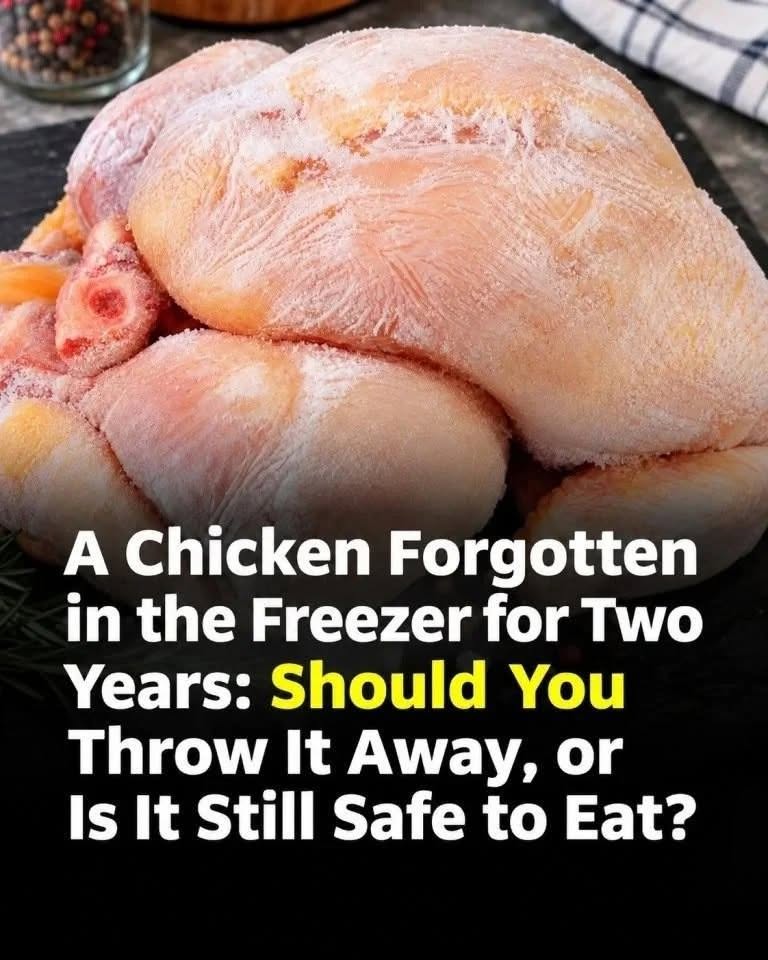
Deep in the freezer, behind the peas and the ice cube tray, you make an unexpected discovery: a chicken that has been forgotten there for two years. Should you cook it, or throw it away without a second thought? The good news is that age alone isn’t the deciding factor. Temperature, the freezer’s history, the thawing process, and the cooking method—these are the points to consider before making your choice. With a few simple checks, you can decide with greater peace of mind when preparing your dinner.
it on the kitchen counter for hours, as this puts it in a “temperature danger zone” that encourages bacterial growth. Also, be sure to place the chicken on a deep plate on the lowest shelf of the refrigerator to prevent any juices from dripping onto other foods. Finally, aim for an internal temperature of 74°C (165°F), measured by inserting a thermometer into the thickest part of the meat, without touching the bone. Neither white-colored flesh nor clear juices are sufficient to confirm that the food is
remained warmer. If you have any serious doubts, it is better not to take the risk. After thawing, an unusual odor or a slimy texture should be a clear sign to discard the item. Be careful, however: the fact that meat smells fine is no guarantee of safety. Pathogenic bacteria can be present without altering the appearance or the smell.
approach is to mentally retrace the item’s history: has it remained in the same spot for two years, without any power outages? If any doubt remains, err on safely cooked.
With proper storage and these simple steps, that “forgotten” chicken can still become a delicious meal.
Once carefully checked and thoroughly cooked, it may well still deserve a place at your table.
it on the kitchen counter for hours, as this puts it in a “temperature danger zone” that encourages bacterial growth. Also, be sure to place the chicken on a deep plate on the lowest shelf of the refrigerator to prevent any juices from dripping onto other foods. Finally, aim for an internal temperature of 74°C (165°F), measured by inserting a thermometer into the thickest part of the meat, without touching the bone. Neither white-colored flesh nor clear juices are sufficient to confirm that the food is
the meat may be drier and less flavorful. So, while you can certainly still serve it for dinner, don’t expect an exceptional culinary experience. Much also depends on the packaging: a well-sealed bag that keeps air out will limit dehydration and the absorption of “freezer odors.” Conversely, a poorly protected chicken might end up tasting like frozen cardboard.
date. A slight rise in temperature above -18°C doesn’t automatically make the meat dangerous; it all depends on the actual temperature reached and how long the item
remained warmer. If you have any serious doubts, it is better not to take the risk. After thawing, an unusual odor or a slimy texture should be a clear sign to discard the item. Be careful, however: the fact that meat smells fine is no guarantee of safety. Pathogenic bacteria can be present without altering the appearance or the smell.
approach is to mentally retrace the item’s history: has it remained in the same spot for two years, without any power outages? If any doubt remains,