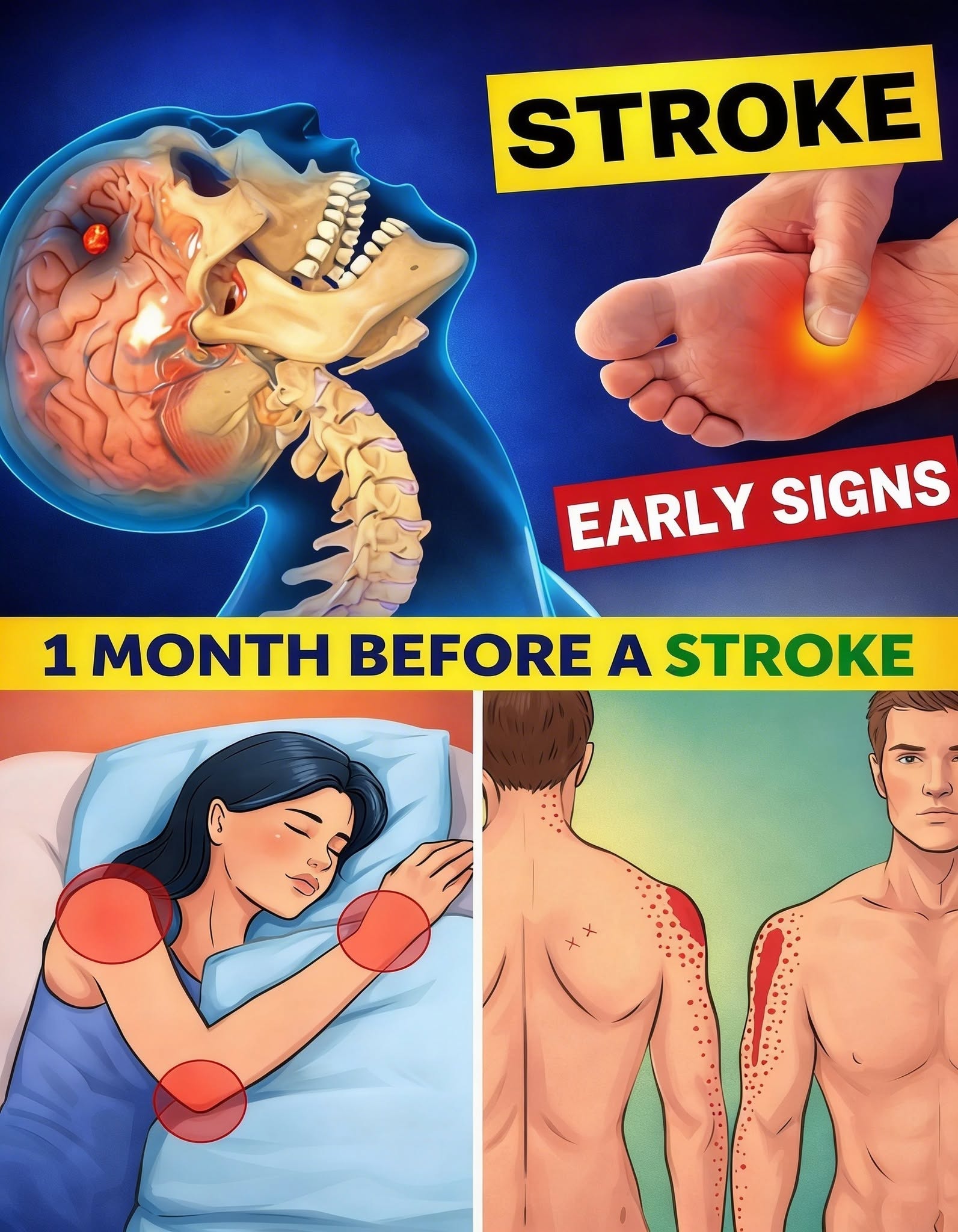
8 Warning Signs of Stroke That May Appear One Month Before and 9 Tips to Prevent It
Could your body be trying to warn you before a stroke happens? While many strokes occur suddenly, some people experience warning symptoms—especially transient ischemic attacks (TIAs), often called “mini-strokes”—days or even weeks beforehand. Recognizing these signs early and seeking immediate medical attention could save your life or prevent permanent disability.
Important: Most strokes happen without a month of warning, and symptoms such as shoulder pain, tingling in a limb, or skin changes alone are not established predictors of a stroke. If you notice any sudden stroke symptoms, treat them as a medical emergency.
What Is a Stroke?
A stroke occurs when blood flow to part of the brain is interrupted or when a blood vessel in the brain ruptures. Without oxygen, brain cells begin to die within minutes.
There are two main types:
- Ischemic stroke (about 85%) – caused by a blocked artery.
- Hemorrhagic stroke – caused by bleeding in the brain.
The faster treatment begins, the greater the chance of recovery.
8 Warning Signs You Should Never Ignore
1. Temporary Weakness or Numbness on One Side
If you suddenly experience weakness or numbness in your face, arm, or leg—especially on one side—it could be a Transient Ischemic Attack (TIA).
Even if it disappears within minutes, don’t ignore it.
2. Sudden Difficulty Speaking
Do people suddenly struggle to understand you?
If your speech becomes slurred or you can’t find the right words, it may signal reduced blood flow to the brain.
3. Sudden Vision Problems
Watch for:
- Blurred vision
- Double vision
- Loss of vision in one eye
- Partial blindness
Vision changes can be one of the earliest stroke warning signs.
4. Severe, Unexplained Headache
A sudden, intense headache unlike anything you’ve experienced before—especially with nausea, dizziness, or vision problems—requires immediate medical attention.
5. Dizziness or Loss of Balance
If you suddenly:
- Feel dizzy
- Lose coordination
- Have trouble walking
- Feel unusually unsteady
it may indicate a stroke affecting the cerebellum or brainstem.
6. Brief Episodes of Confusion
Confusion, difficulty understanding conversations, or sudden memory problems should never be ignored—particularly if they appear abruptly.
7. Sudden Facial Drooping
Look in the mirror.
If one side of your face droops or your smile looks uneven, call emergency services immediately.
8. Repeated Mini-Stroke (TIA) Symptoms
TIAs usually last only a few minutes to an hour.
Many people ignore them because symptoms disappear.
This is dangerous.
A TIA is one of the strongest predictors of a future stroke, especially in the following days.
Symptoms That Are Often Misrepresented Online
Many viral posts claim these are warning signs one month before a stroke:
- Shoulder pain
- Arm pain while sleeping
- Tingling in the fingers
- Skin rashes or red spots
Current medical evidence does not support these as reliable early warning signs of stroke by themselves. If they occur with sudden neurological symptoms, seek medical care, but alone they usually point to other conditions.
FAST: The Stroke Test Everyone Should Know
Remember the word FAST:
F – Face: Ask the person to smile. Does one side droop?
A – Arms: Can they raise both arms?
S – Speech: Is speech slurred or strange?
T – Time: Call emergency services immediately.
Every minute counts.
9 Proven Ways to Reduce Your Stroke Risk
1. Control Your Blood Pressure
High blood pressure is the leading risk factor for stroke.
2. Quit Smoking
Smoking damages blood vessels and greatly increases stroke risk.
3. Exercise Regularly
Aim for at least 150 minutes of moderate exercise each week.
4. Eat a Heart-Healthy Diet
Focus on:
- Fruits
- Vegetables
- Whole grains
- Fish
- Healthy fats
Reduce salt, sugar, and processed foods.
5. Manage Diabetes
Keep blood sugar within your target range.
6. Maintain a Healthy Weight
Losing even a modest amount of excess weight can reduce your risk.
7. Limit Alcohol
Excessive alcohol raises blood pressure and stroke risk.
8. Treat Heart Conditions
Conditions such as atrial fibrillation (AFib) significantly increase the risk of blood clots and stroke.
9. Get Regular Health Checkups
Routine screening for blood pressure, cholesterol, diabetes, and heart disease can identify risks before a stroke occurs.
When Should You Seek Emergency Care?
Call emergency services immediately if you or someone else suddenly experiences:
- One-sided weakness
- Facial drooping
- Slurred speech
- Sudden vision loss
- Severe unexplained headache
- Loss of balance or coordination
Do not wait to see if symptoms improve.
Final Thoughts
A stroke can change a life in minutes—but quick recognition and treatment can dramatically improve outcomes. While some people experience a TIA or other sudden neurological symptoms before a stroke, many strokes happen without any warning weeks in advance. Learning the true warning signs, acting immediately, and adopting healthy lifestyle habits are the best ways to protect yourself and your loved ones.