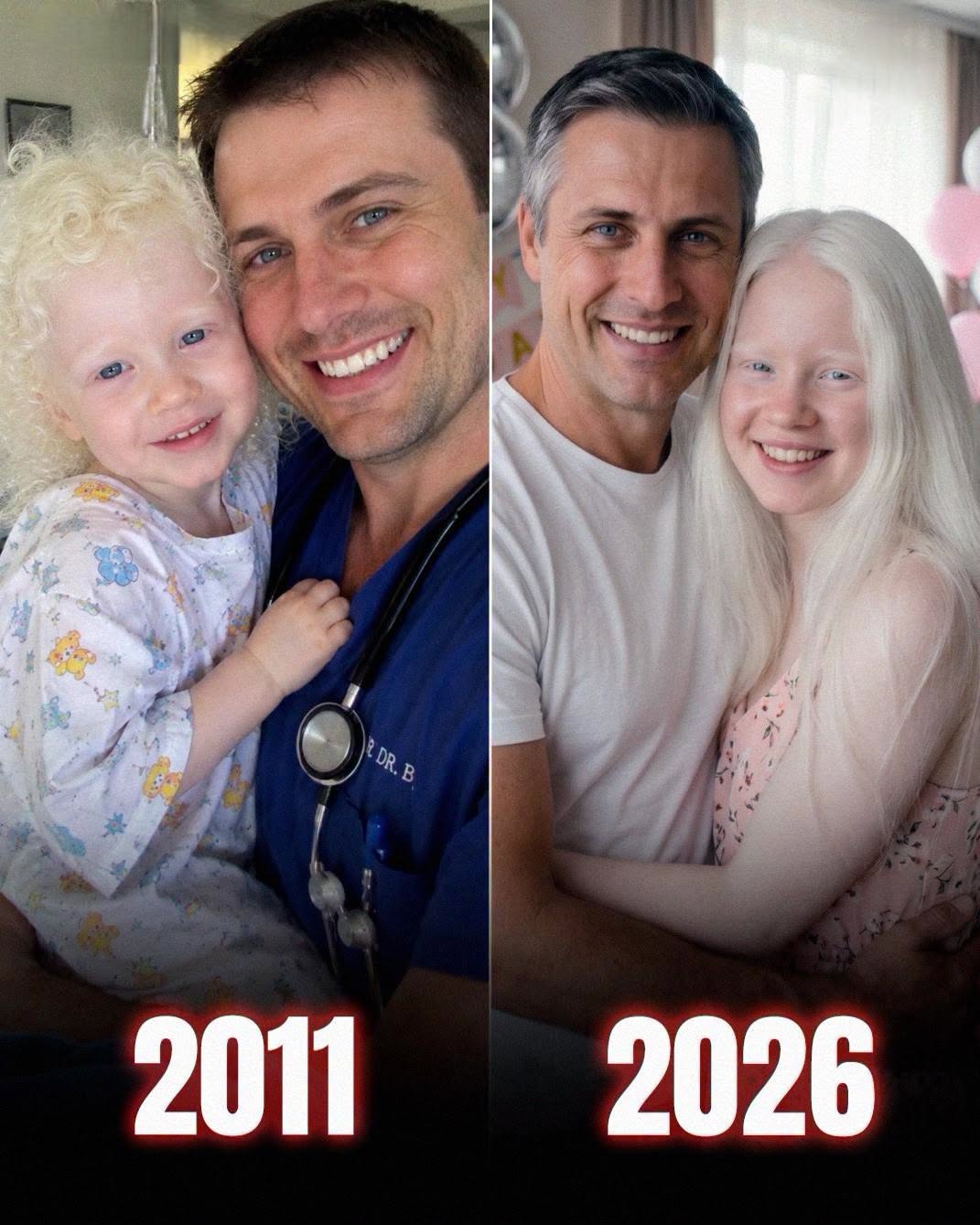
Fifteen years ago, on a rainy October night, a pediatric trauma case rolled through the emergency room doors that would alter the trajectory of my entire existence. I was thirty years old, single, entirely consumed by my medical career, and practically married to my hospital pager. My apartment was nothing more than a place to crash between grueling shifts. Then came Lily, a three-year-old girl whose fragile life was hanging entirely by a thread after a horrific car crash took her parents. I spent twelve exhausting hours in surgery fighting for her, ultimately saving her life. When social services prepared to send her into foster care, an overwhelming wave of protection took over. I refused to let her vanish into the system, stepping up to adopt her and completely reshaping my world.
Raising Lily as a single father and emergency surgeon nearly broke me during those early years. While she cried nightly for a mother I could never bring back, I juggled exhausting 30-hour shifts with toddler wake-up calls. Yet, those quiet struggles forged an unbreakable bond. She grew into my entire universe, the sole reason I rushed home every evening.
Now, fifteen years later, I stood on a step stool in our living room hanging birthday streamers while a barbecue smoked on the patio. Lily was turning eighteen.
“Dad, those streamers are crooked,” she called out, flashing a bright, infectious grin from the doorway.
“They’re artistic,” I joked, climbing down to squeeze her shoulder. “You happy?”
“Very.” She glanced down at her phone, and her smile faltered for a fraction of a second. Slipping into the hallway, she lowered her voice into a sharp whisper. “How did you get my number? Stop calling me!”
I froze, telling myself it was just harmless teenage drama. But it was the third hushed phone call that month. Earlier in the week, I had walked into the kitchen only to watch her frantically slide a thick manila folder off the table and into her backpack with practiced smoothness. When questioned, she had brushed it off as “school stuff.” I let it go, trusting the quiet promise I’d made years ago to give her privacy.
Later that afternoon, amidst the laughter of her friends gathered in our backyard, I walked to the front door to check for a late delivery. The porch was empty save for a small white gift box with a cream-colored card tucked neatly under the ribbon.
I picked it up and read the chilling note twice: It’s time you found out that your daughter has been hiding something terrible from you.
My pulse spiked. Dismissing it as a cruel prank from a high school rival, I carried the box to my bedroom, locked the door, and finally opened it. Inside lay a stack of legal documents, a bank statement, a photograph, and a handwritten warning.
The bank statement stopped my breath. It displayed Lily’s name alongside an unfamiliar account showing consistent, escalating deposits spanning nearly two years. The balance was staggering. Where was a teenager getting that kind of money?
Then I looked at the photograph. It captured Lily sitting across a table from an older man in a sharp gray suit, leaning in closely over an open folder.
The accompanying note read: She’s preparing to leave you officially soon. You should have known.
Every strange, unexplained moment from the past year suddenly clicked into place with horrifying clarity. The secret phone calls, the hidden folder, the sudden extra shifts she claimed were just for pocket money—it all pointed to a calculated deception. Fifteen years of unconditional love, burnt pancakes, fever-filled nights, and school pickups flashed before my eyes, replaced by the crushing weight of betrayal. How could she plan to walk away without a word?
After the last guest finally left, I placed the box on the living room table. My hands shook as I looked at her. “Can you explain this to me, Lily?”
She glanced inside, her face draining completely of color before tears flooded her eyes. “Dad, you weren’t supposed to find out like this.”
“Find out what? That you’ve been meeting with a man behind my back, hoarding secret accounts, and planning to abandon everything we built?”
“I wasn’t planning to leave! I would never!” she sobbed, reaching for my hand.
I pulled away, my chest tightening with overwhelming anguish. “Just go stay at Rachel’s tonight. I need space.”
The next three agonizing days blurred together in a haze of sleeplessness and despair. Desperate for answers, I drove to the address listed on a business card tucked into the photo file—Reeves and Associates, Estate Planning.
The attorney, David, studied my devastated expression before sighing softly. “Sir, whatever you think you’re looking at, you’re entirely wrong. Go home and talk to your daughter.”
When I pressed further, David revealed the shocking truth. A toxic woman claiming to be a distant relative of Lily’s birth mother had recently come into the office demanding files. When turned away, she had snuck photographs of document carts and fabricated a malicious narrative to destroy our relationship, leaving a threatening package designed to ignite my deepest fears.
My daughter hadn’t been plotting a betrayal at all. Months earlier, she had overheard me telling a colleague that I was burning out from the brutal physical toll of emergency medicine. In secret, working pro bono with a lawyer, Lily had taken on extra jobs to build a trust fund and legally change her last name to mine, wanting to secure my future so I could finally rest.
The realization hit me like a physical blow. I had allowed a malicious stranger’s lie to fracture my trust in the person I loved most.
I raced to Rachel’s house, finding Lily sitting on the front steps, her eyes swollen from crying. Sitting beside her, I pulled her into an embrace, my voice breaking. “I am so sorry. I should have trusted you.”
“I just wanted you to stop working so hard,” she whispered against my shoulder.
Weeks later, Lily legally took my last name in a small courthouse ceremony, and I scaled back my hospital hours for good. Sitting together on the porch where that ominous box had once appeared, watching the evening light settle over our home, I realized something profound. Saving her life in that emergency room fifteen years ago wasn’t just an act of medicine—it was the moment she quietly stepped up to save mine.