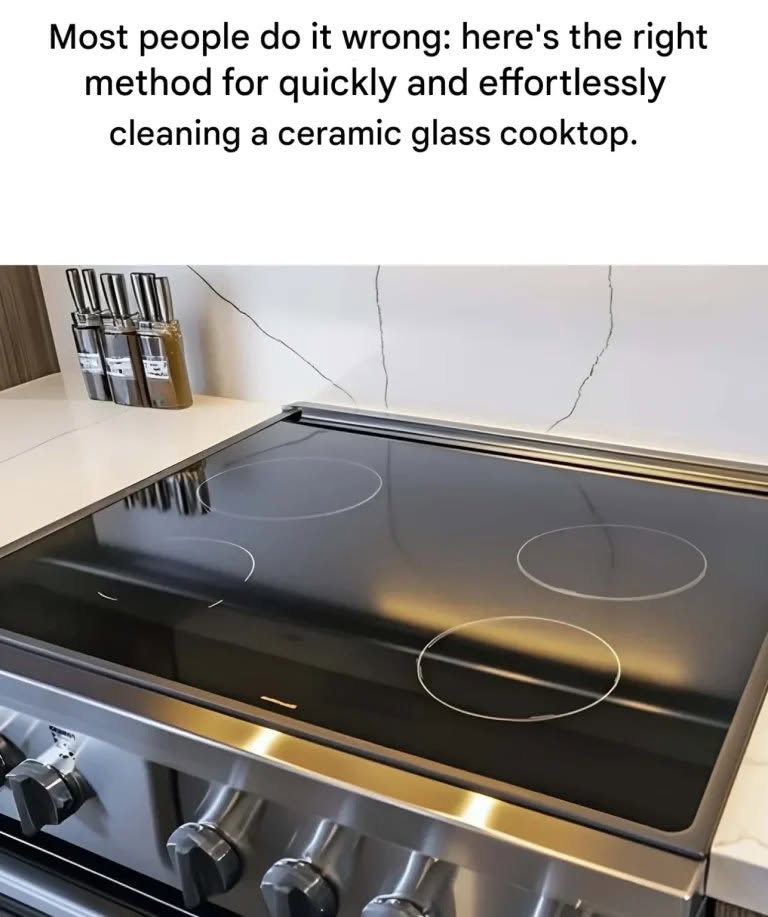
Ceramic glass cooktops look sleek when clean, yet their smooth, glossy finish shows every smudge, grease splatter, and burnt-on spill—and the wrong scrubbing tool can leave permanent micro-scratches or dull cloudy patches. Because the surface is made of tempered glass-ceramic (like Schott Ceran), it is engineered to withstand extreme thermal shock, not abrasive friction.
Cleaning it effectively without damage comes down to softening baked-on residue chemically first, using single-edge razor blades at the exact right angle for stubborn crusts, and polishing with non-abrasive creams and microfiber.
What Never to Use on Ceramic Glass
Before starting, make sure these common kitchen tools stay far away from the cooktop:
- Abrasive Scouring Pads & Steel Wool: Green heavy-duty sponges, copper scrubbers, and steel wool act like sandpaper on glass-ceramic, creating permanent hazy scratch marks.
- Powdered Cleansers (e.g., Comet, Ajax) & Baking Soda Pastes: While baking soda is popular for general cleaning, its crystalline grit is slightly abrasive enough to dull the glossy protective coating over repeated use.
- Harsh Chemicals (Ammonia, Bleach, Oven Cleaner): Oven sprays and strong degreasers can etch the glass surface, strip printed burner rings, and corrode surrounding stainless-steel trim.
- Dirty Dishcloths: A cloth that previously wiped a countertop can hold tiny grains of salt, sugar, or sand that scratch the glass as you rub.
Step-by-Step Deep Cleaning Method
1.Let the Cooktop Cool Completely:Prerequisite.
Ensure all burners are off and the hot-surface indicator light has turned off. Applying water or cleaner to a hot cooktop causes the liquid to flash-evaporate, baking cleaner chemicals directly onto the glass and risking thermal shock or burns.
Verification: The surface feels completely cool to the back of your hand across every burner zone.
2.Soften Crusts with Warm Soapy Water or Vinegar:5-10 min.
Spray the surface generously with white distilled vinegar or lay a warm, damp microfiber towel soaked in mild dish soap over burnt-on spots for 10 minutes. Moisture and mild acidity break down caramelized sugars and hardened starches so you do not have to force them off.
Verification: Softened food residue wipes away easily with a clean damp cloth, leaving only hardened carbonized spots.
3.Scrape Stubborn Burn Marks with a Single-Edge Razor:5 min.
Hold a clean, new single-edge steel razor blade (or dedicated cooktop scraper) at a 30- to 45-degree angle flat against the glass. Push gently forward to shave off carbonized crusts—never use the corner of the blade or scrape dry glass, as lubrication from soapy water or cooktop cream prevents catching.
Verification: Running a fingernail over the previously burnt area feels completely smooth with no raised bumps.
4.Apply Dedicated Cooktop Cleaning Cream:3-5 min.
Pour a quarter-sized drop of specialized ceramic cooktop cleaner (such as Weiman, Cerama Bryte, or Affresh) onto the surface. Using a clean, dry paper towel or non-scratch microfiber pad, rub in firm circular motions to lift grease haze, mineral water spots, and metallic pan marks.
Verification: The white cream turns into a slightly dark, hazy film as it lifts embedded residue.
5.Buff to a Streak-Free Shine:2 min.
Let the cleaner dry to a light haze for one minute, then buff it off completely using a clean, dry microfiber cloth. Polishing removes any leftover residue that could burn the next time you turn on a burner.
Verification: Looking at the cooktop from an angle under kitchen lights shows a uniform, mirror-like black reflection with no cloudy streaks.
How to Handle Specific Types of Messes
Different spills require slightly different tactics to avoid permanent damage:
| Type of Spill | Why It Is Risky | Immediate Action |
| Melted Sugar, Syrup, or Plastic | Hot sugar and melted plastic bond chemically to cooling glass-ceramic and can pull tiny pits out of the surface if left to harden. | Exception to the cooling rule: While the surface is still warm (wearing an oven mitt), immediately push the melted puddle to a cool area of the cooktop with a razor scraper, then clean once cool. |
| Silvery / Metallic Pan Marks | Aluminum or copper cookware dragged across the glass leaves thin metal smears that look like scratches. | Rub the mark firmly with cooktop cleaning cream and a non-scratch scrub pad; the mild polishing agents dissolve metal transfer without harming the glass. |
| White Mineral Rings (Boil-Overs) | Hard water minerals bake onto hot burner zones, leaving chalky rings. | Soak the ring with undiluted white vinegar for 10 minutes to dissolve calcium deposits before polishing with cooktop cream. |
| Rainbow / Iridescent Discoloration | Overheating empty pans or detergent film leaves an oily, rainbow-tinted sheen. | Wipe with white vinegar followed by a thorough buff with cooktop polish. |
Everyday Habits That Prevent Scratches in the First Place
- Lift Pans—Never Slide Them: Dragging heavy cast-iron skillets, rough-bottomed stainless steel pots, or stoneware across the glass is the number-one cause of deep scratches.
- Wipe Pan Bottoms Before Cooking: A single grain of coarse salt, sugar, or grit trapped between a heavy pot and the glass acts like a diamond cutter under heat and pressure.
- Avoid Cast Iron and Enameled Cookware When Possible: Unfinished cast iron has a naturally rough texture; if you use it, set it down gently and avoid shaking it back and forth over the burner.
- Do a Quick Wipe After Every Meal: Once the stove cools down after dinner, a 15-second wipe with a damp microfiber cloth and a drop of dish soap stops thin grease films from turning into baked-on carbon tomorrow.