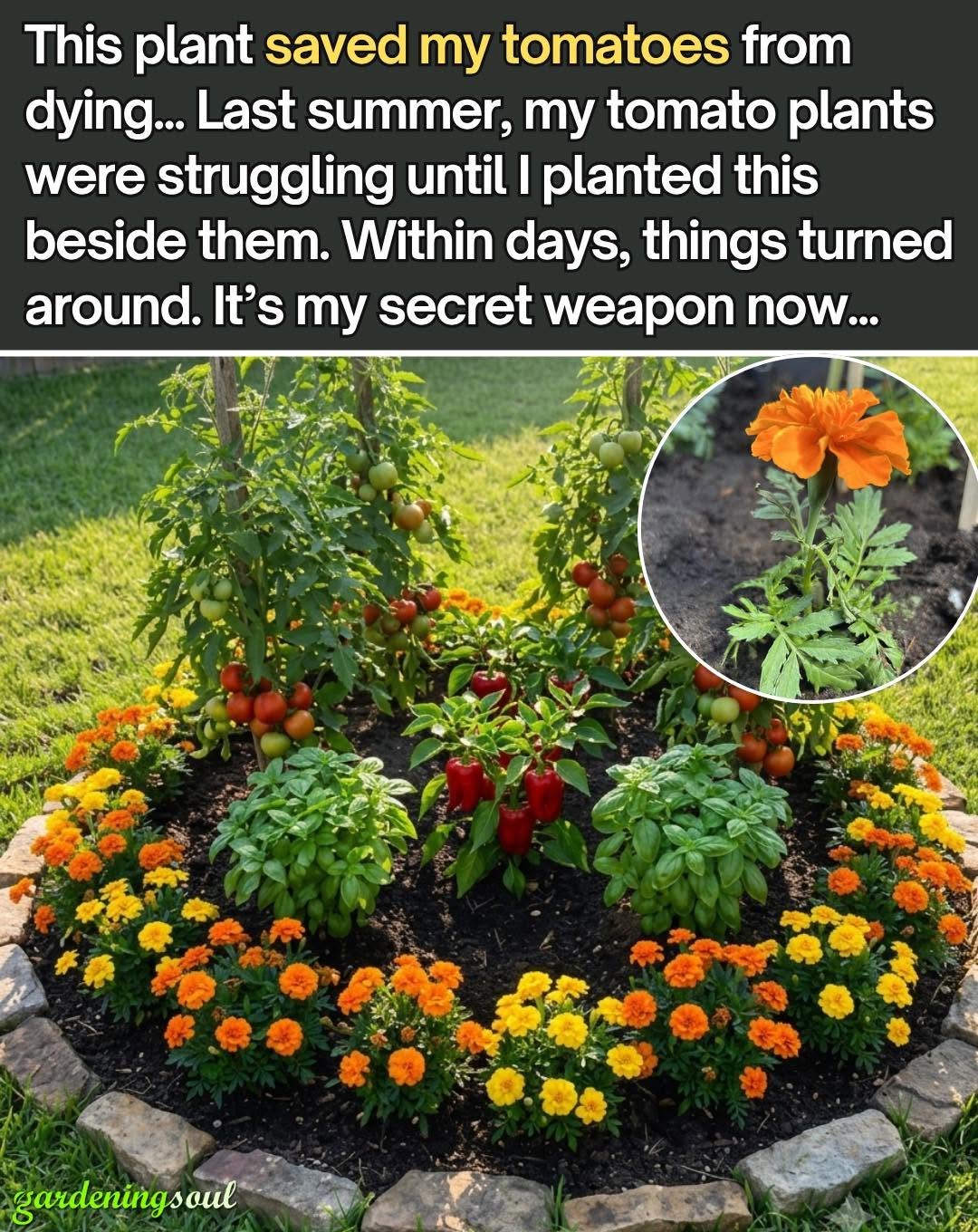
Every home gardener knows the crushing feeling of watching their prized tomato plants decline. You open the back door, coffee in hand, only to find curled leaves, yellowing stems, or jagged holes where lush foliage used to be.
Last summer, my backyard tomato patch was on the brink of total collapse. Despite high-quality organic soil amendments, strict watering schedules, and plenty of sunshine, my heirloom varieties were visibly suffering under a dual assault from voracious pests and underground stressors.
Out of sheer desperation, I turned to a classic principle of horticulture that I had long overlooked: intercropping (planting diverse species together).
I went to the local nursery, picked up flats of a specific, pungent flowering herb, and planted them directly alongside my struggling vines.
Within days, the downward spiral stopped. Within two weeks, my patch transformed into a thriving, resilient ecosystem. That plant was the humble marigold (Tagetes). Today, it is my absolute secret weapon for growing massive yields of sweet, unblemished tomatoes.
Far from being just a decorative border flower, the marigold is a biological powerhouse that alters soil chemistry, manipulates insect behavior, and acts as a living shield for the Solanaceae (nightshade) family.
The Biological Symphony of Companion Planting
To understand why this pairing works so rapidly, we have to look at the concept of companion planting through a scientific lens.
Plants do not grow in isolation; they communicate, share root zones, and emit volatile organic compounds (VOCs) into the surrounding air and soil.
When you plant tomatoes alone in a monoculture bed, they become an easy target for specialized pests. By introducing marigolds, you disrupt this dynamic entirely.
5 Ways Marigolds Save Tomato Plants from Destruction
Marigolds protect your garden using a combination of underground chemical warfare and above-ground sensory disruption.
1. Underground Chemical Warfare Against Root-Knot Nematodes
The most insidious threats to tomatoes often hide completely out of sight. Root-knot nematodes (Meloidogyne species) are microscopic, parasitic roundworms that live in the soil.
They burrow into tomato root systems, causing grotesque galls or knots that choke off the plant’s ability to absorb water and nutrients. This leads to stunted growth, wilting, and mystery yellowing that fertilizers can’t fix.
Marigolds—specifically French marigolds (Tagetes patula)—are the ultimate organic solution to this issue. The root systems of these flowers naturally exude a powerful chemical compound called alpha-terthienyl.
This compound is highly nematicidal; it inhibits the eggs of parasitic nematodes from hatching and kills active worms in the immediate root zone, creating a safe, subterranean sanctuary where your tomato roots can expand freely.
2. Blinding the Voracious Tomato Hornworm
The tomato hornworm (Manduca quinquemaculata) can defoliate an entire mature tomato plant in less than 48 hours.
The adult sphinx moths locate nightshade leaves by tracking the distinct, green, herbaceous odor molecules emitted by the tomato foliage.
When you intercrop your tomatoes with dense clusters of marigolds, the heavy, musky, thiophene-rich scent profile of the flowers overwhelms the area.
This intense aroma creates an olfactive smoke screen, effectively “blinding” the moths and preventing them from landing on your tomato vines to lay their destructive eggs.
3. Masking and Repelling Whiteflies with Limonene
Whiteflies are tiny, sap-sucking insects that congregate on the undersides of tomato leaves, draining the plant’s energy and secreting a sticky residue called honeydew, which invites black sooty mold. More dangerously, whiteflies act as vectors for devastating plant viruses.
Scientific studies have confirmed that marigolds emit an airborne compound called limonene. To whiteflies, aphids, and thrips, limonene is a powerful natural deterrent.
The persistent release of this compound from marigold foliage significantly reduces pest populations on nearby tomatoes, saving you from having to use synthetic chemical sprays.
4. Attracting a Predatory Bio-Defense Force
While marigolds excel at repelling destructive pests, they are equally adept at attracting beneficial, predatory insects. The open, nectar-rich blooms serve as a vital food source for hoverflies, ladybugs, lacewings, and parasitic wasps.
The larvae of these beneficial insects are voracious predators of aphids, spider mites, and small caterpillars. By planting marigolds, you are essentially establishing a permanent, self-regulating biological defense force directly beneath your tomato canopy.
5. Boosting Pollination and Maximizing Fruit Yield
Tomatoes are self-pollinating flowers, meaning their blossoms contain both male and female parts and simply require physical vibration—often from a breeze or a buzzing bee—to release pollen and set fruit.
If your tomato plants develop plenty of flowers but they drop off without ever producing a tomato, you have a pollination problem.
The vibrant, high-contrast yellow, orange, and red hues of marigold petals act as highly visible landing beacons for native bumblebees and honeybees.
By pulling these crucial pollinators into your garden patch, you ensure that your nearby tomato blossoms receive maximum vibration and activity, resulting in a dramatic increase in fruit set and overall yield.
The Co-Planting Blueprint: Step-by-Step Installation
Simply tossing a few marigold seeds into a weed-choked garden corner won’t provide the rapid turnaround your tomatoes need. To replicate my success, follow this precise companion planting layout.
1. Select the right marigold species: Step 1.
Avoid giant African varieties (Tagetes erecta) if you are working in confined raised beds, as they can compete with tomatoes for sunlight.
Instead, opt for French Marigolds (Tagetes patula) or Signet Marigolds (Tagetes tenuifolia). These varieties stay compact, produce a higher concentration of root exudates, and feature the most pungent aroma profiles.
2. Establish the geometric layout: Step 2.
Plant your tomato starts along the center axis of your garden bed, spaced roughly 24 inches apart.
Install your marigolds directly in the spaces between each tomato plant and along the front border, maintaining a distance of 10 to 12 inches from the main tomato stems. This proximity allows their root zones to intertwine and share defenses without choking each other out.
3. Incorporate deep organic mulching: Step 3.
Once your companion plants are in the ground, spread a 2-inch layer of clean straw, shredded leaves, or shredded bark across the entire soil surface.
This protects the shallow, fibrous root networks of the marigolds, maintains consistent soil moisture, and prevents water from splashing soil-borne fungal spores onto your lower tomato branches.
4. Execute regular deadheading: Step 4.
Throughout the heat of the summer, actively pinch off fading, dried marigold blooms right down to their supporting stems.
This process, called deadheading, prevents the plant from diverting its energy into seed production. It forces the marigold to continually channel its resources into creating fresh foliage, new roots, and a continuous supply of vibrant flowers.
Critical Rules for Maintaining Companion Harmony
While this partnership is incredibly effective, managing a multi-species garden bed requires careful attention to balance:
- Monitor Sunlight Competition: Tomatoes grow rapidly and can easily cast deep shade over lower-growing border plants. Ensure you prune the bottom 12 to 18 inches of your tomato branches once the plants are established. This improves air circulation to ward off blight and allows plenty of sunlight to reach your marigolds below.
- Balance Your Fertilizer Routine: Tomatoes are heavy feeders that require plenty of phosphorus and potassium to produce large, sweet fruits. However, be cautious with high-nitrogen fertilizers like fresh manure or blood meal; excess nitrogen will cause your marigolds to produce lush green leaves at the expense of their protective, aromatic flowers.
- Keep Soil Moisture Consistent: Both tomatoes and marigolds prefer deep, infrequent watering rather than shallow daily misting. Aim to water the base of the plants deeply twice a week, allowing the top inch of soil to dry out between waterings to encourage deep, resilient root growth.
The Holistic Gardener’s Perspective: Last summer taught me that a garden’s health doesn’t come from a bottle of synthetic pesticide or a box of quick-fix chemical fertilizer. True resilience comes from diversity. By pairing the heavy-feeding, high-value tomato with the chemically defensive, pollinator-attracting marigold, you create a natural balance where pests are kept in check, soils are protected, and plants can thrive the way nature intended.