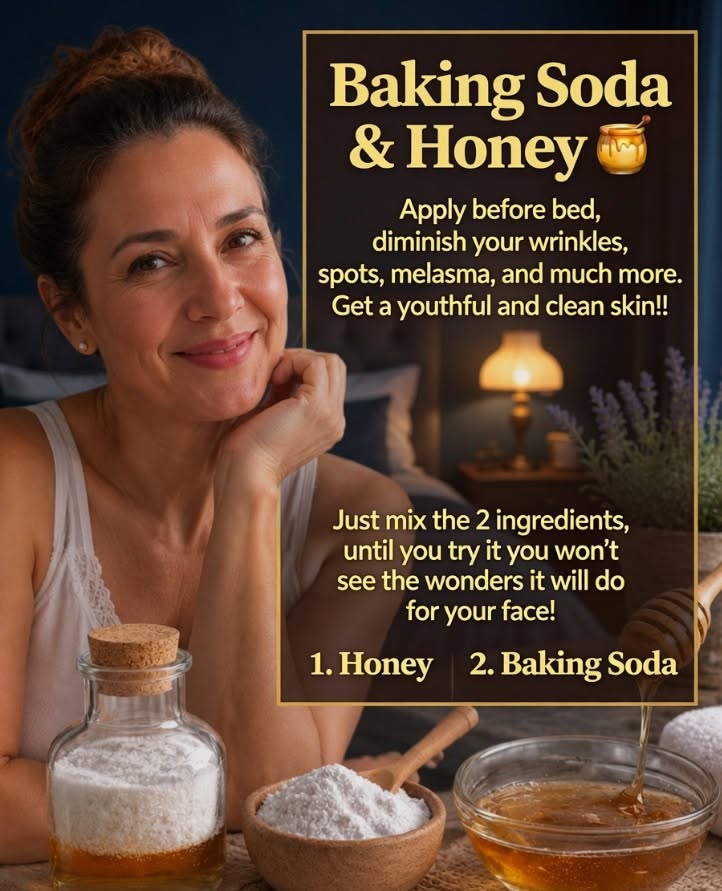
Baking soda and honey have become a popular DIY skincare combination for people looking to refresh dull-looking skin naturally. Supporters claim the mixture may help remove dead skin buildup, soften rough texture, and leave the face looking cleaner and brighter.
But while this homemade remedy is simple and inexpensive, it is important to understand both the potential benefits and the risks before applying it to your skin.
Why Does Skin Start Looking Dull?
Dull skin does not always mean “aging skin.” In many cases, the surface of the skin becomes covered with dead skin cells, excess oil, pollution residue, sweat, and environmental buildup.
When this happens, the skin may appear:
Rough or uneven
Tired-looking
Dry and flaky
Less radiant
Uneven in tone
This buildup can prevent light from reflecting evenly on the face, making the complexion appear fatigued or lifeless.
How Baking Soda and Honey Work Together
Baking soda acts as a physical exfoliant. Its fine particles can help loosen dead skin cells and remove surface buildup temporarily.
Honey, on the other hand, is known for its soothing and moisturizing properties. Natural honey contains compounds that may help calm the skin and reduce dryness after exfoliation.
Together, the combination works like this:
Baking soda exfoliates the surface
Honey helps soften and moisturize the skin
The mixture may temporarily improve texture and brightness
However, moderation is extremely important because baking soda can also irritate or damage the skin barrier if used incorrectly.
Potential Benefits of Baking Soda and Honey for Skin
1. Removes Dead Skin Buildup
Exfoliation helps remove old skin cells that accumulate on the outer layer of the skin.
After gentle exfoliation, many people notice:
Smoother texture
Softer skin
A brighter appearance
Better absorption of moisturizer
2. May Improve the Appearance of Dull Skin
When dead skin and surface residue are removed, the face may appear fresher and more radiant.
This does not permanently change the skin, but it can create a cleaner-looking surface that reflects light more evenly.
3. Helps Skin Feel Softer
Honey acts as a humectant, meaning it helps attract moisture to the skin. This can reduce the dry or tight feeling that sometimes follows exfoliation.
Many people report that their skin feels smoother after using a honey-based mask.
4. May Temporarily Improve the Look of Fine Lines
Dry and rough skin can make fine lines appear more noticeable. By softening the skin surface and improving hydration, the face may temporarily look more refreshed.
It is important to note that this mixture does not erase wrinkles or reverse aging.
5. Can Help Makeup Apply More Evenly
Some users notice that foundation or powder sits more smoothly on freshly exfoliated skin because rough patches are reduced.
How to Make a Baking Soda and Honey Face Mask
Ingredients
1 teaspoon baking soda
1 tablespoon raw honey
Instructions
Mix the ingredients into a smooth paste.
Apply gently to clean, damp skin.
Massage lightly using circular motions for no more than 30 seconds.
Leave on for 1–2 minutes only.
Rinse thoroughly with lukewarm water.
Apply a gentle moisturizer afterward.
Important Safety Tips
Baking soda is highly alkaline and may disrupt the skin’s natural protective barrier. Using too much or scrubbing aggressively can lead to irritation.
Avoid this mixture if you have:
Sensitive skin
Rosacea
Eczema
Active acne inflammation
Broken or irritated skin
Important precautions:
Do not scrub harshly
Do not leave the mask on too long
Use only occasionally (once every 1–2 weeks)
Always moisturize afterward
Stop immediately if irritation occurs
A patch test on a small area of skin is recommended before full use.
Why Honey Matters in the Mixture
Honey helps reduce some of the harshness of baking soda by adding moisture and softness to the skin.
Without honey, baking soda alone may feel overly drying or abrasive for many skin types.
Natural raw honey is usually preferred because it contains more beneficial compounds compared to highly processed honey products.
Common Mistakes People Make
Overusing the Mask
Many people assume that more exfoliation means better results. In reality, excessive exfoliation can weaken the skin barrier and increase redness, dryness, and sensitivity.
Scrubbing Too Hard
The goal is gentle exfoliation — not aggressive friction. Harsh rubbing can cause micro-irritation and worsen skin texture over time.
Leaving It on Too Long
Baking soda should not sit on the skin for extended periods because its alkaline nature may disrupt the skin’s natural pH balance.
Does It Remove Wrinkles or Dark Spots Permanently?
No. Baking soda and honey cannot permanently erase wrinkles, remove deep pigmentation, or reverse skin aging.
However, gentle exfoliation and hydration may temporarily make the skin appear:
Brighter
Cleaner
Smoother
More refreshed
Real skin improvement usually comes from consistent skincare habits, sun protection, hydration, sleep, and proper nutrition.
Better Long-Term Habits for Healthy Skin
For healthier-looking skin over time, focus on:
Daily sunscreen use
Gentle cleansing
Consistent moisturizing
Adequate hydration
Healthy sleep habits
A balanced diet rich in antioxidants
Professional dermatological treatments may also help with deeper wrinkles, pigmentation, or chronic skin concerns.
Final Thoughts
Baking soda and honey can work as a simple DIY exfoliating treatment when used carefully and occasionally. The mixture may help remove dead skin buildup, soften rough texture, and leave the face looking fresher and smoother.
However, baking soda is not suitable for everyone, especially those with sensitive or damaged skin. Gentle use, moderation, and proper moisturizing are essential to avoid irritation.
Healthy skin is rarely about harsh treatments or miracle cures. Often, the best results come from consistent care, patience, and protecting the skin barrier over time.
Disclaimer: This article is for informational purposes only and does not replace professional medical advice. Consult a dermatologist or healthcare professional for personalized skincare recommendations.