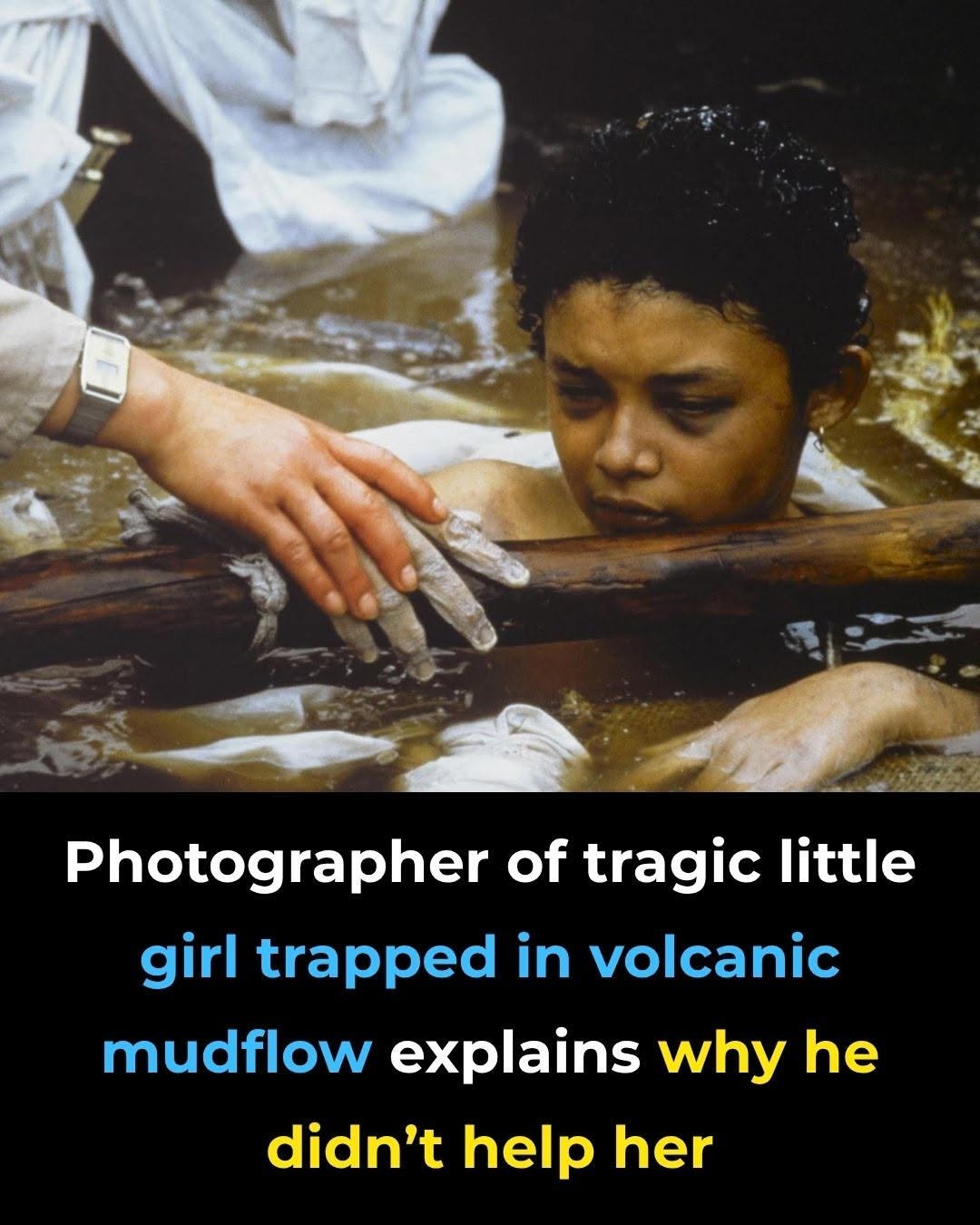
She was only thirteen, a child trapped in a suffocating, freezing tomb of volcanic sludge, staring directly into the lens of a camera with eyes that held the weight of a thousand lifetimes. For three agonizing days, Omayra Sánchez remained pinned beneath the wreckage of her own home, her legs crushed by a concrete door, her body slowly succumbing to the icy slurry of the Armero tragedy. While the world watched the flickering television coverage, a single, haunting photograph captured her final moments of dignity. Was the photographer a hero who exposed a global injustice, or a cold-blooded vulture?
The eruption of the Nevado del Ruiz volcano in Colombia on November 13, 1985, remains one of the most catastrophic disasters in South American history. The town of Armero, a vibrant hub of 29,000 people, was effectively erased from the map in a matter of hours. The sheer scale of the devastation was incomprehensible; approximately 25,000 lives were extinguished as the mountain unleashed its fury. A lethal, pyroclastic mudflow known as a “lahar”—a terrifying mixture of melted glacial ice, volcanic ash, and pulverized debris—raced down the slopes at destructive speeds. Armero was struck by three successive waves of this debris, sealing the fate of those who had miraculously survived the initial volcanic blast.
Amidst this landscape of total ruin, young Omayra Sánchez Garzón became the singular, devastating face of the tragedy. For seventy-two hours, she remained caught in the debris, her lower body trapped beneath the heavy wreckage of her collapsed home. The lifeless arms of her aunt were found wrapped around her feet, a final, futile gesture of protection in the face of nature’s overwhelming power. Rescuers swarmed the site, their hearts heavy and their resources woefully inadequate. They made desperate, exhaustive attempts to free her, but the structural integrity of the mudflow was such that any attempt to move the debris threatened to collapse the ground beneath her even further, risking a more violent end.
It was during these final, brutal hours that photojournalist Frank Fournier arrived at the scene. He captured the image that would define the tragedy for the rest of the century: a close-up of Omayra’s bloodshot, darkened eyes, filled with a stoic, ethereal courage. The photograph was published globally, sparking an immediate and intense backlash. Critics accused Fournier of voyeurism, labeling him a “vulture” who prioritized an award-winning shot over the life of a dying girl. The debate was fierce and personal, touching on the fundamental ethics of photojournalism: how much should a witness intervene, and at what point does documentation cross the line into exploitation?
Fournier’s defense was steadfast and rooted in the necessity of his profession. He explained that helping Omayra in any meaningful, physical capacity was essentially impossible under the constraints of the mudflow. Beyond that, he argued that his presence and his camera served a larger, more urgent purpose. He was not there to act as a surgeon or an engineer, but as a bridge between a neglected, dying girl and a world that had remained blissfully ignorant of the Colombian government’s failure to evacuate Armero. He maintained that the global outcry the image ignited was instrumental in raising millions of dollars in international aid and holding local leaders accountable for their criminal lack of preparedness. To Fournier, the photograph was not an act of theft; it was an act of witnessing.
Omayra’s final hours were characterized by a resilience that defied her age and the horrific conditions of her entrapment. Surrounded by rescuers and journalists who were helpless to save her, she remained remarkably composed. They sang to her, offered her sips of soda, and tried to soothe her nerves with kind words. As the third night of her ordeal began, her clarity started to fracture. She began to drift into hallucinations, talking about school and the math exam she was worried about missing. In one of the most heartbreaking acts of selflessness ever recorded, she even asked the exhausted workers sitting by her side to leave her and go get some rest.
Her final words were a soft, poignant message to her family: “Mommy, I love you so much, daddy I love you, brother I love you.” On November 16, 1985, Omayra finally succumbed to the effects of what was likely gangrene or hypothermia. She had reached the absolute limit of human endurance. While her mother and brother survived the catastrophic event, their lives were permanently altered by the loss of their child and sister. Her mother’s poignant reflection, “It is horrible, but we have to think about the living,” serves as a grim monument to the resilience required to survive the aftermath of such a total collapse of one’s world.
The legacy of Omayra Sánchez is one of tragic accountability. Her death became the primary catalyst for exposing the gross negligence of the Colombian government, which had ignored repeated scientific warnings that a major eruption was imminent. The lack of a coordinated evacuation plan meant that thousands of people were left to face the mudflow with no warning and no exit strategy. The haunting photograph taken by Fournier continues to be one of the most discussed images in the history of journalism, acting as a perennial, uncomfortable reminder of the human cost of bureaucratic inaction.
Fournier’s own perspective on the image remains unchanged by the passing decades. He sees himself as a conduit, a man who was lucky enough to capture a moment that could link the humanity of a dying child to the conscience of the world. “People still find the picture disturbing,” he once noted. “This highlights the lasting power of this little girl.” The image is a testament to the fact that while tragedy is often the result of systemic failure and natural chaos, the legacy of the victims can force society to confront its own failures. Omayra’s life was taken by the volcano, but her image ensured that her death would not be hidden in the silence of the mud. She remains a permanent fixture of our collective memory—a reminder that when we choose to look away, we surrender our humanity.