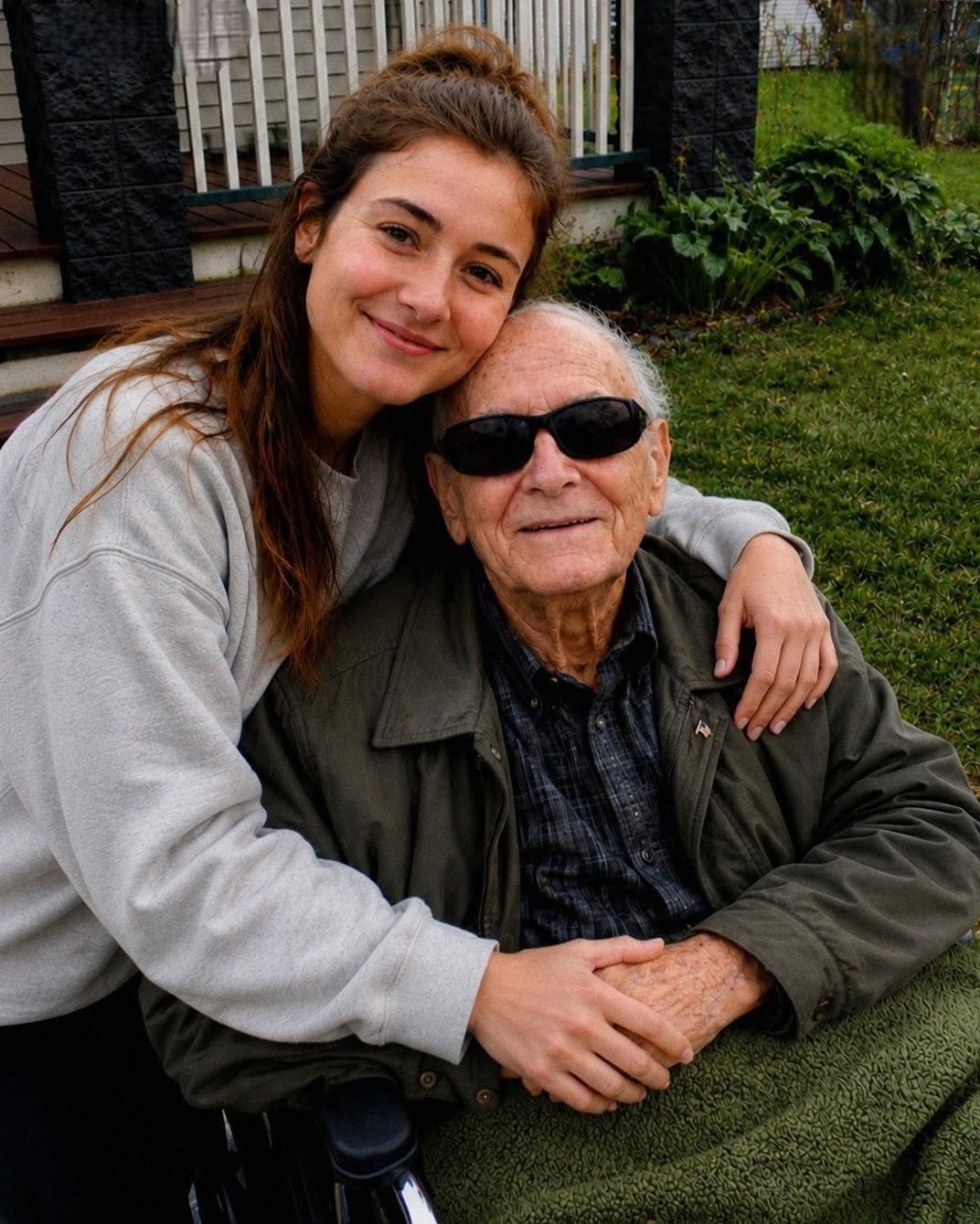
The desperate ad was buried at the bottom of a soul-crushing job board, a bizarre request for a young woman to pose as a blind veteran’s long-lost granddaughter in exchange for a life-altering sum of money. I was twenty-three, drowning in student loans, and watching my younger brother’s health crumble under the weight of bills we couldn’t pay. I thought I was signing up for a simple, heartless charade to save my family from financial ruin. I had no idea that I was stepping into a trap—and a legacy—that would ultimately shatter every expectation I held about love, loss, and the true cost of kindness.
My reality was a relentless cycle of exhaustion. I was balancing a full college course load with double shifts at a local diner, all while rushing home to help my mother care for my brother, Caleb, whose medical needs were an ever-growing drain on our nonexistent resources. The atmosphere at home was defined by the sound of my brother’s labored cough and the sight of my mother’s hollow, sleep-deprived eyes. We were teetering on the edge of total collapse. When I saw the job posting, my moral compass wavered for only a second before the crushing reality of a four-thousand-dollar medical bill forced my hand. I applied, telling myself it was just a job—a performance.
I was contacted by Margaret, a woman whose polished demeanor and cold, unreadable expression suggested she was just as desperate as I was, though for entirely different reasons. She brought me into a study that felt frozen in time and revealed the parameters of my deception. Her father, Walter, was an eighty-two-year-old blind veteran whose heart was tethered to a granddaughter named Vanessa, who had vanished twelve years earlier following a family tragedy. Margaret provided me with a dossier—school records, favorite foods, and childhood anecdotes—and instructed me to inhabit a ghost. I knew it was wrong, but the thought of Caleb’s treatment plan overrode every instinctual protest.
The first Sunday was a blur of terror. I arrived at the grand, silent house, feeling like an intruder in a sacred space. When Walter heard me enter, his face lit up with a fragile, hopeful warmth that pierced through my manufactured confidence. “Vanessa? You finally came?” he whispered, his sightless eyes scanning the space where he hoped his granddaughter would be. I took his hand, the lie already hardening in my throat. We spent that first hour talking about his late wife, Eleanor, and his military past. I walked away with an envelope of cash that felt heavy with guilt, but it was enough to keep my brother’s treatment alive for one more month.
The Sundays became a grueling ritual of performance. I memorized the details of a life I hadn’t lived, carefully sidestepping the questions I couldn’t answer. But as the weeks stretched into months, something unpredictable began to happen. The lines between the lie and the reality started to blur. Walter wasn’t a client; he was a lonely, brilliant man who delighted in sharing his history and wisdom. He spoke of his wife with a reverence that moved me to my core, and in the quiet moments between his stories, I found myself genuinely wanting to be there. I wasn’t just working; I was listening.
Margaret, however, remained a haunting presence. She grew increasingly impatient, peppering me with questions about trust documents, house deeds, and safe deposit boxes, rather than her father’s well-being. It became clear that she saw my presence as a tactical move in a larger game—an attempt to secure her father’s assets before he passed. Her cousin, Richard, joined the fray, testing me on family lore with the precision of a prosecutor. I lived in constant fear of being exposed, yet Walter’s hand in mine under the dinner table provided the only reassurance I could find in a room full of vultures.
Then, the turning point arrived on an ordinary Sunday afternoon. Walter patted my hand and asked, “What’s your real name, sweetheart?” My heart stopped, but the instinct to maintain the charade died. I whispered, “Taylor.” To my shock, Walter only smiled. “I thought so,” he said, revealing that he had known the truth from the very first day. He hadn’t been fooled; he had been lonely, and he had recognized a kindred spirit in my struggle. That admission was the end of the performance. We spent the rest of the hour talking about my real life, my brother, and my mother. For the first time, I wasn’t Vanessa; I was Taylor, and for the first time, I felt truly seen.
The following months were a revelation. I stopped pretending, and Walter stopped asking me to be anyone other than myself. We sat in his garden, playing cards and talking about everything under the sun, often in the presence of his longtime attorney, Mr. Hollis. I didn’t realize then that those conversations were the foundation of a final, masterfully constructed act of justice. Walter’s health began to decline rapidly, and despite Margaret’s efforts to control his environment, I remained the one person he consistently asked for. I was by his side when he passed, holding his hand as he slipped away, feeling the immense weight of the family I had accidentally found.
The aftermath was a nightmare of greed. At the reading of the instructions, Margaret and Richard were arrogant, confident that their maneuvering had paid off. They were blindsided when Mr. Hollis revealed that Walter had known about the deception all along—and had chosen to embrace me regardless. He had instructed his attorney to verify my story, confirm the hardships of my family, and draft a trust that would pay for my entire education and all of Caleb’s medical expenses. The money hadn’t come from Margaret’s inheritance; it came from a trust Eleanor had established years prior, to which Walter held sole distribution rights.
I walked out of that office not just with the means to save my brother, but with a letter from Walter that confirmed the most important thing I had learned in those long, quiet Sundays: that I was worthy of love and support, even if the road to finding it had been paved with a lie. The deception had been the door, but the connection we built was the life that blossomed on the other side. Every month, I visit his grave, and every time, I am reminded that the most unexpected miracles often arise from the most desperate, imperfect choices.