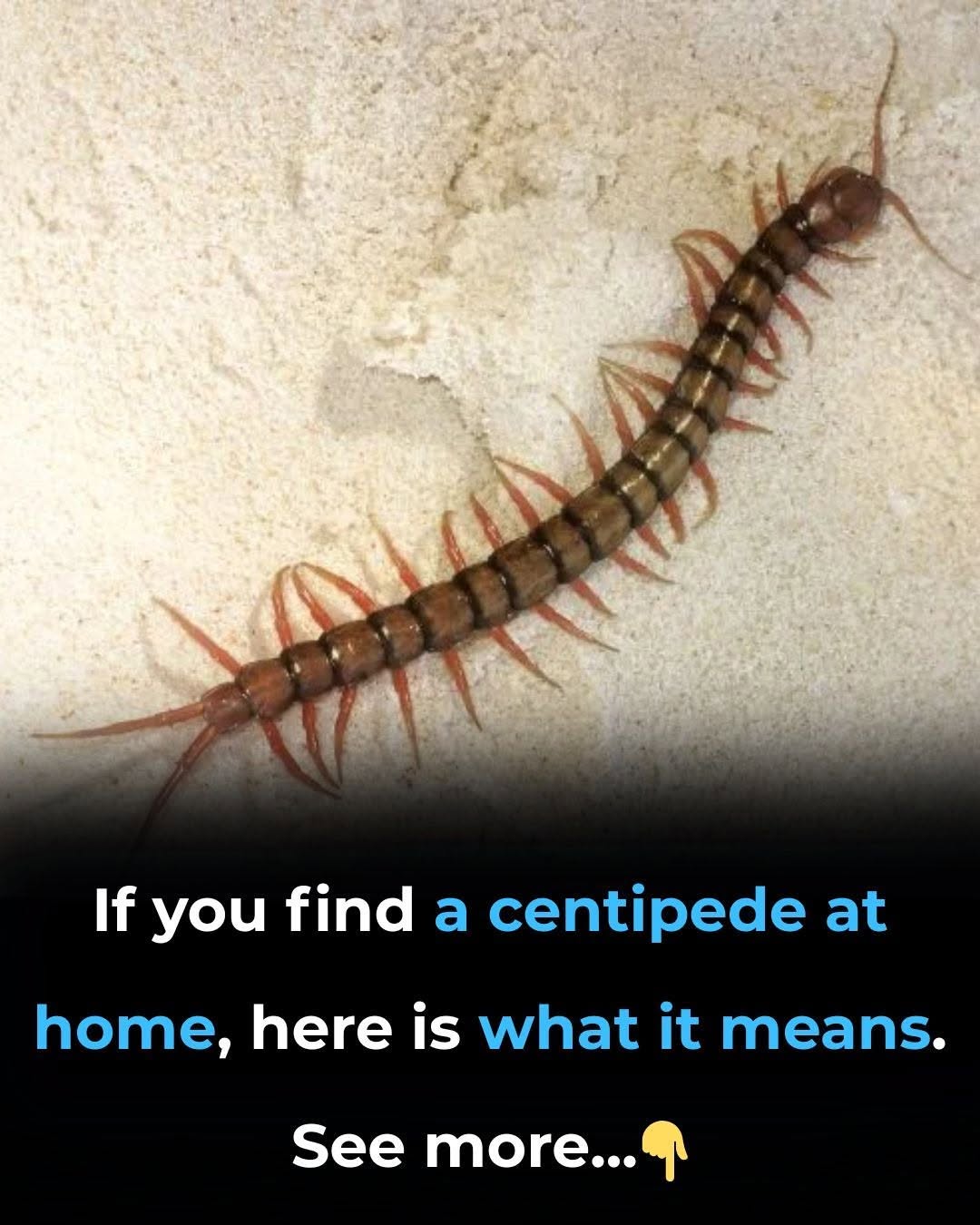
It’s late at night.
You walk into the bathroom, flip on the light, and suddenly see something dart across the floor faster than you thought possible.
Long legs.
Dozens of them.
Moving at a speed that seems almost unnatural.
For many people, the reaction is immediate.
Shock.
Disgust.
A desperate search for something to squash it with.
But before you panic, experts say that finding a centipede inside your home may actually reveal something important about your living environment.
And surprisingly, the creature itself may not be the biggest issue.
Most people assume that centipedes enter homes randomly.
In reality, their presence often serves as a clue.
Centipedes don’t typically move indoors because they enjoy human company.
They’re searching for something.
Food.
Moisture.
Shelter.
Or all three.
Understanding why they’re there can help you address the real problem rather than simply dealing with the occasional visitor.
One of the biggest reasons centipedes appear indoors is because they are hunters.
Unlike cockroaches, which feed on scraps and waste, centipedes are predators.
Their diet consists of insects and other small creatures.
Spiders.
Ants.
Silverfish.
Cockroaches.
Termites.
Various household pests.
To a centipede, your home may simply be a giant buffet.
That’s why pest control professionals often view indoor centipedes as indicators rather than primary problems.
If you’re seeing them regularly, there may be a larger population of insects hiding somewhere nearby.
The centipedes are simply following their food source.
In a strange way, they are performing pest control themselves.
Another common reason centipedes enter homes is moisture.
These creatures thrive in damp environments.
Their bodies lose moisture easily, making humid locations especially attractive.
Bathrooms.
Basements.
Laundry rooms.
Crawl spaces.
Areas beneath sinks.
Rooms with poor ventilation.
These locations often provide ideal conditions.
If you repeatedly find centipedes in the same area, it may be worth investigating potential leaks, excess humidity, or ventilation issues.
Moisture problems can lead to far more significant concerns than centipedes alone.
Mold growth.
Wood damage.
Structural deterioration.
In some cases, the appearance of centipedes serves as an early warning sign that these conditions exist.
Weather also plays a major role.
During periods of intense heat, heavy rain, or freezing temperatures, centipedes frequently seek refuge indoors.
Your home offers stable temperatures, protection from predators, and plenty of hiding places.
To the centipede, entering your house may simply be a survival strategy.
Fortunately, despite their unsettling appearance, centipedes are generally not considered dangerous.
Unlike rodents, they do not spread diseases throughout the home.
They don’t contaminate food.
They don’t destroy furniture.
And they usually prefer avoiding humans whenever possible.
Most encounters end with the centipede running away rather than confronting anyone.
That said, centipedes can bite.
Their front legs are modified into venom-delivering appendages used to subdue prey.
Fortunately, bites are uncommon because centipedes rarely attack unless handled or trapped.
When bites do occur, symptoms are usually mild.
Most people experience localized redness, swelling, tenderness, or a burning sensation similar to a bee sting.
Discomfort typically resolves without serious complications.
However, individuals with allergies to insect venom may experience stronger reactions.
Significant swelling, breathing difficulties, severe pain, or other concerning symptoms should always be evaluated by a medical professional.
For homeowners hoping to reduce centipede activity, the solution usually involves addressing the conditions attracting them.
The first step is reducing moisture.
Repair leaking pipes.
Improve bathroom ventilation.
Use dehumidifiers in damp basements.
Dry wet areas promptly.
The less moisture available, the less attractive your home becomes.
Next comes sealing entry points.
Small cracks around windows.
Gaps beneath doors.
Openings around utility lines.
Foundation cracks.
Centipedes can squeeze through surprisingly small spaces.
Closing these access points can dramatically reduce unwanted visitors.
Decluttering is another effective strategy.
Centipedes prefer dark, undisturbed hiding places.
Stacks of cardboard.
Piles of clothing.
Stored boxes.
Unused storage areas.
Reducing clutter removes many of the environments they favor.
Perhaps most importantly, control other pests.
Remember, centipedes are hunters.
If their food source disappears, they have far less reason to stay.
Eliminating cockroaches, silverfish, ants, and spiders often leads to a natural reduction in centipede activity.
Some homeowners also use natural deterrents.
Diatomaceous earth placed along baseboards and entry points can discourage crawling insects.
Certain essential oils, including peppermint, eucalyptus, and tea tree oil, are believed by some people to help repel centipedes when used appropriately.
While results vary, these approaches may complement broader prevention efforts.
If you encounter a centipede directly, removal is usually simple.
Vacuuming.
Sticky traps.
Careful capture and release.
These methods often work effectively without requiring harsh chemicals.
The most important thing to remember is that centipedes are usually symptoms rather than causes.
Their presence often indicates conditions worth addressing.
Moisture.
Hidden pests.
Structural gaps.
Environmental issues.
In that sense, they function almost like tiny inspectors moving through your home.
The next time you spot one racing across the floor, the real question may not be “How do I get rid of this centipede?”
Instead, it might be “What attracted it here in the first place?”
Answering that question is often the key to solving the problem for good.