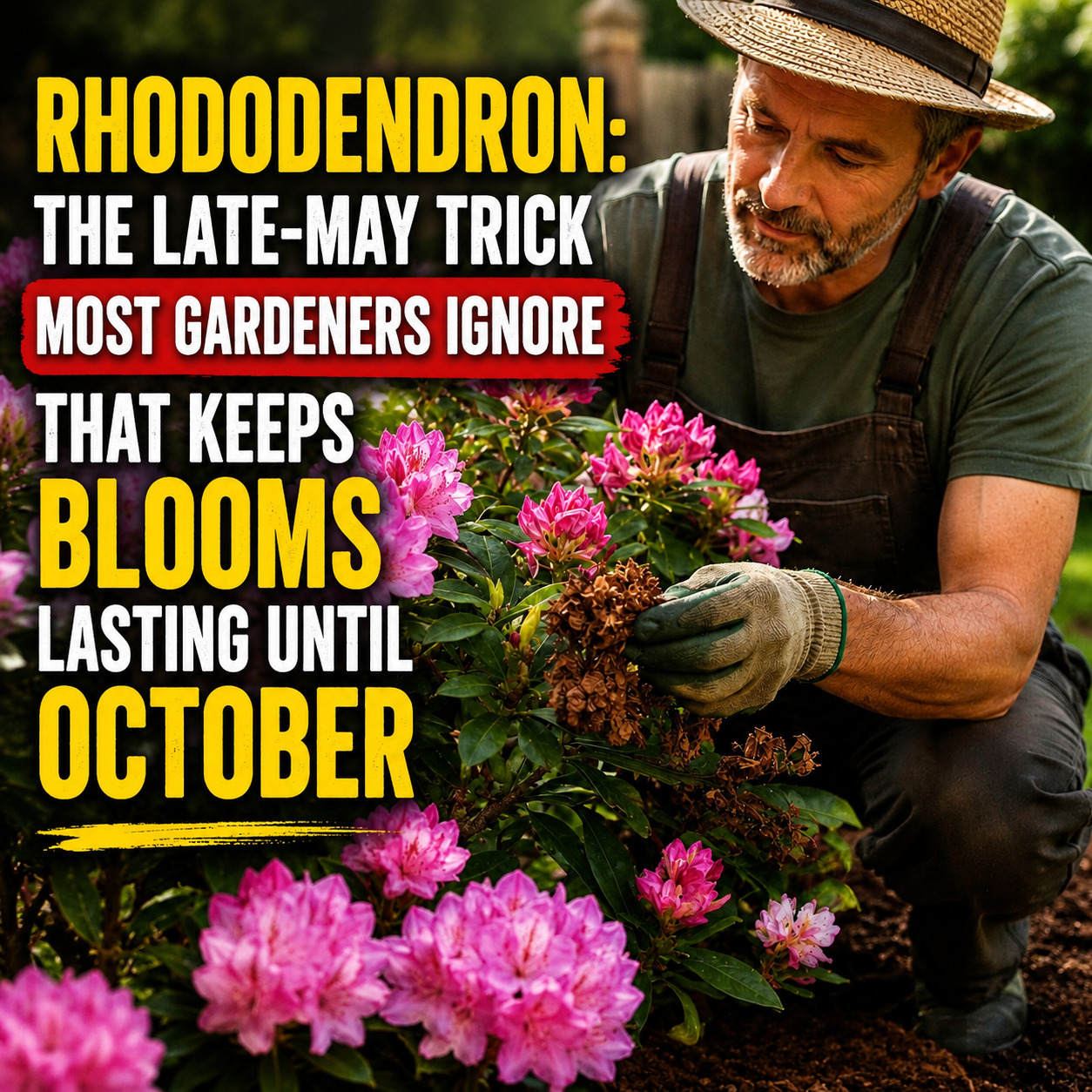
In spring, rhododendrons completely transform the garden with their spectacular clusters of flowers.
But once early summer arrives, many shrubs quickly lose their brilliance and seem to enter a long resting period until the following year.
What many gardeners don’t realize is that one simple action performed immediately after flowering can help extend the beauty of the plant for several more months.
Combined with the right blooming fertilizer, proper watering, and a few targeted care techniques, some rhododendrons may even produce a second wave of flowers that lasts into September — or sometimes October.
Why Rhododendrons Stop Blooming So Quickly
Once the main blooming period ends, the shrub completely changes its priorities.
Instead of focusing on flowers, the plant begins preparing for the future.
At this stage, the rhododendron starts to:
- Produce seeds
- Strengthen its branches
- Develop future flower buds
- Store energy reserves for the next season
The problem is that faded flowers continue draining the shrub’s energy unnecessarily.
When old flower clusters remain attached, the plant keeps using its resources to produce seeds rather than encouraging fresh growth.
As a result, the development of new flower buds slows down significantly.
This is exactly why experienced gardeners remove faded blooms as soon as the first flowering period ends.
The Essential Step After Flowering
The secret is surprisingly simple:
remove the faded flowers at the right moment.
When Should You Do It?
The ideal time is:
- Between late May and mid-June
- Immediately after the main blooming period
- Before the flowers dry completely
How to Remove Faded Flowers Correctly
The process should be done gently to avoid damaging new growth.
- Pinch the faded flower clusters with your fingers
- Avoid breaking the young green shoots underneath
- Do not touch developing buds
This simple technique helps the shrub redirect its energy toward fresh growth instead of seed production.
Why This Encourages a Second Bloom
By removing old flowers quickly, the rhododendron conserves more of its energy reserves.
This can help:
- Reduce plant fatigue
- Stimulate new bud formation
- Encourage certain varieties to bloom again later in the season
Under the right conditions, some vigorous rhododendrons may produce additional flowers in late summer or early autumn.
Summer Care: The Key to Long-Lasting Flowers
Removing faded blooms alone is not enough.
To encourage extended flowering, several additional care steps remain essential throughout the summer.
The Most Effective Summer Care Tips
- Maintain regular watering
- Use low-lime or rainwater whenever possible
- Add organic mulch around the base
- Lightly prune spent branches
- Apply a blooming fertilizer rich in potassium
Why Watering Matters So Much
Rhododendrons dislike dry conditions.
Even short periods of drought can completely interrupt the formation of new flower buds.
That’s why mulch plays such an important role.
A layer of mulch helps:
- Retain moisture around the roots
- Protect the soil from heat
- Keep root temperatures stable
- Reduce water evaporation
The Best Soil for Healthy Rhododendrons
Rhododendrons are quite demanding when it comes to soil quality.
Soils to Avoid
These shrubs struggle in:
- Chalky or alkaline soil
- Heavy compacted ground
- Poorly drained areas
- Waterlogged soil
Ideal Growing Conditions
For strong flowering and healthy growth, gardeners usually recommend:
- Acidic soil
- Heather soil mixtures
- Pine bark mulch
- Consistent moisture without excess water
The Best Rhododendron Varieties for Reblooming
Not all rhododendrons have the same ability to produce a second flowering cycle.
Some of the most commonly recommended varieties include:
- ‘Nova Zembla’
- ‘Scintillation’
- ‘Cunningham’s White’
Why These Varieties Perform Better
These hybrids are appreciated for:
- Their vigorous growth
- Heavy blooming potential
- Improved reblooming ability
Why More Gardeners Are Using This Technique
Today, many gardeners want to extend the beauty of their outdoor spaces naturally without constantly buying new plants.
With just a few simple actions, it becomes possible to:
- Keep flower beds colorful for longer
- Reduce gardening costs
- Create a more vibrant autumn garden
Using a proper blooming fertilizer combined with deadheading has become one of the most popular methods for keeping rhododendrons healthy and visually stunning.
Final Thoughts
Rhododendrons do not have to lose all their beauty after spring.
By removing faded flowers quickly and providing the right summer care, many gardeners successfully extend blooming for several extra weeks.
Balanced watering, acidic soil, mulch, and the right blooming fertilizer can help stimulate fresh growth and maintain a colorful garden long after the traditional flowering season ends.