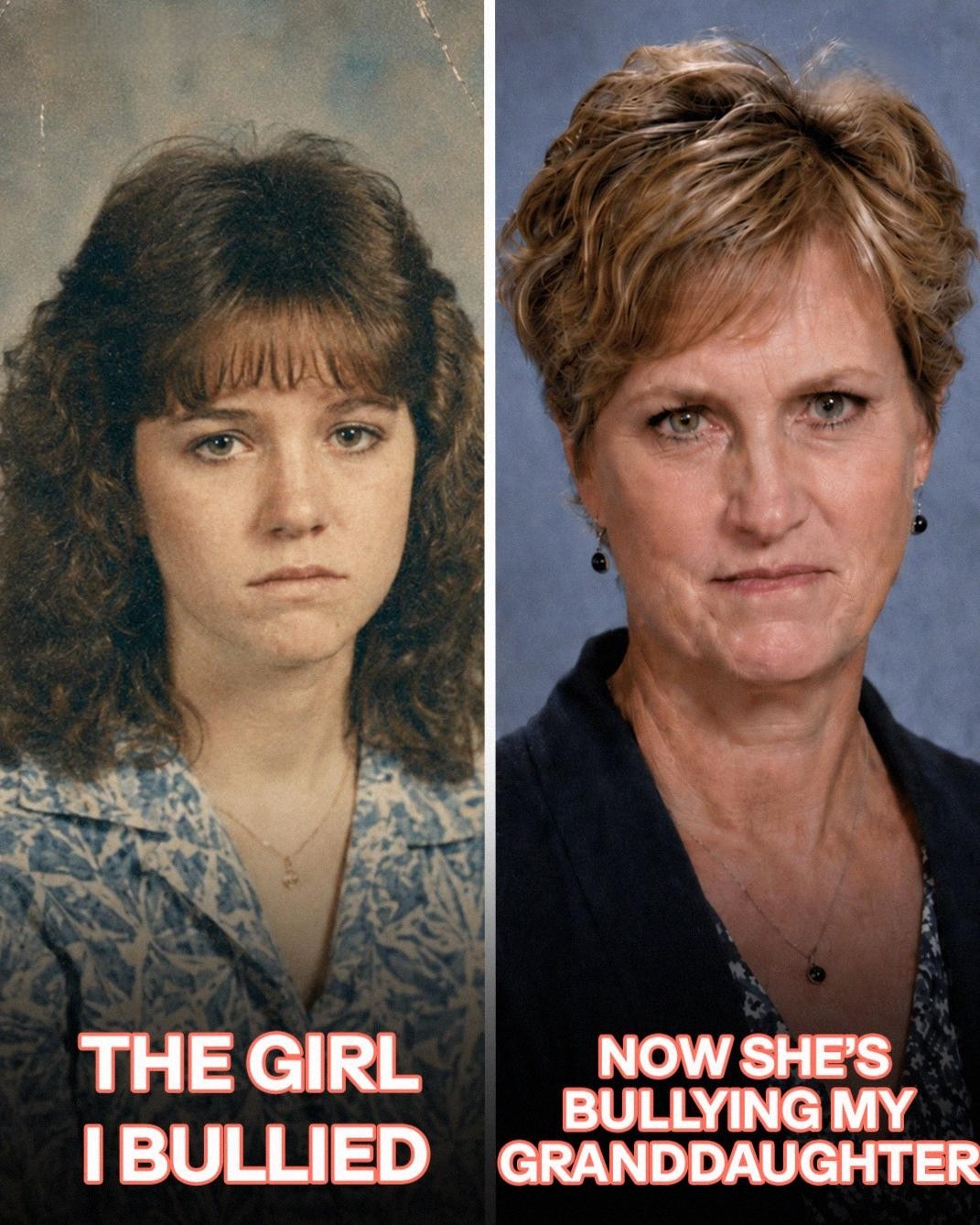
My name is Margaret, and at fifty-nine years old, I have lived a life that, on the surface, looks impeccable. I am a grandmother, a respected member of my community, and a woman who prides herself on raising my granddaughter, Sophie, with kindness and grace. Yet, there is a shadow that has followed me for over four decades—a past defined by the casual, quiet cruelty I inflicted upon others when I was a teenager. I wasn’t the kind of girl who started physical fights or caused loud scenes; I was something far more insidious. I was the girl who mastered the art of the whisper, the well-timed laugh, and the nickname that destroyed a person’s confidence before they even reached their locker. And the girl I targeted more than anyone else was Carol. I spent years telling myself that we were just kids and that my behavior was merely a byproduct of adolescent ignorance. I built a life that looked respectable, but guilt is a persistent ghost. It never truly disappears; it just waits for the right moment to surface.
My life changed forever three years ago when a tragic car accident claimed the lives of my daughter, Rachel, and her husband, Daniel. Sophie, who had stayed behind with me that weekend, became my entire world. She was sweet, shy, and fragile, still clinging to her mother’s old sweaters at night for comfort. I made a solemn vow to raise her differently than I had been raised—to foster a spirit of compassion and kindness in her that I had so clearly lacked at her age. When Sophie began fifth grade this year, she initially adored her new teacher, Mrs. Harris. She spoke of the plants in the classroom and the books they read together, and for a few months, I felt like my vow was coming to fruition. But then, the tide turned. Sophie’s smile began to fade, her grades started to suffer under strange, subjective critiques about messy handwriting, and she came home discouraged, convinced that her teacher simply did not like her.
The breaking point arrived on a Friday when Sophie came through the door sobbing, her breath hitching in a way that terrified me. She shoved her backpack into my hands, and inside, I found a folded note. It contained a single, chilling sentence written in blue ink: Bad behavior runs in families. My hands went cold. That wasn’t a teacher correcting a student; it was a weaponized message, deeply personal and vindictive. I checked the school’s website, and as I stared at the faculty photo of Mrs. Harris, the air left my lungs. It was Carol. She was older, with short hair and fine lines around her eyes, but the tight, unmistakable smile was the same. The past had circled back to find me, and my granddaughter was paying the price for the girl I had been forty years ago.
I spent a sleepless, agonizing night replaying the damage I had caused—the way Carol sat alone in the cafeteria pretending to read, the way she went silent whenever I entered a room, and the way the other students followed my lead because they were desperate for my approval. I had effectively erased her confidence, and now she was in a position of power over the only person I loved. I decided then and there that I would not let Sophie pay for my sins. The next morning, I arranged a meeting with the principal and Carol. When I walked into that office, the look on Carol’s face was like an old wound being ripped open. She looked not just angry, but exhausted, as if she had been waiting for this confrontation her entire life.
As the meeting progressed, the facade of professional decorum fell away. Carol didn’t deny it; she unleashed a torrent of memories that I had successfully repressed—the rumors, the deliberate exclusion from birthday parties, and the mornings she spent sitting in her mother’s car in the school parking lot, trying to find the courage to walk inside. Hearing her describe that little girl’s daily terror, knowing I was the architect of that fear, was a profound, nauseating blow. She admitted that when Sophie walked into her classroom and smiled at her, she saw Rachel, and by extension, she saw me. She hadn’t been able to remain professional because the ghost of the girl I had broken was standing right in front of her. The principal issued a warning to Carol, but the punishment felt irrelevant. The real consequence was the realization of what I had done and how far the ripples of my teenage cruelty had traveled.
The following weeks saw an improvement in Sophie’s treatment, but the lingering shame I felt was suffocating. I realized that an apology behind closed doors was not enough. I called the principal and requested to speak at the school assembly, determined to break the cycle. On Friday morning, standing before the sea of students and teachers, my hands shook so violently I had to grip the podium. I told them the truth. I told them about the girl I used to be—how I had used laughter and exclusion to feel important at the expense of others. I looked directly at Carol and offered a public, unreserved apology for the years of pain I had caused.
The silence in the gymnasium was total. Then, the most unexpected thing happened: Sophie stood up, walked across the floor, and wrapped her arms around Carol’s waist. She whispered that it was okay. That small, innocent gesture of compassion from my granddaughter did what all my years of trying to be a respectable woman could not. Carol dropped to her knees, weeping, and for the first time, the weight of the past seemed to lift. After the students cleared out, Carol and I remained in the empty gym. We didn’t reach a perfect resolution, but we started the slow, difficult process of trying to heal. I had spent forty years running from the girl I once was, only to realize that the only way to stop the pain was to own it. That day, I learned that while we cannot undo the damage we inflict on others, we can at least stop the cycle of harm from reaching the next generation. We left the gym not as enemies, but as two people finally choosing to lay down the weapons we had carried for far too long.