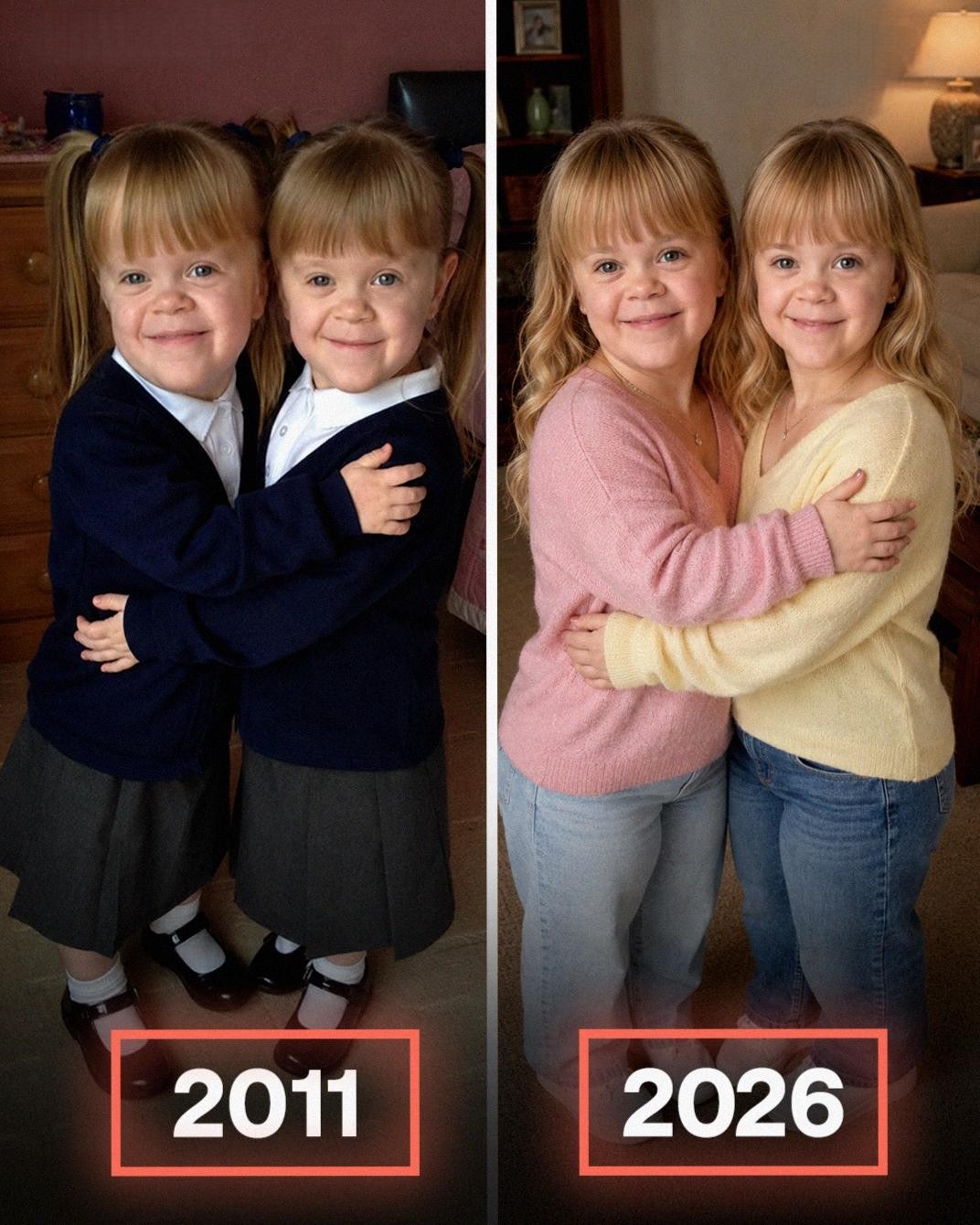
I was seven years old the last time I saw my mother. It was a Tuesday morning, entirely unremarkable in its rhythm, but it remains burned into my memory with agonizing clarity. Mom was at the kitchen table, her fingers expertly weaving a braid into my twin sister Lily’s hair, while I sat on the floor struggling with the laces of my sneakers. She leaned down, pressed a soft, lingering kiss to each of our foreheads, and promised that she would be waiting at the school gate when the final bell rang. She whispered that she loved us more than the whole sky, a phrase that became the final anchor of my childhood. But when the afternoon came and the school gate emptied, Mom was not there. Instead, our father stood waiting, his eyes swollen, his hands trembling with a force that seemed to vibrate through his entire body. He told us she wasn’t coming back, and then, the silence began—a silence that would span fifteen years.
Three months later, Jean entered our home. She came bearing gifts, a warm casserole, and a smile that, even as a young child, I felt was jagged and dishonest. Within a month, she was our stepmother. At first, she played the role of the devoted nurturer, packing lunches and reading bedtime stories with theatrical voices. But as we grew, her mask slipped. By the time we were nine, the bedtime stories had been replaced by a cruel, repetitive narrative. If we asked for new shoes or a winter coat that wasn’t second hand, Jean would snap, reminding us with biting precision that our real mother had abandoned us and that she was the only reason we weren’t homeless. We grew up believing we were fundamentally unlovable, the kind of daughters a mother could simply discard. We lived in a house where Jean’s closet overflowed with designer labels while Lily and I were relegated to thrift store scraps, all while our father worked double shifts to support the lifestyle Jean demanded. We were terrified that if we asked too many questions, Jean would leave, too. We learned to make ourselves small, quiet, and grateful, convinced that love was a currency we had to earn through submission.
The turning point arrived this Mother’s Day. Lily was working a double shift, so I took it upon myself to visit Jean, armed with a bouquet of stargazer lilies—her favorite—that I had scraped together every cent to afford. I arrived at the house to find the front door unlocked. As I walked down the hallway, I heard Jean’s voice drifting from the kitchen, radiating a bright, saccharine tone that she only used when she thought she was unobserved. I stopped, intending to surprise her, but the words that cut through the air stopped me dead in my tracks. She was on the phone, laughing with a poisonous, triumphant sound. She bragged to someone that she had trained us perfectly, calling us fools who hadn’t suspected a thing in fifteen years. She then made a comment about our mother, noting that she had fooled her, too, and that our mother had been screaming into a void for over a decade.
My heart hammered against my ribs as I listened to the revelation. Jean hadn’t just stepped into our lives; she had orchestrated the destruction of our family. She had convinced our mother that our father was planning to strip her of parental rights and leave her destitute. She had intercepted every attempt at communication, faking text messages and letters, feeding our mother’s darkest fears until she was driven to run away to escape a phantom threat. Our mother hadn’t abandoned us; she had been coerced into exile by a woman who wanted our father and his life for herself. I stood in the shadow of the hallway, my vision sharpening with a clarity that felt like ice water in my veins. The woman I had been trying to impress for fifteen years was not a savior; she was the architect of our sorrow.
I didn’t storm into the kitchen. I moved with a cold, calculated silence, knowing that today was not going to be the celebration she expected. I stepped into the kitchen, wearing a mask of cheerful devotion, and presented the flowers. As she busied herself, I made an excuse to use the bathroom, but I bypassed it entirely, heading straight for the hall closet—a place Jean had strictly forbidden us to enter for our entire childhoods. Inside, hidden beneath layers of her designer winter coats, I found three stacked shoeboxes. My hands shook as I lifted the lids to reveal dozens of letters, all postmarked to Lily and me. Some were birthday cards, some were letters of desperate love, and the most recent one was postmarked only nine days ago.
When Jean caught me in the closet, the veneer of the doting stepmother dissolved into a portrait of pure malice. She threatened to have our father cut us out of his life if I didn’t return the letters and sit down to eat, but for the first time, I wasn’t afraid. Her power over us was built entirely on the fragile foundation of our ignorance. When our father walked in, the confrontation was seismic. I held up the letters, his hands trembling as he realized he had been living in a house built on his wife’s deception. He confronted Jean, and when she tried to pivot back to her role as the aggrieved victim, he didn’t falter. He realized the woman he had married to fill the void of his lost wife had been the one who carved that void in the first place. He told her to leave, and she vanished, knowing the game was finally over.
We didn’t waste a second. We went to Lily’s workplace, explained the impossible news, and drove two towns over to the address on the most recent envelope. When I knocked on the door of the small, neat house, it was answered by a woman who was a reflection of my own face, aged by fifteen years of grief. The silence that had defined our childhood ended in a single, thunderous collision of tears and disbelief. We spent the afternoon in her living room, unraveling the lies Jean had spun and filling the silence of a decade with the words we had been denied. I realized then that my childhood hadn’t been a tragedy of abandonment, but a tragedy of interruption. As I sat with my mother, listening to her talk about the letters she had sent every month, I knew the fear that had shaped me for years had finally lost its grip. We were no longer the daughters a mother could leave; we were the daughters a mother had fought a lifetime to find. For the first time in fifteen years, the sky didn’t just feel big—it felt like home.