Companion planting is an age-old horticultural technique that involves growing different plants together to promote growth, repel pests, and increase yields. This method is based on the assumption that some plants will benefit each other when grown close together. By carefully selecting plant combinations, gardeners can create a more harmonious and productive garden environment. Understanding which plants thrive together and which do not is essential for anyone looking to optimize the health and productivity of their garden.
The science of plant compatibility
The science of plant compatibility is based on the interactions between different plant species. Some plants release chemical substances through their roots or leaves that can inhibit or promote the growth of neighboring plants. Allelopathy, for example, is a biological phenomenon in which plants release biochemicals that can inhibit the growth of competing plants. Conversely, some plants can increase nutrient uptake, improve soil health, or attract beneficial insects that aid in pollination or pest control. Understanding these interactions is key to successful companion planting.
Benefits of
Intercropping: Intercropping offers numerous advantages, including natural pest control, improved plant health, and increased biodiversity. By planting certain species together, gardeners can reduce the need for chemical pesticides, as some plants naturally repel pests. Furthermore, intercropping can lead to better nutrient utilization, since some plants improve soil fertility through nitrogen fixation or nutrient degradation. This method also promotes ecosystem biodiversity by attracting beneficial insects and pollinators, which can result in higher yields and healthier plants.
Common mistakes in plant selection:
One of the most frequent mistakes in plant selection is failing to consider the specific needs and characteristics of each plant. For example, combining sun-loving and shade-loving plants can lead to poor growth in one or both species. Another mistake is ignoring the allelopathic properties of some plants, which can inhibit the growth of neighboring plants. Furthermore, neglecting the different water and nutrient requirements of plants can lead to competition and stress. Understanding these factors is essential to avoid common mistakes in companion planting.
The 10 most popular flowers and their ideal companion plants:
Choosing the right seedlings can enhance the growth and beauty of popular flowers. Here you’ll find ten popular flowers and their ideal companion plants, as well as plants you should avoid.
1. Roses: Ideal companion plants and plants to avoid
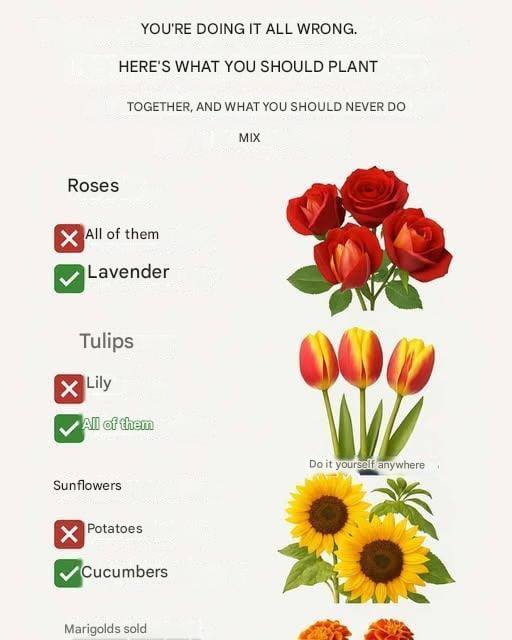
Roses thrive when planted alongside plants like garlic and chives, which repel pests such as aphids. Marigolds are also excellent companion plants, as they keep nematodes and other harmful insects away. However, avoid planting roses near fennel and boxwood, as these compete for nutrients and space.
2. Tulips: The best companion plants and those to avoid.
Tulips harmonize well with daffodils and garlic, which can help keep rodents and other pests away. Avoid planting tulips together with lilies, as they compete for similar nutrients and space, thus inhibiting their growth.
3. Daffodils: Ideal neighbors and incompatible plants.
Daffodils are good neighbors for tulips and daylilies because they bloom at different times and don’t compete for nutrients. However, avoid planting them next to roses, as they can inhibit each other’s growth.
4. Sunflowers: Suitable and unsuitable companion plants.
Sunflowers go well with cucumbers and corn, as these provide shade and support. However, avoid planting them near potatoes, as they can attract similar pests and diseases.
5. Marigolds: Beneficial and unsuitable partners.
Marigolds are known for their pest-repellent properties and go well with tomatoes and peppers. However, avoid planting them near beans, as they can inhibit each other’s growth.
6. Lilies: Ideal and unsuitable plants.
Lilies thrive next to hostas and ferns, which provide shade and retain moisture. Avoid planting them near tulips, as they can compete for similar nutrients and space.
7. Lavender: Ideal companion plants and plants to avoid.
Lavender harmonizes well with rosemary and sage, as they have similar growing requirements and support each other. Avoid planting lavender next to mint, as it can become invasive and deprive lavender of nutrients.
8. Peonies: Best planting partners and unsuitable neighbors.
Peonies grow well with irises and foxgloves, which complement their growth and aesthetic appeal. Avoid planting them next to trees or shrubs, as these will shade them and deprive them of nutrients.
9. Hydrangeas: Suitable companion plants and plants to avoid.
Hydrangeas harmonize well with hostas and ferns, which provide shade and retain moisture. Avoid planting with sprawling ground covers like ivy, as these compete with hydrangeas for nutrients and space.
10. Geraniums: Ideal plant combinations and plants to avoid.
Geraniums pair well with roses and can repel pests. However, avoid planting them with cabbage, as these can attract similar pests and diseases. Conclusion: Enhance your garden with smart plant selection.
By understanding and applying the principles of companion planting, gardeners can create a thriving, balanced ecosystem in their gardens. This method not only promotes plant growth and health but also reduces the need for chemical additives and encourages more sustainable gardening practices. By carefully selecting plant combinations, you can enjoy a more productive and beautiful garden.