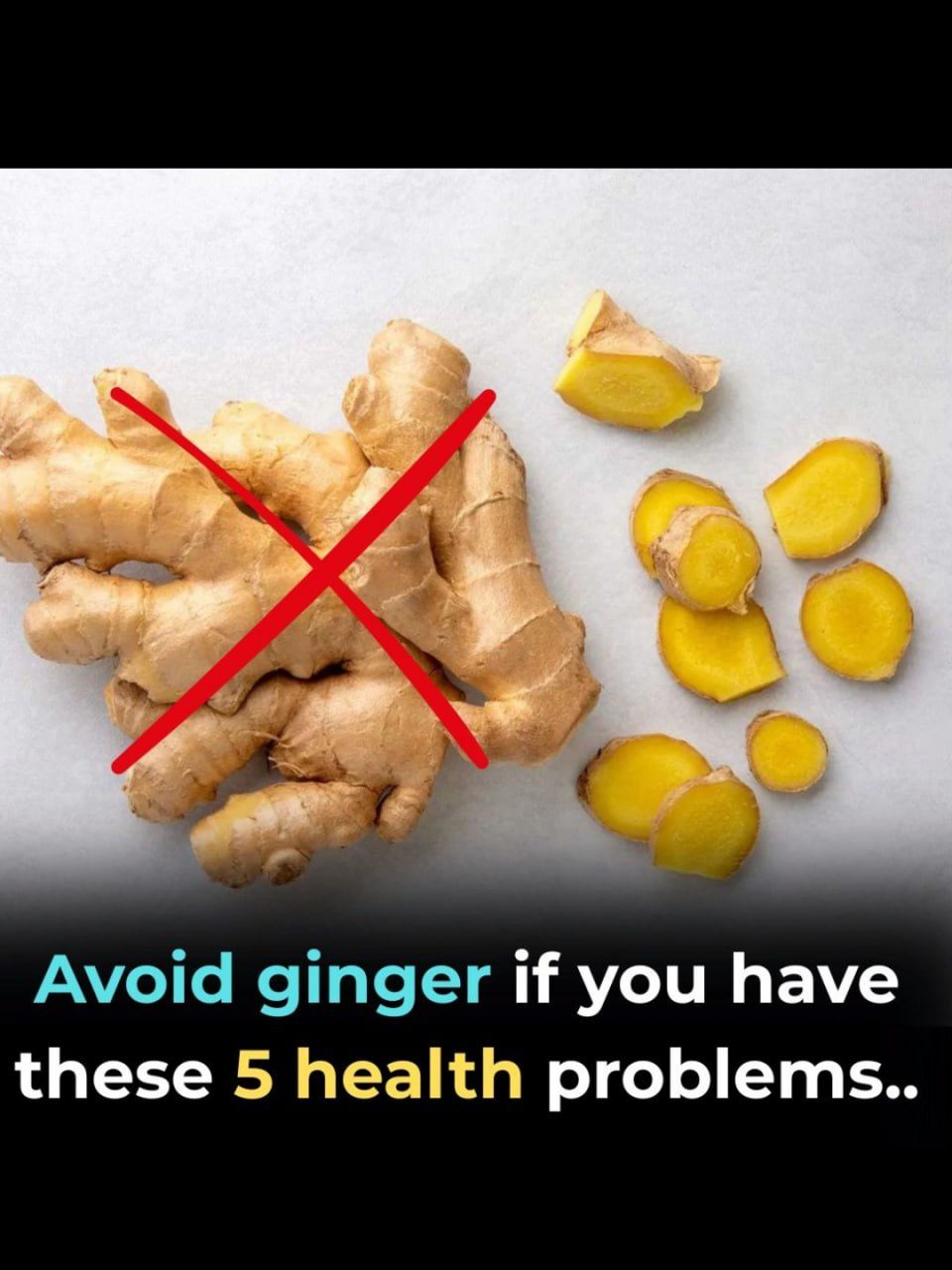
Ginger is celebrated for its powerful health benefits — from soothing nausea and reducing inflammation to boosting digestion and fighting colds.
But while this spicy root is safe and beneficial for most people, it’s not right for everyone.
In certain health conditions, ginger can interact with medications or worsen symptoms — sometimes dangerously.
Here are five health situations where you should think twice before adding ginger to your tea, meals, or supplements — along with safer natural alternatives to support your wellness.
1. People with Bleeding Disorders or on Blood Thinners
Why to Avoid:
Ginger contains natural compounds (like salicylates) that inhibit blood clotting. While helpful for circulation in healthy individuals, this effect can be risky if you have:
- Hemophilia
- Von Willebrand disease
- Or if you take anticoagulants such as warfarin, aspirin, clopidogrel, or heparin
Too much ginger may increase the risk of:
- Easy bruising
- Nosebleeds
- Prolonged bleeding after injury or surgery
Safer Alternatives:
- Turmeric (in moderation) – Anti-inflammatory without strong blood-thinning effects
- Foods rich in vitamin K – Spinach, kale, broccoli (supports healthy clotting)
Always consult your doctor before using herbal supplements.
Pro Tip: Stop taking high-dose ginger at least 7–10 days before surgery.
2. People with Diabetes (Especially Those on Medication)
Why to Avoid:
Ginger can lower blood sugar levels by improving insulin sensitivity — great in theory, but dangerous if you’re already on:
- Insulin
- Metformin
- Sulfonylureas (like glipizide)
Combining ginger with these medications may cause hypoglycemia (dangerously low blood sugar), leading to:
- Dizziness
- Sweating
- Confusion
- Fainting
Safer Alternatives:
- Cinnamon tea – Helps regulate glucose gently
- Green tea – Supports metabolism without drastic drops
- Focus on balanced meals: fiber + protein + complex carbs
Monitor blood sugar closely when trying any new herb.
Note: Small amounts of ginger in food are usually fine — avoid concentrated forms (extracts, pills, large doses).
3. People with Heart Disease or on Heart Medications
Why to Avoid:
While moderate ginger supports heart health, excessive intake may interfere with:
- Beta-blockers
- Calcium channel blockers
- Antiarrhythmic drugs
Large amounts may lead to:
- Irregular heartbeat (arrhythmia)
- Blood pressure fluctuations
- Palpitations
Some animal studies suggest that high-dose ginger might affect heart rhythm — especially when combined with certain drugs.
Safer Alternatives:
- Garlic – Naturally supports cholesterol balance
- Omega-3 fatty acids – From salmon, chia seeds, or flaxseed oil
- Eat a heart-healthy diet: low sodium, high fiber, rich in antioxidants
Always talk to your cardiologist before adding ginger supplements.
4. People with Gallstones
Why to Avoid:
Ginger stimulates bile production in the liver, which helps digest fats. However, if you have gallstones, increased bile flow can trigger painful gallbladder attacks.
The contraction of the gallbladder to release bile may cause stones to get stuck in the duct, leading to sharp pain, nausea, or even infection.
Safer Alternatives:
- Peppermint tea – Soothes digestion without stimulating bile
- Digestive enzymes – Taken with meals to help break down fats
- Limit high-fat foods that stress the gallbladder
If you’ve had your gallbladder removed, small amounts of ginger are usually okay — but start slow.
5. People with Gastroesophageal Reflux Disease (GERD) or Acid Reflux
Why to Avoid:
Despite being helpful for nausea, ginger can actually relax the lower esophageal sphincter (LES) — the valve between your stomach and esophagus.
This relaxation can allow stomach acid to rise, worsening:
- Heartburn
- Regurgitation
- Chest pain
Fresh ginger, ginger tea, or supplements may trigger reflux symptoms in sensitive individuals.
Safer Alternatives:
- Chamomile tea – Calms the digestive tract
- Licorice root (DGL form) – Soothes the stomach lining
- Aloe vera juice – Cooling and anti-inflammatory
Eat smaller meals and avoid lying down immediately after eating.
Note: Some people tolerate ginger well — others don’t. Pay attention to your body.
When Is Ginger Safe?
For most healthy adults, 1–3 grams of fresh ginger per day (about a ½–1-inch slice) is perfectly safe and beneficial.
It’s widely used during pregnancy for morning sickness — but even then, consult your OB-GYN first.
Final Thought: Natural Doesn’t Always Mean Risk-Free
You don’t need synthetic drugs to affect your body.
Even gentle herbs like ginger are powerful — and with power comes responsibility.
True wellness isn’t just about adding “healthy” things —
it’s about knowing what works for your unique body.
So if you have any of these conditions, pause.
Talk to your doctor.
Choose wisely.
Your health deserves more than trends.
It deserves informed care.