We’ve all heard “sit up straight!”—but beyond posture and spinal health, the way you sit when you’re relaxed can quietly reveal your mood, mindset, and even your emotional state. While no single pose defines your personality, body language experts and psychologists agree: habitual sitting positions often mirror what’s happening beneath the surface.
Of course, context is everything. Slouching on your couch after a long day isn’t the same as slumping in a job interview. But in casual or social settings—when you’re not “performing”—your natural posture can offer surprising insights.
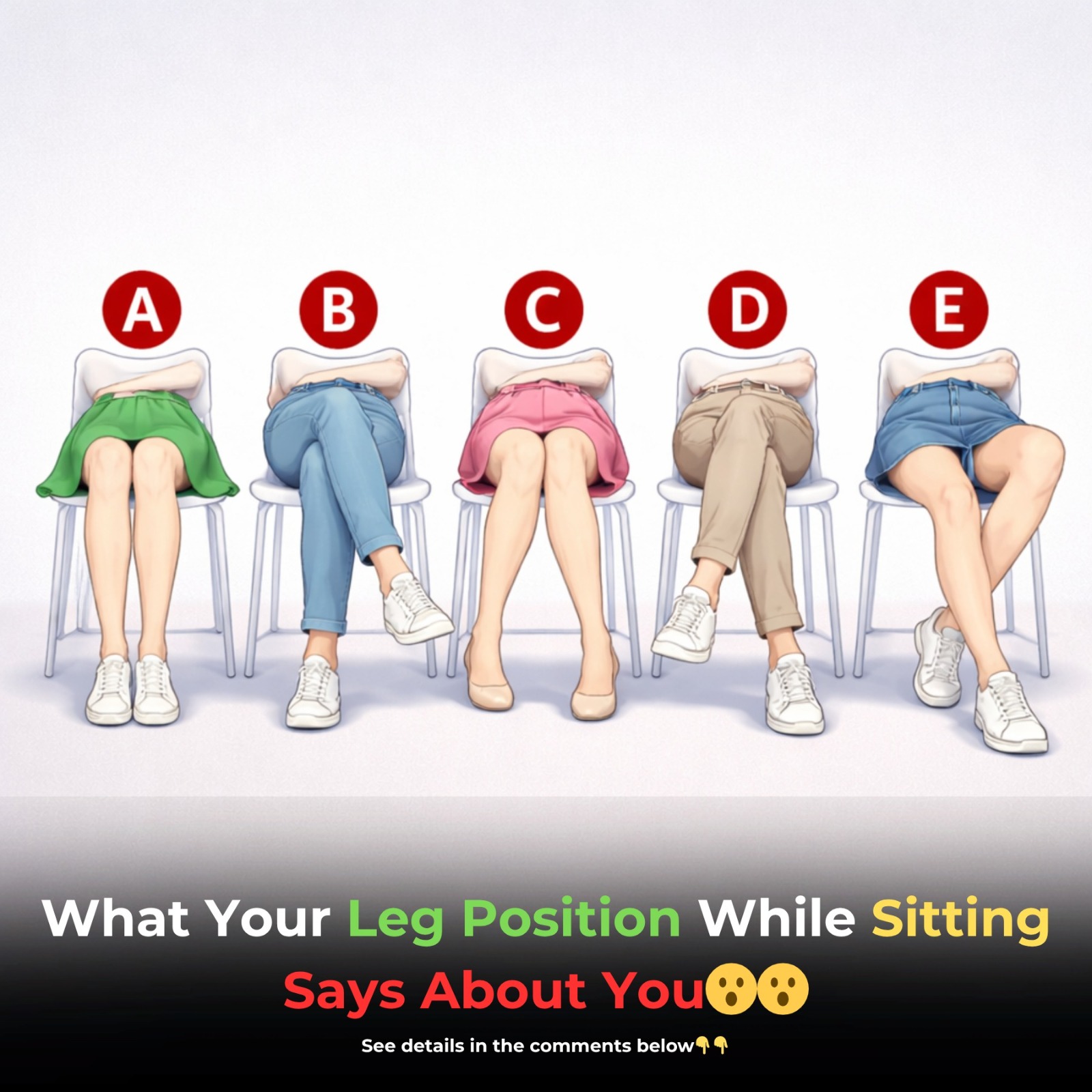
Here’s what five common sitting styles might say about you… and when to read between the lines.
🪑 1. The “Figure Four” (Ankle Over Opposite Knee):
What it looks like: One ankle resting on the opposite knee, forming a “4” shape. Often paired with hands behind the head or loosely clasped.
What it may signal:
✅ Confidence – This is a classic “power pose.” It takes up space, signaling comfort and self-assurance.
✅ Assertiveness – Common in negotiations or debates; it subtly communicates dominance.
⚠️ Defensiveness – If combined with crossed arms, tightened jaw, or leaning back, it can shift from confident to closed-off.
💡 Fun fact: Studies show people in this pose are more likely to stick to their opinions—even when presented with new evidence.
When it’s just comfort: In relaxed settings (like watching TV), it may simply mean you’re stretching your hips—not making a statement.
🧘 2. Upright Spine, Feet Flat on the Floor:
🧘 2. Upright Spine, Feet Flat on the Floor
What it looks like: Back straight, shoulders relaxed but aligned, feet planted shoulder-width apart.
What it may signal:
✅ Engagement – You’re mentally present and ready to participate.
✅ Professionalism – This is the go-to posture in interviews, meetings, or formal settings.
⚠️ Nervous control – If overly rigid (hands clenched, knees pressed together), it might mask anxiety.
🌟 Body language pro tip: This posture actually boosts focus and confidence—even if you’re faking it at first (thanks to “embodied cognition”).
Why it works: It supports healthy breathing, blood flow, and vocal projection—making you feel and sound more capable.
🤲 3. Slouched with Hunched Shoulders
What it looks like: Rounded upper back, head forward, chest collapsed inward.
What it may signal:
😔 Fatigue or overwhelm – After a long day, this is your body’s way of conserving energy.
🌧️ Emotional withdrawal – Can reflect sadness, stress, or a desire to “disappear.”
🧠 Deep thought – Some creatives and introverts naturally curl inward when processing ideas.
⚠️ Long-term note: Chronic slouching is linked to shallow breathing, neck pain, and even lower mood—but it doesn’t mean you lack self-worth! Context matters.
Compassionate reminder: If you’re grieving, recovering from illness, or managing depression, this posture may simply be your body asking for rest.
🤝 4. Leaning Forward, Hands on Knees or Table
What it looks like: Torso angled toward the other person, elbows resting forward, eyes engaged.
What it may signal:
🔥 Enthusiasm – You’re invested in the conversation.
👂 Active listening – Shows empathy and openness.
💡 Problem-solving mode – Common when brainstorming or offering support.
✅ This is one of the most universally positive postures in social interaction. It says, “I’m with you.”
Bonus: Mirroring this pose builds rapport—try it subtly in conversations!
🛋️ 5. Curled Up (Legs Tucked Under or Side-Sitting)
What it looks like: Sitting sideways on a chair, legs folded beneath you, or perched on the edge with knees drawn in.
What it may signal:
🛡️ Self-protection – A subconscious attempt to make yourself smaller, especially in unfamiliar settings.
🌸 Gentle sensitivity – Often seen in empathetic, intuitive individuals who absorb others’ energy.
🏡 Comfort in safe spaces – On your own couch? It might just mean you feel secure enough to relax fully.
💬 Note: Women are more frequently socialized into “small” postures like this—which doesn’t always reflect insecurity, but cultural conditioning.
A Gentle Reminder: Posture ≠ Personality
Your sitting style is a snapshot, not a diagnosis. Mood, culture, physical comfort, injury, and even your chair influence how you sit. Someone with chronic back pain may slouch not from sadness, but survival.
Instead of labeling yourself or others, use these cues as invitations for awareness:
- Notice how your posture shifts when you’re stressed vs. joyful
- Experiment with “power poses” before big moments (science backs this!)
- Offer comfortable seating to guests—it helps them feel safe enough to open up
Final Thoughts: Your Body Is Always Speaking
You don’t need to “fix” your posture to be worthy. But tuning into how you sit can be a kind, curious way to check in with yourself: Am I tense? Am I present? Do I feel safe?
And sometimes, the most powerful thing you can do is uncross your arms, plant your feet, and lean in—to life, to connection, to your own unfolding story.
So next time you settle into a chair, take a breath. Notice your shape. And remember: however you sit, you belong exactly as you are.
Have a favorite sitting pose? Noticed how yours changes with your mood? Share your thoughts below—we’d love to hear from you!