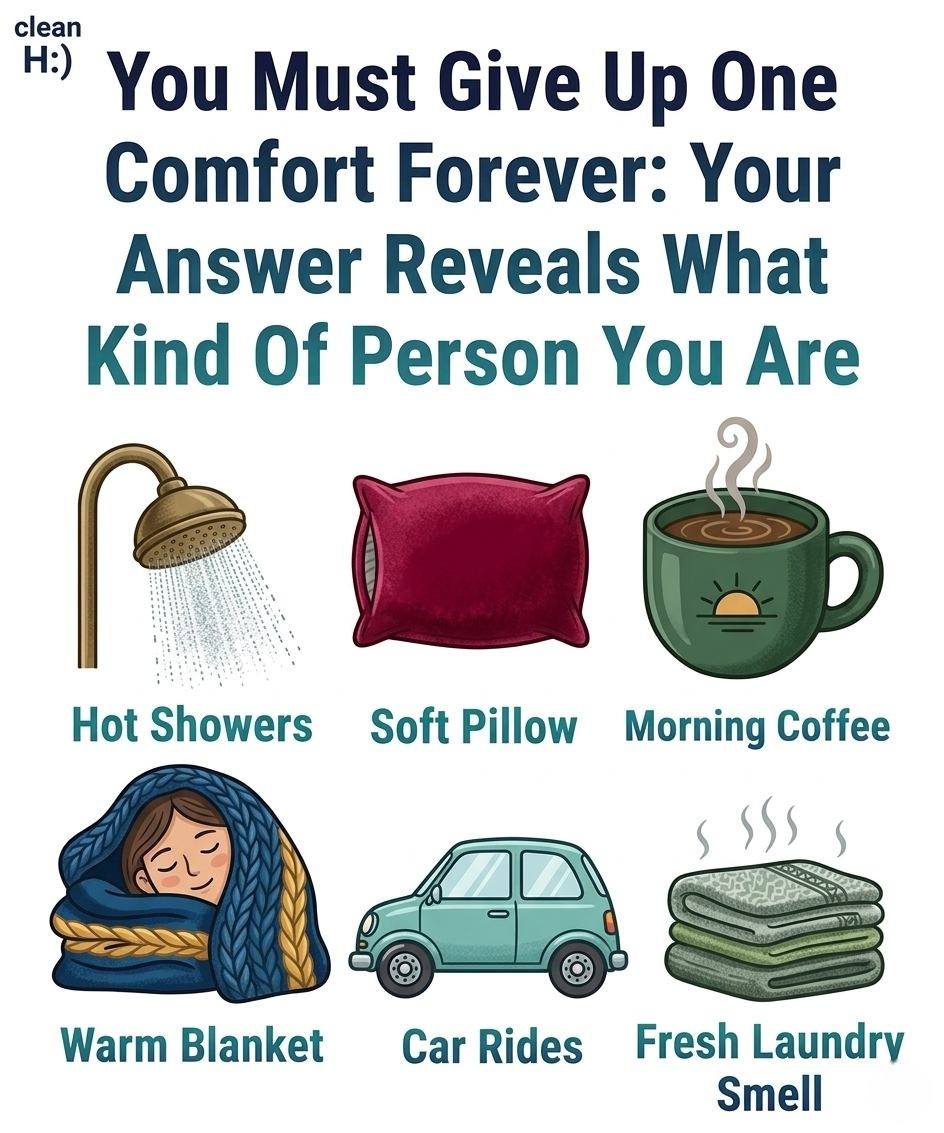
Imagine being faced with a deceptively simple question: you must give up one comfort forever. No compromises, no substitutions, no switching back later. Just one thing—your daily companion, your small indulgence—that disappears from your life permanently. At first, it seems like a harmless thought experiment, a playful challenge you might casually dismiss over a morning coffee or while wrapped in your favorite blanket. But pause for a moment, and the question begins to unspool, revealing the depth of our attachment to small comforts that shape not only the flow of our days but also the architecture of our identities. These comforts are subtle, easily overlooked, yet their absence would resonate far deeper than we anticipate. They are the punctuation marks in the narrative of our lives: the warm exhalation of a shower, the gentle embrace of a pillow, the soft crinkle of freshly laundered sheets, the smell of coffee stirring you into consciousness, the weight of a blanket on a tired body, or the freedom of stepping into a car and setting your own course. Each is, in its own way, a ritual and a tether, a quiet anchor to stability in a world that often feels unpredictable. And yet, the very act of choosing one to relinquish forces us to examine what we truly value—not only in terms of pleasure, but in the structure, rhythm, and priorities of our lives.
Consider hot showers. On the surface, they are simple—water and warmth—but to those who rely on them, they are far more. Hot showers are a sanctuary, a small private moment to release the accumulated stress of a day, to let tension drain from muscles and thoughts alike. They offer a rare opportunity to exist alone with one’s body and mind, a ritual of cleansing that is simultaneously physical and symbolic. Choosing to forgo them forever is no small decision. It requires resilience, adaptability, and an understanding that comfort is not a prerequisite for coping. Someone willing to give up hot showers might possess a remarkable emotional independence, able to reset themselves mentally without external triggers or sensory indulgences. They might approach stress with a practical mindset, able to function efficiently and find inner calm even when external conditions are less than ideal. Conversely, refusing to give up hot showers signals a deep recognition of personal needs, an acknowledgment that one’s mental and physical well-being deserve tangible care. It speaks to a philosophy that small acts of self-maintenance—ritualized, deliberate, and comforting—are essential for emotional balance. It acknowledges that life’s pressures do not diminish with effort alone; they require moments of pause, sensory restoration, and the quiet reassurance that comes from allowing oneself to feel nurtured. Hot showers are, therefore, not just about warmth—they are about presence, about reclaiming a few minutes of life where one exists entirely for oneself, free from obligation, expectation, or judgment.
Now, consider the soft pillow. At first, it seems trivial, almost incidental, but it embodies the sacred act of rest. Sleep is one of the most foundational needs of human life, a non-negotiable period where our bodies repair, memories consolidate, and emotional resilience regenerates. A soft pillow is more than a cushion for the head; it is a symbol of sanctuary, of protection, and of comfort. Choosing to keep this comfort forever reflects a profound awareness of self-worth and a willingness to prioritize well-being over convenience or productivity. It says, “I matter enough to ensure my body can rest well, every night, under the conditions it deserves.” Giving up the pillow, on the other hand, suggests a personality willing to sacrifice personal comfort for larger goals, a mind that can endure discomfort without collapsing, a character that values purpose, productivity, or external achievement over bodily ease. Such a person may have cultivated a high threshold for endurance, able to function even when sensory pleasure or physical ease is absent. Yet this endurance comes with a cost: a quiet, insidious wear on the body and mind over time. And therein lies the tension at the heart of such choices—balancing the needs of immediate survival, mental clarity, and progress against the restorative, life-giving power of comfort.
Morning coffee presents yet another dimension. More than a beverage, it is ritual, intention, and symbolism distilled into a single cup. It signals the start of the day, the awakening of focus, and the ignition of motivation. Refusing to relinquish morning coffee demonstrates a reverence for routine, a belief in small anchors that frame life with rhythm and predictability. It suggests a person who understands the psychological importance of signals: the way familiar actions prime the mind for productivity, emotional readiness, and stability. Conversely, giving up coffee implies self-sufficiency, a natural internal drive, and an ability to energize oneself without external stimulants. Such a person may be intrinsically motivated, deriving momentum from purpose rather than ritual. But this also means sacrificing the comforting familiarity of a daily routine, a small ceremonial act that marks the passage of night into day and signals to the body that it is time to move from rest into activity. Here, too, the choice is less about caffeine and more about what anchors us in life, what small routines matter enough to define our daily experience, and what internal resources we rely upon when habitual comforts vanish.
Then there is the warm blanket, a tactile emblem of safety, security, and emotional shelter. A blanket is far more than fabric; it is a cocoon, a tactile reassurance, a constant friend in the dark hours. To keep it forever is to place a premium on comfort, on the quiet cultivation of peace and emotional well-being, and on the small, deliberate pleasures that make life bearable. Choosing to relinquish it suggests a willingness to embrace discomfort, to face vulnerability without hedging one’s emotional or physical needs with protective rituals. It speaks to independence, a certain stoicism, and a focus on resilience over ease. The blanket represents touch, texture, and warmth—all elements that influence mental and emotional health far more than most people consciously realize. It is a reminder that some comforts do more than please; they nurture, they heal, they hold us together when the world outside feels harsh, chaotic, or indifferent.
Finally, the seemingly minor choices—car rides or the smell of fresh laundry—reveal yet subtler layers of personality. Car rides are symbols of freedom, autonomy, and control over one’s environment. Refusing to give them up signifies a desire to navigate life with independence, to move fluidly through space and opportunity. Surrendering car rides, by contrast, suggests flexibility, a willingness to relinquish control, and an openness to alternative experiences, slower tempos, or new methods of connecting with the world. Meanwhile, the smell of fresh laundry is a delicate comfort, often unnoticed until absent.
It embodies order, attention to detail, and the psychological reassurance of cleanliness. Choosing to keep it indicates a mind attuned to the subtle markers of order and harmony; relinquishing it signals a capacity to tolerate chaos, imperfection, and the incidental messiness of human life. In both cases, these small rituals are mirrors: they reflect values, habits, emotional needs, and coping mechanisms, ultimately the exercise of choosing which comfort to give up is less about the object itself than about what it represents. It is a meditation on priorities, emotional resilience, self-knowledge, and the interplay between habit and identity. Our comforts are never trivial—they are symbols of how we navigate life’s uncertainties, how we honor ourselves, and how we balance endurance with indulgence. To relinquish one forever is to confront the stark reality of our attachments and to recognize the silent power they wield over our daily existence. The choice we make reveals what sustains us, what nourishes our bodies and minds, and what anchors our sense of self amidst the constant flux of responsibilities, stressors, and societal expectations. And though the act of choosing may seem hypothetical, the insight it provides is enduring: a simple comfort is rarely simple at all, and understanding why it matters may offer the clearest glimpse of who we are—and what we truly need to thrive.