
It’s a sweet tradition, but it has a rather dark past.
Swedes are known for their delicious and creative-looking, tiny candies available at the godisvägg (wall of candy) at their local grocery store. Just grab a bag, fill it up, and pay by weight. Some of Sweden‘s most popular pick-and-mix candies are, of course, Swedish Fish, Ahlgren’s Cars (a small automobile-designed marshmallow candy), Salmiak (salty licorice), and Polly candies that combine chocolate with a soft center.
However, if you’re a child in Sweden, you’ll have to wait for Saturday to enjoy a bag full of the local godisvägg. That’s because, according to the Swedish tradition known as Lördagsgodis (Saturday candy), they only eat sweets once a week. It’s a sweet tradition, but it has a rather dark past.

Why do the Swedes only eat sweets on Saturday?
In 1946, as part of the Vipeholm dental study, the Swedish government forced mental patients in its hospitals to eat caramel and other sweets to observe their effects on teeth. After high sugar consumption was linked to tooth decay in the 1950’s, the Swedish government recommended that people eat sweets only once a week.
At the time, trust in government was high, and the growing social safety net required the population to work together to maintain high public health standards. Plus, when the public takes good care of their teeth, it’s a lot easier for the government to pay for healthcare.
The tradition also makes it easier for parents to say “no” to sweets and gives kids something to look forward to on the weekend.
“Mostly, it’s a tool for managing candy, so that there’s no asking about candy during the week, and if they do, ‘It’s not Saturday.’ So, it’s a really a good way to control the sugar,” Therese Larri, a Swedish parent, told the BBC. “But then, it’s an event. They get to choose where we go, which store we go to, and then they take their time. It feels like a big part of the fun is to choose and plain, ‘What am I Gonna get?’”
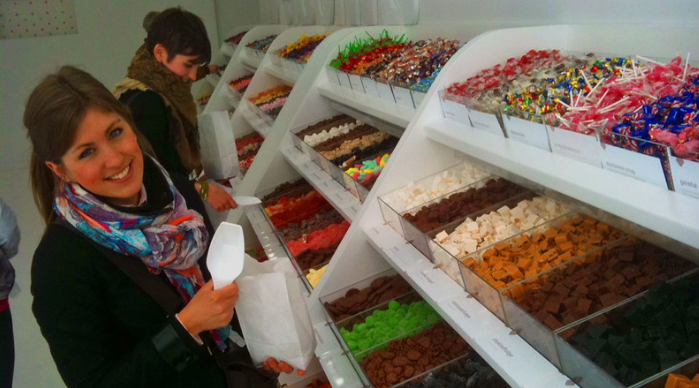
Lördagsgodis is great for Sweden’s dental health
The Lördagsgodis tradition is also better for people’s teeth because, according to research, it’s better to eat a pound of candy in one sitting and then brush your teeth than to spread the candy over a week and brush every night. The Vipeholm dental study found that sticky sweets eaten between meals cause far more cavities than larger amounts of candy eaten in one sitting. That’s probably a big reason why Swedish people have some of the best teeth in Europe.
Dentistry Today found that Sweden has the fourth-best teeth in Europe, based on a study of 24 European Union countries, plus England and Switzerland.
The Lördagsgodis tradition and the science behind it could be a great way for parents in other countries to talk with their children about candy. Simply ask them: Would you like a little candy throughout the week, or one big day to gorge on an entire bag? If they say they’d take more candy, that’s the lesson of Lördagsgodis: If you can delay your gratification for a few days, you can have all the candy you like.