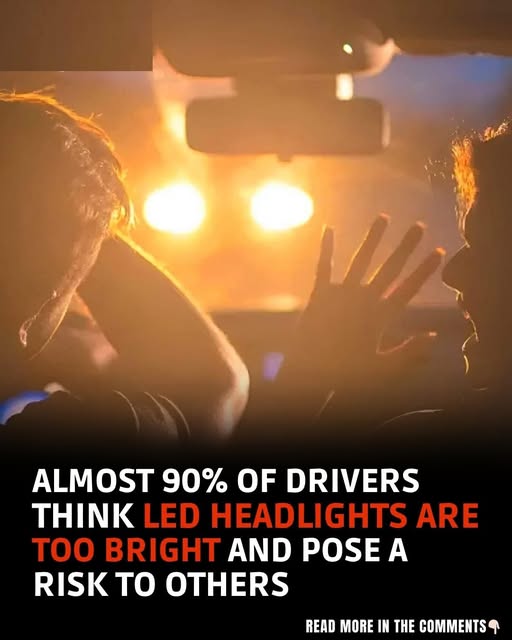
The glare hits you before you even see the car coming. For a moment, your vision disappears completely. Your heart jumps, and suddenly you’re driving at highway speeds while feeling almost blind. This frightening burst of light has become something drivers around the world deal with on a regular basis.

Modern headlights, especially LED and HID systems, are extremely bright. While they help drivers see better, they can also create harsh, blinding glare for anyone facing them. Many people describe the sudden brightness as shocking—causing them to swerve, slow down, or look away from the road just to regain their vision.
LED headlights were originally praised for being closer to natural daylight, more energy-efficient, and longer-lasting than halogen bulbs. But the very features that make them effective also make them intense and sometimes overwhelming for oncoming drivers.
Unlike halogen bulbs, which give off a softer glow, LED lights create a sharp, concentrated beam. This improves visibility for the driver using them but can be uncomfortable or even dangerous for others on the road. The issue becomes worse with SUVs, trucks, and larger vehicles, where headlights sit higher and shine directly into the eyes of drivers in smaller cars. A slight misalignment of the beam—sometimes just a few degrees—can dramatically increase glare.
As vehicles grow larger, their headlights sit higher, increasing the chances of shining directly into another driver’s line of sight. On hilly or winding roads, the beam may shift unpredictably, making the glare even harder to avoid.

Traffic safety groups report that glare contributes to a number of nighttime accidents, even though it is rarely listed as an official cause. At 65 mph, a vehicle covers nearly 95 feet per second. Being blinded for as little as three seconds means traveling the length of a football field without clearly seeing the road.
One of the biggest challenges is outdated regulations. Many headlight rules were created long before LEDs existed. Although limits on brightness and height exist, they do not fully account for today’s powerful lighting technologies or the wide range of vehicle sizes on the road.
Some new cars include adaptive headlights that adjust brightness automatically, but these systems are still expensive and mostly available in higher-end models. Millions of vehicles still use standard LED or HID lights that do not adjust for oncoming traffic.
The effects of glare go beyond discomfort. Drivers may look away, brake suddenly, or drift out of their lane. Repeated exposure can cause anxiety or reluctance to drive at night. Urban areas add reflections from signs and windows, while rural roads combine glare with high speeds and minimal lighting.
Regulatory agencies such as NHTSA and ECE are working to update headlight standards, but changes are slow. Meanwhile, aftermarket LED and HID kits—sometimes brighter than legal limits—continue to spread, often installed without proper alignment.
Experts believe that simple steps like routine headlight alignment could prevent many glare problems. Driver education is also important, as many people are unaware of how easily their headlights can become misaligned.
Health professionals note that glare affects drivers differently. Older adults, and anyone with vision issues such as cataracts, are especially vulnerable. Intense light reduces contrast sensitivity and causes temporary “flash blindness,” increasing the risk of mistakes on the road.
The economic impact of glare-related incidents is also significant, contributing to more nighttime crashes, higher insurance costs, and increased stress for drivers.

New technologies like matrix LED systems and automatic high-beam assist offer promising solutions, but they need wider adoption. Regulators and manufacturers must work together to update safety standards so that lighting technology improves visibility without compromising safety.
Until then, drivers can take practical steps: keep headlights aligned, avoid overly bright aftermarket bulbs, clean headlight lenses, and drive more cautiously at night.
Glare from modern headlights may seem like a small issue, but it is a growing safety concern. Balancing innovation with safety is essential to ensure that everyone can travel the roads comfortably and confidently—day or night.