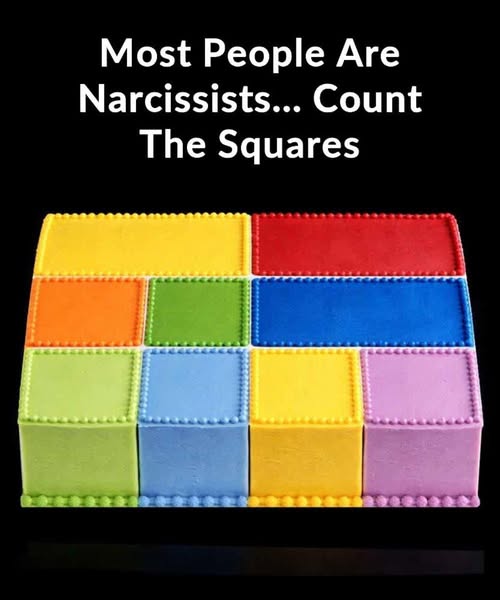
At first glance, it looks like one of those fun puzzles you scroll past on social media — a bright stack of geometric blocks arranged in a pattern with a bold challenge to “count the squares.” It feels simple, quick, and almost effortless.
But the moment you try to count them properly, the puzzle becomes surprisingly tricky. You start noticing extra shapes, questioning your first answer, and wondering how something so basic suddenly feels complicated. This puzzle doesn’t just test your eyesight — it subtly reveals how your mind works.
Why This Puzzle Is Harder Than It Looks
These puzzles rely on visual perception. Some squares are fully visible, others are partially hidden, and many are implied by perspective or overlapping edges. The challenge isn’t mathematical; it’s about how your brain interprets what it sees.
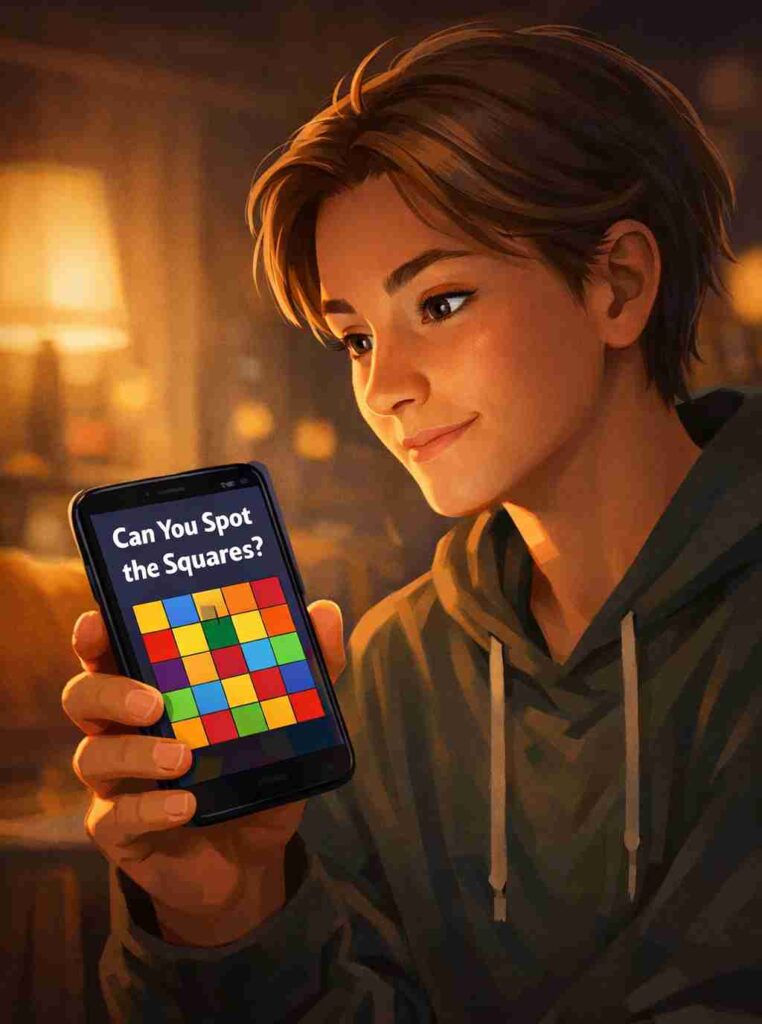
Most people count only the obvious top squares. Others include front-facing squares. A smaller group counts hidden or implied squares. Each approach is valid, yet each gives a different answer.
Different Interpretations, Different Answers
People rarely use the same definition for “counting squares,” which is why arguments break out online. Here are the three common approaches:
- Count only the squares that are clearly visible.
- Count every visible square from any angle.
- Count all squares that exist in the structure, even hidden ones.
Each method leads to a different total, but none are wrong — they are simply based on different interpretations.

The Viral Claim About Narcissism
You may see versions of this puzzle claiming “most people are narcissists.” This isn’t scientific — it’s just provocative clickbait. But it does trigger ego. People want to be right, even about something as small as a counting puzzle, which turns harmless fun into a heated debate.
Cognitive Biases at Play
- Confirmation bias: Sticking to the first answer you see.
- Anchoring: Your initial guess becomes your mental foundation.
- Selective attention: Noticing only what seems obvious.
These natural biases influence how we count, think, and respond.
A Simple Example
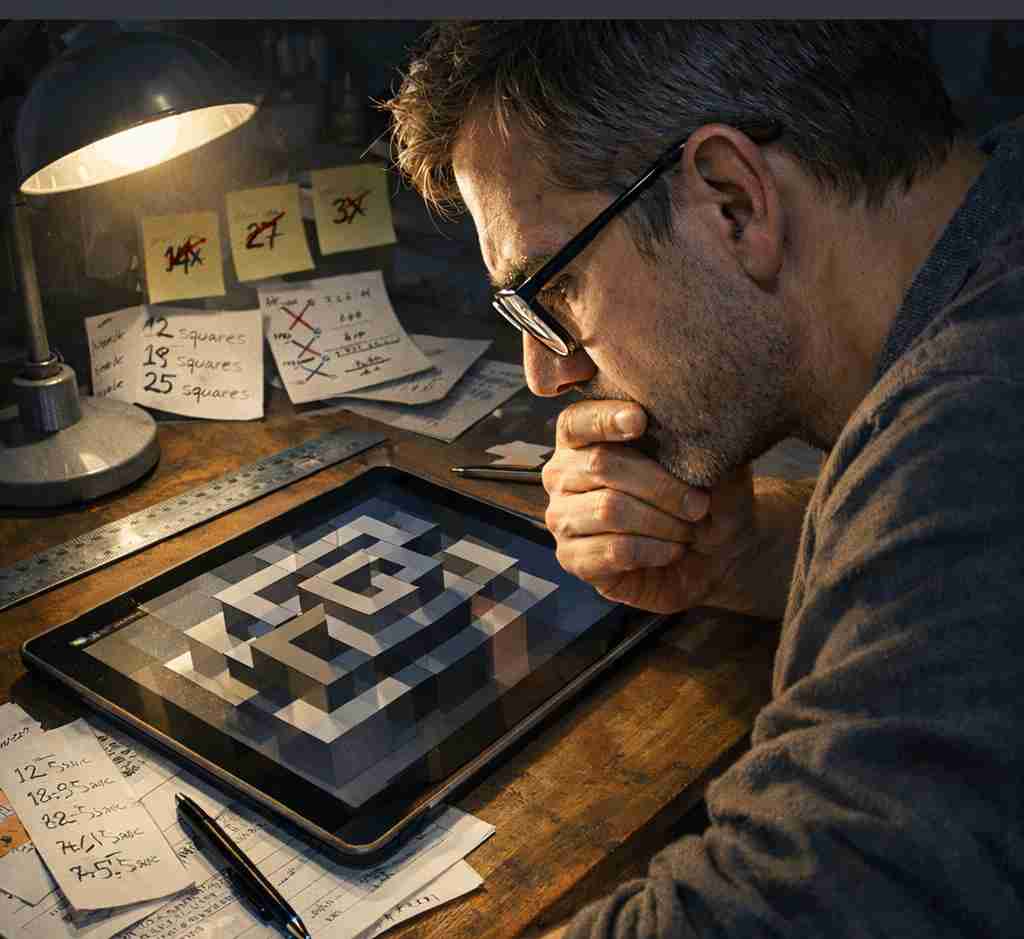
Imagine a 3×3 block of squares:
Scenario 1: Counting only the top squares → 9
Scenario 2: Counting top + visible fronts → 14
Scenario 3: Counting all squares including hidden → 27
Same image, completely different answers based on interpretation.
Life Lessons Hidden in the Puzzle
- Perspective matters: People can see the same thing differently.
- Clarify definitions: Miscommunication comes from assumptions.
- Ego affects perception: We defend answers rather than question them.
- Patience helps: Slow, careful observation reveals the full picture.
Why These Puzzles Go Viral
They are simple, visual, and highly shareable. They spark debates because everyone assumes their own method is the correct one. But the puzzle doesn’t measure intelligence — it measures perception.
The Real Punchline
Without the exact image, there’s no single correct answer. Each version is different. But that’s the deeper message: this puzzle is less about counting and more about how you approach challenges, uncertainty, and differing viewpoints.
How to Count More Accurately
- Define your rules first
- Count layer by layer
- Look for hidden or implied shapes
- Compare calmly with others
- Be open to different interpretations
Conclusion
These puzzles show how our minds process information, make assumptions, and react when challenged. The lesson isn’t in the number of squares — it’s in seeing clearly, thinking openly, and being willing to reconsider your first impression.