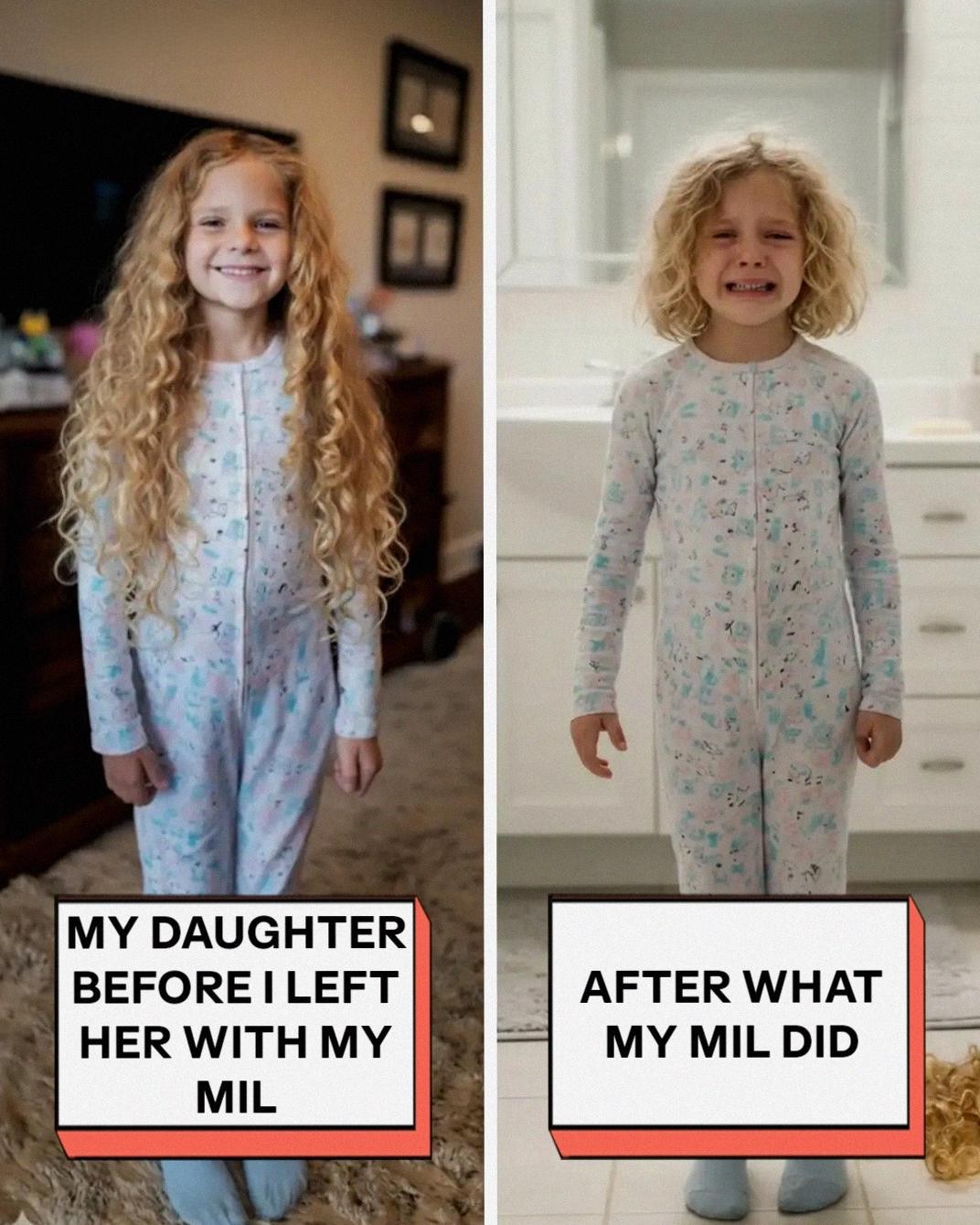
When my mother-in-law suddenly offered to help for the day, I should have trusted my instincts. One lie, one pair of scissors, and a quiet act of betrayal shattered my daughter’s trust. I didn’t yell. I didn’t beg. I made one careful move—and by the next morning, the woman who crossed that line woke up to consequences she would never forget.
My husband, Theo, mentioned it casually while scrolling on his phone.
“My mom said she can watch Theresa today.”
I stared at him. “Your mom? Denise?”
He nodded. “It’s just one day. She wants to help.”
That alone should have set off alarms. Denise had avoided babysitting for eight years, always citing her dog’s separation anxiety or a last-minute obligation. But my daughter had been sick all night—feverish, miserable—and I had already taken time off work earlier in the month. This day wasn’t optional.
Against my better judgment, I agreed.
Theresa was eight, pale and exhausted, her long golden hair sticking to her forehead. I kissed her gently, handed Denise the fever medicine, and spelled out everything slowly and clearly. No visitors. No going outside. No cold drinks. And above all, no haircuts.
“She just needs rest,” I said. “Please.”
“You can count on me,” Denise replied, smiling.
By noon, my phone lit up with Theresa’s name. She wasn’t supposed to call unless something was wrong.
When I answered, I heard it immediately—the kind of crying that steals a child’s breath.
“Mom, please come home,” she sobbed. “Grandma lied.”
My heart dropped. “Lied about what, sweetheart?”
“She said she was going to braid my hair. She said you wanted it short. But she cut it. Please come home.”
I didn’t ask questions. I grabbed my keys and left.
When I walked through the front door thirty minutes later, I stopped cold. Denise stood in the kitchen humming softly, broom in hand. On the tile floor at her feet lay a pile of golden curls.
“Oh good, you’re home,” she said calmly. “Her hair was too messy. I fixed it.”
I couldn’t breathe.
From down the hall, I heard Theresa crying again. Denise went on, unfazed. She talked about her upcoming wedding, about family photos, about appearances. She said my daughter needed to look “presentable.”
I didn’t scream. I didn’t argue. I pulled out my phone and started taking pictures. The hair on the floor. The scissors on the counter. Theresa’s scrunchie lying useless nearby.
“What are you doing?” Denise asked, unsettled for the first time.
“Documenting.”
“It’s just hair,” she scoffed.
“No,” I said quietly. “It was my daughter’s.”
I went to the bathroom and found Theresa curled on the floor, shaking. She looked up at me with red eyes.
“She said you wanted it,” she whispered.
“I would never,” I said, holding her tightly. “You get to decide what happens to your body.”
That night, after Theresa fell asleep, I called my mother.
“She violated my child,” I said. “I need her to feel what that’s like—without hurting anyone.”
My mother was silent for a moment. Then she said, “Come by the salon in the morning. I have an idea.”
The next day, Denise acted like nothing had happened. I apologized—calmly, convincingly. I told her I overreacted. I handed her a small bottle from my mom’s salon.
“Bridal shine rinse,” I said. “It’ll make your hair glow for photos.”
She was delighted.
That evening, she used it.
An hour later, she burst into our house screaming.
Her hair was neon green.
She shouted. She cried. She said her fiancé was reconsidering everything after learning what she’d done to Theresa. I listened quietly, then sent the photos I’d taken to the family group chat with a clear explanation.
The truth spread quickly.
Theo finally spoke up. He told his mother to leave.
Later that night, Theresa stood in front of the mirror, touching her short hair.
“I don’t hate it,” she said softly. “But I need help liking it.”
“We’ll figure it out together,” I said.
And this time, she believed me.