Chapter 1: The Discard
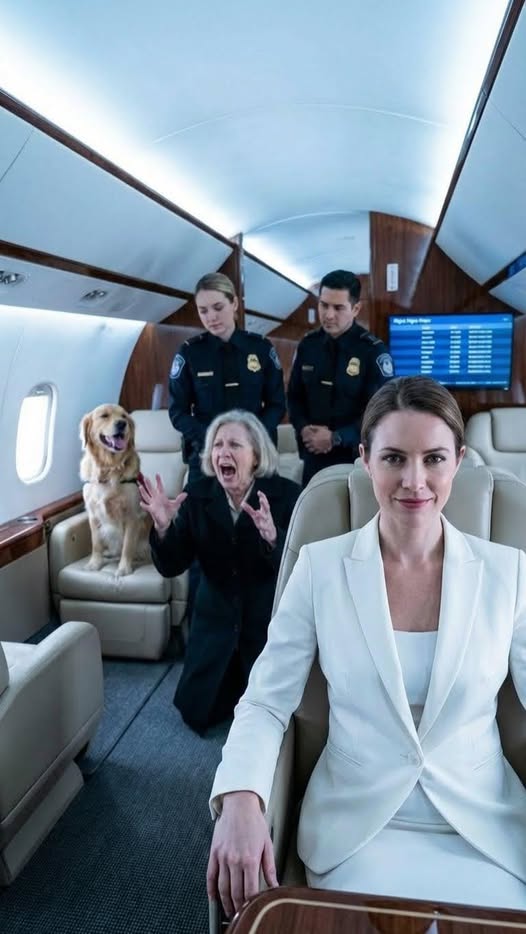
Do not board. We told the senator’s family you are in rehab. Your presence ruins the aesthetic. We gave your first-class seat to the dog.
My mother’s text hit my phone like a physical slap, the vibration buzzing against my palm as I stood in the middle of Terminal 4. I stared at the screen, the words blurring slightly under the harsh fluorescent lights of the airport. I didn’t even have time to blink before the second notification popped up, slicing through the shock.
It was my sister, Brittany, posting live from seat 1A. The seat I had paid for.
The photo was a masterpiece of curated cruelty. She was holding her French bulldog, Pierre, who was wearing a cashmere sweater that probably cost more than my first car. He was pouting for the camera, oblivious to the fact that he was sitting in a seat meant for a human being—me. The caption read: Finally got rid of the bad energy. #FamilyCleanse #AspenBound.
I didn’t cry. I didn’t scream at the gate agent, who was currently announcing the final boarding call for Flight 882 to Aspen. I just stared at the screen, and for the first time in my twenty-nine years, the familiar, crushing sadness didn’t come. There was no wave of inadequacy, no desperate urge to fix it.
Instead, there was only calculation. A cold, hard arithmetic settling in my chest.
They thought they were discarding me. They thought I was just another appliance they could unplug and toss aside when it stopped being useful. They didn’t realize they had just declared war on the wrong defense contractor.
I turned around, the wheels of my carry-on gliding silently over the terrazzo floor. I wasn’t going to Aspen to join them, begging for a scrap of their affection. I was going to bury them.
I walked through the terminal, the noise of the holiday crowd fading into a dull roar behind the pounding in my ears. I am twenty-nine years old. To my family, I am Briona, the struggling freelance IT consultant who lives in a studio apartment and drives a five-year-old sedan. They think I scrape by. They think I need their approval to feel significant.
They have no idea.
They don’t know that last month, I negotiated a six-hundred-million-dollar cyber logistics contract for the Department of Defense. They don’t know that my “studio apartment” is a decoy address I use for mail, while my real home is a fifteen-million-dollar fortress of glass and steel built into the side of a mountain in Aspen. They don’t know that I could buy the airline we were supposed to fly on with the liquidity in my checking account.
I stopped at a kiosk to buy a bottle of water, my hand shaking slightly as I tapped my card. Not from sadness—from the sheer, blinding clarity of it all.
For years, I had been the silent architect of their comfort. I remembered the day Brittany graduated college. My mother, Constance, had pulled me aside, tears welling in her perfectly mascaraed eyes, whispering that the eighty-thousand-dollar student loan debt was crushing the family.
“We just want her to start fresh, Briona,” she had said, clutching my arm. “You’re the only one who can help.”
I paid it off the next morning. I didn’t get a thank you. I got a text from Brittany asking if I could also cover her “post-grad decompression trip” to Bali. I paid for that, too.
Flashbacks hit me like physical blows as I walked toward the exit. The car I bought Constance when hers broke down. The deposit for the Aspen rental they were staying in right now—a rental I had secured because Constance claimed her credit card was “having issues.” I had been their safety net, their bank, their fixer.
I thought I was buying love. I thought if I was useful enough, if I solved enough problems, they would finally keep me.
But that’s the trap of the utility relationship. In a toxic family, you aren’t a person. You are an appliance. You are a toaster. You are a lawnmower. You are kept around exactly as long as you perform a function. And the moment they find a shiny new appliance that does the job better—like a fiancé with a senator for a father—you aren’t just demoted. You are discarded.
They don’t put the old toaster in the guest room. They throw it in the trash.
Constance didn’t uninvite me because she was ashamed of me. She uninvited me because she had upgraded her supply. The senator’s son, Chad, offered prestige and power—things my “freelance” money couldn’t buy in her eyes. I had served my purpose. I was the bridge they walked over to get to the good life.
And now that they were there, they were burning me down.
I stepped out of the sliding doors into the biting cold of the airport pickup zone. I took a deep breath, letting the freezing wind sting my face. They thought they had broken me. They thought I would go back to my fake studio apartment and cry into a pillow.
They forgot that my job isn’t just building networks. It’s dismantling threats.
I pulled out my phone and opened my banking app. My balance wasn’t a number. It was a weapon. They wanted a narrative where I was the crazy, unstable failure in rehab? Fine. I would give them a story, but it wouldn’t be the one they were expecting.
I wasn’t going to be the victim in their little Aspen fairytale. I was going to be the director.
My phone buzzed against my palm. I expected another taunt from Brittany, or perhaps a demand for money from my mother disguised as an emergency. Instead, it was a priority alert from my bank.
Security Warning. Transaction Declined. Amount: $200,000. Merchant: Rolex Boutique, Aspen. Card ending in 8841.
I stopped walking. The crowd flowed around me, people hugging and loading luggage, but the world went silent.
I stared at the last four digits. That wasn’t my personal Amex. That wasn’t my business account. That was the heavy, matte black titanium card I kept locked in a fireproof box in my old bedroom at my mother’s house. The card issued directly by the Department of Defense for classified procurement logistics.
Constance had raided my room. She must have found the box, broken the lock, and seen the black card. She didn’t know what it was. To her, it just looked like a symbol of the wealth I had been hiding. She saw a limitless credit line she could use to buy a bribe for her new, fancy son-in-law.
She was trying to buy Chad a Rolex with my money to secure her place in high society.
A normal daughter would panic. A normal daughter would call the bank, scream fraud, and shut it down to save her mother from prison. I hovered my thumb over the “Deny” button. If I pressed it, the transaction would fail. Constance would be embarrassed at the register. Maybe she’d have to use her own card, or maybe she’d have to walk away. But she would be safe. It would just be a family squabble.
But then I remembered the text. We gave your seat to the dog.
I remembered the years of being the ATM. I remembered the way she looked at me when I paid off her mortgage—not with gratitude, but with expectation. She didn’t just want my money. She felt entitled to it. And now, she felt entitled to steal it.
I moved my thumb.
If I authorized this, it wasn’t just theft. It wasn’t a civil dispute I could drop later when she cried and begged. This was federal funds. This was taxpayer money allocated for cyber defense infrastructure. By using this card for personal luxury goods, Constance wasn’t just stealing from me. She was embezzling from the United States government.
The moment that charge went through, a flag would be raised in a server room in Virginia. An investigation would open automatically. There would be no taking it back. There would be no “it was a misunderstanding.” There would only be federal agents and mandatory minimum sentencing.
My mother wanted to play the big game. She wanted to exist in a world of high stakes and power. Fine. I would give her the full experience.
I tapped the button marked Authorize Transaction.
A second later, the confirmation flashed on the screen. Transaction Approved.
Somewhere in Aspen, Constance was probably smiling at the sales clerk, handing over a watch she thought was a gift from her freelance daughter’s secret stash. She was fastening a platinum handcuff around her own wrist, and she didn’t even know it.
The trap wasn’t just set; it was welded shut.
Chapter 2: The Rejects
I put the phone back in my pocket. The coldness in my chest spread, settling into a hard, diamond-like calm. I wasn’t going home to cry. I had a party to plan.
I didn’t browse travel sites for a last-minute economy seat. I opened my encrypted contacts list and dialed a number I hadn’t used since the Kabul extraction logistics project.
“I need the Bombardier Global 7500,” I said the moment the broker answered. “Tarmac in two hours. And send a fleet of black SUVs to the following twenty-five addresses.”
Constance had made a fatal error in her “aesthetic purge.” By uninviting everyone who didn’t fit her image of high society, she had alienated the people who actually held the family together. My Aunt Sarah, who made the best potato salad but wore thrift store coats. Uncle Mike, the mechanic with grease permanently etched under his nails. And Grandma Josephine, the matriarch Constance had shoved into a nursing home for “her own good,” claiming she was too frail to travel.
I sent a single, mass text to the reject list: Mom said there wasn’t enough room for you in Aspen. She lied. A car is outside your house right now. Pack for snow. We aren’t just going to dinner. We’re taking back the holiday.
I didn’t have to convince them. They were hurt, angry, and confused when the fleet of Escalades deposited them at the private hangar. Confusion turned to shock as they stood on the tarmac, staring at the seventy-five-million-dollar jet gleaming under the floodlights, clutching their Target suitcases.
“Briona?” Aunt Sarah whispered, walking up to me, her eyes wide. “Honey, did you… did you win the lottery?”
“Something like that,” I said, guiding Grandma Josephine up the stairs. “I work hard, Aunt Sarah. And it turns out the government pays better than Mom thinks.”
As we leveled out at forty-five thousand feet, the cabin was filled with the sound of crystal clinking and genuine laughter—a sound I hadn’t heard at a family gathering in years. My cousins were eating caviar like it was popcorn. Uncle Mike was reclining in a leather seat that cost more than his truck. For the first time, they weren’t the poor relations. They were the VIPs.
My phone vibrated on the armrest. It was Constance.
Venmo me $5,000 immediately. The rental requires a larger security deposit than I thought. And Brittany wants to book a spa day for the senator’s wife. Don’t ignore me, Briona. You owe us for raising you.
I looked at the message. Then I looked out the window at the curvature of the earth. She was down there, scrambling for petty cash to impress people who didn’t care about her, demanding money from the daughter she had banned from the trip. She thought she was squeezing me for a few more drops of utility.
She had no idea she was texting a woman cruising at Mach 0.9 in a flying palace.
I didn’t reply. I didn’t send the money. I swiped the notification away and picked up my glass of vintage Dom Pérignon.
“To family,” I said, raising my glass to the room.
“To family!” they roared back.
Below us, the snowy peaks of Colorado were getting closer. Constance was busy staging her perfect little life in a rental house she couldn’t afford. She didn’t know that the landlord was coming home, and I wasn’t knocking on the door.
I was bringing the mountain down on top of her.
The SUVs climbed the private access road, tires crunching on heated pavement that melted the snow instantly. We rounded the final bend, and the trees cleared to reveal it.
My home. A cantilevered structure of steel and floor-to-ceiling glass hanging over the edge of the mountain, glowing like a lantern in the blue twilight.
“Who… who lives here?” Uncle Mike asked, pressing his face to the window.
“I do,” I said.
Silence filled the car. It wasn’t just a house. It was a statement. It was a fifteen-million-dollar middle finger to every time my mother had called me unambitious.
Inside, the staff I’d hired at triple their holiday rate had the fires roaring. I led Grandma Josephine to the head of the table, seating her in a velvet chair that looked like a throne.
“You sit here, Grandma,” I said gently. “No kids’ table tonight.”
She looked at the crystal glasses, the centerpieces of white orchids, and then at me. Her eyes were wet. “Briona, sweetheart, I don’t understand. Your mother said you were struggling.”
“Mom says a lot of things,” I replied, pouring her a glass of sparkling cider. “Tonight, we look at the truth.”
Dinner was a symphony of excess. Truffle risotto, Wagyu beef, wines older than my cousins. For the first time in my life, I watched my family eat without calculating the cost of every bite. They weren’t stressed. They weren’t fighting. They were happy.
But the main course wasn’t the food. It was the view.
“Everyone, if you could look out the north window,” I announced, tapping my glass.
The automated blinds rose silently. Below us, about three hundred yards down the slope, sat a modest luxury rental. It looked small and dark from this height. Through the windows, I could see tiny figures moving around a cramped dining table. Constance, Brittany, the senator’s son.
“Is that… is that your mom?” Aunt Sarah asked, squinting.
“It is,” I said. “And she can see us, too.”
I pressed a button on a remote. Outside on the terrace, a mechanism whirred to life. A forty-foot modular LED wall, the kind used for stadium concerts, blazed into existence. It wasn’t facing us. It was facing them.
And it was projecting a live, 4K feed of our dinner table.
Down in the valley, the snowbank next to Constance’s rental was suddenly illuminated by a forty-foot image of Grandma Josephine laughing and eating caviar. It lit up their dining room like an alien abduction.
My phone rang instantly. Constance.
I put it on speaker and set it in the center of the table.
“What is happening?!” Constance shrieked. “There is a giant picture of your grandmother on the snow! Is that you? Are you here?”
“I’m right above you, Mom,” I said, my voice calm and amplified by the silence of the room. “Look up.”
I saw the tiny figure in the window down below crane her neck. I raised my glass to the window. On the giant screen outside, a forty-foot version of me raised a forty-foot glass.
“Turn it off!” she screamed. “The senator’s son is asking what’s going on! You’re humiliating us!”
“Am I?” I asked. “I thought I was just in rehab. Crazy people do crazy things, right?”
“Briona, I am warning you…”
“Enjoy your turkey, Mom,” I cut her off, my tone flat and lethal. “It looks dry from up here.”
I hung up. Down below, I saw the tiny figure throw her phone. Up here, the room erupted in cheers. Aunt Sarah was laughing so hard she was crying. Uncle Mike was high-fiving a waiter.
For a moment, it felt like victory. But I watched the dark figure of my mother pacing in the window below. She wasn’t defeated. She was regrouping. I knew Constance. She didn’t retreat. She escalated.
And I knew exactly what she would do next.
Chapter 3: The DARVO Defense
The celebration lasted exactly twelve minutes.
One moment, my cousins were toasting to the good life. The next, the room was washed in a strobe of red and white light. Sirens cut through the music, loud and distorted, echoing off the glass walls of my living room.
“Police?” Uncle Mike asked, standing up, his face pale. “Did the neighbors call a noise complaint?”
“No,” I said, watching the vehicle tear up my heated driveway. It wasn’t a police cruiser. It was a private ambulance.
The front doors burst open before I could even move. Constance didn’t walk in. She rushed in. Her face was a mask of sheer, terrified panic—a performance worthy of an Oscar. Behind her was Dr. Aris, a family friend who had lost his license to prescribe opioids years ago but still carried a clipboard like a shield. Two burly men in scrubs followed, carrying a restraint chair.
“Oh, thank God!” Constance cried out, rushing toward me with her arms outstretched. “We made it in time! Briona, honey, it’s okay. Mommy is here.”
The room went dead silent. My family looked from me to her, confused.
“Get away from me,” I said, stepping back.
“She’s spiraling!” Constance sobbed, turning to Aunt Sarah, tears streaming down her face. “She stopped taking her meds weeks ago. The rehab facility called me. They said she’s having a complete psychotic break. She thinks she owns this house. She thinks she has money.”
This was the masterclass of the DARVO defense. Deny. Attack. Reverse Victim and Offender.
In seconds, Constance had rewritten reality. She wasn’t the abuser who had stolen from me. She was the heroic mother trying to save her delusional daughter. She denied her cruelty by acting out of love. She attacked my credibility by labeling me insane. And she reversed the roles: I was the danger, and she was the victim.
“I do own this house,” I said, my voice steady, though my heart hammered against my ribs.
“See?” Constance whispered to Dr. Aris, pointing a shaking finger at me. “Delusions of grandeur. She’s a freelance IT worker, doctor. She makes forty thousand a year. How could she own a fifteen-million-dollar estate? She broke in. She’s squatting here.”
The room went still. My cousins stared at the marble floor, unable to believe that I, the girl who fixed routers, was really in control.
Dr. Aris stepped forward with a form. “Briona, I’m placing you on an M1 psychiatric hold. Seventy-two hours. Secure facility.”
“You can’t do that!” Grandma Josephine protested, struggling to stand.
But Constance pounced, accusing me of kidnapping, manic behavior, and signaling the orderlies to restrain me. “Do it! Before she hurts herself!”
They moved fast. They pinned my arms and buckled me into the chair. The nylon straps dug into my wrists. I didn’t fight. I let them do it.
Constance stroked my cheek, her eyes gleaming with triumph. “Don’t worry, sweetheart,” she whispered, low enough so only I could hear. “I’ll handle the house. The cards. The accounts. While you’re locked away, Mommy will take care of everything.”
That was her plan. Get me committed. Seize guardianship. Drain everything I owned. She would be the tragic mother managing her sick daughter’s estate, and by the time I got out, there would be nothing left.
Then, blue police lights flashed outside. Real ones.
Constance smiled, smoothing her hair. “Finally. The police are here to help escort her.”
She walked to the door, Dr. Aris trailing behind her. Two officers stepped into the foyer, snow melting on their shoulders.
“Officers, thank you for coming,” Constance said, her voice dripping with relief. “My daughter is having a severe mental health crisis. We have a medical hold…”
“Are you Constance Taylor?” the lead officer asked, interrupting her. He wasn’t looking at me. He was looking at her.
Constance blinked. “Yes. I’m her mother. I’m taking custody…”
“Ms. Taylor, we aren’t here for a mental crisis,” the officer said, his hand resting on his belt. “We are responding to a Department of Defense fraud alert triggered in this jurisdiction.”
Constance froze. Her smile faltered. “What? No, you’re mistaken. My daughter is the one…”
I spoke from the chair. “Officer.”
The room turned to me. I looked at Constance, locked eyes with her.
“The credit card you used at the Rolex boutique,” I said clearly. “It wasn’t mine. It was a federal procurement card issued to a defense contractor. You stole two hundred thousand dollars from the United States government.”
Constance paled. “That… that was a gift! Briona gave it to me! She’s confused!”
“Did you authorize the transaction, Ms. Taylor?” the officer asked.
“She told me to use it!” Constance screamed, pointing at me. “She’s lying! She’s crazy!”
“Federal theft isn’t personal, Mom,” I said. “Once that charge is flagged, the prosecution is automatic. The victim isn’t me. It’s the government. And they don’t do family squabbles.”
The officer pulled out his cuffs. “Constance Taylor, you are under arrest for wire fraud and embezzlement of federal funds.”
“No!” Constance shrieked as they grabbed her wrists. “Dr. Aris! Tell them! She’s insane!”
Dr. Aris was already backing away, but the second officer stopped him. “Sir, we’ll need to speak with you regarding your involvement in this attempted unlawful committal.”
The orderlies looked at each other and unbuckled the straps on my chair. I stood up, rubbing my wrists.
Constance was sobbing now, begging for someone important to rescue her. “Call the Senator! Call Chad! Tell them this is a mistake!”
No one would call. The Senator’s son wasn’t going to touch a federal embezzlement case with a ten-foot pole.
Silence fell over the house as they dragged her out. My cousins watched the hierarchy collapse in real time. The queen was dead.
Brittany walked in through the open door a moment later, breathless, her phone in her hand. She looked at the police cars, at our mother in the back seat, and then at me.
“Chad blocked me,” she whispered, her voice trembling. “He said… he said his family can’t be associated with criminals.” She looked up at me, eyes full of venom. “You ruined my life.”
“No,” I said, picking up my glass of champagne. “I just stopped funding it.”
I looked at my family—the aunts, the uncles, the grandmother who had been cast aside. They were looking at me with new eyes. Not with fear, but with respect.
“You can stay in the rental until 10:00 AM,” I told Brittany. “I own that one, too.”
She fled into the snow.
Outside, Grandma Josephine joined me on the terrace. We watched the police lights fade down the mountain road.
“She’ll never forgive you,” Grandma said softly.
“I know,” I answered. “That’s the point.”
Grandma smiled, linking her arm through mine. “I’m glad you finally bit back. She would have devoured you.”
For years, I thought peace meant tolerating abuse. I thought being a good daughter meant being a doormat. Now I understood. Peace requires boundaries. It requires teeth. And sometimes, it requires proof.
Inside, the house felt clean again. The wind tasted like freedom.
“Come on, Grandma,” I said, turning back to the warmth of the fire. “Let’s finish dinner.”