I used to think I was a good father because I provided everything—food on the table, a warm bed, a roof that didn’t leak. Love, I told myself, was built with hours at work and tired hands. I didn’t realize how thin that definition was until the day my son taught me how to listen.
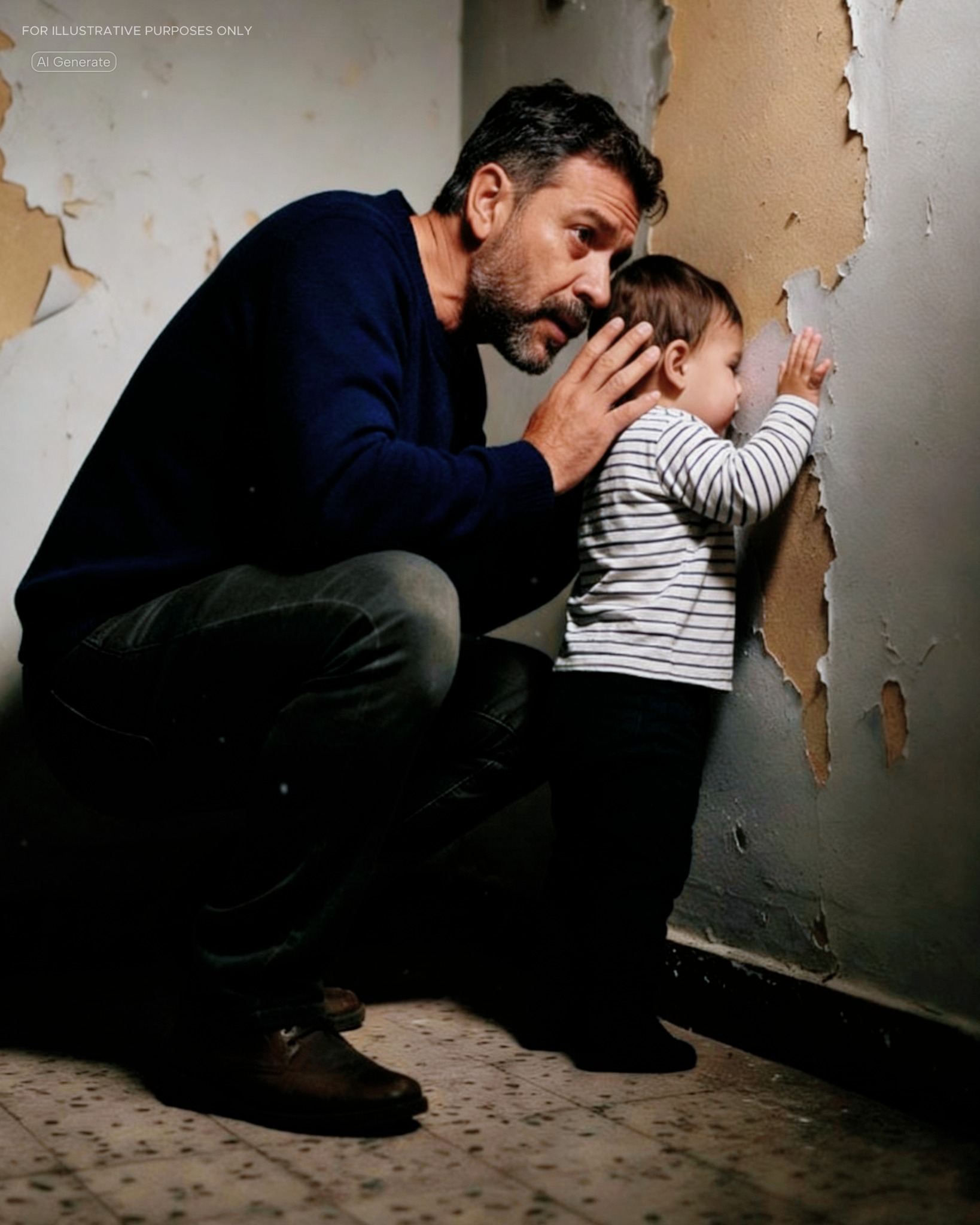
He was barely a year old when I noticed the habit. While other toddlers toddled, bumped, and laughed, my boy would walk straight to the wall and stand there, his small forehead resting against the paint. Not crying. Not fussing. Just… still. As if the wall were an old friend who understood him.

At first, I laughed it off. “Kids do weird things,” I told myself. I’d scoop him up, tickle his ribs, distract him with a toy. He’d giggle, and for a while, I’d forget. But the habit returned. Every day. The same wall. The same quiet posture.
I should have paid attention sooner.
That afternoon, the house was silent except for the hum of the refrigerator. I was scrolling on my phone, half listening to the clock, when I noticed he was gone from the room. I followed the familiar path down the hallway and found him there again—bare feet on the cool floor, hands pressed to the wall, lips moving as if he were talking to it.
I knelt beside him, my heart suddenly tight. “Hey, buddy,” I whispered. “What are you doing?”
He didn’t turn around. He leaned closer to the wall, and then he said it—softly, carefully, like a secret he’d practiced.
“Daddy, listen.”
Three words. That was all.
But they landed like a weight on my chest.
I froze. My phone slipped from my hand. For a second, I couldn’t breathe. Because in those three words, I heard everything I had missed—the nights I came home late and too tired to sit on the floor, the mornings I rushed through breakfast, the times I nodded instead of really hearing him.
I put my ear near the wall, feeling ridiculous, until I realized what he was doing. He wasn’t talking to the wall. He was listening through it.
I remembered then. The neighbors. The raised voices that leaked through the thin paint at night. The arguments I pretended my son was too young to notice. The sharp tones I told myself were “just adult problems.”
To him, they weren’t adult problems. They were sounds without meaning, emotions without explanation—fear wrapped in noise.

My son had found the wall because it was where the voices came from. He stood there because he didn’t know where else to put his confusion. And when he whispered, “Daddy, listen,” he wasn’t asking me to hear the wall.
He was asking me to hear him.
I gathered him into my arms, feeling his small heartbeat against my chest. For the first time in a long time, I didn’t rush. I didn’t check the time. I just held him. “I’m here,” I said, over and over. “I’m listening.”
That night, after he fell asleep, I sat alone in the living room and let the truth settle. Love isn’t just presence. It’s attention. It’s noticing the quiet signs before they become habits, the whispers before they turn into walls.
The next day, I changed things—not all at once, not perfectly, but honestly. I put my phone away when he reached for me. I got down on the floor and let him lead. I spoke softly when emotions ran high. I explained things he couldn’t yet understand, because even if he couldn’t grasp the words, he could feel the care behind them.
The wall is still there. But my son doesn’t stand against it anymore.
Now, when he wants something, he comes to me. He tugs my sleeve. He looks up with those wide eyes and trusts that I’ll hear him.
Every time he does, I remember those three words. And I remind myself of the lesson they carried—one I’ll never forget.
Sometimes, the most important things our children say aren’t loud. They’re whispered. And if we don’t slow down and listen, they’ll learn to speak to walls instead of hearts.