When I moved into the quiet neighborhood seven years ago, I wasn’t looking for anything more than a place to breathe again. Life had bruised me in ways I didn’t talk about—losing my parents too young, a breakup that left more silence than answers, and holidays spent trying to convince myself that being alone wasn’t the same as being lonely.
The house I moved into wasn’t much, but the stillness felt like healing. I thought that was all I needed.

But life had a way of giving me something better.
It all began with a wave.
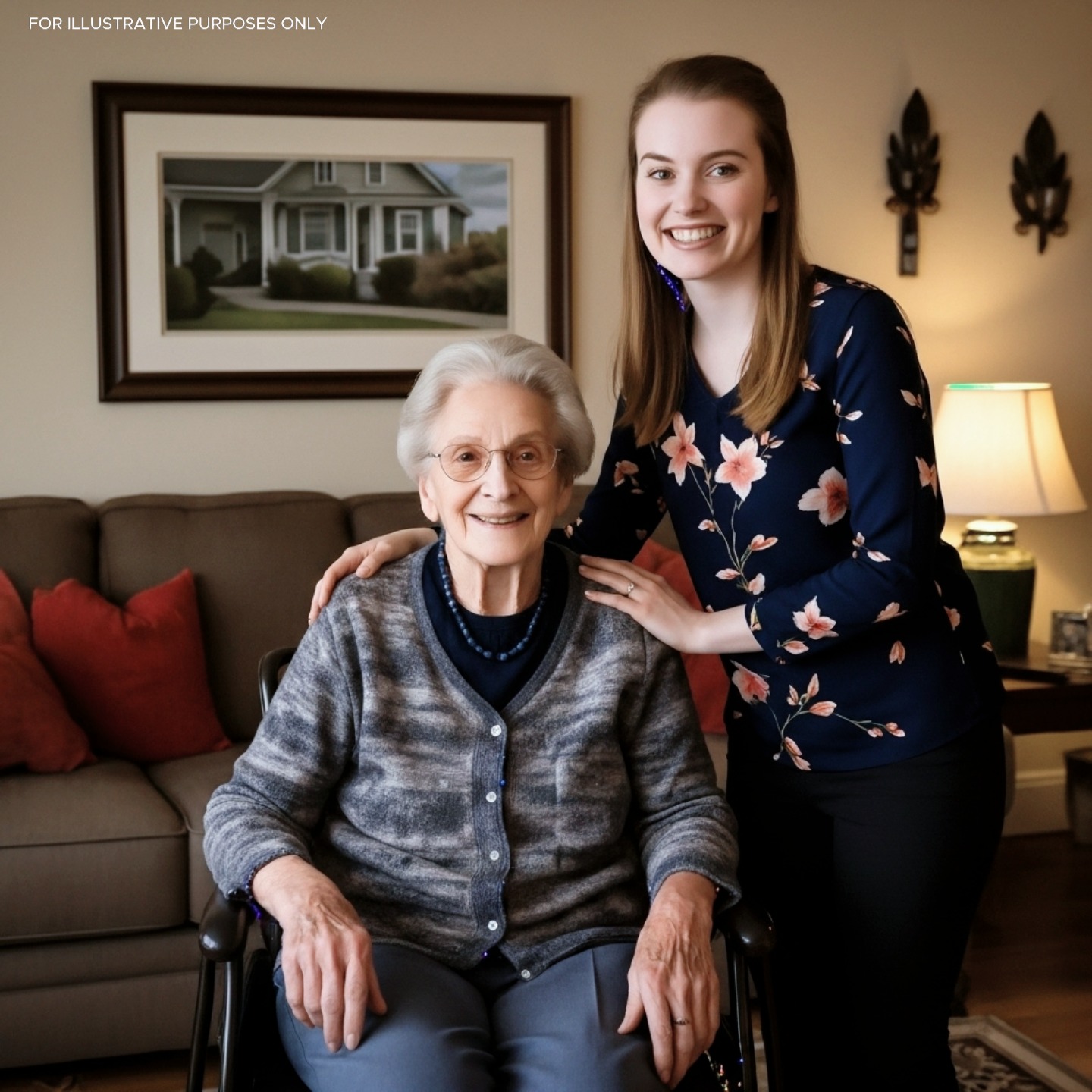
Mrs. Patterson lived two doors down. A tiny woman with snowy white hair and the softest sweaters you could imagine. She sat by her front window every afternoon, hands folded, eyes drifting toward the street like she was waiting for someone she wasn’t sure would come.
The first time I waved, she flinched as if waking from a dream.
The second time, she smiled.
The third time, she opened her front door and called, “Well, come in, dear. Don’t leave an old woman talking to herself.”
That day became the beginning of something I didn’t know I needed.
At first, I only helped her carry groceries or sort the mail. But kindness has a way of expanding. Soon we were sharing tea, folding laundry together, watching old movies while rain tapped the windows. She’d tell me stories from her youth—of summer dances, her first job, her late husband who, according to her, had “two left feet and a heart too big for his body.”
She made me laugh in a way I hadn’t in years.
But one thing always tugged at me: the way she lit up when she heard the doorbell, only for her smile to falter when she realized it wasn’t who she hoped for.
She had children. Grandchildren. But to them, she wasn’t a mother—she was a vault. A responsibility. Maybe even an inconvenience.
They breezed in every few months, dressed well enough to make the neighbors whisper, wearing smiles that never reached their eyes. They’d leave with boxes or envelopes, and always—always—leave her quieter than before.
She never complained. She simply watched them leave.
Then she watched the window for the next time that never came soon enough.
Over the months, and then years, our bond grew. I started checking on her every morning before work and every evening after dinner. I helped with medication, scheduled appointments, drove her to the clinic, and sat beside her through nights when sleep wouldn’t come.
People asked why I did so much.
But how do you explain that someone became family without sharing blood?
She once held my face between her frail hands and said, “You were heaven-sent, my dear. I prayed for love, and you arrived with kindness in your eyes.”
I didn’t know how to explain that she had saved me too.

Last winter, everything began unraveling. Her hands shook more. Her steps shortened. Her naps lengthened. Our conversations turned softer, like whispers that floated away before I could catch them.
One night, as I tucked a blanket around her, she reached for my wrist.
“When I go,” she whispered, “promise me something.”
My throat tightened. “Anything.”
“Remember the laughter… not the silence.”
I kissed her forehead. “Only the laughter, I promise.”
A few days later, she slipped away in her sleep.
The funeral was small, cold, and strangely theatrical. Her children arrived wearing expensive cologne and crocodile tears. I sat in the last pew, clutching the embroidered handkerchief she gave me—my initials stitched with her gently trembling hands.
I cried for her life.
For her loneliness. For the love she gave me so freely.
When it was over, I thought my part in her story had ended.
I couldn’t have been more wrong.
That evening, I was settling on my couch with tea and a photo album when someone knocked.
Two uniformed officers stood on my porch.
“Are you the caretaker of Mrs. Patterson?” one asked.
My heartbeat stumbled. “Yes… why?”
“We need you to come with us.”
Fear rattled through me as I followed them down the quiet street.
Had her family accused me of something?
Was there some medical issue I hadn’t known about?
Did they think I’d taken advantage of her?
By the time we stepped into her house, my knees were trembling.
Her family was gathered in the living room. Some whispered angrily. Others glared at me with pure accusation.
Her daughter stepped forward, pointing at me as if I were a criminal.
“It was her!” she cried. “She manipulated our mother! She took advantage of her vulnerability!”
I froze, stunned.
The officer beside me cleared his throat. “We’re here as witnesses for the reading of Mrs. Patterson’s will.”
Silence fell like a stone.

A lawyer—whom I had never seen—stood in the corner, holding a thick envelope.
Her family gasped as he announced that there was a new will, updated quietly and intentionally.
When he began reading, it felt like the floor tilted beneath me.
Mrs. Patterson had left nearly everything—her house, her savings, her cherished belongings—to me.
Not to her children. Not to her grandchildren. To me.
The outrage exploded instantly.
Fists pounded tables. Voices cracked in disbelief.
Her daughter declared, “She wasn’t in her right mind!”
But the lawyer shook his head.
“She completed this will in full mental clarity, with witnesses and her physician present.”
Then he read the part that shattered me:
“To my family,
Love is not a transaction. You had your chance to be present.
But it was someone else who stayed through my best and worst days.
She asked for nothing, yet gave me everything.
I leave this to her because love like that deserves a home.”
I covered my face with my hands as the tears came—deep, aching tears.
Her daughter stormed out. The rest followed, their anger echoing through the hallway.
The officers left after confirming there was no legal dispute they needed to remain for. The lawyer gave me a gentle nod before leaving me in the quiet house.
Her house. Now—my house.
I sank into her armchair, the one where she used to fall asleep mid-conversation. The air still smelled faintly of cinnamon and lavender.
I didn’t feel triumphant. I felt honored.
Humbled. Loved.
A few days later, I placed a small framed photo of her on the windowsill where she once sat waiting for love that rarely came from those who shared her blood.
The sun streamed through the curtains, warming the room.
For the first time in years, I didn’t feel abandoned or invisible.
I felt chosen.
I never cared about the house or the money. What mattered was that someone had truly seen me—my heart, my intentions, my presence—and decided I was worth trusting with the legacy of a life.
Mrs. Patterson taught me that love isn’t loud.
It isn’t transactional. It doesn’t demand or expect repayment.
Love is showing up, even when no one applauds.
Love is remembering to wave.
Love is a cup of tea shared between souls who didn’t know they were missing something.
In this home we once filled with laughter, I plan to honor her every day—by showing up for others the way she once told me I showed up for her.
And for the girl I used to be—the one who thought she had nothing left to give, but discovered that giving love… means you never run out of it.