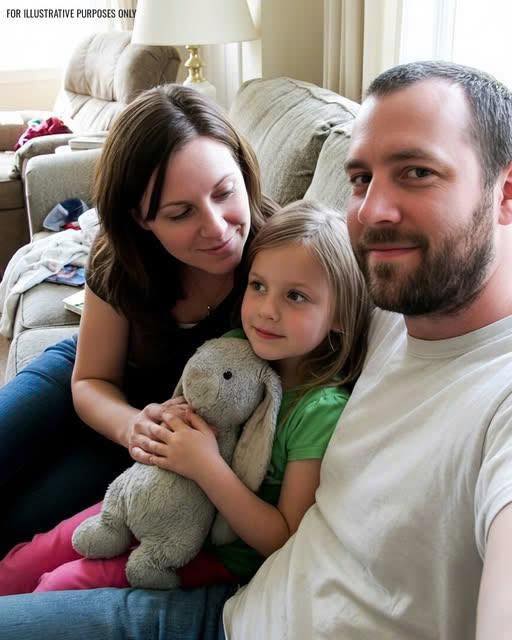
After a decade of heartbreak and countless appointments, my husband Alex and I had memorized the language of disappointment. Specialists used gentle words like “manage expectations,” but we heard one thing: no. When you spend ten years trying to conceive, the universe starts to feel less like a nurturing presence and more like a punishment you can’t name.
Finally, we stopped fighting my body and started focusing on our future. Adoption, which had always felt like a last resort, suddenly felt like opening a window in a stuffy room. It felt like possibility.
Building Hope in a Yellow Room
The process was a mountain of paperwork, but our social worker, a kind woman named Teresa, gave us a simple instruction during the home visit: “Do up that room. Make it a child’s room. This process takes time, but it’s so worth it. Just hang in there.”
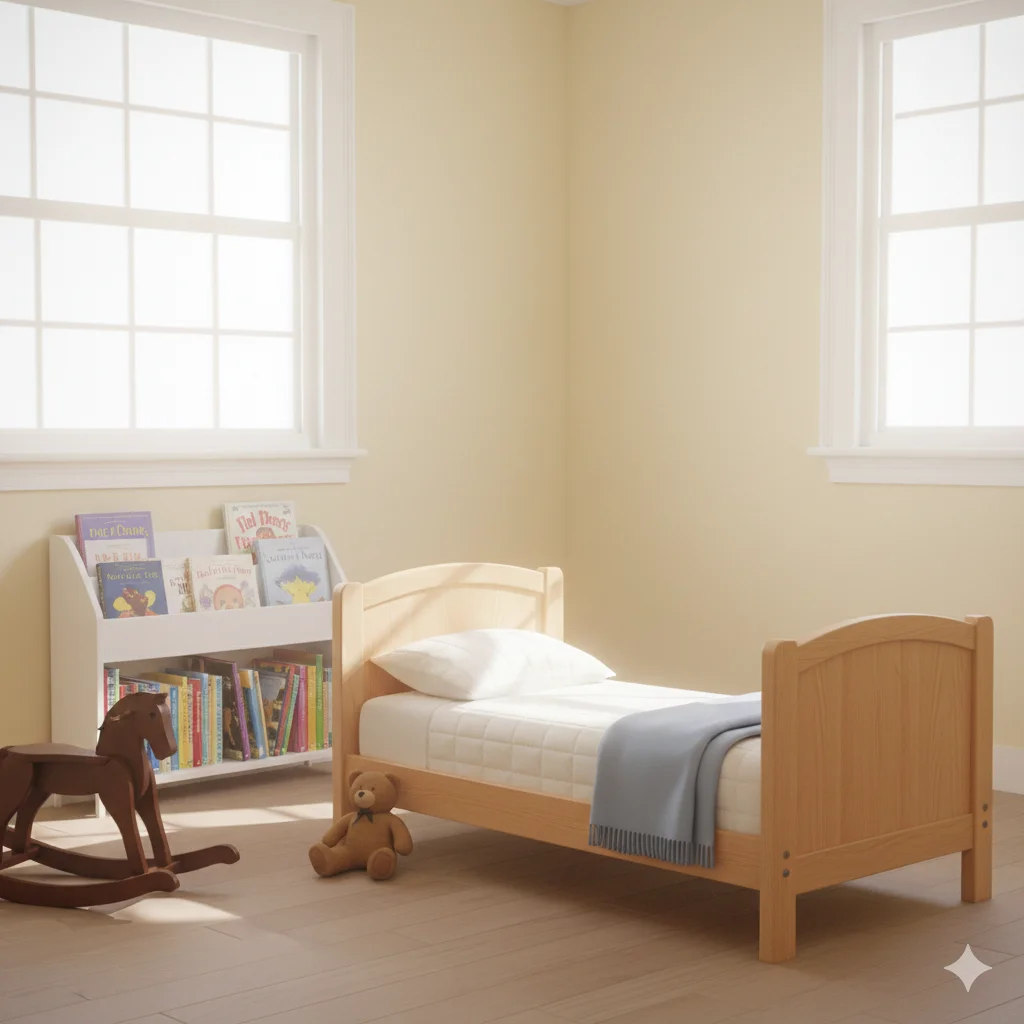
Alex and I poured our waiting energy into that space. We painted the walls a warm, soft yellow. Alex spent two weekends sanding an old wooden bedframe until it shone like new. I filled a small bookshelf with picture books, their covers promising happy endings. Even though the room was empty, it felt like it was waiting too—a beacon of silent hope.
Meeting Lily: The Silent Promise
When the call came, the information was sparse: a six-year-old girl named Lily, noted for being “very quiet.”
The adoption center was a bright, noisy kaleidoscope of children, but our eyes were drawn to the quietest spot. In a far corner, a tiny girl sat cross-legged, her back against the wall, clutching a worn gray stuffed rabbit. She wasn’t playing. She was just still.
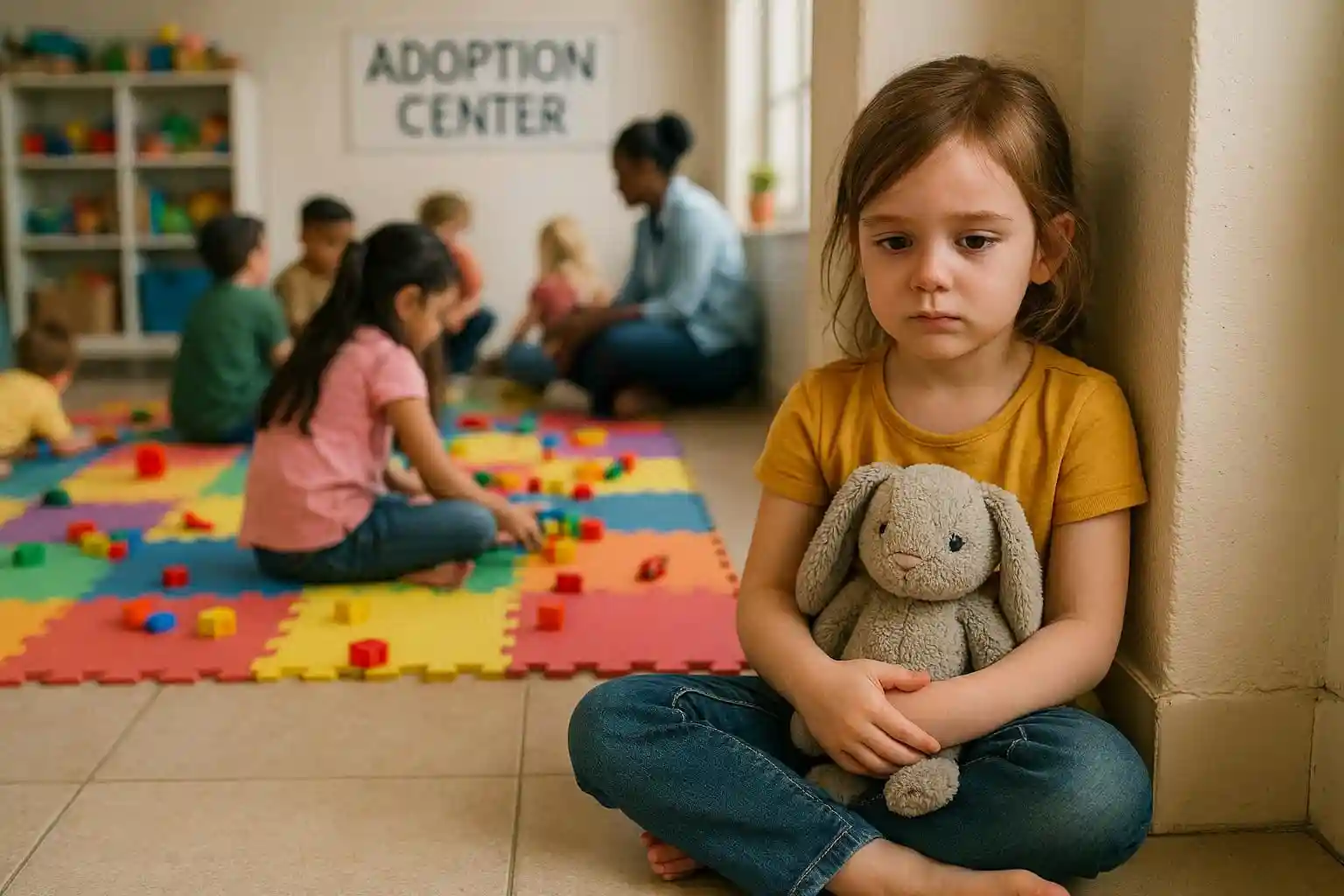
“That’s Lily,” the social worker explained, her voice softening. “She hasn’t spoken in years, not since her mother passed away. She’s been in and out of placements. It’s been difficult.”
We didn’t need a conversation. We didn’t need a smile. When Alex and I knelt down, simply acknowledging her presence, something shifted. She didn’t turn away. That was enough. We both knew instantly. “I want her,” I whispered to Alex. “I want to give this child a home.”
It took three weeks to bring Lily home. She never spoke in the car, but she looked out the window the entire ride. She stepped into the yellow room and sat on the bed, still clutching her rabbit. We didn’t expect conversation. We only expected to provide safety.
Over the next six months, we had small victories: the day she let me brush her hair, the evening she held Alex’s hand, the night she finally fell asleep without her rabbit. We learned from a psychologist that her silence was protective—a shield she would only drop when she felt truly safe. We were patient. We waited.
The Drawing That Broke the Silence
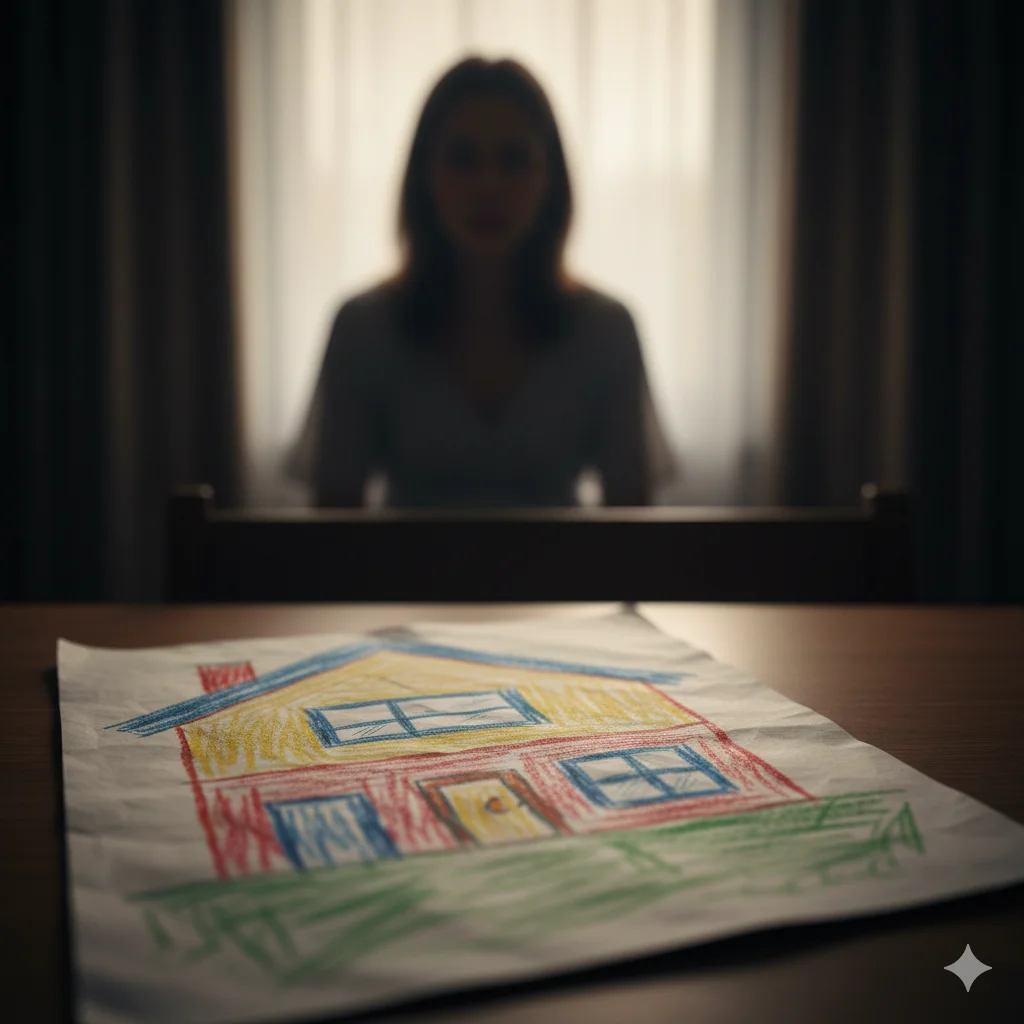
Then, six months into our new, quiet life, it happened. I found Lily hunched over her small art table, drawing intently. I walked over, expecting a rainbow flower or a neon dog. But the drawing made my breath catch in my throat.
It was a house. A specific, two-story house with a prominent upper window and a shadowy figure standing behind the glass. I looked up and out the window. Lily had drawn the house directly across the street.
“That’s beautiful, my love,” I said, trying to keep my voice even. “Whose house is that?”
She didn’t answer. She turned and looked at me, placing her small hand on my cheek. And then, in a voice hoarse and uncertain, she spoke the single sentence that unraveled everything we thought we knew:
“My mom is alive and she lives in the house across the street.”
I called for Alex, my voice cracking with shock and disbelief. She spoke! But what did she say? Alex rationalized it—a trauma echo, a daydream, a memory of an old home. But when I found Lily staring at that house again the next morning, I knew I had to go.
The Unexpected Revelation
I walked across the street and knocked. The woman who answered, Claire, was close to my age and looked tired but kind. After exchanging brief introductions, I took a leap of faith. “This might sound strange,” I began, my voice trembling. “But do you know a little girl named Lily?”
She said no. But I pressed on. I pulled up the only photo we had of Lily’s biological mother—grainy, years old. Claire leaned in to look, and her face went instantly pale.
“She looks just like me, Megan,” Claire whispered.
It turned out Claire and Lily’s biological mother were estranged twin sisters. Claire had just moved to the area a few weeks earlier. Lily, seeing a woman who was the mirror image of the mother she missed so desperately, had simply assumed her mom was *home* again.
With gentle understanding, Claire agreed to meet Lily. She knelt down and explained to the little girl: “I’m not your mom, sweetheart, but I know I look just like her. I can’t be her… but I’m happy to be your friend.”
The Family We Never Expected
Lily nodded once. She didn’t say anything else, but her shoulders relaxed, and she smiled a true, unguarded smile. Her silence had been broken by the sight of a familiar face, even if the reality was slightly different.
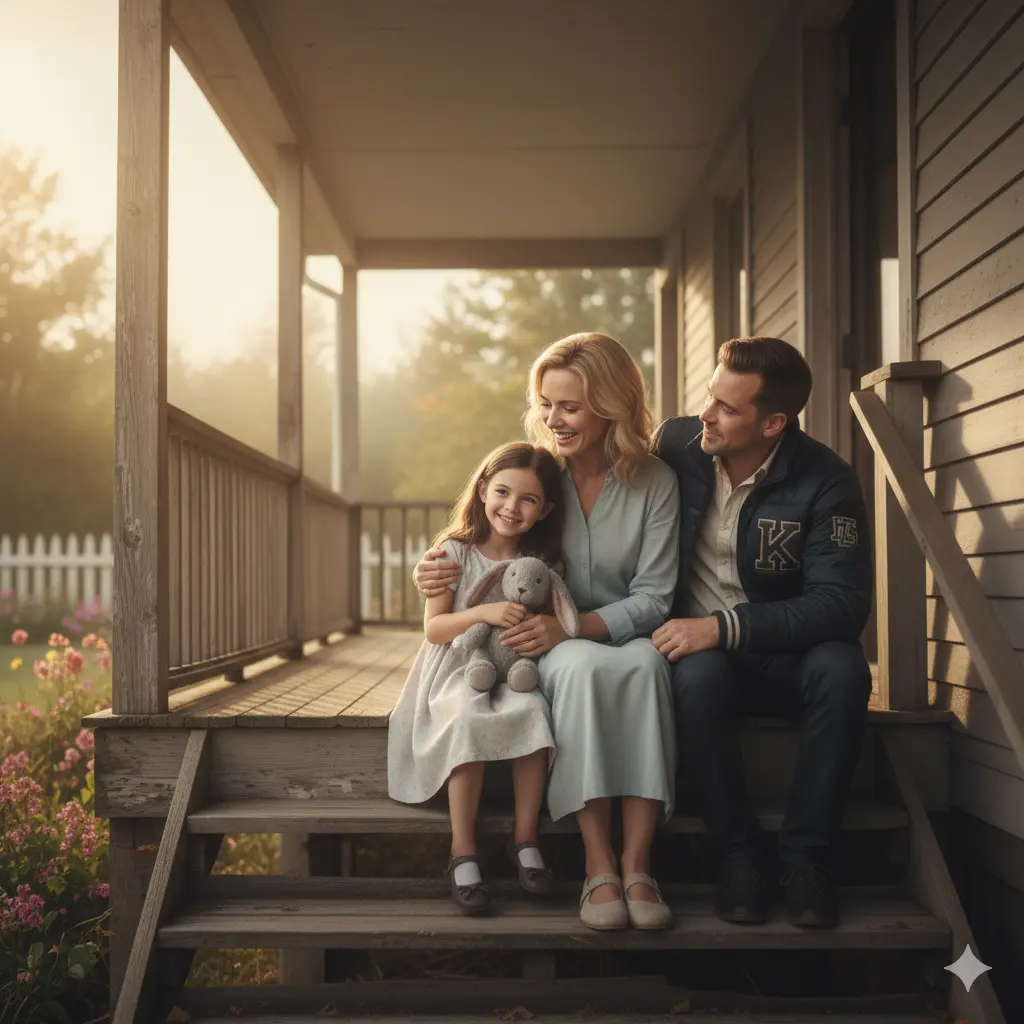
Claire became a steady, comforting presence in our lives—the beloved “Aunt Claire” from across the road. Over time, Lily’s voice returned completely. She told us stories, she laughed loudly, and she stopped standing at the window. The protective shield was gone.
One morning, she crawled into bed between Alex and me, her arms around us. “I love you, Mom and Dad,” she whispered before falling back to sleep.
Lily is seven now. We have a picture in the hallway of the four of us: me, Alex, Lily, and Claire, all sitting on the front steps. Not everyone gets the family they thought they wanted. But sometimes, if you are truly lucky, you get the one **you need**, arriving with a single, startling sentence from the sweetest, quietest child you’ve ever met.