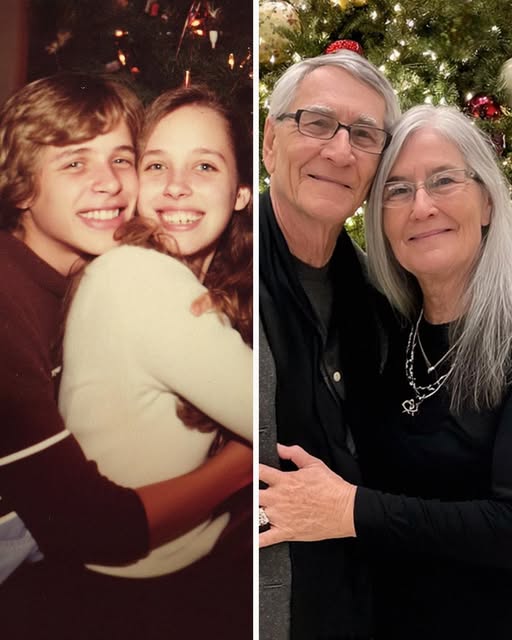
I was not searching for my first love. At 62, I believed that chapter of my life had been sealed, archived, and quietly stored away with other youthful certainties that time dismantles without asking permission. December, for me, usually arrived gently—papers to grade, corridors to monitor, Shakespeare quotations echoing through classrooms warmed by overworked radiators. I liked the predictability. I trusted it.
I’ve been a high school literature teacher for nearly four decades. My days run on structure and routine: lesson plans, essays that multiply overnight, lukewarm tea forgotten on my desk. Every December, just before winter break, I assign the same project—interview an older adult about their most meaningful holiday memory. The students groan, then comply, and inevitably return with stories that remind me why education, at its best, is about human connection.
This year, a quiet student named Emily waited until the bell rang and the room emptied. She approached my desk clutching the assignment sheet as if it mattered deeply.
“Miss Anne,” she said, hesitant but determined, “can I interview you?”
I laughed, reflexively. I told her my holiday memories were unremarkable. I suggested a grandparent, a neighbor, anyone with a more dramatic past. She didn’t waver.
“I want to interview you,” she said again. When I asked why, she replied simply, “Because you make stories feel real.”
That sentence slipped past my defenses. I agreed.
The next afternoon, Emily sat across from me in the empty classroom, notebook open, legs swinging slightly beneath her chair. She began with easy questions—childhood holidays, family traditions. I offered the safe versions. Then she paused.
“Can I ask something more personal?”
Within reason, I said.
“Did you ever have a love story around Christmas? Someone important?”
The question struck a place I hadn’t visited in decades. His name was Daniel. Dan. We were 17, reckless in the way only teenagers convinced of forever can be. We planned impossible futures with no money and endless faith. Then, one winter, his family vanished after a financial scandal. No goodbye. No explanation. He was simply gone.
I told Emily the outline. The edited version adults learn to recite. I moved on. Eventually.
She listened carefully, writing as if the story required gentleness. When she left, something shifted. A door cracked open where I’d built walls.
A week later, between classes, Emily burst into my room, phone in hand, breathless.
“I think I found him,” she said.
I dismissed it instinctively. There are countless Daniels in the world. Then she showed me her screen. A local online forum post. The title alone made my stomach drop: “Searching for the girl I loved 40 years ago.”
There was a photograph. Me at 17. Blue coat. Chipped front tooth from a childhood accident. Dan’s arm around my shoulders.
The post described a girl who wanted to be a teacher. Someone he’d searched for across decades, schools, and cities. He wrote that he had something important to return before Christmas.
Emily looked at me softly. “Is this you?”
I said yes.
She asked if she should message him. I hesitated, fear and hope tangled tightly together. Then I nodded.
Humiliation has a strange cousin in vulnerability. It turns your mind backward. That night, I stood in front of my closet like a teenager before a first date, reminding myself I was 62 and didn’t need to prove anything. I still called my hairdresser.
He replied quickly. He wanted to meet. Saturday afternoon. A café near the park.
The drive there was cruel. What if memory had improved him? What if reality disappointed us both? The café smelled of cinnamon and espresso, holiday lights blinking softly. I saw him immediately. Silver hair, lined face, but the same eyes. He stood when he saw me.
“Annie,” he said. No one had called me that in decades.
We talked first about safe things. Careers. Children. Time. Then the silence arrived—the one that had lived between us for 40 years.
He told me why he disappeared. Shame. Fear. A family implosion that left him believing he was unworthy of love. He’d written a letter but never sent it. He thought I’d see him as tainted by his father’s crimes.
I told him I wouldn’t have.
He said he’d spent years trying to build something honest before coming back. By the time he felt ready, I’d married. Changed my name. Disappeared from his search.
We shared the truth gently. My marriage. The quiet betrayal that ended it years later. His divorce. Two lives shaped by loss, resilience, and unfinished sentences.
Then he asked if I’d give us a chance—not to redo youth, but to see what remained.
Before answering, I asked what he needed to return.
He placed a locket on the table. Mine. The one I lost senior year. Inside were my parents’ photos, unchanged by time. He’d kept it safe for decades, waiting.
I said yes.
On Monday, I thanked Emily. She shrugged and said I deserved to know.
I stood in the hallway afterward, 62 years old, a recovered locket in my pocket, and something unfamiliar in my chest—possibility. Not a fairy tale. Not a do-over. Just a door I never expected to open again.
Sometimes the most powerful human-interest stories don’t come from viral headlines or celebrity news. They come from classrooms, quiet students, online communities, and the courage to reconnect. Love doesn’t expire. It waits. And sometimes, during the holiday season, it finds its way back through the most unexpected hands.