The Unwritten Rule: A Simple Dinner and the Clarity of Boundaries
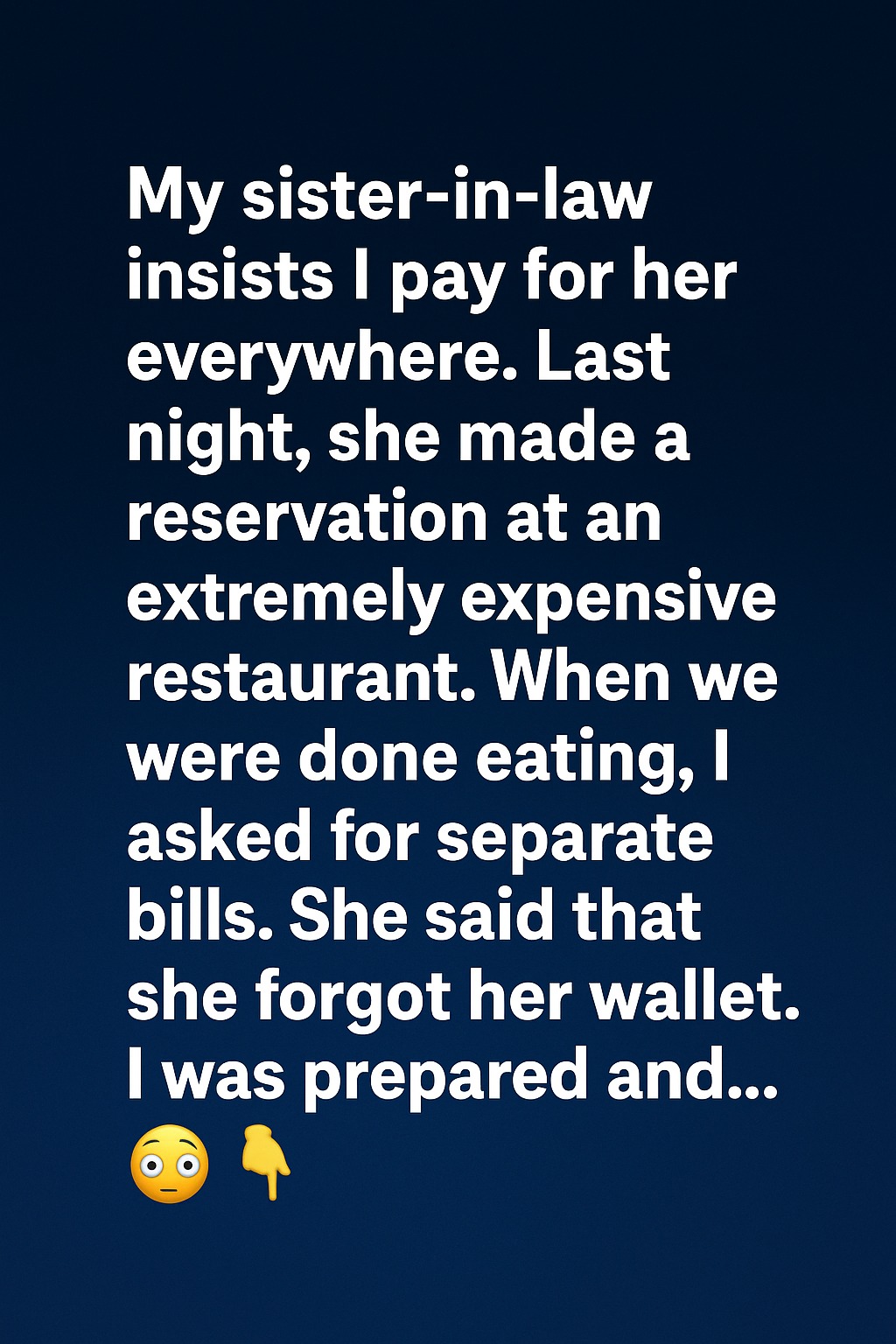
For years, a subtle, unspoken pattern had defined my relationship with my sister-in-law, a quiet habit that, over time, grew from an occasional oversight into a source of constant, low-grade resentment. Every gathering—whether a casual family lunch, an obligatory birthday dinner, or a spur-of-the-moment coffee outing—unfailingly ended the same way. The inevitable conclusion was preceded by a brief, awkward pause, followed by a theatrical patting of her purse, and a hopeful, expectant smile directed squarely at me. “I’ll get you next time,” she would pronounce, a promise that was never fulfilled and was meant more as a verbal shrug than a genuine commitment.
I had rationalized this behavior for years, telling myself that family required patience, that minor financial imbalances shouldn’t disrupt peace, and that showing generosity was simply part of my role. However, as the pattern became not only predictable but also increasingly expensive, it grew impossible to ignore. The relationship began to feel less like a bond of kinship and more like an unwritten contract of payment.
Therefore, when she excitedly announced that she had secured reservations at an exclusive, high-end restaurant downtown, accompanying the news with dramatic, effusive descriptions of the complex menu and the luxurious ambiance, I felt a familiar, tight knot of anxiety form deep in my stomach. I knew, with absolute certainty, how the evening would end, and the prospect of funding her extravagance filled me with dread.
The restaurant was every bit as extravagant as she had promised. The lighting was soft, flattering, and dim; the tables were set with crisp linen tablecloths; and the hushed atmosphere spoke of exclusivity. I kept my anxiety in check, though the menu prices caused my eyes to widen just enough to confirm my discomfort. She ordered without hesitation or apology—a round of expensive appetizers for the table, the most high-priced entrée the restaurant offered, and a gourmet dessert “to share.” I, in contrast, kept my own order deliberately modest, determined not to let my internal tension ruin the external pleasantries of the evening.
The conversation flowed easily, marked by her usual enthusiasm and engaging anecdotes. Yet, beneath the superficial calm, I sensed the familiar, predictable expectation building like a slow tide. The tension mounted with the empty plates, until the moment arrived when the server approached our table with the leather-bound check. This was the moment of truth.
Instead of sighing or reaching for my wallet, I calmly addressed the server, my voice steady and firm despite the rapid drumming in my chest. “We’ll need separate bills, please,” I requested.
The request hung in the air, a disruption of the established routine.
That’s when her reaction confirmed my fears. She visibly froze. Her practiced smile faltered, transforming into an expression of theatrical distress. She began frantically searching through her purse and coat pockets with an exaggerated, sudden urgency.
“I can’t believe this,” she exclaimed, eyes wide with feigned shock. “I must have left my wallet at home.”
The words landed exactly where they were intended, a perfectly executed replica of her recurring script. In the past, this was the cue for me to sigh, express mild exasperation, and then reach for my credit card to cover the full expense.
But this time, everything was different. I had come prepared—not with anger, accusations, or a prepared confrontation, but with quiet clarity and an unshakeable resolve.
I smiled politely, meeting her gaze calmly, and spoke with an even, measured tone. “That’s perfectly fine,” I said. “I’ll only be paying for my bill, of course. We can either wait here while you call your husband to bring your wallet down to the restaurant, or we can simply ask the management to hold the final bill until you’re able to return tomorrow and settle your share.”
The silence that followed was immense, heavy, and far louder than any verbal argument could have been. The subtle power dynamic that had governed our relationship for years had just been shattered with a single, neutral statement.
She blinked rapidly, clearly taken aback by my refusal to engage in the accustomed rescue narrative. She laughed awkwardly, a forced, brittle sound, as if the entire situation were a hilarious misunderstanding that she was now generously ending. After a strained moment, she quietly admitted the truth: she had her wallet after all. It was, she confessed, simply tucked into a side compartment of her car.
She excused herself and returned minutes later, her demeanor noticeably subdued. She quietly paid her substantial share of the bill. The evening ended without any further drama, without any raised voices, and without any direct confrontation. Yet, an important, structural shift had taken place.
On the drive home, I felt a lightness, an unfamiliar sense of profound, quiet relief. The anxiety that had knotted my stomach for hours—and for years—was gone. Setting a clear, firm boundary had not damaged the relationship; it had, in fact, clarified it. By refusing to play the role of the perpetual benefactor, I had redefined the terms of our engagement.
That simple, unspectacular night taught me an essential lesson: the most meaningful and enduring change in a relationship rarely stems from anger, emotional confrontation, or accusations. Instead, it comes from the quiet, powerful refusal to participate in a role you never agreed to play. Respect, I realized, often begins at the exact moment you stop over-explaining your worth and start standing firm on your own financial and emotional ground. The integrity of a relationship is often found in the clear line of a boundary, calmly held.