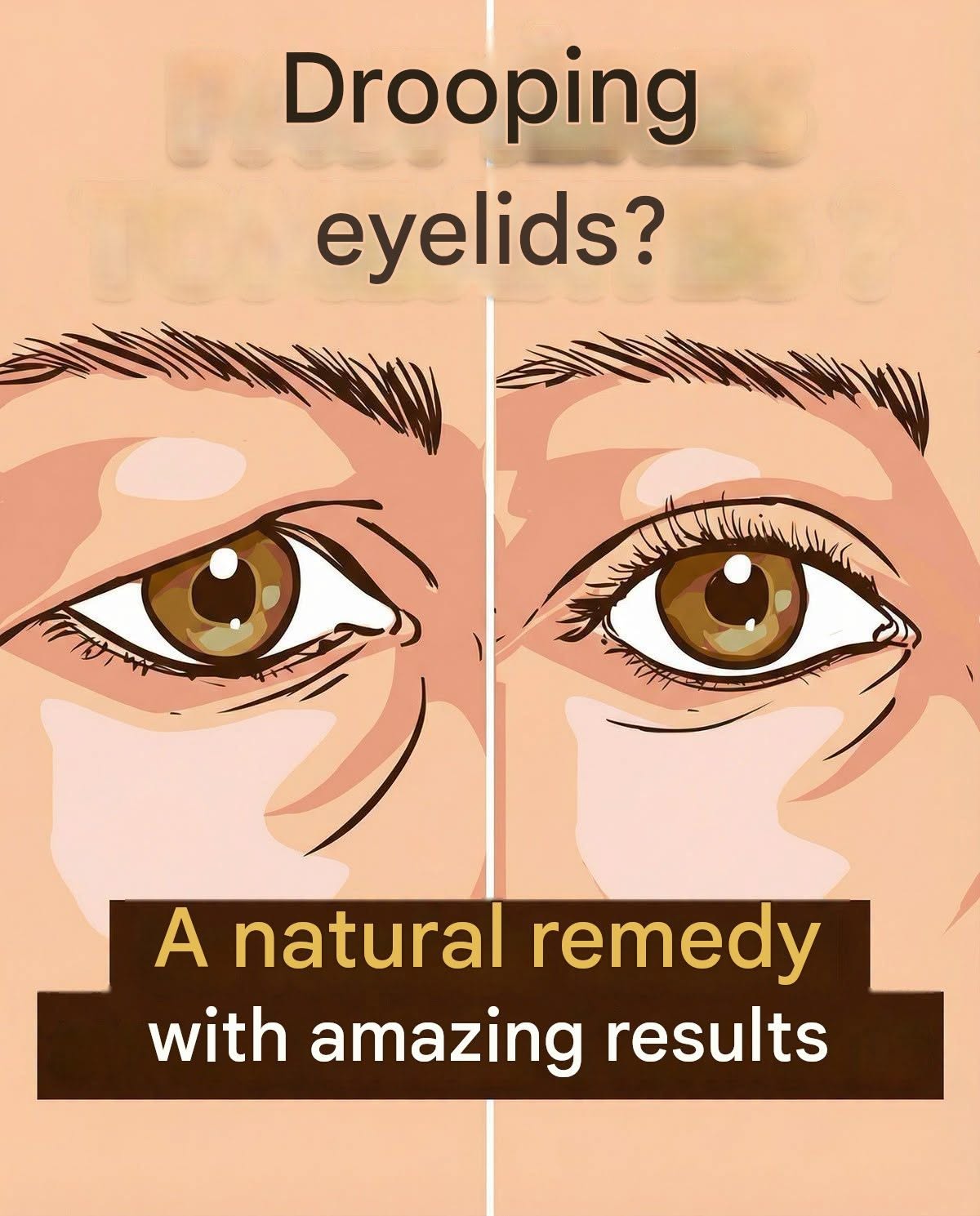
A practical, evidence-aware guide to understanding drooping eyelids, what you can do at home, and which signs call for medical attention.
Introduction
Droopy eyelids are one of the most common reasons people notice a change in their face. For some, the change is purely cosmetic: a tired, heavy look that no amount of sleep seems to fix. For others, it is a sign of an underlying medical condition that deserves prompt attention. Knowing the difference is the most important step you can take.
This article explains what causes droopy eyelids, which natural and lifestyle approaches may improve their appearance, what the evidence does and does not support, and when it is time to see a doctor.
What Are Droopy Eyelids?
“Droopy eyelids” is an everyday term that covers several different conditions. They look similar but have different causes and different treatments.
- Ptosis (blepharoptosis): The upper eyelid sits lower than normal because the muscle that lifts it (the levator muscle) or its nerve supply is weak or detached. In severe cases the lid can cover part of the pupil and block vision.
- Dermatochalasis: Excess, loose skin of the upper eyelid, usually due to aging. The lid margin itself may be in a normal position, but skin folds over it and can make the eyes look heavy.
- Brow ptosis: The eyebrow descends and pushes the upper lid down, creating the impression of a droopy lid.
- Eyelid swelling or puffiness: Fluid, allergies, or fat prominence can make lids look heavier without any true drooping.
Many people have more than one of these at the same time, which is why a proper examination matters.
Common Causes
Age-related changes. Over time the levator tendon can stretch or separate from the eyelid, and skin loses elasticity. This is the most common cause in adults.
Contact lens wear and eye rubbing. Long-term hard contact lens use and habitual, vigorous eye rubbing are associated with stretching of the lid’s supporting structures.
Eye surgery or injury. Cataract surgery, other eye procedures, and trauma can occasionally lead to ptosis.
Congenital ptosis. Some children are born with a drooping lid because of an underdeveloped levator muscle.
Allergies and inflammation. Chronic swelling can make lids appear heavier and, over time, contribute to skin stretching.
Neurological and muscular conditions. Less commonly, ptosis is a sign of a problem with the nerves or muscles, such as third cranial nerve palsy, Horner syndrome, myasthenia gravis, or stroke. These are the cases in which timely diagnosis matters most.
Other causes. Tumors or masses affecting the eyelid or orbit, diabetes-related nerve damage, and certain injections around the eye can also play a role.
Natural Ways to Improve the Appearance of Droopy Eyelids
It is important to be realistic. Lifestyle measures cannot reverse a detached levator tendon or remove excess skin. What they can do is reduce puffiness, protect the skin, and improve how rested and refreshed the eyes look. The approaches below are generally safe, but the evidence for several of them is limited.
1. Prioritize quality sleep
Poor or insufficient sleep makes the skin around the eyes look duller and more swollen. Aim for consistent sleep of seven to nine hours, and consider sleeping with your head slightly elevated to reduce overnight fluid pooling around the eyes.
2. Reduce fluid retention
High salt intake, alcohol, and dehydration can all increase morning puffiness. Drinking enough water, limiting salt in the evening, and moderating alcohol often leads to a visible difference in how heavy the eyelids look.
3. Use cold compresses
A clean, cool (not icy) compress held over closed eyes for five to ten minutes can temporarily reduce swelling by constricting small blood vessels. Chilled cucumber slices, cold spoons, or a refrigerated gel mask are common choices. The effect is short-lived but useful.
4. Manage allergies
If itchy, watery, or swollen eyes are a regular problem, treating the underlying allergy can help. Avoid triggers where possible, wash bedding regularly, and ask a pharmacist or doctor about suitable antihistamine drops or tablets.
5. Protect your skin from the sun
Ultraviolet exposure breaks down collagen and elastin, accelerating skin laxity. Wear sunglasses with UV protection, a wide-brimmed hat, and a broad-spectrum sunscreen on the area around the eyes (using a product labeled safe for use near the eyes).
6. Stop rubbing your eyes
Repeated rubbing and pulling can stretch the delicate tissue of the eyelids. If you rub because of dryness or allergy, address the cause. Remove makeup gently, using a soft, non-dragging technique.
7. Care for the skin around the eyes
A gentle moisturizer and, if tolerated, products containing ingredients such as retinoids or peptides may improve skin texture over time. These will not lift a droopy lid, and the skin here is sensitive, so introduce new products slowly and stop if irritation occurs.
8. Eat a balanced diet and avoid smoking
Smoking accelerates skin aging. A diet rich in fruits, vegetables, and adequate protein supports skin health. These measures are supportive rather than corrective.
9. Gentle facial and brow exercises
Some people try eyebrow lifts, eyelid exercises, or facial massage in the hope of strengthening the muscles around the eyes. Be cautious: there is limited high-quality evidence that facial exercises meaningfully lift true ptosis, and vigorous pulling on the skin can do more harm than good. Gentle lymphatic-style massage may temporarily reduce puffiness, but should not be expected to correct a structural problem.
10. Use makeup and eyewear strategically
For a cosmetic improvement without any procedure, makeup techniques can help create the appearance of more open eyes. Curling the lashes, using light-toned shades near the inner corners, and applying mascara to the upper lashes can all brighten the eye area. In some cases, special eyeglasses with a small support (known as a ptosis crutch) can hold the lid up and are prescribed by an eye specialist.
What Natural Approaches Cannot Do
It helps to be clear about the limits. No cream, supplement, exercise, or home device has been shown to reliably repair a stretched levator tendon, reverse significant excess skin, or treat ptosis caused by a nerve or muscle disorder. Products that promise dramatic “non-surgical eyelid lifts” deserve skepticism. If your eyelids are truly drooping rather than just puffy, a medical evaluation is the right next step.
Medical Treatment Options
When the droop is significant, bothersome, or affecting vision, a specialist may recommend one of the following:
- Prescription eye drops: A low-dose oxymetazoline eye drop is approved in some countries for acquired ptosis. It can temporarily lift the lid slightly, but is not suitable for everyone, so it should only be used under medical guidance.
- Ptosis surgery: Procedures tighten or reattach the levator muscle or tendon, or use other muscles to lift the lid.
- Blepharoplasty: Surgical removal of excess eyelid skin (and sometimes fat), commonly performed for dermatochalasis. When excess skin blocks vision, it may be considered a functional rather than purely cosmetic procedure.
- Brow lift: Repositioning a descended brow when it is contributing to the heavy appearance.
- Treating the underlying disease: When ptosis is caused by a neurological or muscular condition, the priority is treating that condition.
The right choice depends on the cause, your health, and your goals, which is why an accurate diagnosis comes first.
When to See a Doctor
Seek urgent or emergency care if:
- The droop appears suddenly, especially over hours or days.
- It is accompanied by double vision, a severe headache, eye pain, or a change in the size of one pupil.
- You have weakness, numbness, facial droop, trouble speaking, or difficulty swallowing, which can signal a stroke.
- The droop follows a head injury.
- There is significant swelling, redness, fever, or pain in the eyelid.
These features can indicate serious conditions that require immediate evaluation.
Book an appointment soon if:
- Your eyelid droop is progressively worsening or only affects one side.
- The droop fluctuates, worsening in the evening or after fatigue, which can be a sign of myasthenia gravis.
- The eyelid blocks part of your vision, or you tilt your head back or lift your brows constantly to see.
- You have developed a lid droop after eye surgery, injury, or long-term contact lens use.
- Your eyes feel tired, strained, or give you headaches because of the extra effort to keep them open.
Take your child to a doctor promptly if:
A baby or child has a drooping eyelid. Even mild congenital ptosis can interfere with visual development and may lead to amblyopia (“lazy eye”) if the lid covers the pupil, so early evaluation is important.
Who to See
A family doctor or general practitioner is a reasonable first stop. Depending on the findings, you may be referred to an ophthalmologist (eye doctor), an oculoplastic surgeon (a specialist in eyelid and orbital surgery), or a neurologist if a nerve or muscle disorder is suspected. Bringing older photographs, such as a passport or driver’s license picture, can help the doctor judge how long the droop has been present and how it has changed.
Key Takeaways
- “Droopy eyelids” can mean ptosis, excess skin, a low brow, or simple puffiness. Each has a different cause and treatment.
- Sleep, hydration, allergy control, sun protection, cold compresses, and gentle skincare can improve how the eyes look, but they do not correct structural droop.
- Be skeptical of claims that exercises or creams can “lift” a truly drooping eyelid.
- A sudden droop, especially with double vision, headache, or neurological symptoms, needs emergency care.
- Gradual droop that affects vision or comfort, and any droop in a child, should be assessed by a doctor.
Disclaimer
This article is intended for general educational purposes and does not replace professional medical advice, diagnosis, or treatment. If you are concerned about your eyelids or your vision, consult a qualified healthcare provider.