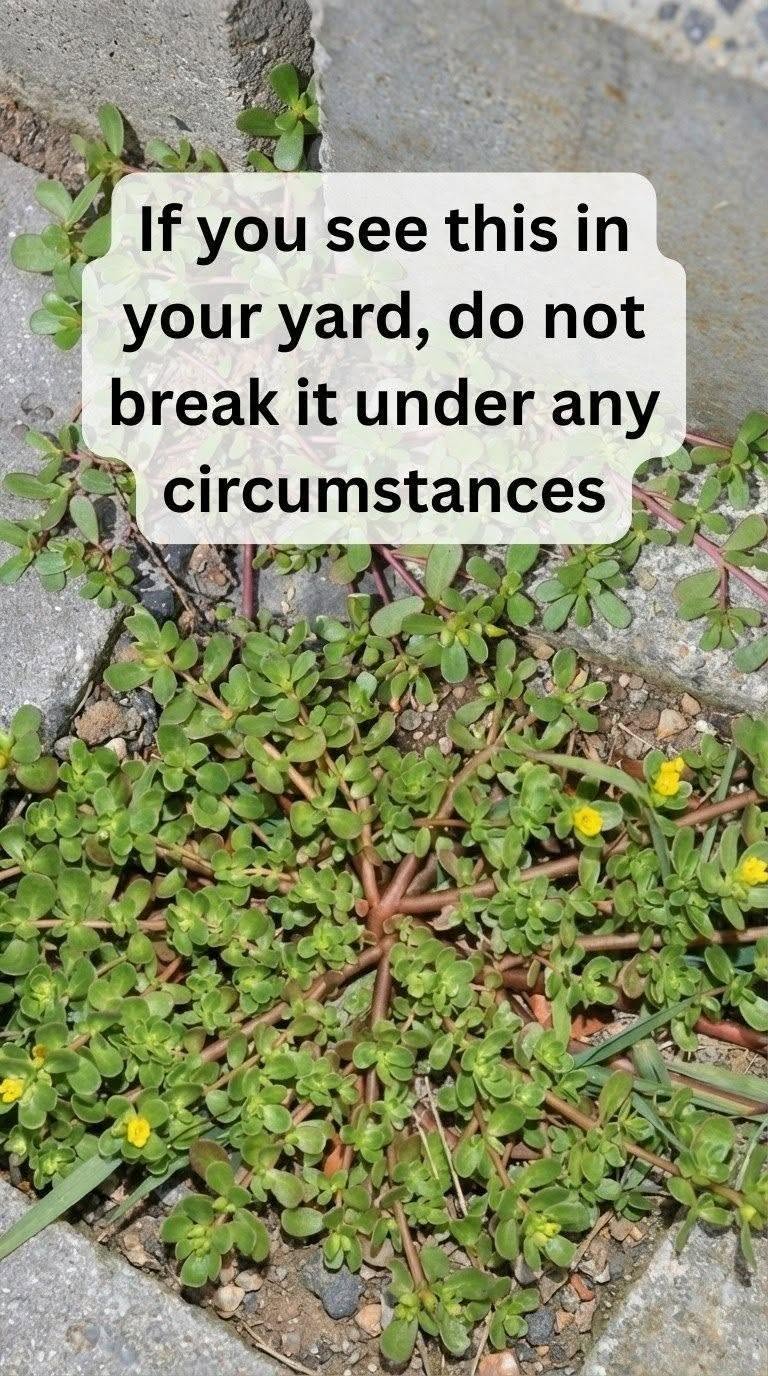
At first glance, the little plant growing between cracks in your driveway, sidewalk, or garden may look like nothing more than an annoying weed. But that low-growing plant with thick, fleshy leaves, reddish stems, and tiny yellow flowers may actually be purslane (Portulaca oleracea)—a plant that has been eaten in many parts of the world for generations.
The viral warning “If you see this in your yard, do not break it under any circumstances” makes the plant sound dangerous. The reality is much more interesting: purslane isn’t a poisonous plant simply because it grows in your yard. In fact, it is considered an edible leafy vegetable in many cultures. However, there are important reasons to be careful before eating any wild plant.
What Is This Plant?
The plant shown in the photo appears to be common purslane, scientifically known as Portulaca oleracea.
Purslane is easy to recognize because it usually has:
Thick, succulent-like green leaves
Smooth reddish or reddish-brown stems
A low, spreading growth habit
Small yellow flowers
A tendency to grow in cracks, gardens, lawns, and disturbed soil
Unlike many ordinary weeds, purslane has been used as a food in Mediterranean, Asian, and other cuisines. Scientific reviews have also documented its nutritional value.
Why Do People Eat Purslane?
One of the most interesting things about purslane is its nutritional profile.
Research has found that purslane contains alpha-linolenic acid (ALA), a plant-based omega-3 fatty acid. It also provides nutrients such as vitamin C, vitamin E, potassium, magnesium, and calcium.
That makes this humble backyard plant surprisingly valuable as a leafy green.
In some parts of the world, the tender leaves and stems are eaten raw in salads or cooked as a vegetable.
Could Purslane Be Good for Your Heart?
Purslane’s omega-3 content is one reason it has attracted scientific interest.
ALA is an essential fatty acid that the body needs to obtain from food. Purslane can contribute ALA to the diet, although it should not be considered a replacement for established heart-healthy foods or medical treatment.
The plant also contains various antioxidant compounds, which have been studied for their potential biological effects. However, claims that purslane can cure heart disease, lower cholesterol dramatically, or replace medication go beyond the evidence.
But There Is an Important Catch
This is where the viral post needs some context.
Purslane can contain relatively high amounts of oxalates. Oxalates are naturally occurring compounds found in a number of vegetables and plants. Research has documented substantial oxalate levels in purslane, and rare medical case reports have linked very high consumption with oxalate-related kidney injury.
So the message shouldn’t really be:
“Never touch this plant.”
A better message is:
Don’t eat a wild plant unless you are certain you have identified it correctly and know that it is safe to consume.
This is particularly important for people who have kidney-related dietary restrictions or have been advised to limit oxalates.
Don’t Eat Purslane Straight From the Sidewalk
Even when a plant is technically edible, where it grows matters.
A plant growing beside a road, sidewalk, driveway, or area treated with pesticides or chemicals shouldn’t automatically be considered food.
Wild plants can also be contaminated by:
Animal waste
Soil contaminants
Herbicides or pesticides
Road pollution
Other environmental contaminants
If you intend to eat purslane, use a reliably identified, food-safe source rather than simply picking a random plant growing through a crack in the pavement.
How Is Purslane Used?
When properly identified and safely sourced, purslane can be used in several ways.
The tender leaves and stems can be:
Added to fresh salads
Mixed into yogurt-based dishes
Cooked with vegetables
Added to soups and stews
Used in Mediterranean-style recipes
Pickled
Its leaves have a slightly tangy, lemony flavor and a juicy texture that makes them different from ordinary leafy greens.
So, Should You Pull It Out?
If you see this plant in your garden, there’s no scientific reason to panic or treat it as a dangerous poisonous plant.
In fact, if it really is common purslane, you’ve discovered a plant that has a long history as food and has an interesting nutritional profile.
But don’t identify a plant based only on a viral Facebook photo. Several plants can look similar, and misidentification of wild plants can be dangerous.
The Bottom Line
That little plant growing between the cracks may not be an ordinary weed at all.
It may be purslane—a nutritious edible plant containing plant-based omega-3 fatty acids and several vitamins and minerals.
Just remember: “edible” doesn’t mean “eat any specimen you find.” Correct identification, clean growing conditions, and reasonable consumption matter.
So next time you spot those red stems, fleshy green leaves, and tiny yellow flowers, take a closer look. You may have more than just a weed growing in your yard.
Disclaimer: This article is for informational purposes only. Never consume a wild plant unless you are certain of its identification and safety. People with kidney conditions or dietary restrictions involving oxalates should consult a qualified healthcare professional before consuming large amounts of purslane.