At sixty-five, I believed there were certain kinds of pain a woman could no longer experience.
I had already buried my parents, watched friends grow old and disappear from my life, and sat beside hospital beds praying that the people I loved would recover. I had raised two children, welcomed four grandchildren, and spent forty-two years building a marriage that I believed would last until one of us drew our final breath.
I thought I understood my husband, Robert.
I knew how he took his coffee, which knee hurt when the weather changed, and why he always checked the front door twice before going to bed. I knew the sound of his footsteps on our wooden staircase and the particular way he cleared his throat whenever he wanted to disagree with me without starting an argument.
After forty-two years, I thought I knew the difference between his ordinary silences and the ones that meant something was wrong.
I was mistaken.
The first warning arrived on a Tuesday morning while I was making breakfast.
My husband had left early, claiming he needed to meet an old business associate. I was standing beside the stove, turning two slices of bread in a pan, when my phone vibrated on the kitchen counter.
An unknown number.
Normally, I would have ignored it.
But the message contained a photograph.
I opened it.
And the entire world seemed to stop.
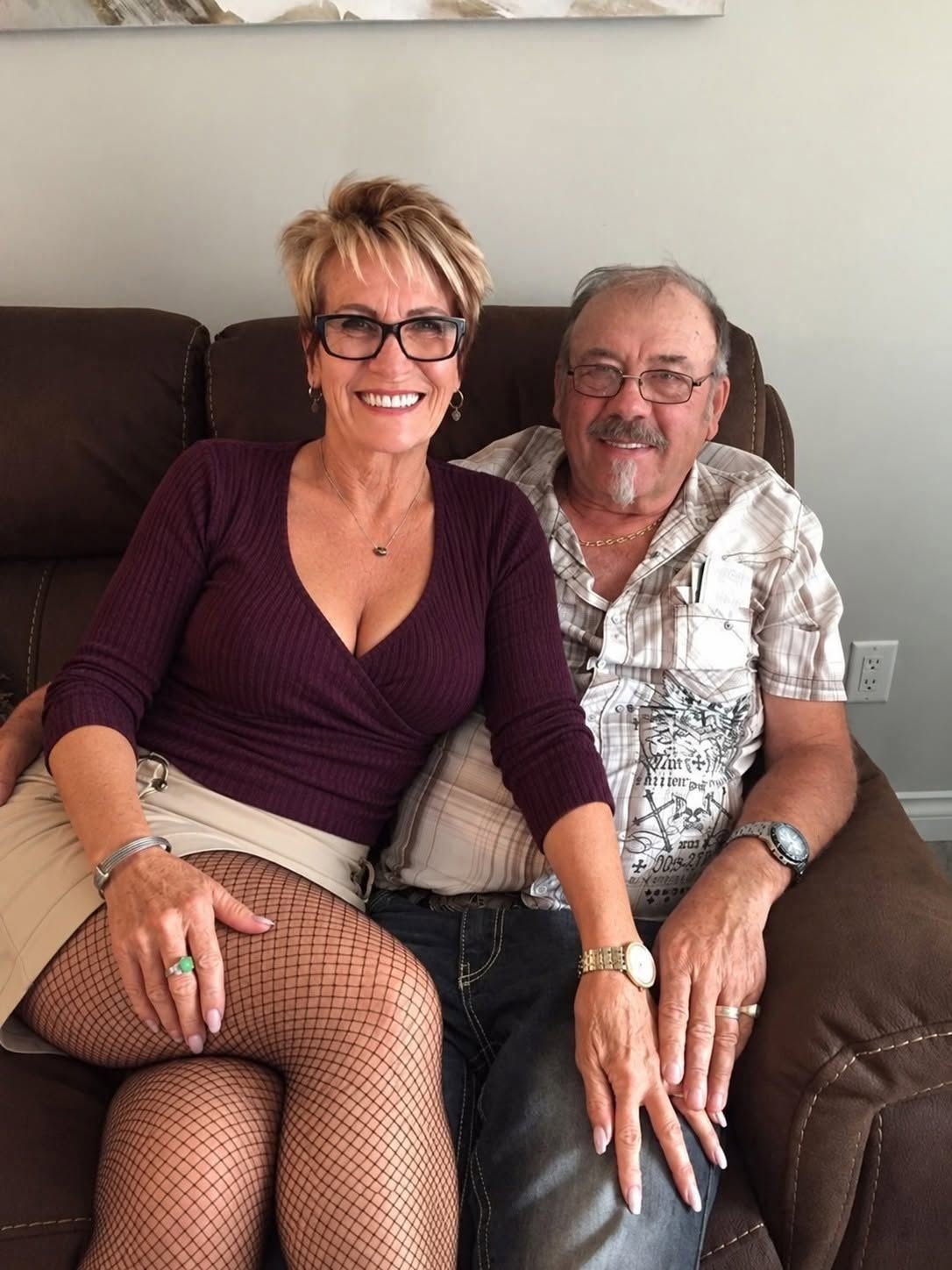
Robert was sitting on a brown leather couch in what looked like an expensive apartment. He wore the navy-blue sweater I had bought him for his sixty-eighth birthday. His silver hair was neatly combed, and he was smiling in a way I hadn’t seen in months.
Beside him sat a blonde woman wearing black-framed glasses and a red blouse.
She looked to be around sixty.
Her hand rested possessively on Robert’s knee.
His arm was stretched along the back of the couch behind her.
They weren’t sitting like two people who had accidentally found themselves in the same room.
They looked comfortable.
Intimate.
Happy.
Then I noticed something that hurt even more than the photograph itself.
Robert was wearing his wedding ring.
I stared at the picture, hoping there was some explanation I hadn’t considered. Perhaps she was a colleague. Perhaps the photograph had been taken at a gathering. Perhaps the unknown sender was trying to frighten me.
Then another message appeared.
“My name is Susan Miller. I’m fifty-nine years old, and I’ve been involved with your husband for eight months. Robert loves me, and I’m tired of pretending our relationship doesn’t exist.”
I felt the blood drain from my face.
A second message followed.
“He’s told me everything about your marriage. He says you’ve been living like strangers for years. He stays because he feels guilty about abandoning you at your age. Don’t worry, though. That’s about to change.”
My hands began to tremble.
Then came the final message.
“YES, I’M THE WOMAN DESTROYING YOUR FORTY-TWO-YEAR MARRIAGE, AND I’M NOT GOING TO APOLOGIZE! YOUR TIME IS OVER. HE’S MINE NOW!”
I sat down so abruptly that the chair scraped against the kitchen floor.
The toast began to burn.
Smoke curled from the pan, but I couldn’t move.
Forty-two years.
Forty-two Christmas mornings, anniversaries, family vacations, arguments, reconciliations, and whispered promises.
Forty-two years of believing that even when life became difficult, we were still on the same side.
And a woman I had never met was telling me that my life with my husband was finished.
I read the messages again.
Then I did something that surprised even me.
I didn’t call Robert.
I didn’t call our children.
I didn’t scream or throw anything across the kitchen.
I placed the phone on the table and stared out the window at the small garden I had tended for more than thirty years.
Robert had built the wooden fence around that garden when our youngest son was ten. He had planted the rosebush near the steps after my mother died. Every spring, we worked together to remove the weeds, and every autumn, we complained about the leaves that covered the path.
That morning, I realized I didn’t know whether those memories belonged to the man I had married or to a version of him that no longer existed.
I switched off the stove.
Then I waited for him to come home.
Robert returned shortly after six in the evening.
He walked into the kitchen carrying a paper bag from the bakery and leaned down to kiss my cheek.
“Something smells good,” he said.
I looked at him.
For forty-two years, I had loved that face. I had watched it change from the face of a young man into the lined, silver-haired face of an older husband. I knew every wrinkle around his eyes.
Yet when he smiled at me that evening, I wondered how many times he had smiled at another woman while I was waiting for him at home.
“Robert,” I said quietly, “we need to talk.”
He stopped moving.
Something changed in his expression.
Not confusion.
Recognition.
I took my phone from the table and placed it in front of him.
“Who is she?”
He looked at the photograph.
For several seconds, he said nothing.
Then he lowered himself into the chair opposite mine.
“Margaret, I can explain.”
Those five words were enough.
I had heard them from friends whose husbands had been unfaithful. I had heard them in television dramas. I had even heard them from our daughter when she was young and had broken a neighbor’s window.
But I had never imagined hearing them from my own husband.
“Explain what?” I asked. “The photograph? The messages? Or the eight months you’ve apparently spent building a second life?”
He rubbed his forehead.
“It wasn’t supposed to happen this way.”
“How was it supposed to happen, Robert? Were you planning to tell me on our forty-third anniversary?”
He flinched.
“Please don’t make this harder than it already is.”
I almost laughed.
Harder for him?
He had been the one sneaking around. He had been the one lying about business meetings and overnight trips. He had been the one returning to our home, eating my cooking, sleeping beside me, and allowing me to believe that our marriage was intact.
Yet somehow, he was asking me not to make things difficult.
“Do you love her?” I asked.
He looked toward the window.
“I care about her.”
“That isn’t what I asked.”
He closed his eyes.
“Yes.”
The word was barely audible.
But it landed like a door slamming shut.
I stood up and gripped the edge of the counter.
“How long?”
“Eight months.”
“Have you been sleeping with her?”
He looked at the floor.
I didn’t need another answer.
“Does she know you’re married?”
“Yes.”
“Does she know you have children and grandchildren?”
“Margaret—”
“Does she?”
“Yes.”
I turned away.
For a moment, I thought I might collapse. My chest felt tight, and the kitchen seemed to have become too small to contain the air I needed.
Then I heard him say something that made me turn back.
“I haven’t been happy for a long time.”
There it was.
The sentence that would haunt me for weeks.
I had spent years helping him recover after surgery. I had sat beside him when his business failed. I had taken extra shifts when money was tight, cared for his father during his final illness, and encouraged him when he felt useless after retirement.
I wasn’t claiming our marriage had been perfect.
We had argued. We had disappointed each other. There had been lonely evenings and difficult years.
But I had believed those were things we faced together.
“You weren’t happy,” I repeated. “And instead of telling me, you found someone else.”
“You wouldn’t understand.”
“Then explain it to me.”
He couldn’t.
Or perhaps he simply didn’t want to.
He stood, took his keys from the counter, and said he needed some time to think.
Before he reached the door, I asked one final question.
“Does Susan know that you still come home every night and tell me you love me?”
He stopped.
He didn’t turn around.
That was the moment I understood that the affair was not an isolated mistake. It was a life he had been maintaining through a thousand deliberate decisions.
He left without answering.
That night, I slept alone in our bedroom for the first time in forty-two years.
At three in the morning, I got out of bed and walked through the house.
I stopped outside our children’s old rooms. I looked at the family photographs on the walls and the framed picture of Robert and me on our wedding day.
We had been twenty-three and twenty-six then.
He had held my hands and promised that whatever happened, we would face life together.
I touched the frame.
“Was any of it real?” I whispered.
The photograph offered no answer.
The next morning, I received a phone call from Susan.
I nearly let it go to voicemail.
But curiosity, anger, and the desperate need to hear the truth made me answer.
“Hello?”
“Margaret?”
Her voice was smooth and confident.
“Yes.”
“I thought we should speak woman to woman.”
I tightened my grip on the phone.
“After sending me that message, you think we should speak woman to woman?”
“Look, I know you’re upset.”
“Upset?”
“I understand this is difficult, but Robert and I have something special.”
I stared at the wall.
“Did you call to tell me that?”
“I called because I don’t want unnecessary drama. Robert has made his decision. You need to accept that your marriage is over.”
I closed my eyes.
There was something astonishing about listening to a stranger lecture me about the future of a marriage she had helped betray.
“Did Robert tell you our marriage was over before he began sleeping with you?”
There was a pause.
“He told me you were practically separated.”
“Did he tell you we celebrated our forty-second anniversary eight months ago?”
Silence.
“Did he tell you that he held my hand at our grandson’s birthday party last month and told me I was the best thing that had ever happened to him?”
“Margaret, I don’t want to hear about your memories.”
“Then why are you calling me?”
“Because I want you to stop trying to hold on to him.”
I looked at the photograph still open on my phone.
“I haven’t called him once since he left.”
“Good.”
“And I haven’t begged him to return.”
“Even better.”
Her voice softened, almost triumphantly.
“Then perhaps we understand each other.”
“No, Susan. We don’t.”
I ended the call.
For the next two days, I barely ate.
Our daughter, Emily, noticed something was wrong when she called on Thursday evening.
“Mom, have you been crying?”
“No, sweetheart.”
“Don’t lie to me. You always get that little catch in your voice when you’re trying not to cry.”
I sat down on the sofa.
Then I told her everything.
She listened without interrupting.
When I finished, she was silent for several seconds.
“Mom, I’m coming over.”
“You don’t need to.”
“Yes, I do.”
She arrived forty minutes later, carrying groceries and wearing the determined expression she had inherited from me.
When she saw the wedding photograph on the mantelpiece, she stopped.
“Where’s Dad?”
“He left.”
Emily sat beside me and wrapped her arms around my shoulders.