At twenty-seven, a woman told her wealthy father Arthur that she intended to marry Liam, the man who had worked as his driver for six years. Arthur did not consider Liam an equal. He said the young man had a place in the household and warned his daughter that if she left with him, she would leave with nothing.
She packed one suitcase and chose Liam. By the next morning, her bank account had been frozen and her access card no longer worked. Her stepmother Miriam, who controlled much of Arthur’s schedule and correspondence, made it clear that no calls, letters, or exceptions would be permitted.
The couple built a life without the resources of her childhood. They rented a one-bedroom apartment above a bakery. Liam worked nights so she could attend nursing school, then delivered pizzas on weekends when their son Noah was born. She passed her licensing examination shortly before learning she was pregnant again.
A frightening birth and years of silence
Their daughter Ellie arrived prematurely and spent six days in intensive care. Terrified, the new mother called her father’s house and begged Miriam to tell Arthur that his granddaughter was struggling. Miriam promised to pass along the message, but Arthur never called. Ellie recovered and came home on the seventh day.
Over the years, the couple saved for a little yellow house with a crooked porch. Liam built a delivery route, his wife worked as a nurse, and the children grew. Birthdays remained painful because Noah asked why the grandfather he had seen in photographs never visited. His mother wrote Arthur several letters, including holiday updates, but received no answer.
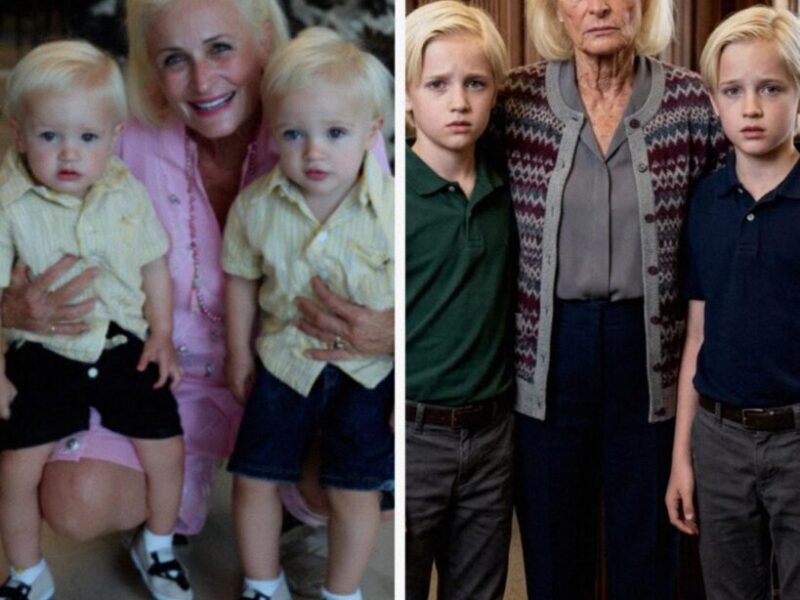
Eight years after the marriage, a black car stopped outside their house. Arthur stepped onto the sidewalk holding a silver gift bag. When the children ran onto the porch, he looked first at Noah and then at Ellie. His face lost its color, and the bag fell from his hand.
Arthur cried out that Ellie’s presence was impossible. Miriam had told him the premature baby died in the hospital. She had even shown him what appeared to be a letter on hospital stationery and claimed his daughter blamed him and wanted no further contact.
A lie designed to keep a family apart
Arthur said none of the calls or letters had reached him. He had recently received a school photograph of Ellie from a friend whose granddaughter attended the same school. The child’s resemblance to a portrait in Arthur’s study made him question the story he had accepted for seven years.
His daughter did not excuse his choices. He had disowned her before Miriam invented the baby’s death, and shame was not a substitute for making an effort. Still, the photograph exposed deliberate interference that neither of them understood.
Arthur investigated. A lawyer found copies of the letters his daughter had sent locked in Miriam’s filing cabinet. The inquiry also revealed that Miriam had persuaded him to revise an estate plan that would have left her nearly everything. Her deception had protected her influence and financial position by preventing any reconciliation.
Arthur filed for divorce, and the story became known among the social circles Miriam had worked so hard to impress. The outcome did not restore the missed births, illnesses, birthdays, or ordinary Sundays. Arthur admitted that the lost years could not be returned.
Reconciliation had to begin without privilege
The following Sunday, Arthur came back under conditions set by his daughter. He arrived without a driver, expensive presents, or any expectation that money could purchase forgiveness. He came as a grandfather who needed to learn the names, routines, and personalities of children he had almost lost.
The family did not pretend one visit repaired everything. Arthur’s original contempt for Liam had caused the separation, while Miriam’s forged message and intercepted letters made it last. Forgiveness, if it came, would depend on consistent humility rather than a dramatic apology.
Liam had already answered Arthur’s old judgment through the life he built. He supported his wife’s education, stayed beside Ellie in intensive care, and helped create a secure home through years of work. The man Arthur once told to remember his place had found it within a loving family. Arthur’s task was not to take control of that family but to earn a modest place in it.