When doctors told Emily she likely had only a month left, she offered to cancel our wedding. I refused. We married in our backyard, and for three weeks I had the privilege of calling her my wife. After her funeral, a lawyer delivered a box she had ordered him to keep secret until her death. Inside were documents proving the woman I loved had destroyed an innocent person’s life—and expected me to repair the damage.
Emily and I had been engaged for nearly a year. The venue was reserved, invitations ordered, and her dream dress waiting. Months of exhaustion eventually led to tests revealing advanced cancer. Treatment could not stop its progression.
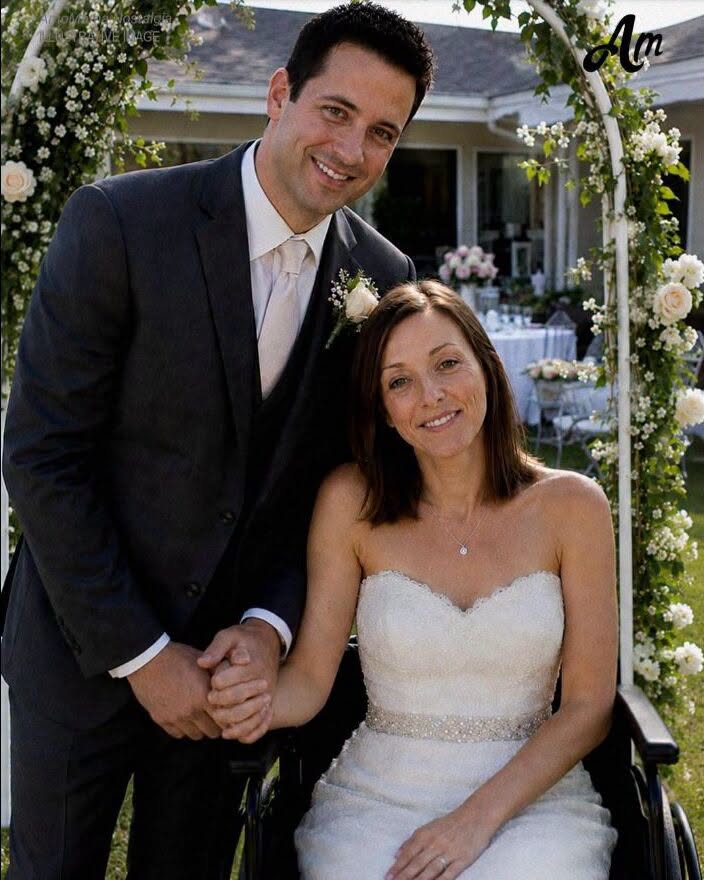
She repeatedly told me I was free to walk away. Instead, I gathered our families, invited a priest, decorated the backyard, and helped her into the gown. I wheeled her down the aisle and promised that illness changed nothing.
She smiled more brightly that day than she had in weeks.
Emily died three weeks later. Grief left me barely able to leave the house. Then her lawyer arrived with a box and a letter.
Emily confessed that years earlier, money disappeared from the company where she worked. Her sister was responsible, but Emily altered records and blamed a coworker named Sarah. Sarah lost her job, reputation, and financial stability.
The box contained the real accounting records, correspondence, and proof of the cover-up. It also held an envelope of money and instructions for me to find Sarah, compensate her, and keep Emily’s family out of the scandal.
I could not reconcile the confession with the woman I had married. Emily had been kind, funny, and deeply loved. Yet the evidence was unmistakable.
I found Sarah working at a diner. When I explained who I was, her expression hardened. I offered the money and repeated Emily’s request to “make things right.”
Sarah refused.
She had worked for the company for eight years and built a strong record. When funds disappeared, Emily handed investigators falsified logs and identified her as the thief. Sarah was dismissed and spent years carrying a reputation she did not deserve.
She called the money a bribe rather than an apology. Emily had waited until she could no longer be questioned, blamed, or required to face the person she harmed.
I defended my wife at first. I said she had panicked and wanted to protect her sister. Sarah answered with a sentence I could not dismiss: “Your whole world stole mine.”
Guilt, she explained, was not justice. A private check could not restore her name. She wanted the truth presented publicly to everyone who believed she was dishonest.
That meant releasing the records, exposing Emily’s actions, and allowing her sister to face legal consequences. It also meant destroying the comforting version of Emily I was trying to preserve.
Sarah told me that love did not entitle me to bury evidence. If Emily genuinely wanted to make amends, the truth could not remain hidden simply because revealing it hurt.
I sat with the box for a long time. Every excuse collapsed against the documents in my hands.
Finally, I gave Sarah everything. I told her to take the material to her lawyer and the authorities. I was not emotionally ready, but I knew it was right.
Weeks later, Sarah called. Her former employer had reviewed the evidence and formally cleared her. The people who branded her a thief learned what had actually happened, and Emily’s sister was forced to answer for the missing money.
Sarah never accepted the cash. Restoring her name mattered more.
The evidence changed how I remembered my wife, but it did not erase my love. Grief became more complicated and more honest. Emily had shown courage while facing death, yet she had also acted cowardly when another woman’s future was at stake.
I learned that loving someone does not require protecting their worst act. Sometimes the final responsibility we owe the dead—and the living people they harmed—is to stop carrying their lies.