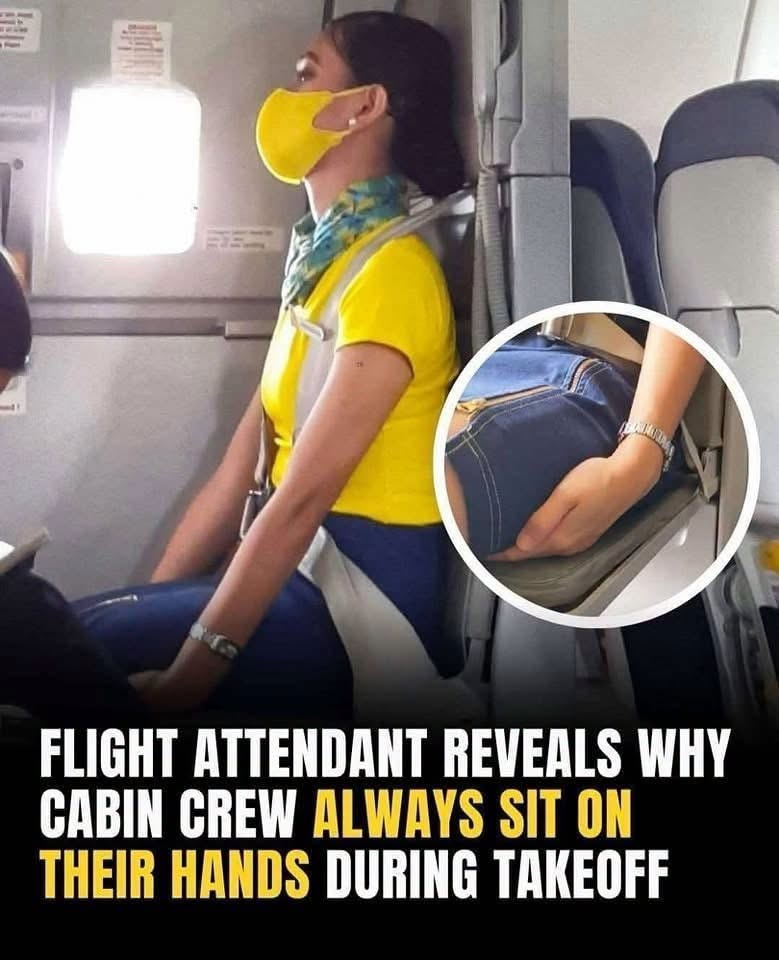
Imagine staring out the airplane window as the heavy metal tube hurtles down the runway, thousands of feet in the air, completely unaware of the chilling, silent ritual happening just a few rows away. While passengers sip their ginger ale and flip through magazines, flight attendants are quietly bracing for absolute terror. They buckle tightly into their jump seats, tuck their thumbs, keep their feet flat, and slide their hands underneath their thighs in a rigid, motionless freeze. What you do not know about this terrifying posture could literally mean the difference between life and death. The hidden reason behind this bizarre cabin crew habit has finally been exposed, and it will completely change how you view every single flight you ever take from this moment forward.
Air travel remains one of the safest modes of transportation in the modern world, yet millions of travelers remain blissfully unaware of the intense, split-second safety protocols unfolding behind the scenes. Aviation safety is a meticulously engineered science, forged through decades of rigorous testing, regulatory updates, and lessons learned from past aviation incidents. Every single item on an aircraft, from the tiny hole in the cabin window to the specific posture of the crew during critical phases of flight, serves a vital, life-saving purpose. Among these protocols, the actions of the flight attendants during takeoff and landing stand out as some of the most fascinating and misunderstood practices in commercial aviation.
Recently, aviation enthusiasts and everyday passengers alike were given a rare glimpse behind the curtain of commercial flight operations. Henny Lim, a dedicated flight attendant with the Philippines-based airline Cebu Pacific, took to social media to share a compelling and educational look at a routine cabin crew procedure. In a viral video that captured the attention of millions across the globe, Lim illuminated the unexpected reason why flight attendants keep their hands firmly tucked under their thighs while seated in their jump seats during takeoff and landing. This posture is formally recognized within the aviation industry as part of the “bracing position,” a specialized physical stance designed to maximize human survival and minimize bodily harm in the event of an abrupt, unexpected impact or emergency landing.
In her informative post, Lim detailed the precise requirements of this specialized safety posture. She explained that the position involves fastening seatbelts securely across the lap, sitting completely upright, keeping arms loose with thumbs tucked, placing hands underneath the thighs, and keeping feet flat on the floor. While it might look unusual or overly rigid to an untrained observer, every single element of this physical arrangement is calculated to protect the human body from violent physical trauma. According to guidelines and official memorandums from regulatory authorities such as the Federal Aviation Administration, the primary objective of the brace position is twofold: restricting violent body movement to prevent flailing extremities, and drastically reducing the risk of secondary impact injuries inside the cabin environment.
During violent deceleration or sudden structural stress, an unbraced body is subjected to intense G-forces that can cause limbs to flail uncontrollably. This flailing motion dramatically increases the likelihood of arms and legs striking hard cabin surfaces, bulkheads, or emergency equipment, leading to severe fractures, dislocations, or debilitating injuries. By sitting squarely on their hands with thumbs securely tucked, flight attendants effectively lock their upper extremities in place, neutralizing the risk of erratic limb movement. Keeping the feet flat on the floor ensures a stable center of gravity, preventing the lower body from shifting awkwardly and protecting the spine and lower joints from absorbing sudden, uneven shock waves.
However, the physical posture of the crew is only one component of a deeply comprehensive mental and operational routine that takes place during these critical phases of flight. While passengers are chatting, listening to music, or settling into their seats, flight attendants are actively engaged in what the industry refers to as the “silent review.” This mental rehearsal is a mandatory safety discipline designed to prepare the crew for any conceivable emergency situation the moment the aircraft lifts off the ground or approaches the runway tarmac. During the silent review, flight attendants mentally walk through emergency evacuation procedures, assess the immediate locations of critical safety equipment, verify door operation mechanics, review specific verbal commands to be shouted during an evacuation, and scan the external environment through the cabin windows for any visual clues or anomalies that might indicate a developing hazard.
This rigorous mental preparation ensures that flight attendants transition from a state of routine cruise to absolute crisis management in a fraction of a second, should the unthinkable occur. Their primary role on any commercial flight is not merely to serve refreshments or provide customer service, but to act as highly trained safety professionals responsible for the evacuation and protection of every passenger on board. By maintaining a constant state of hyper-awareness regarding emergency exits, slide deployment protocols, and potential fire or smoke hazards, they bridge the crucial gap between a catastrophic emergency and a successful, orderly evacuation.
The willingness of aviation professionals to share these behind-the-scenes insights has created a new wave of passenger awareness and appreciation. Beyond safety bracing positions, other prominent flight attendants, such as Esther Sturrus, have taken to digital platforms to educate the public on how to be model passengers and how to navigate the logistical challenges of long-distance travel. These educational efforts demystify the aviation industry, transforming a standard commercial flight from an anonymous, routine commute into an engaging, shared journey underpinned by incredible vigilance, precise engineering, and unwavering dedication to human safety. Understanding the reasons behind these hidden protocols fosters a deeper respect for the men and women who wear the uniform, reminding us all that every movement made by the flight crew is meticulously planned to ensure that every traveler reaches their destination safe and sound.