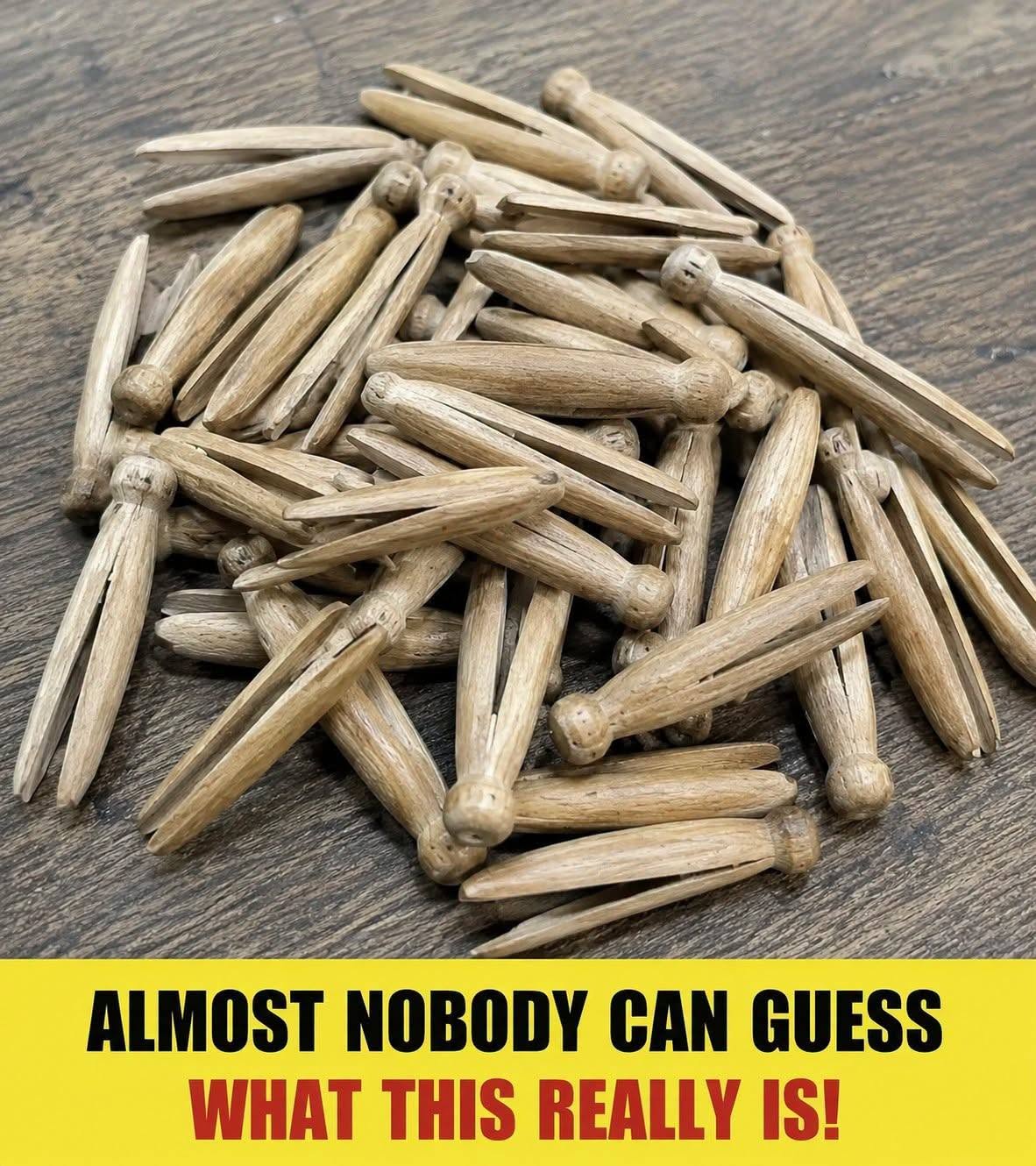
If you’ve ever dug through a relative’s attic, junk drawer, or old sewing box and found a pile of odd little wooden pegs with round heads and split legs, you’ve likely stumbled on one of the most common — and most forgotten — household tools of the 20th century: the classic wooden clothespin.
What Exactly Is It?
This style is often called a dolly peg or one-piece clothespin, and it’s the ancestor of the spring-loaded clothespins most people picture today. Key features:
- Carved from a single piece of wood — no metal parts, no springs
- A rounded “head” at the top (early designs were sometimes carved to loosely resemble a small figure, which is where the “dolly” nickname comes from)
- A split down the middle of the body, forming two prongs or “legs”
To use one, you’d push the split legs down over a clothesline, straddling the line so the wood’s natural tension held the fabric in place. Simple, cheap, and remarkably durable — some survive in usable condition for decades.
A Brief History
- Early 1800s: Simple wooden pegs and pins were used informally to hold laundry, often whittled by hand.
- 1850s: The first patented one-piece clothespin design (credited to inventor David M. Smith in the U.S.) formalized the split-peg shape still recognizable today.
- Late 1800s–early 1900s: Mass production made wooden clothespins a household staple across the U.S. and Europe, coinciding with the rise of backyard clotheslines as the standard laundry-drying method.
- 1887: The spring-hinge clothespin — the two-piece style with a metal spring most people use today — was patented, offering stronger, more adjustable grip. It slowly began replacing the one-piece design in everyday households.
- Mid-1900s onward: As electric clothes dryers became common, clothespins overall became less essential for daily laundry, though the one-piece style remained popular for crafts, gardening, and light household use well into the century — which is exactly why so many of them still turn up in older homes today.
Why They Show Up So Often in Older Homes
If your grandmother’s generation ran a household before (or alongside) electric dryers becoming standard, wooden clothespins were simply everywhere — kept in cloth bags by the back door, stored in coffee cans, or tossed into junk drawers by the dozens. They were:
- Cheap and long-lasting, so people rarely threw them away
- Multi-purpose, used for sealing bags, holding recipe cards, crafting, and gardening — not just laundry
- Passed down along with sewing kits, tool boxes, and other everyday household items
Finding a pile of them today is less “mysterious artifact” and more a small time capsule of daily domestic life from decades past.
What People Do With Them Today
Old wooden clothespins have found a second life well beyond laundry:
- Crafts and DIY projects — picture frames, ornaments, garden markers, and kids’ craft projects are popular uses
- Bag and snack sealing — still genuinely useful for sealing chip bags or produce bags
- Plant and seedling labels — the split shape makes them easy to write on and clip to garden markers
- Vintage decor — collectors and thrifters sometimes display large jars or bowls of them purely for the nostalgic, farmhouse-style aesthetic
- Actual laundry use — some people, especially those who prefer air-drying delicate fabrics, still use them today
How to Tell If Yours Are Worth Keeping (or Selling)
Most vintage wooden clothespins aren’t individually valuable — they were mass-produced and inexpensive even when new. However:
- Large bulk lots occasionally sell for a modest amount to crafters or collectors on resale sites
- Hand-carved or unusually old examples (pre-1900s, hand-whittled rather than machine-made) can occasionally interest antique collectors
- Sentimental value is often the real reason to keep them — especially if they came from a specific family member’s household
The Bottom Line
That pile of odd wooden pegs is a wooden clothespin — a simple, single-piece laundry tool that was once a fixture in nearly every household with a clothesline. It’s not a mystery object so much as a quiet reminder of how much manual, hands-on work went into everyday chores just a generation or two ago. Whether you keep them for crafts, gardening, or simply as a nostalgic keepsake, they’re a small but genuine piece of household history.