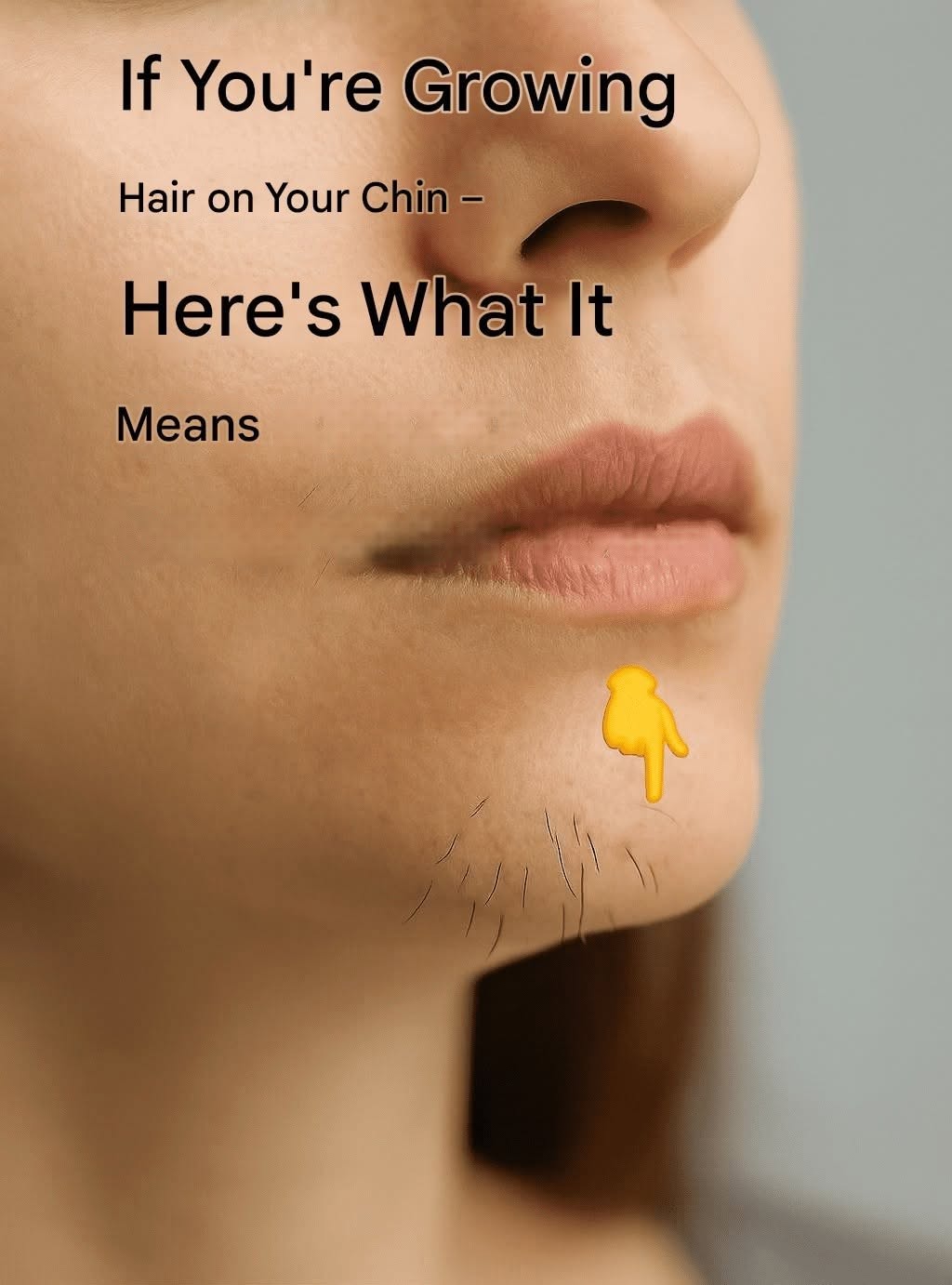
Finding a few dark hairs on the chin is common for many women and is often a normal part of aging or genetics. In some cases, changes in hormone levels or certain medical conditions may contribute to increased facial hair growth.
This article explains common causes, when facial hair is considered normal, and situations where a medical evaluation may be helpful.
Important: Chin hair alone does not diagnose any medical condition. Many factors can influence hair growth, and only a qualified healthcare professional can determine the underlying cause.
1. Genetics
Family history is one of the most common reasons for chin hair. Some people naturally have darker or coarser facial hair.
2. Hormonal Changes
Hormone levels naturally change during different stages of life, including menopause. These changes can influence hair growth patterns.
3. Polycystic Ovary Syndrome (PCOS)
Some women with PCOS experience increased facial hair due to higher androgen levels. However, chin hair by itself is not enough to diagnose PCOS.
4. Certain Medications
Some medications may increase hair growth as a side effect. If you notice a change after starting a new medication, discuss it with your healthcare provider.
5. Age
As estrogen levels decline with age, some women notice slightly more facial hair, which is often a normal age-related change.
When Should You Seek Medical Advice?
Consider speaking with a healthcare professional if:
- Hair growth appears suddenly and rapidly.
- It is accompanied by irregular menstrual cycles.
- You notice severe acne, deepening of the voice, or other significant hormonal changes.
- The hair growth causes concern or affects your quality of life.
Common Hair Removal Options
- Tweezing
- Waxing
- Threading
- Dermaplaning
- Laser hair reduction
- Electrolysis
The best option depends on your skin type, hair color, and personal preferences.
Frequently Asked Questions
Is chin hair normal?
Yes. Many women develop a small amount of chin hair during adulthood, especially with age.
Does every woman with chin hair have a hormonal condition?
No. Genetics and normal hormonal changes are common explanations.
Can lifestyle changes reduce chin hair?
Lifestyle changes may support overall health, but treatment depends on the underlying cause. A healthcare professional can recommend appropriate options if needed.
Conclusion
Chin hair is a common experience and often reflects normal variation rather than a serious health problem. If the growth is new, rapid, or accompanied by other symptoms, a healthcare professional can help determine the cause and discuss suitable management options.