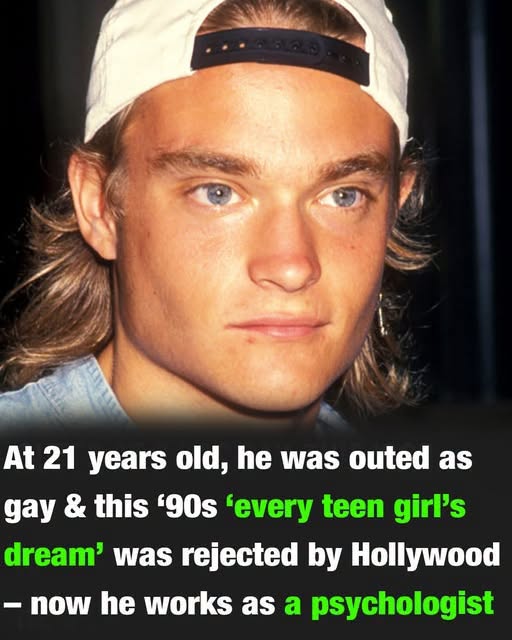
Before he could even legally drive, his face stared out from the glossy covers of every teen magazine in America, plastered across bedroom walls as the ultimate hearthrob of a generation. But behind the blinding flashbulbs and roaring adoration of millions, a deeply fractured reality was unfolding. Plunged into a relentless machine of fame before his childhood had even begun, this young icon was quietly walking a tightrope over an abyss of identity crises, shattering pressure, and profound isolation. This is the raw, untold story of how Hollywood’s golden boy lost everything to find himself.
Born in 1974, his journey into the limelight began at the tender age of eight, landing a role portraying an autistic child in St. Elsewhere. To help him prepare, his mother explained that children with autism often live in worlds of their own. Understanding that concept intimately, he would sit on set with an entire imaginary universe playing out in his mind, tracking the patterns on the walls while staging an elaborate war between the shapes. Soon, he was a fixture of American television, starring in hit family dramas like Our House and My Two Dads. While other kids were worrying about math homework and playground politics, he was memorizing scripts under harsh studio lights.
Years later, he reflected on that surreal era with mixed emotions, noting that he was simply good at playing pretend until the financial stakes escalated and the fun completely evaporated. The normal rites of passage—school dances, spontaneous friendships, and carefree afternoons—were entirely swallowed by studios, interviews, and public expectations. Seeking an escape from the suffocating artificiality of his teenage stardom, he made a bold and disruptive choice at age sixteen. He walked away from Hollywood entirely, enrolled in a traditional high school, and joined the drama club specifically because it was populated by the school rejects and theater kids. It was a refreshing sanctuary far removed from the predatory glamour of the teen magazine circuit.
However, the transition into authentic adulthood brought invisible demons. Raised in a strict, devout Catholic household, he harbored a deep internal conflict regarding his identity. As the pressures of young adulthood collided with lingering childhood wounds, severe addiction took the wheel. He later recalled how the glamorous nights always ended the same way: sitting completely alone in his Malibu condo, grappling with an unstoppable dependency on alcohol, and teetering precariously on the absolute edge of survival. The spiral only halted when a close friend and fellow actress, Heather Tom, finally walked away in frustration. That painful abandonment served as the ultimate wake-up call, forcing him to choose between total self-destruction and arduous redemption.
Just as he was navigating the fragile waters of early recovery at age twenty-one while starring in the hit series Dr. Quinn, Medicine Woman, his carefully guarded personal life was violently dismantled. In 1996, a prominent U.S. tabloid published invasive photographs of him kissing another man in a hot tub at a private party. The intimate images had been shamelessly sold by someone posing as a trusted friend, accompanied by a barrage of fabricated rumors and sensationalized headlines. Paralyzed by fear, he faced a brutal crossroads. He refused to live a lie to appease network executives, yet he desperately wanted to avoid becoming tabloid fodder. While the cast of Dr. Quinn remained fiercely supportive during the remainder of the show’s run, the industry’s reaction post-wrap was swift and punishing. In a 2008 interview, he revealed that he could not even secure a single audition for a television pilot after the outing.
The personal fallout was equally harrowing. His father struggled to look him in the eye, a devastating blow for a son yearning for parental acceptance, especially knowing he had kept secrets from them. His mother, caught off guard and overwhelmed, wept as she confessed she had always assumed he was simply too attractive not to have a girlfriend. Yet, amidst the rejection, a profound wave of solidarity arrived from an unexpected quarter. Letters began flooding in by the thousands from young gay men across the nation, thanking him for his visibility and courage. For the first time, he sat down and answered those letters by hand, realizing that the agonizing pressure to publicly identify himself carried a silver lining: he was never truly alone in his struggle. He embraced a simple, liberating truth that love, regardless of its form, was the only metric that truly mattered.
After decades of surviving the relentless machinery of fame, battling addiction, and weathering intense public scrutiny, he made a definitive exit from Hollywood in 2015. Rather than retreating in defeat, he chose complete reinvention. He returned to academia with a fierce determination, ultimately earning a Doctorate in Clinical Psychology and establishing his own private practice. Today, he dedicates his life to guiding others through the exact labyrinths of trauma, shame, and identity crisis that once nearly destroyed him. He purposefully named his practice Confluence Psychotherapy, serving as a powerful living symbol of two separate, turbulent rivers merging to form something infinitely stronger and more peaceful.
Far away from the deafening noise of red carpets, screaming fans, and invasive camera lenses, his daily life now consists of counseling vulnerable patients, walking his dog, and immersing himself in the quiet healing of nature. He has also embraced a passionate role as an outspoken advocate for the LGBTQ community, using his voice to champion progress and equality. The boy whose face once sold millions of magazines ultimately discovered that true wealth is never found in applause or glossy covers. By trading Hollywood illusion for authentic human connection, he transformed his profound pain into a masterclass of survival, proving that the most heroic act of all is simply having the courage to heal.